
Dussehra 2026 in Kuwait, City by City: Date, Vijay Muhurat and Community Celebrations
Vijayadashami falls on Tuesday 20 October 2026 across Kuwait. Local Vijay Muhurat, Aparahna and Dashami times for Kuwait City, Salmiya, Farwaniya and Fahaheel, verified community organisations, and how to mark the day at home.
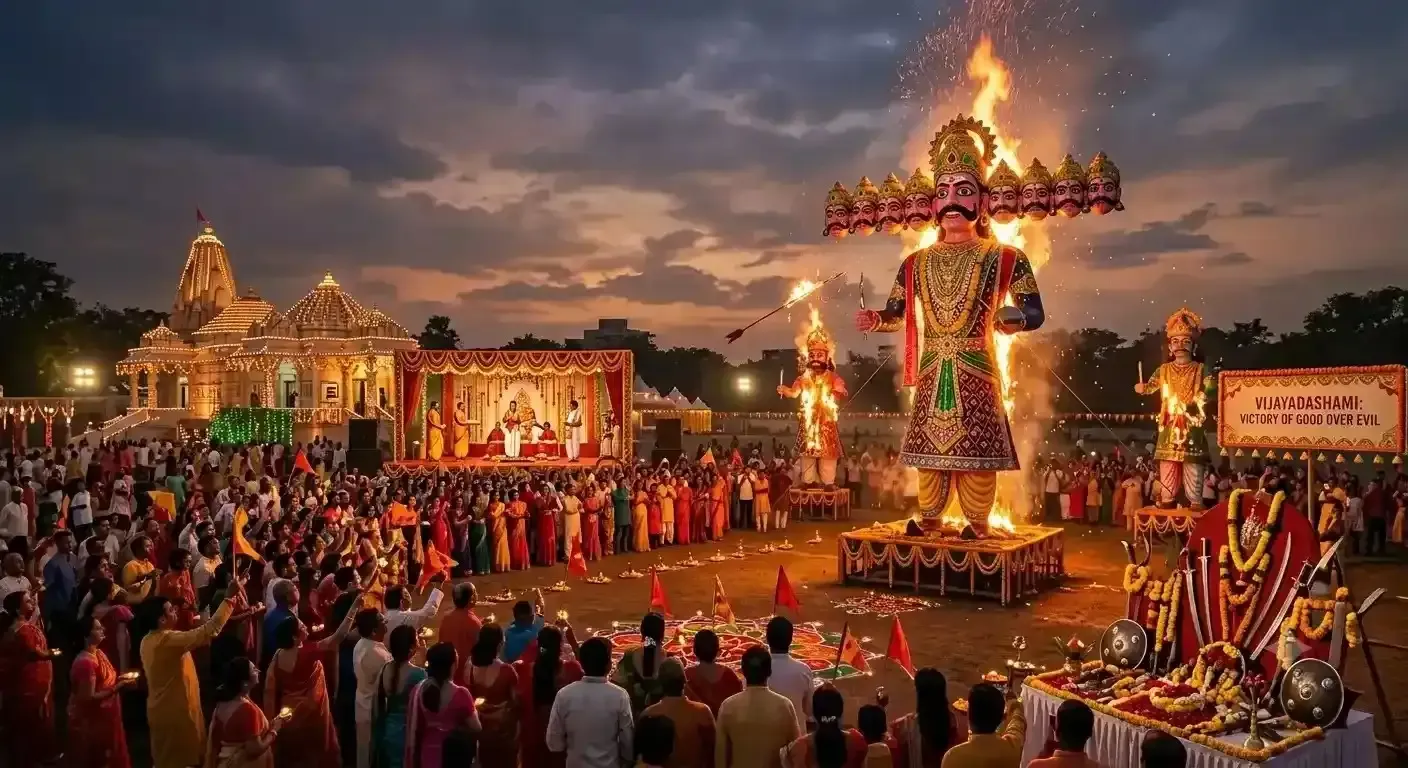
Vijayadashami falls on Tuesday 20 October 2026 across Kuwait. Local Vijay Muhurat, Aparahna and Dashami times for Kuwait City, Salmiya, Farwaniya and Fahaheel, verified community organisations, and how to mark the day at home.
Quick answer: Dussehra (Vijayadashami) 2026 in Kuwait is on Tuesday 20 October 2026 in every city. The Vijay Muhurat, calculated by the Drik Panchang method, is 1:26 PM – 2:11 PM in Kuwait City and Farwaniya and 1:25 PM – 2:11 PM in Salmiya and Fahaheel (Arabia Standard Time, UTC+3). Navratri runs from Sunday 11 to Monday 19 October 2026, and 20 October is a normal working day in Kuwait.
Editor's note (5 October 2026): The local times on this page were calculated for each city from the Drik Panchang tithi (Dashami from 12:50 PM IST on 20 October to 2:11 PM IST on 21 October 2026), converted to Kuwait time, which does not change for daylight saving. The Vijay Muhurat is the 11th of the 15 daytime muhurtas, calculated by the Drik Panchang method from each city's own sunrise and sunset. We do not list 2026 event schedules, because associations announce their own programmes; please check with them directly.
Kuwait is home to one of the largest Indian communities in the Gulf, and a large share of it is Hindu. Families from Kerala form the biggest group, alongside Tamil, Telugu, Kannada, Gujarati, Maharashtrian, Bengali, Goan and North Indian households, plus Nepali workers who celebrate the same season as Dashain. Most live in the capital and the dense residential districts around it: Salmiya and Hawalli, Farwaniya, Abbasiya and Jleeb, and the oil-town belt of Ahmadi, Fahaheel and Mangaf in the south. Many families have been in Kuwait for two or three generations, and Navratri is one of the busiest weeks of the community year.
Faith life in Kuwait looks different from India or the West. There is no officially recognised public Hindu temple in the country, so worship happens mainly at home, in small family and neighbourhood gatherings, and at cultural programmes organised by registered Indian associations and embassy-linked bodies, which are framed as cultural rather than public religious events. This page is written with that in mind: the heart of Dussehra in Kuwait is the home puja, timed by your own city's muhurat.
Dussehra 2026 in Kuwait: dates and Vijay Muhurat by city
The whole country is on Arabia Standard Time (UTC+0300) all year. The Dashami tithi begins and ends at the same moment everywhere, so only the sun-based windows differ, and Kuwait is so compact that the four cities are within a minute of each other.
| Region (governorate) | City | Dussehra date | Vijay Muhurat (Drik Panchang method) | Dashami begins → ends |
|---|---|---|---|---|
| Al Asimah (Capital) | Kuwait City | Tue 20 Oct | 1:26 PM – 2:11 PM | Tue 20 Oct, 10:20 AM → Wed 21 Oct, 11:41 AM |
| Hawalli | Salmiya | Tue 20 Oct | 1:25 PM – 2:11 PM | Tue 20 Oct, 10:20 AM → Wed 21 Oct, 11:41 AM |
| Farwaniya | Farwaniya | Tue 20 Oct | 1:26 PM – 2:11 PM | Tue 20 Oct, 10:20 AM → Wed 21 Oct, 11:41 AM |
| Ahmadi | Fahaheel | Tue 20 Oct | 1:25 PM – 2:11 PM | Tue 20 Oct, 10:20 AM → Wed 21 Oct, 11:41 AM |
The Aparahna (afternoon period) is the traditional window for Aparajita and Shami puja, and sunset marks the time for evening aarti:
| City | Aparahna, 20 Oct | Sunset, 20 Oct |
|---|---|---|
| Kuwait City | 12:40 PM – 2:57 PM | 5:13 PM |
| Salmiya | 12:40 PM – 2:56 PM | 5:12 PM |
| Farwaniya | 12:40 PM – 2:57 PM | 5:13 PM |
| Fahaheel | 12:40 PM – 2:56 PM | 5:12 PM |
Key Navratri and Dussehra dates 2026
| Observance | Date (2026) |
|---|---|
| Navratri begins (Ghatasthapana) | Sunday 11 October |
| Durga Ashtami and Maha Navami | Monday 19 October |
| Dussehra / Vijayadashami in Kuwait | Tuesday 20 October |
| Dashami tithi, Kuwait time | Tue 20 Oct, 10:20 AM → Wed 21 Oct, 11:41 AM |
| Bijoya Dashami / Sindoor Khela (India, Bengal tradition) | Wednesday 21 October |
Ashtami and Navami share Monday 19 October in India's calendar this year, so families who do Kanya pujan on either day will hold it then. In every Kuwaiti city the Dashami tithi covers the whole Aparahna on 20 October, with more than two hours of overlap, so there is no doubt about the date, and the Vijay Muhurat falls well inside the Dashami.
Hindu temples and community groups in Kuwait for Navratri & Dussehra
Because Kuwait has no public Hindu temple, we list confirmed community organisations rather than mandirs. We give name and area only; check their own websites or social pages for details. Temples and community groups usually announce Navratri garba, Durga Puja, Ramlila and Ravan Dahan programmes a few weeks ahead — check their websites/social pages.
- Embassy of India, Kuwait — Diplomatic Enclave, Kuwait City. The embassy hosts cultural programmes through the year and works with the many registered Indian associations, making it a useful first point of contact for finding community groups.
- BAPS Kuwait Satsang Mandal — Kuwait. The BAPS Swaminarayan satsang group in Kuwait, which has held festival celebrations such as Ram Navami and Swaminarayan Jayanti and has hosted visiting BAPS sadhus.
- Bengali Cultural Society Kuwait — Kuwait. Founded in 1978, it organises cultural programmes for Bengali families through the year and takes part in programmes organised by the Indian Embassy.
Beyond these, Kuwait has a very large number of regional and language associations, especially Malayali, Tamil, Telugu and Gujarati groups, many organised by district or neighbourhood. Ask friends, colleagues or your children's school community which group serves your area.
Al Asimah: Kuwait City
Kuwait City's Vijay Muhurat is 1:26 PM – 2:11 PM, with the Aparahna from 12:40 PM to 2:57 PM and sunset at 5:13 PM. The capital governorate is the administrative heart of the country and home to the Indian Embassy, and many professional families live in and around the city or commute into it. Because 20 October is a working day, many people here will do a short puja during a lunch break or late afternoon, or hold the full family puja after work.
Hawalli: Salmiya
Salmiya's Vijay Muhurat is 1:25 PM – 2:11 PM, with the Aparahna from 12:40 PM to 2:56 PM and sunset at 5:12 PM. Salmiya and neighbouring Hawalli are busy, mixed residential districts with many Indian families, Indian schools nearby and shops that stock puja items, flowers and sweets in the run-up to Navratri.
Farwaniya: Farwaniya, Abbasiya and Jleeb
Farwaniya's Vijay Muhurat is 1:26 PM – 2:11 PM, with the Aparahna from 12:40 PM to 2:57 PM and sunset at 5:13 PM. The Farwaniya governorate, including Abbasiya and Jleeb Al-Shuyoukh, has one of the densest concentrations of Indian residents in Kuwait, many of them from Kerala. Navratri here is often marked with family Saraswati Puja and Pooja Veppu, and Vijayadashami morning brings Vidyarambham for small children at home or at gatherings organised by community associations.
Ahmadi: Fahaheel and Mangaf
Fahaheel's Vijay Muhurat is 1:25 PM – 2:11 PM, with the Aparahna from 12:40 PM to 2:56 PM and sunset at 5:12 PM. The southern Ahmadi governorate grew around Kuwait's oil industry, and Fahaheel, Mangaf and Abu Halifa have large Indian communities of engineers, technicians and their families. Ayudha Puja, the worship of tools and work equipment, has special meaning for many of them.
How Kuwait celebrates Navratri and Dussehra
With Keralites forming the largest group, the end of Navratri in many Kuwaiti homes looks much as it does in Kerala. On Durgashtami evening, books, musical instruments and tools are placed before an image of Saraswati for Pooja Veppu, and they are not touched again until Vijayadashami morning, when they are taken back after puja and children begin learning with Vidyarambham, writing the first letters in rice. Tamil families set up Golu (Bommai Kolu) displays of dolls on stepped shelves, invite friends to see them and offer sundal, and observe Saraswati Puja and Ayudha Puja. Telugu families may celebrate Bathukamma with flower stacks and circle songs, and Kannada families mark Ayudha Puja.
Gujarati and other West Indian families keep the garba and dandiya tradition alive, usually in community halls or private venues booked by associations, with aarti before the dancing. Bengali families observe Durga Puja, usually in a compressed format with pushpanjali, bhog, sandhya aarti and cultural evenings, ending with Bijoya greetings and, for married women, Sindoor Khela. North Indian families remember the Ramlila tradition by reading or telling the Ramayana story and singing bhajans at home; large public Ravan Dahan with burning effigies is a feature of India, not of Kuwait.
Nepali families in Kuwait celebrate the same season as Dashain, when elders give tika and jamara (barley shoots sown at Ghatasthapana) to younger relatives on Vijaya Dashami. For everyone, video calls home are a big part of the day, so children can see the pandals, Ramlilas and family gatherings in India.
Dussehra puja at home
For most Hindu families in Kuwait, a short puja at home in the afternoon is the main observance, and it is entirely traditional. Ideally do it during your city's Vijay Muhurat, or at least within the Aparahna:
- Aparajita puja: draw an eight-petalled lotus with kumkum or rice flour, place a lamp, and worship Devi Aparajita, the goddess of victory, with flowers, akshat and a simple prayer for success over obstacles.
- Shami puja: if you have Shami leaves (or a substitute such as apta/bauhinia leaves), offer them to the Devi and exchange them with family as "gold" — a Maharashtrian and Karnataka custom.
- Ayudha Puja / Shastra puja: clean and decorate tools, books, laptops, work equipment and the car, apply kumkum and offer flowers, thanking them for their service.
- Vidyarambham: Vijayadashami is the traditional day for small children to begin learning — writing "Om" or the first letters of the alphabet in rice. In Kerala tradition it is done in the morning after the books from Pooja Veppu are taken back.
- Seemollanghan and new beginnings: a short walk beyond your street, starting a course or beginning a new project are traditional symbols of victory on this day.
A simple order: bathe, light a lamp, pray to Ganesha, do the Aparajita and Shami puja, then Ayudha puja, offer naivedya (sweets, fruit), do aarti and share prasad. Keep the puja quiet and within your home. For full step-by-step vidhi and the stories behind the festival, see our Dussehra / Vijayadashami 2026 pillar guide.
Practical tips for Dussehra in Kuwait
- Working day: Tuesday 20 October 2026 is a normal working and school day in Kuwait, and so is Wednesday 21 October. The Vijay Muhurat falls in the early afternoon, so plan a short puja at lunchtime or a fuller one in the Aparahna if you can leave work early. Community gatherings are usually held on the weekend.
- Respect local law: Kuwait's rules on religious gatherings, fire and fireworks are set by the authorities. Keep worship private, attend only events organised by registered associations in approved venues, and never burn effigies or set off fireworks at home or in public spaces.
- Lamps at home: use a stable diya or electric lamp, keep it away from curtains and air-conditioning vents, and never leave it burning unattended in an apartment.
- Puja items: Indian supermarkets and shops in Salmiya, Farwaniya, Abbasiya and Fahaheel stock flowers, kumkum, diyas and sweets, but buy a few days early as stock runs short before Navratri.
- Weather and traffic: October afternoons can still be very hot, so keep any gathering indoors, and allow extra time for evening traffic on the main ring roads.
- Muhurat: use your own city's times from the table above; never convert India's times into Kuwait time.
Frequently asked questions
When is Dussehra 2026 in Kuwait?
Tuesday 20 October 2026 in every part of Kuwait. The Dashami tithi begins at 10:20 AM Kuwait time on 20 October and ends at 11:41 AM on Wednesday 21 October, so it covers the whole afternoon of the 20th.
What is the Vijay Muhurat in Kuwait City, Salmiya, Farwaniya and Fahaheel?
Calculated by the Drik Panchang method for each city on Tuesday 20 October 2026: Kuwait City 1:26 PM – 2:11 PM, Salmiya 1:25 PM – 2:11 PM, Farwaniya 1:26 PM – 2:11 PM and Fahaheel 1:25 PM – 2:11 PM, all in Arabia Standard Time (UTC+3).
Is there a Hindu temple in Kuwait?
There is no officially recognised public Hindu temple in Kuwait. Hindu families worship at home, and festivals are marked through registered Indian community associations and embassy-linked cultural events, which are subject to official approval.
Can I convert India's Dussehra muhurat into Kuwait time?
No. The Vijay Muhurat depends on local sunrise and sunset, so it has to be calculated for your own city. Use the Kuwait times on this page, not India's times shifted by the two-and-a-half-hour difference.
When is Bijoya Dashami and Sindoor Khela for Bengali families in Kuwait?
In India, Bengal-tradition Bijoya Dashami and Sindoor Khela fall on Wednesday 21 October 2026 (Drik Panchang, Kolkata). Durga Puja gatherings in Kuwait follow their own committee's schedule, so check the announcements of the group you attend.
Where will garba, Durga Puja and Dussehra gatherings take place in Kuwait?
Temples and community groups usually announce Navratri garba, Durga Puja, Ramlila and Ravan Dahan programmes a few weeks ahead — check their websites/social pages. In Kuwait these are private or association events in approved venues; public effigy burning and fireworks are not something families should attempt on their own.
Related guides
- Dussehra / Vijayadashami 2026: complete guide
- Navratri 2026: complete guide for NRI families
- Dussehra 2026 in Dubai & UAE, emirate by emirate
- Dussehra 2026 in Qatar, city by city
- Dussehra 2026 in Oman, city by city
- Dussehra 2026 in Bahrain, city by city
- Navaratri and Vijayadashami 2026 in Kerala
- Vijayadashami 2026 in Tamil Nadu
- October 2026 Hindu festival calendar
You might also like
Dussehra 2026 in Victoria, BC: Date, Vijay Muhurat, Temples and Navratri Celebrations
Dussehra 2026 in Surrey: Date, Vijay Muhurat, Temples and Navratri Celebrations
Dussehra 2026 in Vancouver: Date, Vijay Muhurat, Temples and Navratri Celebrations