Navaratri 2026: Dates, Importance, Daily Poojas & Complete Celebration Guide
“Ya Devi Sarvabhuteshu Shakti Rupena Samsthita,Namastasyai Namastasyai Namastasyai Namo Namah” — Devi Mahatmyam Navaratri — the nine sacred nights of the…
“Ya Devi Sarvabhuteshu Shakti Rupena Samsthita,Namastasyai Namastasyai Namastasyai Namo Namah” — Devi Mahatmyam Navaratri — the nine sacred nights of the…
“Ya Devi Sarvabhuteshu Shakti Rupena Samsthita,
Namastasyai Namastasyai Namastasyai Namo Namah” — Devi Mahatmyam
Navaratri — the nine sacred nights of the Divine Mother — is one of the most spiritually powerful festivals in the Hindu calendar.
In 2026, this magnificent festival arrives twice:
- Chaitra Navaratri (Spring)
- Sharad Navaratri (Autumn – Grand Celebration)
Whether you are a devotee seeking divine blessings or someone exploring Hindu traditions, this complete guide from HinduTone covers everything — dates, poojas, Navadurga significance, fasting rules, colors, and regional celebrations.
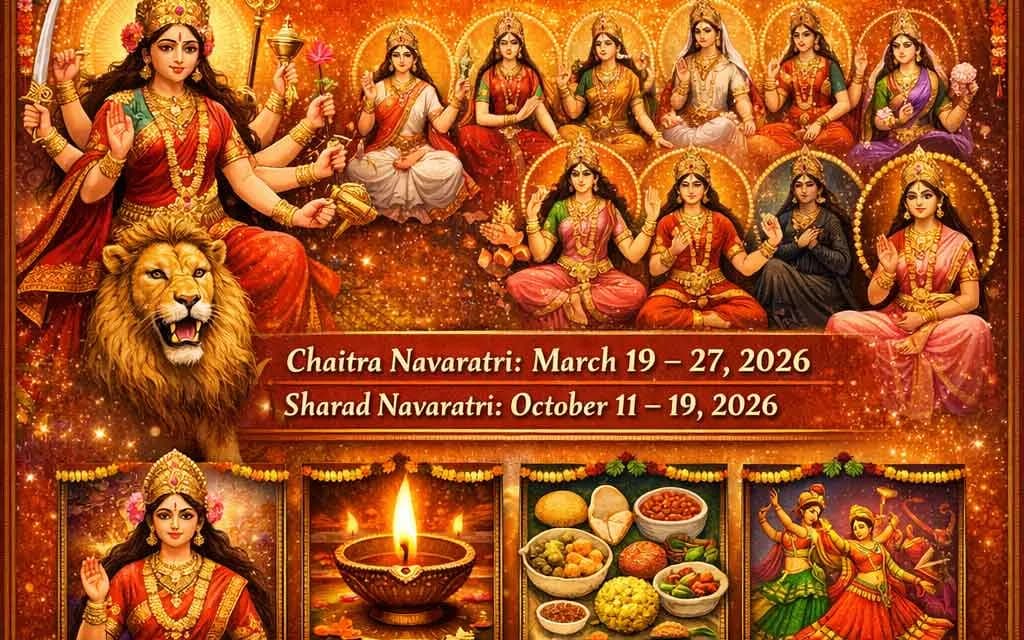
Navaratri 2026: Key Dates at a Glance
Tip: Sharad Navaratri is the most widely celebrated, ending with Dussehra (October 20, 2026) — symbolizing victory of good over evil.
What is Navaratri? — Meaning & Spiritual Importance
- “Nava” = Nine
- “Ratri” = Nights
Navaratri is dedicated to the nine divine forms of Goddess Durga (Navadurga).
Why is Navaratri Celebrated?
- Celebrates Goddess Durga’s victory over Mahishasura
- Based on the sacred text Durga Saptashati (Devi Mahatmyam)
- Represents cosmic balance of Shakti (divine feminine energy)
Spiritual Significance
- Victory of good over evil
- Removal of inner vices:
- Ego
- Anger
- Greed
- Attachment
- Best time for:
- Sadhana
- Mantra chanting
- Fasting and purification
Chaitra Navaratri 2026 — Day-by-Day Guide (March 19–27)
Ghatasthapana Muhurat
- 6:52 AM – 7:43 AM
- Alternate: 12:05 PM – 12:53 PM
Navadurga — 9 Days, 9 Forms, 9 Colors
Sharad Navaratri 2026 — Grand Celebration (October 11–19)
- Begins with Ghatasthapana
- Ends with Vijayadashami (October 20)
Key Highlights:
- Day 8: Durga Ashtami
- Day 9: Maha Navami
- Day 10: Dussehra
Navaratri Daily Pooja Vidhi — Step-by-Step
1. Preparation
- Clean home and setup altar
- Install Durga idol or photo
- Perform Kalash Sthapana
- Light Akhand Jyoti
2. Morning Pooja
- Wake during Brahma Muhurta
- Light diya
- Offer:
- Flowers
- Kumkum
- Fruits
- Recite Durga Saptashati
- Perform Aarti
3. Evening Aarti
- Light lamp again
- Offer sweets
- Sing Aarti (Jai Ambe Gauri)
- Perform Pradakshina
4. Havan (Ashtami or Navami)
- Fire ritual with:
- Ghee
- Rice
- Sesame
5. Kanya Pujan
- Worship young girls (2–10 years)
- Offer:
- Puri, chana, halwa
- Gifts
Navaratri Fasting Rules (Vrat)
Allowed Foods
- Sabudana, kuttu flour
- Milk, fruits, dry fruits
- Sendha namak
- Potatoes
Avoid
- Wheat, rice, dal
- Onion and garlic
- Non-vegetarian food
- Alcohol
Regional Celebrations Across India
Gujarat — Garba and Dandiya
- Night-long dance festivals
- Circular Garba around diya
West Bengal — Durga Puja
- Grand pandals
- Artistic idols
- Visarjan processions
Tamil Nadu — Golu
- Doll displays
- Cultural storytelling
Karnataka — Mysore Dasara
- Palace illumination
- Royal procession
North India — Ramlila
- Ramayana performances
- Ravana Dahan
Powerful Navaratri Mantras
- Om Shailputryai Namah
- Om Brahmacharinyai Namah
- Om Chandraghantayai Namah
- Om Kushmandayai Namah
- Om Skandamatayai Namah
- Om Katyayanyai Namah
- Om Kalaratryai Namah
- Om Mahagauryai Namah
- Om Siddhidatryai Namah
Universal Mantra
Sarva Mangala Mangalye
Shive Sarvartha Sadhike
Sharanye Tryambake Gauri
Narayani Namostute
Daily Bhog Offerings
FAQs — Navaratri 2026
When is Navaratri 2026?
March 19–27 and October 11–19
When is Dussehra 2026?
October 20, 2026
What is Ghatasthapana?
Sacred Kalash installation invoking the Goddess
Can I eat non-vegetarian food?
No, it is avoided during Navaratri
Final Blessings
Navaratri is not just a festival — it is a spiritual transformation journey.
- From darkness to light
- From ego to surrender
- From fear to divine strength
May Maa Durga bless you with health, prosperity, and spiritual power.
Jai Mata Di
Published by HinduTone
Your trusted guide to Hindu festivals and spiritual living
The Scriptural Foundation: What Devi Mahatmyam Tells Us About Navaratri
The Devi Mahatmyam — also called the Durga Saptashati or Chandi Path — is a 700-verse hymn embedded within the Markandeya Purana. It narrates three distinct battles in which the Goddess manifests across cosmic ages: as Mahakali who slays Madhu and Kaitabha, as Mahalakshmi who destroys Mahishasura, and as Mahasaraswati who annihilates Shumbha and Nishumbha. These three episodes correspond to the three sets of three nights within Navaratri, making the recitation of all 13 chapters across the nine days a complete spiritual journey rather than mere ritual repetition.
The text itself declares in Chapter 12 that the Goddess promises protection, prosperity, and liberation (moksha) to any devotee who listens to or recites the Mahatmyam during Navaratri with devotion. Traditionally, the Paatha (recitation) is divided into three khands — Prathama Charitra, Madhyama Charitra, and Uttama Charitra — each opening with a specific dhyana shloka invoking the corresponding form. Families observing Akhand Path recite all 700 verses without pause, while others spread the reading across all nine days using the traditional chapter-division prescribed in the Navarna Vidhi.
Ghatasthapana: The Science and Ritual of the Sacred Kalash
Ghatasthapana — literally 'the establishment of the pot' — is the ritual that officially inaugurates Navaratri on Pratipada (the first day). A clay or copper Kalash is filled with Ganga jal or clean water, along with coins, supari (areca nut), and five kinds of leaves. Soil mixed with seven types of grain seeds — typically barley (yava), wheat, sesame, rice, mung, urad, and chickpea — is placed beneath it in an earthen tray. The sprouting of these ankura (shoots) over nine days is a living symbol of fertility, abundance, and the Goddess's life-giving shakti.
Shastra specifies that Ghatasthapana must not be performed during Chitra Nakshatra unless absolutely necessary, as it is considered inauspicious. The Muhurat window given for Chaitra Navaratri 2026 (6:52 AM – 7:43 AM) falls within the auspicious Pratipada tithi combined with a favorable nakshatra, which is why that precise window holds importance. An Akhand Jyoti — a continuously burning ghee lamp — is lit alongside the Kalash and kept burning for all nine nights without interruption, representing the unbroken presence of the Divine Mother in the household.
Navadurga in Depth: The Nine Forms and Their Specific Blessings
The nine forms worshipped across Navaratri are: Shailputri (daughter of the Himalayas), Brahmacharini (the ascetic), Chandraghanta (the warrior with a bell-shaped crescent), Kushmanda (creator of the universe), Skandamata (mother of Kartikeya), Katyayani (the fierce warrior form), Kalaratri (the dark destroyer of evil), Mahagauri (the radiant pure form), and Siddhidatri (the bestower of all siddhis). Each form is associated with a specific planet in Jyotisha: Shailputri with the Moon, Brahmacharini with Mars, Chandraghanta with Venus, Kushmanda with the Sun, and so on, giving the worship a cosmic-astrological dimension.
Devotees recite specific mantras for each form — for instance, 'Om Devi Shailputryai Namah' on Day 1 and 'Om Devi Siddhidatryai Namah' on Day 9. Each form is also associated with a specific flower offering: Jasmine for Shailputri, Champa for Brahmacharini, and Lotus for Kushmanda. The Devi Bhagavata Purana explains that meditating on each form removes a specific category of inner obstruction — Shailputri resolves doubt, Brahmacharini builds tapas-shakti, and Kalaratri dissolves deep karmic fear — making the nine-day progression a structured path of inner transformation.
Regional Celebrations: How India's Major Traditions Observe Navaratri Differently
In West Bengal, Navaratri's final five days are observed as Durga Puja, with elaborately sculpted clay murtis of Durga flanked by Lakshmi, Saraswati, Kartikeya, and Ganesha installed in pandals across Kolkata and beyond. The Sandhi Puja performed at the juncture of Ashtami and Navami — when the tithi transitions — is considered the most potent moment of the entire festival, during which 108 lamps and 108 lotus flowers are offered simultaneously. The immersion (Visarjan) of the murti in the Hooghly River on Vijayadashami is accompanied by the sindoor ceremony, where married women apply vermillion to the Goddess and to each other.
In Gujarat, Navaratri is synonymous with Garba and Dandiya Raas — circular folk dances performed around a central image of the Goddess or an earthen lamp. The dance is not merely entertainment; it is a devotional pradakshina (circumambulation) of the Divine Mother performed through movement, breath, and rhythm. In Karnataka and Mysuru (Mysore), the Mysuru Dasara — declared a State festival — transforms the Mysore Palace into a spectacle of lights, with a royal procession (Jamboo Savari) on Vijayadashami that has been observed for over four centuries. In Tamil Nadu, the Golu (Kolu) tradition displays rows of dolls on stepped platforms representing all layers of creation, with families visiting each other's homes to view the display and exchange prasadam.
Fasting Rules and Sattvic Diet: What to Eat and Avoid During Navaratri
Navaratri fasting (Vrat) is grounded in the concept of ahara shuddhi — purification through food — which the Chandogya Upanishad links directly to sattva-shuddhi (purification of the inner being). Permitted foods include Singhara atta (water chestnut flour), Kuttu atta (buckwheat flour), Sabudana (tapioca), Sendha namak (rock salt), fruits, milk, ghee, and most root vegetables like sweet potato and arbi. Regular table salt, grains such as rice and wheat, onion, garlic, non-vegetarian food, and alcohol are strictly avoided.
Those observing partial fasting (Phalahar) eat only fruits and dairy once a day, typically after the evening Aarti. Those observing full Nirjala Vrat on Ashtami and Navami abstain from both food and water until the Kanjak or Kumari Puja is completed. The Kanjak Puja — in which nine pre-pubescent girls are honored as living forms of Navadurga, offered halwa, puri, and chana, and their feet are washed — marks the ceremonial conclusion of the fast. This practice is rooted in the Devi Bhagavata Purana's instruction to see the Divine Mother present in all female forms.
Vijayadashami and Dussehra 2026: The Deeper Meaning Beyond the Battlefield
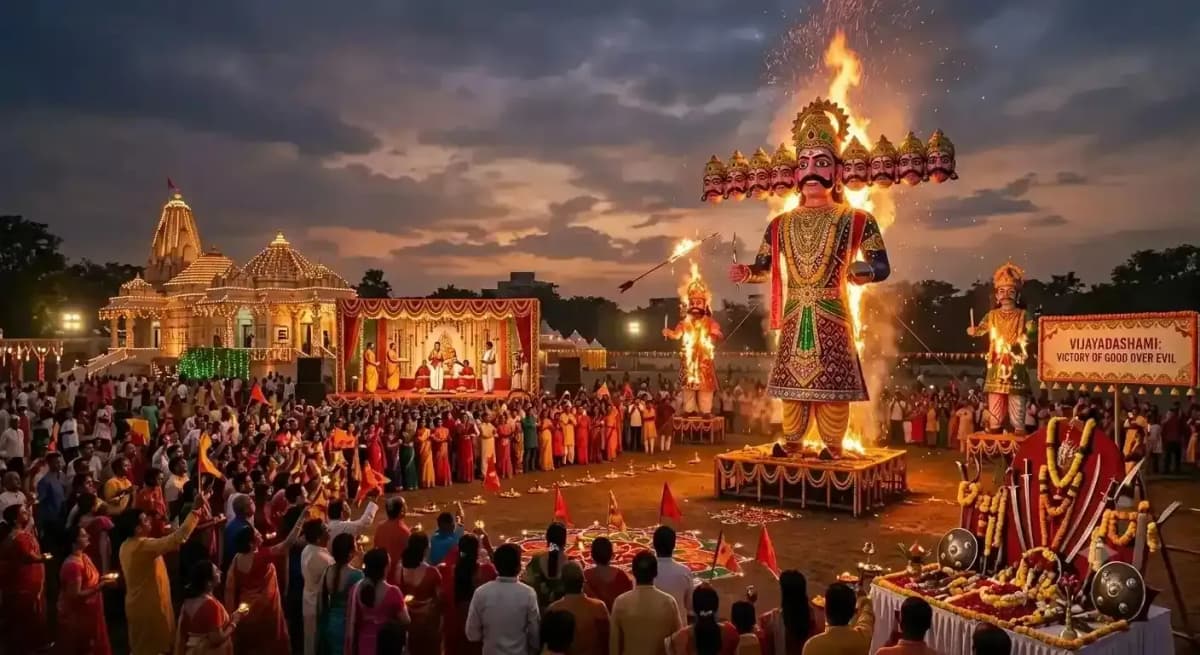
Vijayadashami — falling on October 20, 2026 — is simultaneously the culmination of Navaratri and the celebration of Sri Rama's victory over Ravana as narrated in the Valmiki Ramayana and the Ramcharitmanas of Tulsidas. The word 'Vijaya' means not just victory in external war but the conquest of the ten-headed Ravana as a symbol of the ten inner enemies: Kama (desire), Krodha (anger), Lobha (greed), Moha (delusion), Mada (arrogance), Matsarya (jealousy), Manas (the uncontrolled mind), Buddhi (distorted intellect), Chitta (polluted memory), and Ahamkara (false ego). Burning the effigy of Ravana during the Ravan Dahan ceremony thus carries a deeply interior meaning.
Vijayadashami is also considered the most auspicious day in the Hindu calendar for beginning new ventures — starting a new business, enrolling children in their first letters (Vidyarambha), or commencing martial arts training. The tradition of Shastra Puja on this day — worshipping tools, weapons, vehicles, and instruments of one's livelihood — acknowledges that every skill and implement is ultimately an expression of the Goddess's energy. The Aparajita Puja performed at the Aparajita tree (identified with Shami or Bael in different regional traditions) during Vijayadashami is referenced in the Mahabharata, where the Pandavas retrieved their weapons from the Shami tree after completing their year of Agyatvas and won the subsequent battle.
Related
See the main Dussehra & Vijayadashami 2026 complete guide for the date (20 October), Vijaya muhurat and full rituals.
Frequently Asked Questions
When is Navaratri 2026?
Navaratri 2026 falls on October 20, 2026.
What is the significance of Navaratri?
“Ya Devi Sarvabhuteshu Shakti Rupena Samsthita, Namastasyai Namastasyai Namastasyai Namo Namah” — Devi Mahatmyam Navaratri — the nine sacred nights of the Divine Mother — is one of the most spiritually powerful festivals in the Hindu calendar. In 2026, this magnificent festival arrives twice: Chaitra Navaratri (Spring) Sharad Navaratri (Autumn – Grand Celebr
How is Navaratri celebrated?
Devotees observe it with puja, fasting or special offerings, visiting temples, chanting mantras, and gathering with family. Customs vary by region and tradition.
What should devotees do on Navaratri?
Take a sacred bath, perform the day's puja and charity (dana), observe any prescribed fast, and chant mantras with sincere devotion.
You might also like
Dussehra / Vijayadashami 2026: Complete Guide — Date, Muhurat, Rituals & Meaning
Hindu Festival Calendar 2026 — Complete Guide for NRIs (Dates, Tithis, Puja)
Gayatri Jayanti 2026: Date, Gayatri Mantra, Puja Vidhi & Significance