
Sankashti Chaturthi Moon Rules: Moonrise, Arghya and Breaking the Fast Correctly
Sankashti Chaturthi is the monthly Ganesha fast that ends only after sighting the moon. This guide covers moonrise rules, how to offer chandra arghya, cloudy-night practice, fasting options, Angaraki Sankashti, and why families abroad must use their own city's moonrise.
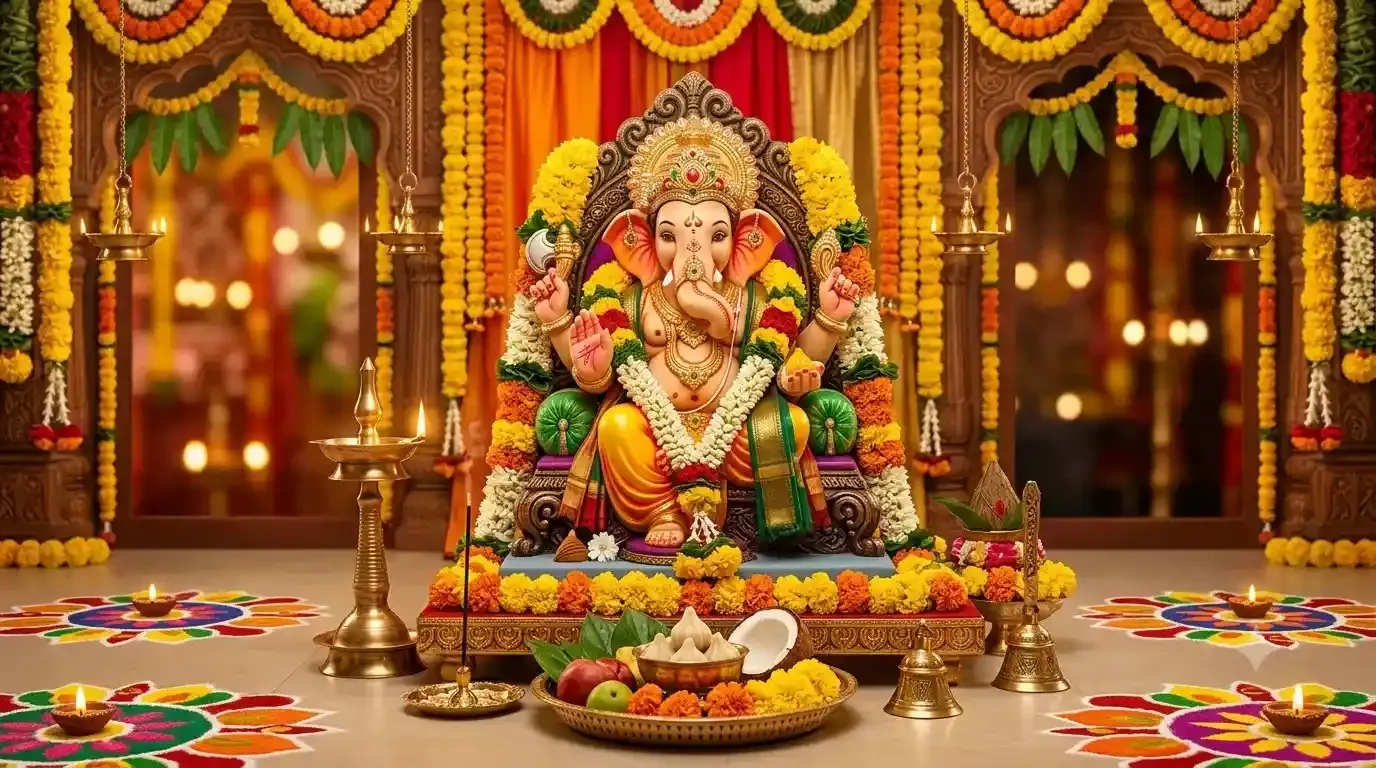
Sankashti Chaturthi is the monthly Ganesha fast that ends only after sighting the moon. This guide covers moonrise rules, how to offer chandra arghya, cloudy-night practice, fasting options, Angaraki Sankashti, and why families abroad must use their own city's moonrise.
Quick answer: Sankashti Chaturthi is observed on the Chaturthi of the waning fortnight (Krishna Paksha) every month. Devotees fast from sunrise, worship Ganesha in the evening, and break the fast only after sighting the moon and offering it arghya (water). The date is set by the Chaturthi tithi prevailing at moonrise, so always use the moonrise time for your own city, never India's time converted. On a cloudy night, arghya is commonly offered at the published moonrise time, facing the moon's direction.
This guide has been restored at its original hindutone.com address. It explains the moon rules clearly, so that families in India and abroad can keep the monthly vrata with confidence.
What Sankashti Chaturthi is
'Sankashti' comes from the Sanskrit for deliverance from difficulties. Every lunar month has two Chaturthis: the Vinayaka Chaturthi in the bright fortnight and the Sankashti Chaturthi in the dark fortnight, about four days after the full moon. Sankashti is dedicated to Ganesha as Vighnaharta, the remover of obstacles, and is one of the most widely kept monthly fasts in Maharashtra, Karnataka, Andhra Pradesh, Telangana, Tamil Nadu and across the diaspora.
Two Sankashtis are especially well known:
- Angaraki Sankashti: when Sankashti falls on a Tuesday. It is considered particularly auspicious and draws large crowds to Ganesha temples.
- Sakat Chauth (Sankat Chauth): the Sankashti of the Magha month in the North Indian calendar, kept by mothers for their children's well-being.
Karva Chauth, the North Indian fast kept by married women, falls on the Krishna Paksha Chaturthi of Kartika (in the purnimanta calendar) and also ends with sighting the moon; it coincides with that month's Sankashti.
The moon rules, explained
| Rule | What it means in practice |
|---|---|
| The date follows moonrise | Sankashti is kept on the day the Chaturthi tithi prevails at moonrise. That is why the date in a panchang can differ from a simple calendar listing. |
| Fast until the moon is seen | The fast continues until the moon rises and arghya is offered. |
| Use local moonrise | Moonrise varies with location. Use a panchang or moonrise table for your own city. |
| Arghya before eating | Offer water to the moon, then complete Ganesha worship, then break the fast. |
| Cloudy sky | Commonly, arghya is offered at the calculated moonrise time facing the moon's direction. |
Because the moon rises late on Krishna Paksha Chaturthi, often well after dark, the fast can be long. Plan meals and work accordingly.
How to offer chandra arghya
- Fill a small copper or steel pot (lota) with clean water. Add a little milk, a pinch of sandalwood or kumkum, a few grains of akshata and a flower.
- When the moon has risen, stand facing it, ideally outdoors or at an open window.
- Hold the pot at chest height and pour the water in a steady stream, looking at the moon through or alongside the stream, while praying silently or chanting 'Om Somaya namah' or 'Om Chandraya namah'.
- Offer a namaskaram to the moon, then to Ganesha.
- Pour the water so it falls on soil or a plant rather than down a drain where possible; abroad, a balcony pot or garden works well.
The full Sankashti routine
- Morning: Bathe, take a sankalpa (resolve) before Ganesha to keep the fast, and recite a short prayer or 'Om Gam Ganapataye namah'.
- During the day: Keep the fast according to your capacity (see the table below).
- Evening: Worship Ganesha with durva grass, red flowers, kumkum, incense, a lamp and naivedyam such as modak or laddu. Read or listen to the Sankashti vrata katha, and recite the Ganapati Atharvashirsha or Sankatanashana Ganesha Stotram if you know it.
- Moonrise: Offer arghya to the moon.
- Breaking the fast: Take prasad first, then a simple sattvic meal.
Fasting options
| Type | What it involves | Suitable for |
|---|---|---|
| Nirjala | No food or water until moonrise | Only for healthy adults used to fasting |
| Phalahar | Fruit, milk, curd, nuts, and fasting foods such as sabudana, peanuts and sweet potato | Most people |
| Ekabhukta | One simple sattvic meal during the day, then puja and arghya | Busy working people, the elderly |
| Puja only | No fast; evening puja and moon arghya | Children, pregnant women, people with medical conditions |
The vrata is about devotion and self-discipline, not hardship. If you take medication or have diabetes, speak to your doctor and choose a gentler option.
Sankashti for NRI families
Families abroad face two practical questions every month: which day, and what time is moonrise?
- Which day: Use a panchang calculated for your city, or the calendar published by your local temple. Because Sankashti depends on the tithi at moonrise, the date abroad can differ from the date in India.
- What time: Use the local moonrise time from that panchang or from a reliable astronomical source for your location. Never take India's moonrise time and convert it to your time zone.
- Late moonrise and work: If the moon rises late on a workday, keep a phalahar fast and do a short evening puja, then offer arghya when the moon is up.
- High latitudes and buildings: In northern cities or apartments where the moon is hidden behind buildings, offer arghya at moonrise time facing its direction, as on a cloudy night.
- Temples: Many diaspora temples hold Sankashti abhishekam and puja in the evening. Check your temple's official website for the schedule.
Sankashti and Ganesh Chaturthi compared
| Sankashti Chaturthi | Ganesh Chaturthi | |
|---|---|---|
| Fortnight | Krishna Paksha (waning), monthly | Bhadrapada Shukla Paksha (waxing), yearly |
| Moon | Sighted and worshipped; fast ends at moonrise | Avoided that night |
| Main time | Evening and moonrise | Midday (madhyahna) puja |
| Next date | Every month; check your local panchang | Saturday 4 September 2027 (India) |
To understand why the moon is avoided on Ganesh Chaturthi, read our guide to Ganesh Chaturthi and Chandra darshan.
Frequently asked questions
What if the moon is hidden by clouds on Sankashti?
A widely followed practice is to wait until the moonrise time given in your local panchang, face the direction where the moon would be, offer arghya and then break the fast. Some families wait a little longer in case the clouds clear. Follow your family's custom.
Why is the moon seen on Sankashti but avoided on Ganesh Chaturthi?
The two days are different. The moon-avoidance rule applies only to Bhadrapada Shukla Chaturthi, because of Ganesha's curse on Chandra on that day. Sankashti falls in the Krishna Paksha (waning fortnight) every month, and sighting the moon and offering it arghya is the completion of the vrata.
Can I use India's moonrise time if I live in the USA or UK?
No. Moonrise depends on your exact location. Use a panchang or moonrise table calculated for your own city. Converting India's moonrise time to your time zone gives a wrong result, and the Sankashti date itself can differ by a day.
What is Angaraki Sankashti?
When Sankashti Chaturthi falls on a Tuesday (Mangalavara, the day of Angaraka or Mars), it is called Angaraki Sankashti and is considered especially auspicious. Large crowds visit Ganesha temples, including the Siddhivinayak temple in Mumbai, on these days.
Can children, elderly people or people with health conditions fast?
The vrata does not require anyone to put their health at risk. Children, pregnant women, the elderly and anyone with diabetes or another medical condition can keep a partial fast with fruit and milk, or simply do the puja and moon arghya. Consult your doctor if you are unsure.
Editor's note
Editor's note (5 October 2026): This guide has been restored at its original address after the earlier version was lost. We have not listed individual monthly Sankashti dates or moonrise times, because they vary by city; use a panchang for your location. The Ganesh Chaturthi 2027 date (Saturday 4 September) is from Drik Panchang.
Related guides
You might also like
Who Started Public Ganesh Chaturthi? Lokmanya Tilak and the Story of 1893
Vinayaka Chavithi 2027 Date: Ganesh Chaturthi on Saturday 4 September 2027
Ganesh Chaturthi 2026 in Mumbai: Lalbaugcha Raja, Siddhivinayak, Famous Mandals, Visarjan and Planning for 2027