

Sukhkarta Dukhharta: Ganesh Aarti Lyrics, Transliteration & Meaning
The full Sukhkarta Dukhharta aarti with English transliteration and a line-by-line meaning — the beloved Marathi aarti to Lord Ganesha sung across the world during Ganeshotsav.
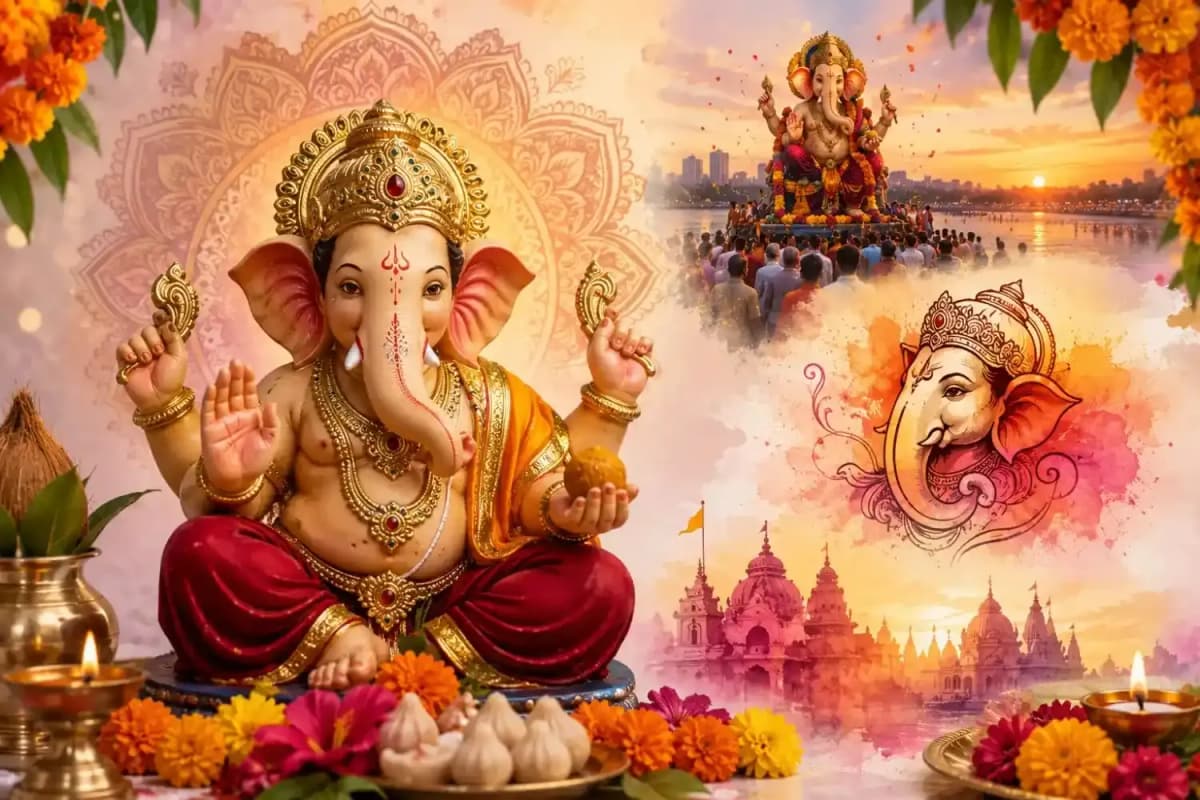
The full Sukhkarta Dukhharta aarti with English transliteration and a line-by-line meaning — the beloved Marathi aarti to Lord Ganesha sung across the world during Ganeshotsav.
Quick answer: Sukhkarta Dukhharta is the beloved Marathi aarti to Lord Ganesha, composed by Sant Samarth Ramdas. Sung morning and evening during Ganesh Chaturthi, it praises Ganesha as the giver of joy and remover of sorrow whose sight dispels affliction.
Sukhkarta Dukhharta is the most widely sung aarti to Lord Ganesha, composed by the 17th-century saint Samarth Ramdas. Families across the US sing it at the morning and evening aarti during Ganeshotsav. Below is the aarti in Roman transliteration with a faithful meaning so devotees who do not read Marathi can join in.
Sukhkarta Dukhharta — transliteration
Sukhakarta Dukhaharta, Varta Vighnachi | Nurvi Purvi Prem Krupa Jayachi | Sarvangi Sundar, Uti Shendurachi | Kanthi Jhalke Mal, Muktaphalanchi ||
Jai Dev Jai Dev Jai Mangalmurti | Darshanmatre Manakamana Purti | Jai Dev Jai Dev ||
Ratnakhachit Phara, Tuj Gaurikumara | Chandanachi Uti, Kumkumkeshara | Hire Jadit Mukut, Shobhato Bara | Runjhunati Nupure, Charni Ghagariya ||
Lambodar Pitambar, Phanivarvandana | Saral Sond, Vakratunda Trinayana | Das Ramacha, Vat Pahe Sadana | Sankati Pavave, Nirvani Rakshave, Survarvandana ||
Meaning of the aarti
- You are the giver of happiness and remover of sorrow, who dispels every obstacle; your love and grace fill the devotee.
- Your form is beautiful in every part, adorned with vermilion, a garland of pearls shining at your throat.
- Victory to you, Mangalmurti — the very sight of you fulfils the heart’s wishes.
- Son of Gauri, adorned with gems, sandal paste and saffron, wearing a jewelled crown and softly chiming anklets.
- Lambodara in yellow silk, with a curved trunk and three eyes; Ramdas, your servant, awaits you and prays: protect me in difficulty and be my refuge.
How and when to sing it
- Sing it at the morning and evening aarti while circling the lamp before the murti.
- Follow it with the Ghalin Lotangan prayer and the mantra pushpanjali, as many families do.
- End with three claps and "Ganpati Bappa Morya, Mangal Murti Morya!"
This is public-domain devotional text; sing it with devotion rather than as a performance. For a home celebration, pair the aarti with your daily puja.
See the home puja vidhi to structure your aarti, and the Ganesh Chaturthi 2026 USA guide for the festival overview.
Frequently Asked Questions
Who composed the Sukhkarta Dukhharta aarti?
It was composed by Sant Samarth Ramdas, the 17th-century Marathi saint, which is why the aarti ends with "Das Ramacha" — the servant Ramdas.
What does Sukhkarta Dukhharta mean?
It means "the giver of happiness and the remover of sorrow," describing Lord Ganesha as the one who brings joy and removes obstacles and grief.
When is this aarti sung?
It is sung at the morning and evening aarti throughout Ganeshotsav, while circling the lamp before the Ganesha murti.
What is sung after Sukhkarta Dukhharta?
Many families follow it with the Ghalin Lotangan prayer and the mantra pushpanjali, ending with "Ganpati Bappa Morya."
Can non-Marathi speakers sing it?
Yes. Using the Roman transliteration, anyone can join the aarti; the meaning helps devotees sing with understanding.
What does "Mangalmurti Morya" mean?
Mangalmurti means the auspicious form of Ganesha; "Morya" is a traditional exclamation of devotion linked to the saint Moraya Gosavi.
Is there a specific number of times to sing it?
There is no fixed count; it is typically sung once at each aarti, though families may repeat it. Devotion matters more than repetition.
Can I play a recording instead of singing?
Singing yourself is encouraged, but playing a recording to accompany your family aarti is acceptable, especially for those learning the tune.
You might also like
Ganesh Chaturthi in India: Celebrations Across the Country (2026 Guide)
How the UK Celebrated Ganesh Chaturthi & Visarjan 2026: A City-Wise Guide
How the USA Celebrated Ganesh Chaturthi & Visarjan 2026: A City-Wise Guide
