Traditional Foods and Recipes for Hindu Festivals in January 2026 : Lohri & More
Traditional Foods and Recipes for Hindu Festivals in January 2026: Lohri, Makar Sankranti, Pongal, and Vasant Panchami Beloved readers of www.hindutone.com, as…
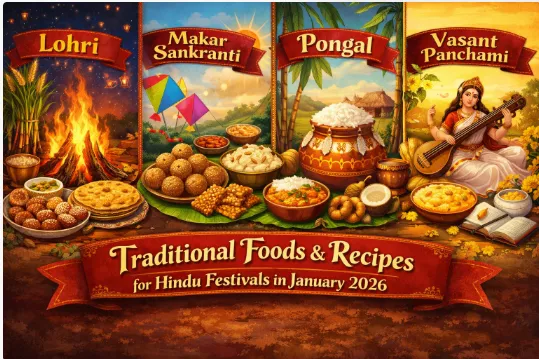
Traditional Foods and Recipes for Hindu Festivals in January 2026: Lohri, Makar Sankranti, Pongal, and Vasant Panchami Beloved readers of www.
Traditional Foods and Recipes for Hindu Festivals in January 2026: Lohri, Makar Sankranti, Pongal, and Vasant Panchami
Beloved readers of www.hindutone.com, as the new year unfolds with the gentle transition from winter's chill to spring's promise, January 2026 brings a series of vibrant Hindu harvest festivals filled with gratitude, joy, and delicious traditional foods. These celebrations—Lohri on January 13, Makar Sankranti and Pongal on January 14, and Vasant Panchami on January 23—honor the sun's journey, bountiful harvests, and the goddess of knowledge, Saraswati. At the heart of these festivals are sattvic, warming dishes made with seasonal ingredients like sesame seeds (til), jaggery (gur), rice, lentils, and yellow-hued sweets, symbolizing prosperity, warmth, and renewal.
In this devotional guide, we explore the cultural stories behind these foods, their spiritual significance, health benefits rooted in Ayurveda, and easy homemade recipes to prepare at home. Let these offerings fill your homes with aroma, your hearts with devotion, and your bodies with nourishment. May these festivals bring abundance and divine blessings to you and your family.
Lohri: January 13, 2026 – Celebrating the End of Winter with Bonfires and Warmth
Lohri, predominantly celebrated in Punjab and North India, marks the culmination of winter and the sun's northward journey. Families gather around bonfires, singing folk songs and offering rewari, gajak, peanuts, and popcorn to the flames as symbols of gratitude for the harvest and prayers for prosperity.
Cultural Story and Significance
Legend associates Lohri with the tale of Dulla Bhatti, a Robin Hood-like figure who rescued girls and distributed wealth. The bonfire represents the burning away of the old and welcoming longer days. Foods like sesame and jaggery are offered for their warming properties, aligning with Ayurvedic principles to combat winter's cold.
Traditional Foods: Rewari, Gajak, and More
- Rewari: Crunchy sesame-jaggery nuggets, symbolizing sweetness in life.
- Gajak: Brittle sheets of sesame or peanuts with jaggery.
- Sarson da Saag and Makki di Roti: Hearty mustard greens curry with cornmeal flatbread, embodying Punjab's winter harvest.
Health Benefits
Sesame seeds and jaggery provide natural warmth, boost energy, and are rich in iron, calcium, and healthy fats. Peanuts add protein, helping maintain body heat and immunity during cold months.
Easy Recipe: Til Rewari
Ingredients (Makes 20-25 pieces):
- 1 cup white sesame seeds
- 1 cup jaggery, grated
- 1 tsp ghee
- 1/4 tsp cardamom powder
Steps:
- Dry roast sesame seeds on low flame until golden and aromatic. Set aside.
- In a pan, melt ghee, add jaggery, and cook on low heat until it forms a thick syrup (one-string consistency).
- Remove from heat, add roasted sesame and cardamom. Mix quickly.
- While warm, shape into small balls or flatten into nuggets. Coat with extra sesame if desired.
- Cool completely for crunchiness.
Offer these as prasad around the Lohri bonfire for blessings of warmth and unity.
Makar Sankranti: January 14, 2026 – Harvest Gratitude and Kite-Flying Joy
Makar Sankranti celebrates the sun's entry into Capricorn, marking longer days and agricultural abundance. Known as Uttarayan in Gujarat with kite-flying, it's a pan-Indian harvest festival emphasizing charity and sesame-jaggery sweets.
Cultural Story and Significance
Ancient texts link it to the sun god Surya, with rituals like holy dips and offering til-gul (sesame-jaggery) while saying "Til gul ghya, god god bola" (Eat this and speak sweetly), promoting harmony.
Traditional Foods: Til Laddoo and Khichdi
- Til Laddoo: Sesame-jaggery balls for prosperity.
- Khichdi: Comforting rice-lentil dish, often with vegetables.
- Tilgul: Similar to laddoo, exchanged for goodwill.
Health Benefits
The til-jaggery combination generates body heat, aids digestion, purifies blood, and provides iron to prevent anemia. Lentils in khichdi offer protein for sustained energy.
Easy Recipe: Til Laddoo
Ingredients (Makes 15-20):
- 1 cup sesame seeds
- 3/4 cup jaggery, powdered
- 2 tbsp ghee
- 1/4 tsp cardamom powder
- Optional: Chopped nuts
Steps:
- Roast sesame seeds until they pop and turn golden. Cool and coarsely grind half.
- Melt ghee in a pan, add jaggery, and stir until melted and bubbly.
- Mix in sesame (whole and ground), cardamom, and nuts.
- While warm, grease hands and shape into balls.
- Cool and store.
Share these laddoos with neighbors, invoking sweetness in relationships.
Easy Recipe: Simple Khichdi
Ingredients (Serves 4):
- 1 cup rice
- 1/2 cup moong dal
- 1 tsp cumin seeds
- Pinch of asafoetida
- 1/2 tsp turmeric
- Salt to taste
- 2 tbsp ghee
- Vegetables (optional: carrots, peas)
Steps:
- Wash and soak rice-dal for 30 minutes.
- Heat ghee, add cumin and asafoetida, then turmeric.
- Add rice-dal, 5 cups water, salt, and vegetables.
- Pressure cook for 4 whistles or simmer until mushy.
- Top with ghee before serving.
This humble khichdi is auspicious, offered for simplicity and nourishment.
Pongal: January 14, 2026 – Tamil Harvest Thanksgiving
Pongal, coinciding with Makar Sankranti, is a four-day Tamil festival thanking nature and cattle. The signature dish "Pongal" (meaning "to boil over") symbolizes abundance.
Cultural Story and Significance
Named after the dish cooked in new pots until it overflows, representing prosperity. Sweet Pongal is offered to the sun god.
Traditional Foods: Sakkarai Pongal (Sweet) and Ven Pongal (Savory)
- Sakkarai Pongal: Sweet rice-lentil pudding with jaggery.
- Ven Pongal: Savory version with pepper and ghee.
Health Benefits
Rice and dal provide balanced carbs and protein; jaggery adds minerals; ghee aids digestion.
Easy Recipe: Sakkarai Pongal
Ingredients (Serves 4):
- 1/2 cup raw rice
- 1/4 cup moong dal
- 1 cup jaggery, grated
- 3 cups milk (or milk-water mix)
- 4 tbsp ghee
- Cashews, raisins
- Cardamom powder
- Pinch of edible camphor (optional)
Steps:
- Roast dal until aromatic, then cook with rice in milk until soft (pressure cook 4 whistles).
- Melt jaggery with little water, strain, and add to cooked rice-dal. Simmer.
- Fry nuts-raisins in ghee, add to pongal with cardamom.
- Stir in remaining ghee.
Offer this creamy sweet as naivedyam for overflowing blessings.
Vasant Panchami: January 23, 2026 – Welcoming Spring with Yellow Hues
Vasant Panchami heralds spring and worships Goddess Saraswati. Yellow dominates—clothes, flowers, and foods—symbolizing mustard fields and knowledge's bloom.
Cultural Story and Significance
Marks Saraswati's appearance; yellow foods please the goddess for wisdom and creativity.
Traditional Foods: Yellow Sweets
- Besan Laddoo: Gram flour sweets.
- Kheer: Saffron-infused rice pudding.
- Boondi Laddoo or Halwa: Golden treats.
Health Benefits
Saffron boosts mood; gram flour provides protein; milk in kheer strengthens bones.
Easy Recipe: Besan Laddoo
Ingredients (Makes 15):
- 2 cups besan (gram flour)
- 1 cup ghee
- 1 cup powdered sugar
- Cardamom powder
- Nuts
Steps:
- Roast besan in ghee on low flame until golden and aromatic (20-25 mins).
- Cool slightly, add sugar, cardamom, nuts.
- Shape into balls.
Easy Recipe: Saffron Kheer
Ingredients (Serves 4):
- 1/2 cup rice
- 1 liter milk
- 1/2 cup sugar
- Saffron strands
- Nuts, cardamom
Steps:
- Soak saffron in warm milk.
- Boil milk, add washed rice, simmer until thick.
- Add sugar, saffron milk, cardamom, nuts.
- Serve warm or chilled.
These yellow offerings invoke Maa Saraswati's grace for enlightenment.
Embracing Tradition in Modern Times
Incorporate these recipes into your celebrations—prepare with family, offer as prasad, and share with community. For health-conscious twists, use organic jaggery or reduce ghee. These foods not only nourish the body but connect us to our roots and divine abundance.
May January 2026's festivals fill your life with sweetness, warmth, and spiritual joy. Jai Surya Dev! Jai Maa Saraswati!
🌸 For More Devotional Journey, Follow
- Temples
/temples/ - Tirumala Updates
/tirumala/ - Sabarimala Yatra
/category/sabarimala-yatra/ - Pooja, Slokas & Mantras
/pooja-slokas-and-mantras/ - Hindu Gods
/hindu-gods/
Frequently Asked Questions
When is Traditional Foods and Recipes for Hindu Festivals 2026?
Traditional Foods and Recipes for Hindu Festivals 2026 falls on January 13, 2026.
What is the significance of Traditional Foods and Recipes for Hindu Festivals?
Traditional Foods and Recipes for Hindu Festivals in January 2026: Lohri , Makar Sankranti, Pongal, and Vasant Panchami Beloved readers of www.hindutone.com , as the new year unfolds with the gentle transition from winter's chill to spring's promise, January 2026 brings a series of vibrant Hindu harvest festivals filled with gratitude, joy, and delicious tra
How is Traditional Foods and Recipes for Hindu Festivals celebrated?
Devotees observe it with puja, fasting or special offerings, visiting temples, chanting mantras, and gathering with family. Customs vary by region and tradition.
What should devotees do on Traditional Foods and Recipes for Hindu Festivals?
Take a sacred bath, perform the day's puja and charity (dana), observe any prescribed fast, and chant mantras with sincere devotion.
You might also like

Gita Jayanti 2026 Prasad Recipes — Tulsi-Honoring Sweets, Krishna's Favourites & December 10 Bhog Plate
Shani Deva Temples Worldwide & Must-Performed Rituals — Complete Devotee's Guide

Maha Shivratri 2026 Vrat Recipes — Sabudana Khichdi, Singhada Halwa, Phalahara Foods Complete Fasting Guide