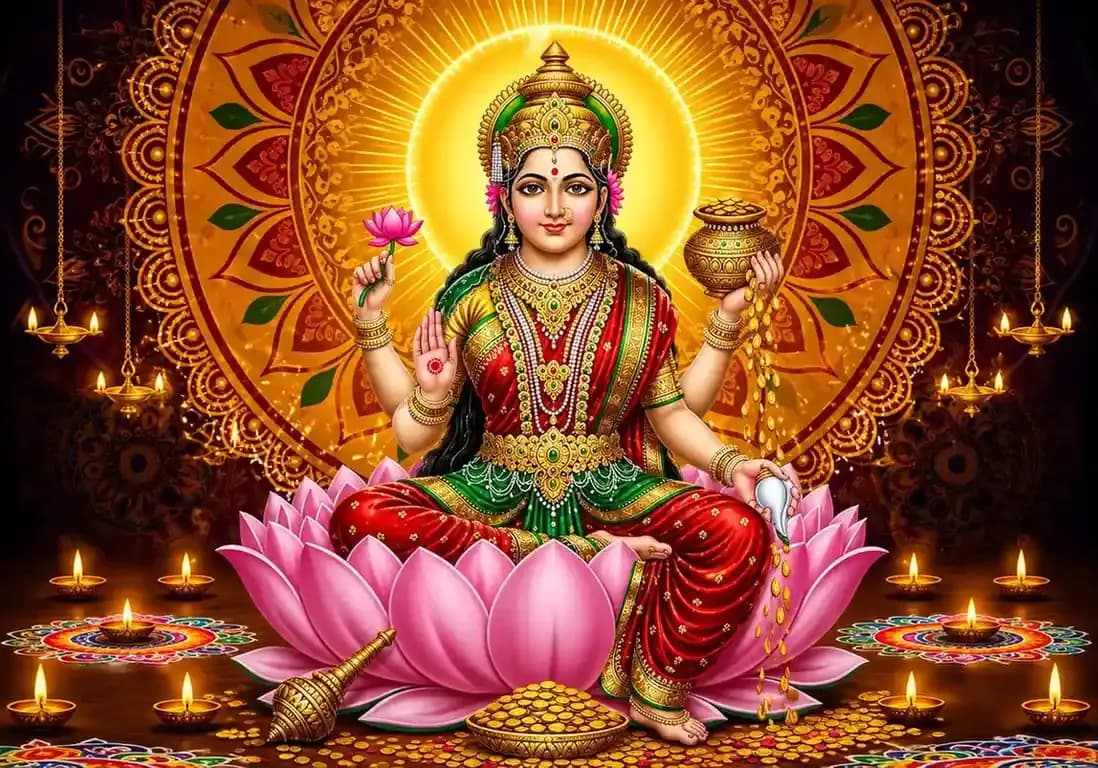
Varalakshmi Vratam 2026 UK: Date, BST Puja Timings, Kalasam and Home Puja Guide
A practical UK guide to Varalakshmi Vratam 2026 — dates, BST timings against IST, kalasam and item sourcing on British high streets, and puja versions for terraced houses and flats.

A practical UK guide to Varalakshmi Vratam 2026 — dates, BST timings against IST, kalasam and item sourcing on British high streets, and puja versions for terraced houses and flats.
Quick answer: Varalakshmi Vratam 2026 falls on Friday 21 August 2026 in most Telugu, Tamil and Kannada panchangs, and on Friday 28 August 2026 in some. In the UK, remember Britain is 4.5 hours behind IST, so confirm your muhurat from a local drik panchang and follow your family or temple tradition.
Varalakshmi Vratam is a Friday vow to Goddess Lakshmi, observed mainly by Telugu, Tamil and Kannada families in the Shravana month. If you are keeping the vratam in the United Kingdom in 2026, the two questions that matter most are which date to follow and what time to begin — and both work differently here than in India because of the 4.5-hour time gap.
This UK country hub walks you through the 2026 date question (21 or 28 August), how BST timings compare to IST, where to source kalasam and puja items on British high streets, and how to adapt the puja for a terraced house or a flat with smoke alarms.
Quick facts for the UK
- Festival: Varalakshmi Vratam (Sri Varalakshmi Vratham)
- Deity: Goddess Varalakshmi, a form of Sri Lakshmi
- Dates 2026: Friday 21 August 2026 (most panchangs) or Friday 28 August 2026 (some panchangs)
- Day: Friday in Shravana masam (last or second-last Friday)
- UK vs India: UK is 4.5 hours behind IST
- Best guidance: Use a local UK drik panchang; follow your family/kula/temple tradition
- Who observes: Traditionally married women; increasingly the whole household participates
Varalakshmi Vratam 2026 date in the UK: 21 or 28 August?
There are two dates in circulation for 2026, and both are defensible. Most Telugu, Tamil and Kannada panchangs place Varalakshmi Vratam on Friday 21 August 2026, observed as the Friday before the Shravana Purnima. Some panchangs mark it on Friday 28 August 2026 instead. Neither is wrong — the difference comes from how each panchang counts the qualifying Friday of Shravana masam.
The simplest rule for a UK household: follow the date your family, kula or home temple has always kept. If you are starting fresh, pick the date your regular temple or association observes so you can join the community puja. Read the full reasoning on the dedicated 2026 date page.
| Panchang tradition | 2026 date | Notes |
|---|---|---|
| Most Telugu / Tamil / Kannada panchangs | Friday 21 August 2026 | Friday before Shravana Purnima |
| Some panchangs | Friday 28 August 2026 | Alternative qualifying Friday of Shravana |
| Your family / temple | As per tradition | Follow kula or local-temple custom |
BST puja timings vs IST: why the UK is different
This is where UK households need to think carefully. During August the UK runs on British Summer Time (BST), which is 4 hours 30 minutes behind Indian Standard Time. An auspicious early-morning muhurat published for India can therefore land in the small hours of the UK night. A muhurat that begins mid-morning in India, for example, would fall in the very early UK morning. This is quite unlike the USA, where the larger gap often pushes an Indian morning muhurat into the previous evening.
Because of this, do not simply subtract time from an Indian panchang in your head. Use a drik (observation-based) panchang calculated for your own UK city — London, Leicester, Birmingham, Manchester or wherever you live — so the lagna and tithi windows are correct for your local sunrise.
The four traditional lagna windows
Varalakshmi Vratam is traditionally begun in one of four favourable lagna (ascendant) windows: Simha (Leo), Vrishchika (Scorpio), Kumbha (Aquarius) or Vrishabha (Taurus). Each recurs at a different point of the day. Rather than a fixed clock time, confirm which of these windows is practical for you on the day, and take the exact minutes from a local UK panchang.
- Simha lagna — a morning window, popular for an early puja before work
- Vrishchika lagna — a late-morning to midday window
- Kumbha lagna — an afternoon window
- Vrishabha lagna — an evening window, useful for working households
For a deeper explanation of choosing the right almanac abroad, see which panchang NRIs should follow.
Three ways to observe in the UK
Not everyone can take a working Friday off in the UK, and school runs, shifts and commutes are real. Here are three honest versions of the vratam. The full traditional version is the ideal; the shorter versions are widely accepted adaptations for those who cannot manage it — do them with devotion and, where you can, complete the full puja on the nearest weekend or join a temple observance.
Version 1: 30-minute before-work puja
- Bathe and wear clean or traditional clothes; keep the space tidy the night before.
- Place a small kalasam (or a clean vessel of water) with a coconut and mango leaves, and a Lakshmi image or framed picture.
- Light a lamp (or a battery diya if an open flame is a problem), offer turmeric-kumkum, flowers and a simple naivedyam such as fruit or jaggery.
- Tie the toram (sacred thread) on your wrist, recite a short Lakshmi ashtottara or a few names you know, and do a brief aarti.
- Resolve to complete a fuller puja in the evening or at the weekend.
Version 2: full traditional puja
- Prepare the kalasam: a metal vessel filled with rice or water, adorned with turmeric, kumkum, mango leaves and a coconut, topped with a Lakshmi mukham (face) if you have one.
- Decorate with new cloth, flowers, turmeric and rangoli/muggu at the doorstep.
- Begin within your chosen lagna window as confirmed from a local panchang.
- Perform Ganesha puja, kalasam invocation, shodashopachara (16 services), Varalakshmi ashtottara or sahasranama, and the vratam katha (story).
- Tie the nine-knot toram, offer naivedyam (traditionally items like pulihora, sweet pongal, vada), and conclude with aarti and pradakshina.
- Invite married women (muthaide/sumangali) for tamboolam where possible; share prasadam with neighbours and family.
Version 3: evening / after-work puja
If you finish work late, an evening puja aligned to the Vrishabha lagna window is a practical and widely observed option. The honest caveat: many families hold the morning start to be preferable, so if morning is truly impossible, do the evening puja with full devotion rather than skipping — tradition values the sincerity of the vow. Fasting through the day and breaking it after the evening puja is a common pattern for working households.
For the step-by-step ritual detail, follow the complete Varalakshmi Vratam puja vidhi.
Sourcing puja items on UK high streets
The good news for UK observers is that Indian grocery networks are strong across London, Leicester, Birmingham, Manchester and most large towns. Mango leaves and fresh flowers can be seasonal, so plan a week ahead and ask your grocer to order in. This table lists the traditional item, where UK households typically find it, and an accepted substitute if it is unavailable.
| Traditional item | Where to find in the UK | Acceptable substitute |
|---|---|---|
| Mango leaves (toranam) | Indian/Sri Lankan grocers on Belgrave Road (Leicester), Ealing Road (Wembley), Soho Road (Birmingham) | Betel leaves, or fresh green leaves of a clean plant |
| Turmeric root / haldi | South Asian grocers; most supermarkets stock turmeric powder | Turmeric powder mixed to a paste |
| Toram (sacred thread) | Temple shops, Indian gift stores, or bring from India | Plain cotton/yellow thread dipped in turmeric, tied with nine knots |
| Banana leaf | Frozen banana leaf in Indian/Sri Lankan/Thai grocers | A clean plate or fresh large green leaf |
| Kalasam vessel | Indian utensil shops, temple stores, online | Any clean brass, silver or steel pot or tumbler |
| Lakshmi mukham (silver/metal face) | Temple shops, Indian jewellers/gift stores | A framed Lakshmi picture or a coconut adorned with kumkum |
| Flowers (lotus, jasmine, marigold) | Florists, Indian grocers, weekend markets | Any fresh available flowers; clean artificial flowers if none |
If you cannot arrange a full kalasam this year, that is fine — see the guide on keeping the vratam without a kalasam, which explains simple, accepted alternatives.
Where UK Telugu, Tamil and Gujarati communities gather
The UK has a mature temple and community network. Tamil and Gujarati temple communities are especially well established, and the Telugu community has grown strongly, including around Reading, Slough and Milton Keynes. Many temples, Telugu associations, Tamil sangams and even apartment or residents' communities organise a collective Varalakshmi Vratam, which is a good way to join if you cannot manage a full home puja.
- London — Harrow, Wembley, Southall, East Ham and Croydon have dense South Asian communities and temples
- Leicester — Belgrave Road and the Golden Mile area
- Birmingham — the Soho Road corridor
- Manchester — Rusholme (the Curry Mile) and surrounding areas
- Reading, Slough and Milton Keynes — growing Telugu community hubs
Contact your local temple or association directly for their programme and timings, as these vary each year. Temples often hold a community puja on the Friday and welcome families to bring their own kalasam or share the temple's.
Flats, terraced houses and smoke alarms
UK homes bring practical constraints that Indian households rarely face. Terraced houses and flats often have sensitive smoke alarms, shared corridors, strict tenancy or leasehold rules, and neighbours close by. None of this needs to stop your vratam — it just calls for a few sensible adaptations.
- Smoke alarms: keep camphor aarti brief and near an open window with good ventilation; some households do a very short aarti or use a battery LED diya to avoid triggering alarms.
- Open flame in flats: check your tenancy or leaseholder rules; where open flames are restricted, a small oil lamp on a heatproof surface or an electric/LED lamp is an accepted alternative.
- Never leave a lit lamp unattended, especially in a terraced house or flat with shared walls.
- Incense and dhoop: use sparingly and ventilate, particularly in a small flat, to respect neighbours and alarms.
- Kolam/muggu: chalk or rice-flour rangoli indoors on a mat is easy to clean and avoids marking shared or rented flooring.
A simple UK-friendly checklist
- Confirm your date — 21 or 28 August 2026 — per your family or temple tradition.
- Check the muhurat and lagna window on a local UK drik panchang for your city.
- Order mango leaves and flowers from your grocer about a week ahead.
- Set up the kalasam and puja space the night before to save morning time.
- Choose your version — 30-minute, full, or evening — based on your work schedule.
- Plan ventilation and a battery diya if you have sensitive smoke alarms.
- Prepare naivedyam and toram; invite family or neighbours for prasadam.
For a broader overview across countries, the Varalakshmi Vratam NRI global guide collects the same practical advice for many diaspora locations.
Related reading
- Varalakshmi Vratam 2026 date: 21 or 28 August explained
- Which panchang should NRIs follow?
- Varalakshmi Vratam 2026: complete pillar guide
- Varalakshmi Vratam 2026 puja vidhi (step by step)
- How to keep the vratam without a kalasam
- Varalakshmi Vratam 2026 NRI global guide
Frequently Asked Questions
Is Varalakshmi Vratam 2026 on 21 or 28 August in the UK?
Both dates are observed. Most Telugu, Tamil and Kannada panchangs mark Varalakshmi Vratam 2026 on Friday 21 August, while some place it on Friday 28 August. Neither is wrong — the difference is in how each panchang counts the qualifying Friday of Shravana masam. Follow your family, kula or local-temple tradition, and ideally join your temple's chosen date.
What time should I start the puja in the UK?
There is no single UK clock time. The UK is 4.5 hours behind IST during August, so an Indian morning muhurat can fall in UK small hours. Choose one of the four lagna windows — Simha, Vrishchika, Kumbha or Vrishabha — and take the exact minutes from a local drik panchang calculated for your own UK city.
Why are UK timings different from the USA?
Because the time gaps differ. The UK is only 4.5 hours behind India, so an Indian morning muhurat lands in the very early UK morning. In the USA the larger gap can push the same Indian morning muhurat back into the previous evening. So UK households should never copy US timing guidance — use a panchang for your own UK location instead.
Can I do the puja in the evening after work?
Yes. An evening puja aligned to the Vrishabha lagna window is a practical, widely observed option for working households in the UK. The honest caveat is that many families consider a morning start preferable. If morning is genuinely impossible, perform the evening puja with full devotion rather than skipping — tradition values the sincerity of the vow.
Where can I buy kalasam and puja items in the UK?
Indian and Sri Lankan grocers and temple shops across London (Wembley, Harrow, Southall, East Ham), Leicester's Belgrave Road, Birmingham's Soho Road and Manchester's Rusholme stock most items. Order mango leaves and flowers about a week ahead. Kalasam vessels, toram, Lakshmi mukham and banana leaves are available in Indian utensil and gift stores or online.
What if I cannot get mango leaves or a kalasam?
Substitutes are accepted. Use betel or clean fresh leaves instead of mango leaves, and any clean brass, silver or steel pot for a kalasam. You can even keep the vratam without a full kalasam using a Lakshmi picture and a coconut. Devotion matters more than exact items — see our guide on observing the vratam without a kalasam.
How do I manage puja in a UK flat with smoke alarms?
Keep camphor aarti brief and near an open window, ventilate well, and consider a battery LED diya to avoid triggering alarms. Check tenancy or leasehold rules on open flames; where restricted, an electric or oil lamp on a heatproof surface is accepted. Never leave a lit lamp unattended in a terraced house or flat with shared walls.
Are there community Varalakshmi Vratam pujas in the UK?
Yes. Many temples, Telugu associations, Tamil sangams and apartment communities organise a collective vratam, especially in London, Leicester, Birmingham, Manchester and the growing Telugu hubs around Reading, Slough and Milton Keynes. Contact your local temple or association for their programme and timings, as these vary each year, and you can often bring your own kalasam.
You might also like

Rama Ekadashi 2026: Date, Vrat Katha, Puja Vidhi & Significance

Champa Shashthi 2026: Date, Khandoba Worship & Jejuri's Golden Festival
Kati Bihu 2026: Date, Rituals & Assam's Festival of Earthen Lamps