Why Krishna Bhakti Travels: A 2026 Diaspora Guide to Living with Krishna
Four expressions of Krishna worship — Balagopal, Govinda, Yashoda's son and the Gita's charioteer — and why the tradition travels with NRI households more easily than almost any other devotional path.
Four expressions of Krishna worship — Balagopal, Govinda, Yashoda's son and the Gita's charioteer — and why the tradition travels with NRI households more easily than almost any other devotional path.
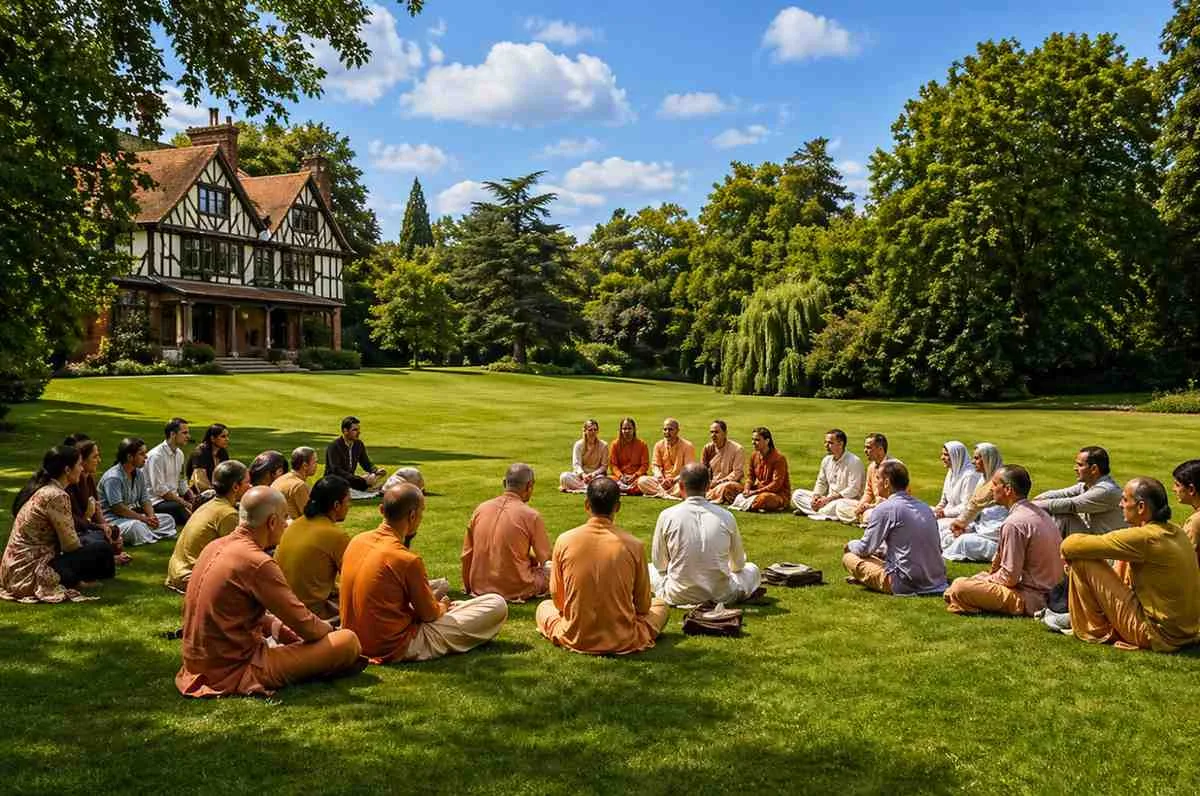
Of all the major Hindu devotional traditions, Krishna bhakti is the one that has most successfully transplanted into NRI life. The kirtan circles that fill living rooms in suburban Chicago on Saturday evenings, the Janmashtami midnight celebrations at temples from Lagos to Sydney, the Bhagavad Gita study groups that meet in apartment community rooms in Singapore and Dubai — these are not heroic preservation efforts. They are the natural continuation of a tradition that has, for centuries, organised itself around forms of devotion that travel.
Why does Krishna bhakti travel so well? The short answer is that the tradition contains multiple distinct expressions of the same devotion, each suited to a different stage of life and a different mode of practice. A diaspora household can find the expression that fits its current rhythm without having to reproduce the agricultural-village context of the original. Four expressions in particular show up reliably in 2026 NRI life.
Expression one: Balagopal — the child Krishna
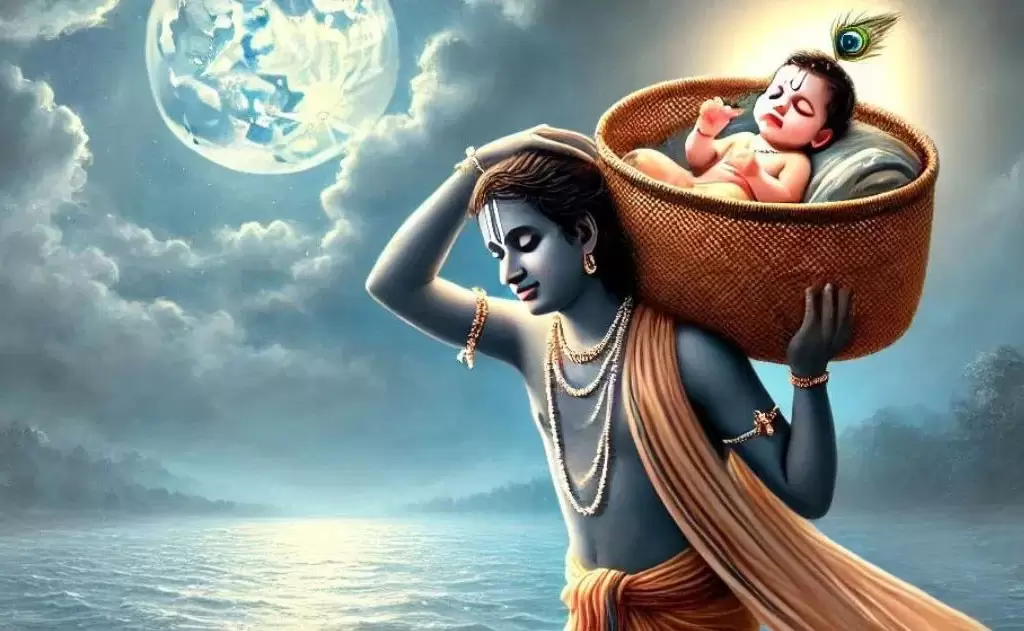
Balagopal is Krishna as the child of Yashoda — the butter-thief, the prankster, the divine toddler whose mischief is also a teaching. This is the Krishna of household nursery culture: the small idol that sits in a cradle in a corner of the puja room, dressed and undressed by the women of the household across the day, sung lullabies before sleep, woken with morning bhajans.
The Balagopal expression is what most NRI households first encounter when they have children. The tradition of the cradle, the morning aarti, the small daily offerings — these slot into the rhythm of a young family in any city. Janmashtami in an NRI apartment in Dallas or London is, more often than not, organised around Balagopal: the cradle decorated, the women of the family taking turns rocking it, the children participating in the ritual rather than watching it. This is the form of Krishna devotion that scales down to a one-bedroom apartment without losing its essence.
Expression two: Govinda — the cowherd and the gopis' beloved
Govinda is Krishna of Vrindavan — the cowherd boy of the Bhagavata Purana, the flute-player whose music draws the gopis from their evening duties to the moonlit forest, the divine beloved whose love is figured as the highest possible relationship between soul and God. This is the Krishna of the rasa-lila tradition, of devotional poetry in dozens of regional languages, of the deepest strain of bhakti philosophy.
The Govinda expression travels differently from Balagopal. It does not require a literal cradle or a household nursery ritual; it requires music, poetry and a contemplative posture that can be practised anywhere. The kirtan circles that meet in NRI living rooms across the diaspora are practising Govinda-bhakti — singing the names, surrendering the day's concerns to the music, encountering the divine through sound and rhythm. This is also the expression that adapts most easily across language barriers: a non-Hindi-speaking second-generation devotee can participate in a kirtan circle through sound alone and access the same devotional state as a Hindi-fluent first-generation devotee.
Expression three: Yashoda's son — the family-relational mode
A third expression, less doctrinally formal but pervasive in lived practice, frames Krishna as a member of the household — Yashoda's son adopted into the devotee's own family. This is the Krishna who has a place setting at meals during festivals, who is "fed" before the family eats during certain rituals, who is taken on the family's outings symbolically through the carrying of a small idol. The relational frame is intimate: the devotee's relationship with Krishna is patterned on the parent-child bond, or the elder-sibling bond, rather than on the formal worshipper-deity bond.
This relational mode survives diaspora life because it is fundamentally a household practice that does not require institutional support. An NRI family in Toronto can sustain a relational Krishna devotion without needing a temple infrastructure, a priestly lineage, or an audience of co-devotees. The practice is internal to the household; it travels in the family's emotional life rather than in any external structure.
Expression four: the Gita's charioteer — the philosophical mode
The fourth expression is Krishna as the teacher of the Bhagavad Gita — the charioteer on the field of Kurukshetra who delivers the philosophical core of the tradition to Arjuna. This is the Krishna of contemplative study, of weekly Gita reading groups, of the contemporary spiritual literature that the second-generation diaspora often encounters through their own intellectual searching rather than through inherited family practice.
The Gita-Krishna travels with particular ease into a diaspora setting because it requires only the text and a contemplative reader. A second-generation NRI in Boston who finds their way to the Gita through a college philosophy class is meeting the same Krishna their grandmother knew through the Balagopal tradition; the door is different, the deity is the same. This expression has supported a steady stream of contemporary practitioners — engineers, academics, professionals — who arrived at the tradition through study rather than through inherited ritual.
How the expressions reinforce each other
The four expressions do not compete; they reinforce. An NRI family that practises all four — the cradle ritual for the children, the kirtan circle in the living room, the relational Krishna who has a place at family meals, and the Gita study group on Sunday mornings — is not running four separate spiritual programs. The same Krishna is being met four different ways, with each meeting deepening the others. The child who participates in the cradle ritual at age five often grows into the Gita reader at age twenty without any sense of contradiction.
This is the structural reason Krishna bhakti travels so well. A tradition that contains multiple complete expressions of the same devotion — each accessible at a different stage of life, each scalable to different household configurations, each independent of any single ritual infrastructure — can move with a diaspora family across decades and continents without breaking.
What this means for an NRI household in 2026
The practical implication for a 2026 NRI household is to recognise which expressions are already alive in the family's practice and which might deepen with attention. A family that already maintains the cradle ritual but has never sat with the Gita might benefit from adding a monthly Gita reading. A family that meets weekly for kirtan but has lost the relational mode might consider restoring a place for Krishna at the family table on festival days.
The discipline is not to force all four expressions into the same household at once. The discipline is to recognise that the tradition contains all four, that the family can move between them across the life of the household, and that the same Krishna meets the family in whichever expression the moment supports. The 2026 diaspora household that holds this clearly tends to find the tradition more durable than any single ritual practice could make it.
You might also like

Janmashtami 2026 in India: Date, Rituals & Top Temples to Visit
Krishna Avatar — The Eighth Incarnation of Vishnu: Bhagavad Gita, Mahabharata, Vrindavan Leelas & Eternal Wisdom for 2026
Bhagavad Gita Chapter 12 — Bhakti Yoga Complete Commentary: All 20 Verses, Devotee Qualities, 30-Day NRI Practice Guide for 2026