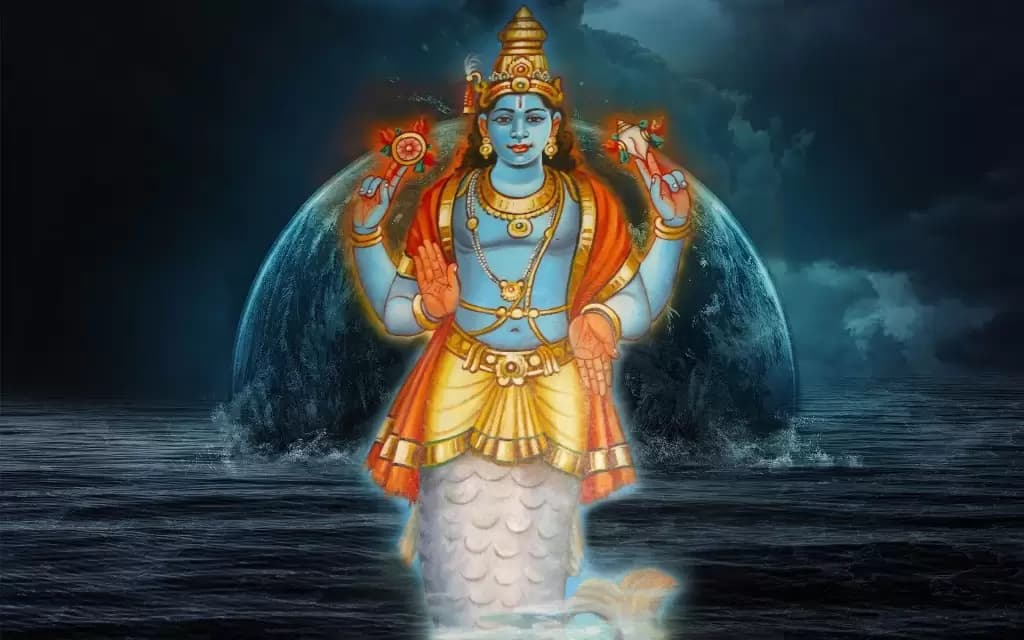
The Rivalry Between Indra and Other Devas: Exploring Divine Politics
In the vast tapestry of Hindu mythology, divine beings often engage in intricate power struggles that mirror human political dramas.
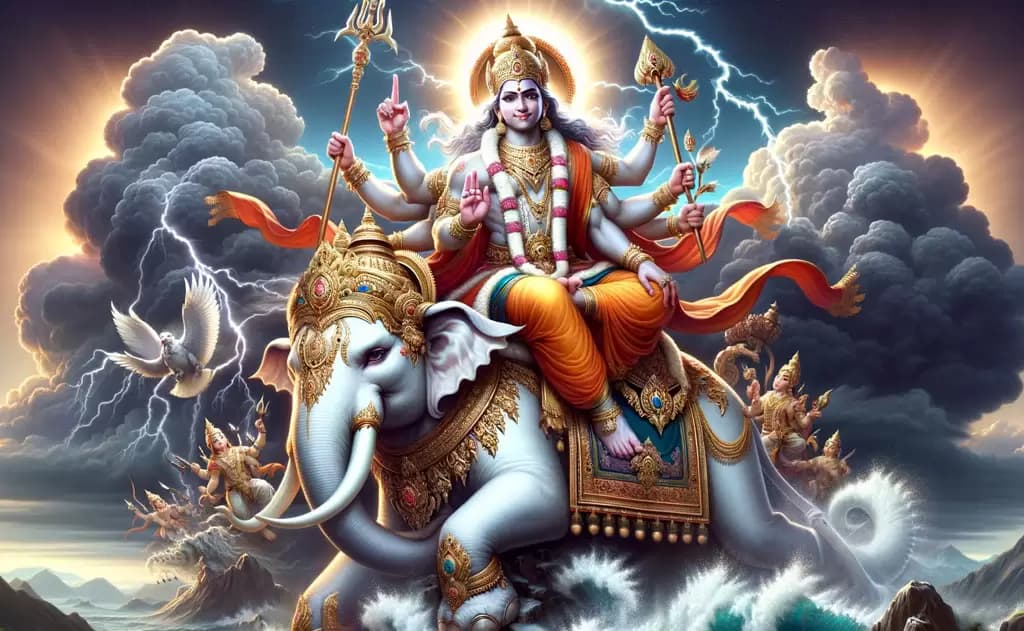
In the vast tapestry of Hindu mythology, divine beings often engage in intricate power struggles that mirror human political dramas.
In the vast tapestry of Hindu mythology, divine beings often engage in intricate power struggles that mirror human political dramas. Among these celestial stories, the rivalry between Indra, the king of the Devas, and other divine entities stands out as a captivating narrative.
Who is Indra?
Indra, the ruler of Svarga (heaven), is a complex figure known for his valor, strategic acumen, and at times, his insecurity. As the wielder of the thunderbolt (Vajra) and a guardian of cosmic order (Dharma), Indra plays a vital role in maintaining balance. However, his position has often been challenged by both allies and adversaries.
Key Rivals in Divine Politics
Vishnu Though not a direct rival, Indra often seeks Vishnu’s help in times of crisis. Their relationship highlights the dynamics of dependency and the need for divine intervention in Indra’s reign.
Shiva Indra's encounters with Shiva, especially when seeking boons or protection, illustrate his vulnerability and the greater cosmic order beyond his control.
Asuras (Demons) Indra's perpetual battles with Asuras, led by figures like Vritra and Bali, represent the eternal conflict between good and evil. These struggles are not just physical but also moral and strategic.
Other Devas and Rishis Indra’s relationships with other Devas and sages often involve jealousy, power plays, and lessons in humility. Stories like those of Nahusha and Sage Durvasa underscore the consequences of arrogance and the need for humility.
Lessons from Divine Politics
Leadership and Responsibility: Indra’s trials teach us about the burdens of leadership and the importance of wisdom and humility in positions of power. Ego and Consequences: Many of Indra’s downfalls are attributed to his ego, reminding us of the dangers of hubris. Interdependence: Even the mightiest need allies. Indra’s reliance on Vishnu and other Devas showcases the importance of collaboration.
Conclusion
The stories of Indra and his rivals are more than just tales of divine politics. They are reflections of human nature, leadership challenges, and moral dilemmas. By understanding these narratives, we gain insights into our own lives and the timeless nature of power dynamics.
Engage with us at www.hindutone.com for more stories that bridge the divine and the human.
The Vritra Slaying: Indra's Greatest Military and Moral Test
The battle between Indra and the demon Vritra is one of the most theologically layered conflicts in all of Vedic literature. The Rigveda dedicates numerous hymns — notably the Vritra-slaying hymns of Mandala I — to celebrating Indra's victory over this serpentine Asura who had blocked the cosmic waters, causing drought and chaos across the three worlds. Yet the story carries a darker dimension that later Puranic retellings, including the Bhagavata Purana, develop at length: Vritra was in fact the Brahmin sage Vishvarupa's spirit, and Indra's killing of him constituted the grave sin of Brahmahatya (slaying of a Brahmin).
Tormented by this sin, Indra went into hiding within the stem of a lotus flower in Lake Manasarovara. The heavens were left without a sovereign, and chaos threatened cosmic order (Rita). Only after performing elaborate expiation rites and transferring portions of the sin to earth, water, trees, and women could Indra reclaim his throne. This narrative teaches that even the most righteous victory can be morally compromised, and that dharmic accountability applies to king and god alike.
Indra and King Nahusha: The Cautionary Tale of a Borrowed Throne
When Indra fled in shame after slaying Vritra, the Devas sought a regent for Svarga and chose the virtuous human king Nahusha, whose extraordinary tapas (austerities) had accumulated immense merit. The story, narrated in both the Mahabharata's Udyoga Parva and the Shanti Parva, shows how quickly power corrupts even a once-noble soul. Nahusha began demanding that Indrani (Shachi) become his queen, an act of profound transgression against the dharmic order.
His downfall came through the sage Agastya. Nahusha had the arrogance to use the Saptarishis — the seven great sages — as bearers of his palanquin, and when the slow-moving Agastya caused a delay, Nahusha kicked him and uttered the word 'Sarpa!' (serpent). Agastya immediately cursed him to become a python, condemning him to live on the earth for ages until liberated by Yudhishthira in the Mahabharata. This episode stands as one of the clearest illustrations in the Itihasa tradition that political power divorced from humility and reverence inevitably self-destructs.
The Govardhan Episode: When Indra's Pride Was Broken by Krishna
Perhaps the most celebrated challenge to Indra's authority in the Puranic corpus occurs in the Bhagavata Purana's tenth skandha, when the young Krishna persuades the Vraja cowherds to discontinue their annual worship of Indra and instead honour the Govardhan Hill, which directly sustains their livelihood. Indra, enraged by what he saw as a slight to his divine sovereignty, unleashed torrential rains and thunderstorms upon Vrindavana for seven consecutive days — a display of raw power designed to humble the villagers into submission.
Krishna responded by lifting the entire Govardhan Hill on his little finger, sheltering all of Vraja beneath it like a vast umbrella. When Indra finally relented and descended to earth, he did so chastened and reverent, addressing Krishna as 'Govinda' and acknowledging the supremacy of the Supreme Being over the administrative devas. The Bhagavata frames this not as a humiliation of Indra but as a necessary correction — Indra himself later expresses gratitude for the lesson. Theologically, the episode distinguishes between upasana-devatas (deities of specific functions) and the Paramatman, establishing a clear hierarchy in Vaishnava thought.
Indra's Complex Relationship with Rishis: Jealousy, Curses, and Hard Lessons
Indra's insecurity about losing his throne made him uniquely suspicious of powerful ascetics, because accumulated tapas (austeritic merit) was widely understood to be a legitimate path to claiming Indra's seat in Svarga. The Ramayana narrates how Indra sent the celestial apsara Menaka to distract the sage Vishvamitra, successfully breaking his tapas and fathering Shakuntala — an act that illustrates how Indra weaponised desire (kama) as a political instrument against potential rivals.
His relationship with the irascible sage Durvasa is equally instructive. When Indra carelessly allowed a garland of divine flowers — a gift from Durvasa — to be trampled by his elephant Airavata, the enraged sage cursed him and all the Devas to lose their strength and splendour. This single act of disrespect triggered the famous Samudra Manthan (churning of the cosmic ocean), one of the most consequential events in Puranic cosmology, during which the Devas and Asuras collaborated to recover Amrita (the nectar of immortality). Thus Indra's inability to honour a sage's offering set in motion an entire cosmic epoch.
The Concept of Indra's Seat and the Doctrine of Earned Sovereignty
Unlike a hereditary monarchy, the position of Indra — technically the title 'Indra' denotes the office rather than a permanent individual — is held by the being with the greatest accumulated punya (merit). The Vishnu Purana and the Devi Bhagavata Purana both explain that each Manvantara (a cosmic era spanning roughly 306 million years) sees a different Indra. In the current Vaivasvata Manvantara, the Indra is Purandara; in the next, it will be the virtuous king Bali, according to the Bhagavata Purana's account of the Vamana avatar.
This doctrine has profound implications for understanding divine politics in Hindu cosmology. It means that heavenly sovereignty is genuinely meritocratic and transient — a direct reflection of the karma-based worldview that underlies all of Sanatana Dharma. Indra's anxieties are therefore not mere personality flaws but structurally embedded in the nature of his office: he knows that a sufficiently meritorious being, human or divine, can rightfully displace him. The stories of Indra thus function as extended parables about impermanence, the limits of institutional power, and the necessity of continuous dharmic conduct even at the apex of existence.
Frequently Asked Questions
Who is The Rivalry Between Indra and Other Devas?
In the vast tapestry of Hindu mythology, divine beings often engage in intricate power struggles that mirror human political dramas. Among these celestial stories, the rivalry between Indra, the king of the Devas, and other divine entities stands out as a captivating narrative.
How is The Rivalry Between Indra and Other Devas worshipped?
Through daily puja, mantra chanting, aarti and offerings of flowers, lamps and prasad — on dedicated days and festivals associated with the deity.
What are the benefits of worshipping The Rivalry Between Indra and Other Devas?
Devotees seek blessings for protection, prosperity, health, wisdom and inner peace, and a deeper connection with the divine.
Which day is dedicated to The Rivalry Between Indra and Other Devas?
Each deity has an associated day and festivals; worshipping on that day, with fasting and mantra, is considered especially auspicious (see the guide above).
You might also like
Shani Jayanti 2026: Date, Significance, Rituals & Powerful Mantras
Sacred Hindu Festivals & Temple News: Divine Week — May 2026
Shani Deva Temples Worldwide & Must-Performed Rituals — Complete Devotee's Guide