Ranbir Kapoor’s Divine Avatar: Nitesh Tiwari’s Ramayana Gears Up for Diwali 2026
The timeless epic of Ramayana is poised for a grand cinematic revival with director Nitesh Tiwari's ambitious adaptation.
The timeless epic of Ramayana is poised for a grand cinematic revival with director Nitesh Tiwari's ambitious adaptation.
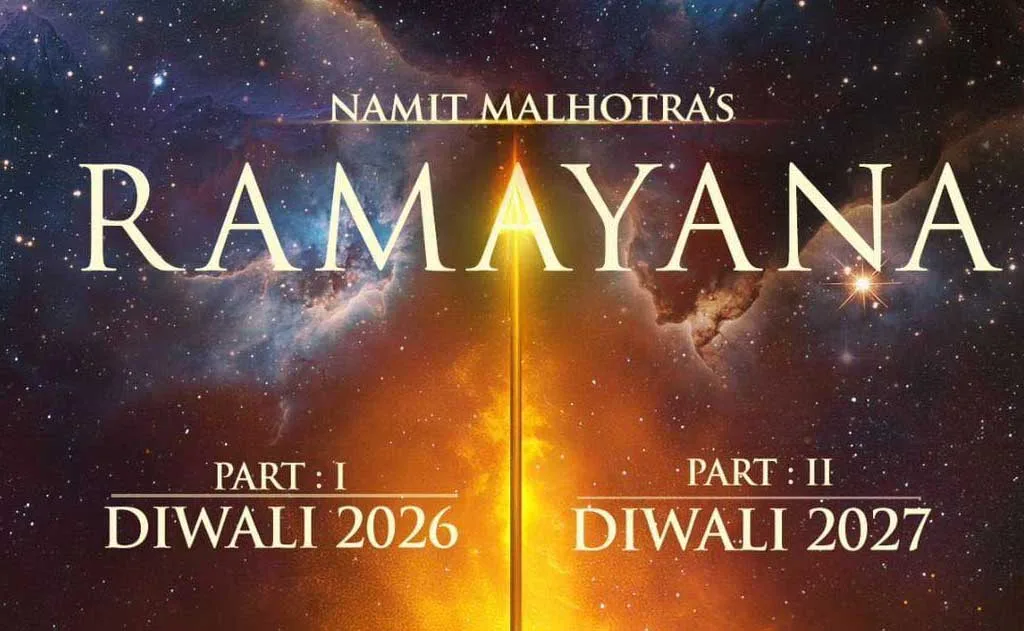
The timeless epic of Ramayana is poised for a grand cinematic revival with director Nitesh Tiwari's ambitious adaptation. Starring Ranbir Kapoor as Lord Ram, Sai Pallavi as Goddess Sita, and Yash as the formidable Ravana, this mythological saga promises unparalleled visual grandeur and emotional depth. Set for release in two parts, with Part 1 arriving on Diwali 2026 and Part 2 on Diwali 2027, the film is already generating immense buzz as one of the most anticipated Bollywood mythological blockbusters.
Star-Studded Cast Bringing the Epic to Life
Nitesh Tiwari, known for heartfelt hits like Dangal and Chhichhore, assembles a powerhouse ensemble:
- Ranbir Kapoor as Lord Ram – The versatile actor embodies the divine prince with grace and intensity.
- Sai Pallavi as Sita – Bringing elegance and strength to the iconic role of the devoted goddess.
- Yash as Ravana – The KGF star delivers a menacing portrayal of the demon king, adding layers of complexity.
- Supporting roles include Sunny Deol as Hanuman, Ravi Dubey as Lakshman, Lara Dutta as Kaikeyi, and Arun Govil (famous for the TV Ramayan) as King Dashrath.
Produced by Namit Malhotra's Prime Focus Studios in collaboration with Yash's Monster Mind Creations, the film features Oscar-winning VFX from DNEG and a score by legends Hans Zimmer and A.R. Rahman.
A Visual Spectacle Rooted in Reverence
Filmed for IMAX, Ramayana aims to present the ancient tale with authenticity and cutting-edge technology. The first glimpse teaser, showcasing stunning VFX and brief looks at Ranbir's focused Ram and Yash's intense Ravana, has left fans in awe. This adaptation honors India's cultural heritage while appealing to a global audience, retelling the eternal battle of good versus evil.
With a massive budget and meticulous preparation, the film is tipped to redefine mythological cinema in Bollywood. Will Ranbir Kapoor's divine presence and Yash's epic clash as Ravana make this the blockbuster of the decade?
Why Ramayana Could Be the Mythological Blockbuster of 2026
As Diwali 2026 approaches, anticipation builds for this sacred yet spectacular retelling. The combination of star power, technical excellence, and spiritual depth positions Ramayana Part 1 as a potential game-changer in Indian cinema.
Who's your favorite character in this upcoming epic? Lord Ram, Sita, Ravana, or Hanuman? Share your thoughts in the comments below!
For More Devotional Journey, Follow
- Temples
/temples/ - Tirumala Updates
/tirumala/ - Sabarimala Yatra
/category/sabarimala-yatra/ - Pooja, Slokas & Mantras
/pooja-slokas-and-mantras/ - Hindu Gods
/hindu-gods/
Stay tuned to HinduTone.com for the latest updates on Ramayana and more Bollywood news. Jai Shri Ram! [image: 🏹] [image: ✨]
Which Version of the Ramayana Is Nitesh Tiwari Drawing From?
The Ramayana tradition is not a single text but a vast river of retellings. The oldest and most authoritative is Maharshi Valmiki's Valmiki Ramayana, composed in Sanskrit and comprising roughly 24,000 shlokas across seven kandas — from the Bala Kanda, which describes Ram's birth in Ayodhya, to the Uttara Kanda, which narrates events after the war. This text is considered the Adi Kavya, the First Poem, and is the primary scriptural source for Ram's character as Maryada Purushottam, the ideal upholder of dharma.
Beyond Valmiki, the tradition expanded through Goswami Tulsidas's Ramcharitmanas (16th century, composed in Awadhi), which remains the most beloved rendering in North India and is the cultural bedrock for most popular depictions of Ram including the iconic 1987 Doordarshan Ramayan by Ramanand Sagar. Nitesh Tiwari has stated in interviews that his film draws from multiple sources, suggesting a syncretic approach that may blend Valmiki's epic grandeur with the devotional warmth of the Ramcharitmanas — a combination that would resonate strongly with both scholarly and mass audiences.
What Does Ram's Character as Maryada Purushottam Mean for the Film's Portrayal?
The title Maryada Purushottam — meaning 'the foremost among men who upholds righteous limits' — encapsulates the theological core of Ram's identity in Vaishnava tradition. Unlike Krishna, who operates through divine strategem and leela, Ram walks a path of visible, human-scale sacrifice: he accepts fourteen years of exile (Vanavas) without protest, honours his father Dasharatha's word above his own comfort, and fights the war against Ravana through righteous means rather than cosmic shortcuts. Ranbir Kapoor's task as an actor is therefore not merely to portray divinity, but to convey a man who is divine precisely because he refuses to be above the rules he sets for others.
The Valmiki Ramayana's Ayodhya Kanda is particularly instructive here — it shows Ram consoling a weeping Kaushalya and a devastated Bharata with composure rooted in his understanding of dharma and the impermanence of worldly attachments (anitya). For a cinematic adaptation targeting a global audience, this psychological depth offers material far richer than action spectacle alone. The balance between Ram's accessible human emotion and his transcendent role as an avatar of Vishnu will likely be the defining artistic challenge of the film.
Why Is Ravana One of the Most Philosophically Complex Villains in World Literature?
Ravana is not a one-dimensional demon but a figure of towering contradiction. The Valmiki Ramayana describes him as a mahabali — a supremely powerful being — who is also a Brahmin (son of the sage Vishrava), a master of the Vedas, an accomplished veena player, and the author of the Shiva Tandava Stotram, a celebrated hymn to Lord Shiva still recited today. His ten heads (Dashanan) are traditionally interpreted as symbols of his mastery over the ten directions, or alternatively as the ten passions — kama (desire), krodha (anger), lobha (greed), mada (pride), and others — that ultimately consume him.
His abduction of Sita is the pivot of the epic's moral argument: no amount of scholarship or strength can redeem a man who violates dharma through the seizure of another's wife. The Aranya Kanda makes clear that Ravana is fully aware of his transgression's gravity, yet proceeds. This makes him a tragic villain in the fullest sense — a being whose destruction originates not from ignorance but from pride (ahamkara). Yash's known screen presence as an imposing, layered antagonist (demonstrated in the KGF franchise) makes him a casting choice calibrated precisely to carry this philosophical weight without reducing Ravana to mere monstrosity.
What Is the Significance of Hanuman's Role, and Why Does the Choice of Sunny Deol Matter?
Hanuman occupies a singular position in the Ramayana and in living Hindu devotion. In the Sundara Kanda — widely considered the most spiritually potent section of Valmiki's text and recited independently as a ritual text in millions of homes — Hanuman single-handedly crosses the ocean to Lanka, locates Sita in the Ashoka Vatika, delivers Ram's message, and burns Lanka before returning. The Sundara Kanda is also the segment that most vividly displays Hanuman's bhakti: his identity is inseparable from his absolute surrender to Ram, which Tulsidas encapsulates in the Hanuman Chalisa.
The casting of Sunny Deol — an actor whose physicality and emotional intensity have made him a cultural icon across generations — signals the filmmakers' intent to present Hanuman not as a cartoon mascot but as a figure of immense, muscular devotion. In iconographic tradition, Hanuman is depicted as Bajrang Bali, the strong-limbed one, carrying the Dronagiri mountain for the Sanjeevani herb that revives Lakshmana. The combination of physical credibility and emotional gravitas required for this role is considerable, and the choice reflects the production's broader commitment to grounded, reverent characterisation.
How Does the Diwali Release Connect the Film to the Ramayana's Own Narrative?
The choice of Diwali 2026 for Part 1 is not merely a commercial calculation — it is a gesture of narrative alignment. Diwali, the Festival of Lights, is traditionally celebrated as the day Lord Ram returned to Ayodhya after fourteen years of exile and the defeat of Ravana, with the citizens of Ayodhya lighting diyas (oil lamps) to illuminate his path home. The Skanda Purana and several regional Puranic traditions record this homecoming as the founding event of the festival. Releasing a film about Ram's journey on the very festival that commemorates his return creates a participatory experience for the audience.
Part 2, targeting Diwali 2027, would presumably cover the Lanka war (Yuddha Kanda) and the return to Ayodhya — meaning the climactic release date and the story's climax are the same moment in the cultural calendar. This structural symmetry, if maintained, would make the theatrical experience itself a form of celebration, echoing the Ramalila performances held across Varanasi, Vrindavan, Ayodhya, and Ramnagar every year during Navratri and Diwali, in which communities collectively re-experience the epic as a living, participatory ritual rather than a passive viewing.
How Does This Film Fit Into the Longer History of Ramayana on Screen?
Indian cinema's engagement with the Ramayana stretches back to the silent era — Dadasaheb Phalke's Lanka Dahan (1917) was among the earliest mythological films and became a landmark box-office success, reportedly causing audiences to prostrate before the screen when Ram's image appeared. The tradition continued through numerous adaptations in multiple languages, culminating in Ramanand Sagar's 78-episode Doordarshan Ramayan (1987–88), which starring Arun Govil as Ram and Deepika Chikhalia as Sita, drew the largest television audience India had ever seen and is still rebroadcast to consistent viewership.
The presence of Arun Govil himself in the 2026 film — cast as King Dasharatha — is a deliberate act of cinematic memory, connecting three generations of Ramayana storytelling on screen. For audiences who grew up watching Govil as Ram, seeing him now as Ram's father is a layered, emotionally resonant choice. Nitesh Tiwari's version enters this lineage as its most technologically ambitious instalment, with the added responsibility of interpreting the epic for a post-globalization Indian audience that is simultaneously more visually sophisticated and, in many cases, more consciously reconnected with its scriptural roots.
Frequently Asked Questions
When is Ranbir Kapoor’s Divine Avatar 2026?
Ranbir Kapoor’s Divine Avatar is observed on its traditional tithi in the Hindu lunar calendar; refer to the year's panchang for the exact date in your region.
What is the significance of Ranbir Kapoor’s Divine Avatar?
The timeless epic of Ramayana is poised for a grand cinematic revival with director Nitesh Tiwari's ambitious adaptation. Starring Ranbir Kapoor as Lord Ram, Sai Pallavi as Goddess Sita, and Yash as the formidable Ravana, this mythological saga promises unparalleled visual grandeur and emotional depth.
How is Ranbir Kapoor’s Divine Avatar celebrated?
Devotees observe it with puja, fasting or special offerings, visiting temples, chanting mantras, and gathering with family. Customs vary by region and tradition.
What should devotees do on Ranbir Kapoor’s Divine Avatar?
Take a sacred bath, perform the day's puja and charity (dana), observe any prescribed fast, and chant mantras with sincere devotion.
You might also like
Gita Jayanti 2026 Prasad Recipes — Tulsi-Honoring Sweets, Krishna's Favourites & December 20 Bhog Plate
Maha Shivratri 2026 Vrat Recipes — Sabudana Khichdi, Singhada Halwa, Phalahara Foods Complete Fasting Guide
Hindu Priest Jobs New Zealand 2026 — Auckland, Wellington, Christchurch Vacancies & NZ Religious Worker Visa Guide