Sanskrit Day 2025: Complete Guide to Vishva Samskrita Dinam
Introduction: Celebrating the Language of Gods Sanskrit Day, also known as Vishva Samskrita Dinam or World Sanskrit Day, is an annual celebration dedicated to…
Introduction: Celebrating the Language of Gods
Sanskrit Day, also known as Vishva Samskrita Dinam or World Sanskrit Day, is an annual celebration dedicated to honoring one of the world's oldest and most influential languages. In 2025, Sanskrit Day falls on August 9, coinciding with Shravan Purnima (the full moon day of the Shravana month), which also marks the auspicious festival of Raksha Bandhan in many parts of India.
This sacred day celebrates Sanskrit—often called Devabhasha (the language of the gods)—and its immeasurable contribution to literature, philosophy, science, and spirituality. Whether you're a student, Sanskrit enthusiast, or someone interested in India's cultural heritage, this comprehensive guide will help you understand the significance, history, and celebrations of Sanskrit Day 2025.
Sanskrit Day 2025: Date and Timing
When is Sanskrit Day 2025? Sanskrit Day 2025 is celebrated on Saturday, August 9, 2025
Why This Date? The date is determined by the Hindu lunar calendar, falling on Shravan Purnima, the full moon day of the Shravana month. This makes Sanskrit Day a moveable feast that changes each year according to the lunar calendar.
Sanskrit Week 2025: World Sanskrit Day 2025 was observed as Sanskrit Week from August 6 to 12, allowing extended celebrations and activities throughout the week.
What is Sanskrit Day? Understanding Vishva Samskrita Dinam
Sanskrit Day is a national observance in India and an international celebration dedicated to preserving, promoting, and spreading awareness about the Sanskrit language. The day marks the birth anniversary of Pāṇini, the renowned Sanskrit grammarian and scholar whose contribution to linguistics remains unmatched.
The Meaning of Sanskrit: The word Sanskrit comprises two syllables: 'Sam' meaning 'Samyak' (entirely) and 'krit' (done), together meaning "perfectly done" or "completely formed". This etymology itself reflects the precision and completeness of the language.
Why "Language of Gods"? Sanskrit is known as Dev Vani, meaning the "language of Gods," as it has been used to write the most important Hindu scriptures including the Vedas, Upanishads, and Bhagavad Gita.
History of Sanskrit Day: From 1969 to 2025
The Beginning: 1969
The roots of World Sanskrit Day trace back to 1969, when the Government of India first designated a day for its observance. The Ministry of Education, Government of India, issued instructions to celebrate Sanskrit Day at the central and state level in 1969.
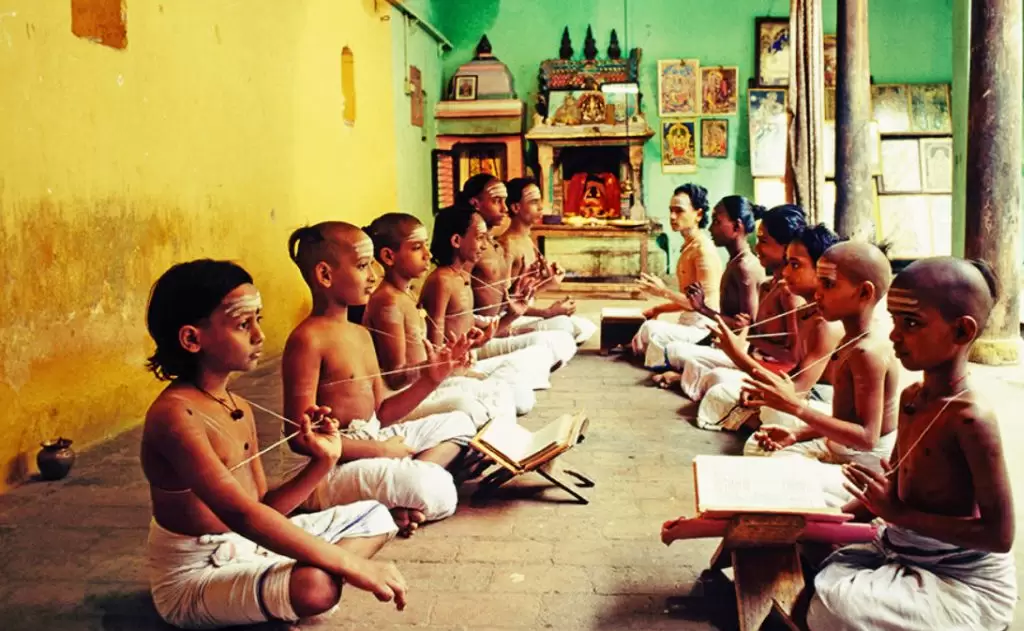
Why Shravan Purnima? The day of Shravan Purnima was chosen because in ancient India, the teaching session and Veda recitation started on this day, and students would begin studying scriptures from this auspicious day. Additionally, on this day, rishis (sages) are worshipped, making it fitting to honor the language they used to compose sacred texts.
Evolution Over the Decades
Over the past 56 years since its inception, Sanskrit Day has evolved from a primarily national celebration to an international observance. The day now witnesses participation from Sanskrit scholars, institutions, and enthusiasts worldwide, with events held across India and in countries like Nepal, the United States, and various European nations.
Significance of Sanskrit Day 2025
Why Sanskrit Matters Today
Despite being thousands of years old, Sanskrit remains relevant in the modern world for several compelling reasons:
1. Cultural Heritage Preservation Sanskrit Day aims to promote awareness about Sanskrit's importance in literature, culture, and science, while encouraging younger generations to learn and use the language.
2. Scientific and Linguistic Value Globally, scholars are drawn to Sanskrit for its precise grammar and contributions to linguistics, philosophy, and computational linguistics, where its structured syntax is seen as a model for computer languages.
3. Root of Modern Languages Sanskrit is considered the "Mother of All Languages" and forms the foundation of many Indo-European languages, influencing vocabulary, grammar, and linguistic structures across continents.
4. Ancient Knowledge Systems Sanskrit has been used to write some of the most important Hindu scriptures such as the Vedas, Upanishads, and Bhagavad Gita, preserving millennia of philosophical, scientific, and spiritual knowledge.
5. Classical Language Status Sanskrit was declared a classical language of India in 2005, recognizing its ancient origin, rich literary tradition, and continued relevance.
Purpose of Sanskrit Day Celebrations
The observance serves several key purposes: encouraging Sanskrit education in schools, colleges, and research institutions; raising awareness about its contributions to literature, philosophy, mathematics, astronomy, and linguistics; and connecting younger generations to India's cultural and intellectual roots.
The basic purpose of celebrating Sanskrit Day and Sanskrit Week is to spread awareness of the Sanskrit language and remind the Indian community of its importance and necessity.
Sanskrit: The Ancient Language
Origins and Timeline
Vedic Period (1500 BCE onwards) Sanskrit's origins can be traced back to the Vedic period around 1500 BCE, making it a cornerstone of Indian civilization. The earliest form, Vedic Sanskrit, was used to compose the four Vedas—Rigveda, Samaveda, Yajurveda, and Atharvaveda.
Classical Sanskrit Sanskrit is divided into two major literary periods: Vedic Sanskrit, the earliest form and part of the Indo-Aryan branch of the Indo-European language family, and Classical Sanskrit, a later development from Old Indo-Aryan dialects.
Pāṇini: The Great Grammarian
Pāṇini, who lived around the 6th to 5th century BCE, revolutionized Sanskrit through his monumental work, the Ashtadhyayi. This text contains approximately 4,000 sutras (rules) that systematically describe Sanskrit grammar with extraordinary precision. His work remains one of the most sophisticated linguistic analyses ever produced and continues to influence modern linguistics and computer science.
Sanskrit Literature and Scriptures
Sacred Texts:
- Vedas: Four ancient collections of hymns, rituals, and philosophical discussions
- Upanishads: Philosophical texts exploring the nature of reality and consciousness
- Bhagavad Gita: The divine discourse between Krishna and Arjuna
- Ramayana and Mahabharata: Epic narratives of dharma, duty, and devotion
- Puranas: Mythological and historical narratives
Scientific and Mathematical Texts:
- Aryabhata's mathematical and astronomical works
- Sushruta Samhita (ancient surgery and medicine)
- Charaka Samhita (internal medicine)
- Arthashastra (political economy and statecraft)
Literary Works:
- Kalidasa's plays and poetry (Shakuntala, Meghaduta)
- Bhartrihari's philosophical verses
- Bhasa's dramatic works
- Extensive kavya (poetry) tradition
Sanskrit Day 2025 Theme and Focus
While themes vary annually to highlight different aspects of Sanskrit, the official theme for World Sanskrit Day 2025 will be announced by the Ministry of Education or related cultural authorities closer to the event, with each year's theme focusing on the contemporary relevance or a special aspect of the Sanskrit language.
Recent themes have emphasized:
- Digital Sanskrit and technology integration
- Sanskrit in modern education
- Sanskrit's contribution to global knowledge
- Youth engagement with Sanskrit
- Sanskrit's scientific heritage
The 2025 celebrations focus on making Sanskrit accessible to younger generations through modern technology while preserving its traditional teaching methods.
How Sanskrit Day is Celebrated in 2025
Educational Institutions
Schools, colleges, and educational institutions organize Sanskrit speech and essay competitions to encourage creative expression in the language, along with workshops and seminars focusing on Sanskrit grammar, poetry, and literature.
Common Activities:
- Recitation Competitions: Students perform shloka recitations from ancient texts like the Vedas, Upanishads, and Bhagavad Gita
- Essay Writing: Competitions in Sanskrit on various themes
- Debates: Sanskrit debates on contemporary and traditional topics
- Quiz Contests: Testing knowledge of Sanskrit literature, grammar, and history
- Drama Performances: Staging Sanskrit plays by classical authors
- Poster Competitions: Creating awareness posters about Sanskrit
Cultural Events and Programs
Various organizations, government bodies, and cultural institutions arrange lectures, talks, performances of Sanskrit plays, recitations of Sanskrit poetry, and exhibitions showcasing Sanskrit literature and art.
Special Events:
- Shloka Chanting Sessions: The chanting of Sanskrit shlokas and hymns is one of the most popular events, as it is believed to purify the mind and soul
- Prayer Sessions: Many temples and spiritual organizations conduct special prayer sessions and havans (sacred fire rituals) on this day to honor the language and seek its blessings
- Sanskrit Poetry Recitals: Celebrating classical and contemporary Sanskrit poets
- Musical Performances: Sanskrit bhajans, stotras, and classical compositions
Digital and Online Programs
Online courses and public lectures are organized to make learning accessible to a wider audience, with many institutions now offering:
- Virtual Sanskrit classes and webinars
- Live-streamed shloka recitation events
- Online competitions and quizzes
- Digital exhibitions of Sanskrit manuscripts
- Social media campaigns promoting Sanskrit (#SanskritDay2025, #VishvaSamskritaDinam)
Distribution of Learning Materials
The distribution of Sanskrit literature and other materials like dictionaries, grammar books, and introductory guides is a crucial aspect of the celebrations, aiming to encourage more people to take interest in the language and provide them with necessary resources to learn it.
State-Level Celebrations
The Gujarat State Sanskrit Board organized a three-day programme from August 6-8, 2025, under the 'Yojana Panchakam' framework, including Sanskrit Gaurav Yatra, Sanskrit Sambhashan Divas, and Sanskrit Sahitya Divas.
Different states organize their own unique programs:
- Uttarakhand: Special programs in Sanskrit Grams (Sanskrit-speaking villages)
- Karnataka: Competitions at Sampurna Sanskrit Vidyalayas
- Tamil Nadu: Integration with temple traditions
- Delhi: National-level competitions and awards
Sanskrit's Official Status in India
Classical Language Recognition
Sanskrit was declared a classical language of India in 2005, joining an elite group of languages recognized for their ancient origin, independent literary tradition, and classical literature distinct from modern forms.
State Official Language Status
Uttarakhand (2010) In 2010, Uttarakhand became the first Indian state to make Sanskrit an official language alongside Hindi, and the state government initiated the development of 'Sanskrit Grams' to encourage daily use of Sanskrit among residents.
Himachal Pradesh (2019) In 2019, Himachal Pradesh became the second Indian state to grant Sanskrit the status of an official language.
Sanskrit Villages (Sanskrit Grams)
Several villages in India have adopted Sanskrit as their primary language of communication:
- Mattur, Karnataka: Most famous Sanskrit village where daily conversations occur in Sanskrit
- Jhiri, Madhya Pradesh: Another prominent Sanskrit-speaking village
- Baghuwar, Madhya Pradesh: Community dedicated to Sanskrit usage
- Various villages in Uttarakhand: Government-supported Sanskrit Grams
Sanskrit in Modern Times: Current Relevance
Sanskrit and Technology
Computational Linguistics: Sanskrit's structured grammar and logical framework make it ideal for:
- Natural Language Processing (NLP) research
- Artificial Intelligence language models
- Machine translation systems
- Computer programming paradigms
NASA and Sanskrit: Research has explored Sanskrit's suitability for computer algorithms due to its unambiguous grammar and systematic structure.
Sanskrit in Academia
Universities and Research:
- Numerous universities worldwide offer Sanskrit programs
- Research centers dedicated to Sanskrit studies
- Digital Sanskrit libraries and databases
- International conferences on Sanskrit studies
Number of Sanskrit Speakers: While the number of native Sanskrit speakers is relatively small (estimated at around 25,000-50,000), millions study it as a second language for religious, academic, or cultural purposes.
Sanskrit in Daily Life
Religious Practices:
- Temple prayers and rituals conducted in Sanskrit
- Wedding ceremonies using Sanskrit mantras
- Funeral rites following Sanskrit texts
- Daily prayers and meditation in Sanskrit
Popular Culture:
- Bollywood songs incorporating Sanskrit shlokas
- Sanskrit tattoos gaining popularity
- Yoga classes worldwide using Sanskrit terminology
- Ayurvedic terminology in wellness industry
Sanskrit and Other Indian Languages
Sanskrit has profoundly influenced modern Indian languages:
- Hindi: 50-60% vocabulary derived from Sanskrit
- Bengali: Significant Sanskrit vocabulary
- Marathi: Strong Sanskrit influence
- Gujarati: Classical vocabulary from Sanskrit
- Kannada, Telugu, Malayalam: Extensive Sanskrit borrowings
- Even Urdu: Contains Sanskrit-derived words
Benefits of Learning Sanskrit
Cognitive Benefits
Enhanced Mental Abilities: Recent studies suggest Sanskrit learning improves:
- Memory and cognitive function
- Concentration and focus
- Logical thinking and problem-solving
- Pattern recognition
- Mathematical abilities
Brain Development: Research indicates that memorizing and reciting Sanskrit texts activates multiple brain regions simultaneously, potentially enhancing neural connectivity.
Cultural Benefits
Connection to Heritage:
- Understanding ancient Indian philosophy
- Accessing original scriptures without translation
- Appreciating classical literature and poetry
- Connecting with cultural roots
Practical Benefits
Career Opportunities:
- Sanskrit teaching positions
- Translation and interpretation work
- Research and academic careers
- Temple and religious organization roles
- Publishing and content creation
- Ayurveda and traditional sciences
How to Celebrate Sanskrit Day 2025
For Individuals
- Learn Basic Sanskrit: Start with simple shlokas or the Sanskrit alphabet
- Recite Sanskrit Texts: Chant your favorite shlokas from Bhagavad Gita or other texts
- Watch Sanskrit Content: Films, documentaries, or educational videos in Sanskrit
- Share on Social Media: Use hashtags like #SanskritDay2025 to spread awareness
- Read Sanskrit Literature: Explore translated or original Sanskrit texts
- Attend Online Classes: Join free webinars or virtual programs
For Families
- Family Shloka Session: Gather to recite Sanskrit prayers together
- Watch Sanskrit Plays: Many are available online or in cultural centers
- Cook with Sanskrit Names: Use Sanskrit names for dishes and ingredients
- Learn Sanskrit Numbers: Teach children counting in Sanskrit
- Visit Temples: Participate in special Sanskrit Day programs
For Schools and Institutions
- Organize Competitions: Speech, essay, recitation, and quiz contests
- Invite Sanskrit Scholars: Arrange guest lectures and demonstrations
- Stage Sanskrit Plays: Perform classical or modern Sanskrit dramas
- Create Awareness Campaigns: Posters, presentations, and displays
- Sanskrit Workshops: Hands-on learning sessions for students
For Organizations and Communities
- Host Seminars: Academic discussions on Sanskrit literature and grammar
- Distribute Resources: Free Sanskrit learning materials and books
- Cultural Programs: Music, dance, and drama in Sanskrit
- Community Gatherings: Sanskrit reading circles or study groups
- Digital Initiatives: Launch apps or websites for Sanskrit learning
Challenges Facing Sanskrit Today
Declining Speakers
Despite Sanskrit having the status of 'Dev Bhasha' in Indian religious culture, the language is losing its existence, with the number of people who read, write, and understand Sanskrit decreasing day by day due to the increasing importance of foreign languages and English.
Educational System
- Limited Sanskrit education in mainstream schools
- Shortage of qualified Sanskrit teachers
- Perception of Sanskrit as difficult or irrelevant
- Competition from modern languages and skills
Modern Relevance
- Difficulty integrating Sanskrit into contemporary contexts
- Lack of conversational practice opportunities
- Limited practical applications in modern careers
- Competing priorities in education
Future of Sanskrit: Hope and Initiatives
Government Initiatives
Ministry of Education Programs:
- National Sanskrit Mission
- Sanskrit universities and research centers
- Scholarships for Sanskrit students
- Digital Sanskrit library projects
- Teacher training programs
State Government Efforts:
- Sanskrit Grams (speaking villages)
- Official language status in some states
- Promotion in schools and colleges
- Cultural programs and festivals
Technology Integration
Digital Sanskrit Resources:
- Online dictionaries and grammar tools
- Sanskrit learning apps (Little Guru, Chitralekha+, etc.)
- Digital manuscript archives
- E-learning platforms
- Sanskrit social media content
Global Interest
International Recognition:
- Events held internationally in Nepal at Valmiki Vidyapeeth, Nepal Sanskrit University, and by global organizations promoting Sanskrit
- Growing number of international Sanskrit scholars
- Western universities offering Sanskrit programs
- Global yoga community maintaining Sanskrit terminology
Sanskrit Day 2025: Key Messages
Unity Through Language
Vishva-Samskrita-Dinam celebrates diversity and harmony, reminding us that through language, people can express their identity, connect with their history, and strengthen ties across nations.
Honoring Scholars
Sanskrit Diwas is a significant occasion to honor the pioneering work of Sanskrit scholars who have spread its knowledge and appreciation far and wide, serving as a tribute to their hard work, dedication, and passion.
Living Heritage
Sanskrit is not merely an ancient language but a living heritage that continues to influence modern thought, science, and culture. Sanskrit Day reminds us that preserving this language means preserving thousands of years of accumulated wisdom.
Famous Sanskrit Quotes for Sanskrit Day
On Knowledge: "विद्या विनयेन शोभते" (Vidya vinayena shobhate) "Knowledge shines with humility"
On Action: "कर्मण्येवाधिकारस्ते मा फलेषु कदाचन" (Bhagavad Gita) "You have the right to perform your duty, but not to the fruits of action"
On Truth: "सत्यमेव जयते" (Satyameva Jayate) "Truth alone triumphs"
On Unity: "वसुधैव कुटुम्बकम्" (Vasudhaiva Kutumbakam) "The world is one family"
On Learning: "अहिंसा परमो धर्मः" (Ahimsa paramo dharmah) "Non-violence is the highest dharma"
Conclusion: Preserving the Sacred Language
Sanskrit Day 2025 offers a unique opportunity to reconnect with one of humanity's most precious linguistic treasures. As we celebrate on August 9, 2025, we honor not just a language but millennia of wisdom, philosophy, science, and spirituality encoded in its perfect structure.
Whether you're chanting a simple mantra, participating in a competition, attending a seminar, or simply learning about Sanskrit's magnificence, every effort contributes to keeping this sacred language alive. Sanskrit Day reminds us that languages carry within them the soul of civilizations, and in preserving Sanskrit, we preserve an irreplaceable part of human heritage.
Let us embrace the vision of Sanskrit Day: to ensure that Devabhasha—the language of the gods—continues to inspire, educate, and enlighten generations to come. From ancient Vedic hymns to modern computational linguistics, Sanskrit bridges the past and future, tradition and innovation.
शुभं संस्कृत दिवसम् 2025! (Happy Sanskrit Day 2025!)
Frequently Asked Questions (FAQs)
1. When is Sanskrit Day 2025 celebrated?
Sanskrit Day 2025 is celebrated on Saturday, August 9, 2025, coinciding with Shravan Purnima (the full moon day of the Shravana month) and Raksha Bandhan. The date changes each year as it follows the Hindu lunar calendar rather than the Gregorian calendar.
2. Why is Sanskrit called the "Language of Gods"?
Sanskrit is called "Devabhasha" or "Language of Gods" because it was used to compose all major Hindu scriptures including the Vedas, Upanishads, Bhagavad Gita, and other sacred texts. These texts are considered divine revelations heard by ancient rishis (sages), and the language itself is believed to have spiritual vibrations that purify the mind and soul.
3. Who started Sanskrit Day and when?
The Government of India officially established Sanskrit Day in 1969 through the Ministry of Education. The day was designated to honor the great Sanskrit grammarian Pāṇini on his birth anniversary and to promote awareness and preservation of the Sanskrit language. Since then, it has been celebrated annually on Shravan Purnima.
4. Is Sanskrit still spoken today?
Yes, Sanskrit is still spoken, though by a relatively small number of people. There are an estimated 25,000-50,000 native Sanskrit speakers in India, with several villages like Mattur in Karnataka where Sanskrit is used for daily conversation. Additionally, millions study and use Sanskrit for religious purposes, academic research, and cultural activities. It's also an official language in Uttarakhand and Himachal Pradesh.
5. What is the difference between Vedic Sanskrit and Classical Sanskrit?
Vedic Sanskrit is the earliest form of the language, used to compose the Vedas around 1500 BCE. It has more complex phonology and grammar with greater dialectal variation. Classical Sanskrit, standardized by Pāṇini around 500 BCE, is more refined and systematic, used for most later literature including epics, poetry, drama, and philosophical texts. Classical Sanskrit follows strict grammatical rules outlined in Pāṇini's Ashtadhyayi.
6. How many people in India speak Sanskrit?
According to various estimates, there are approximately 25,000-50,000 people who claim Sanskrit as their mother tongue or primary language. However, millions more study it as a second language for religious, academic, or cultural purposes. The Census of India records Sanskrit speakers, though the numbers are relatively small compared to other Indian languages.
7. Why is Sanskrit Day celebrated on Shravan Purnima?
Shravan Purnima was chosen because in ancient India, this day marked the beginning of the traditional academic year. Teaching sessions and Veda recitation would commence on this auspicious day, and students would start studying scriptures. Additionally, this day is dedicated to worshiping rishis and gurus who composed Sanskrit literature, making it ideal for honoring the language itself.
8. Is Sanskrit the oldest language in the world?
Sanskrit is one of the oldest documented languages in the world, dating back to around 1500 BCE with the Rigveda. However, it's not definitively "the oldest" as other ancient languages like Sumerian, Egyptian, and Akkadian also have ancient origins. Sanskrit is the oldest member of the Indo-European language family with a continuous literary tradition and is often called the "Mother of All Languages" due to its influence on numerous modern languages.
9. Can I learn Sanskrit online?
Yes, numerous online resources are available for learning Sanskrit. Options include: government-initiated programs through Sanskrit universities, mobile apps like Little Guru and Chitralekha+, online courses from platforms like Coursera and edX, YouTube channels dedicated to Sanskrit instruction, virtual classes offered by cultural organizations, and digital dictionaries and grammar resources. Many of these resources are free or low-cost.
10. What are Sanskrit Grams or Sanskrit villages?
Sanskrit Grams are villages where residents use Sanskrit as their primary language for daily conversation. The most famous is Mattur village in Karnataka, where villagers speak Sanskrit at home, in markets, and in social gatherings. Other examples include Jhiri and Baghuwar in Madhya Pradesh, and several villages in Uttarakhand. These villages demonstrate that Sanskrit can function as a living, spoken language in modern times.
11. How is Sanskrit used in modern technology?
Sanskrit is being explored for use in modern technology, particularly in computational linguistics, artificial intelligence, and natural language processing. Its unambiguous grammar and systematic structure make it suitable for computer algorithms. Researchers have investigated Sanskrit's potential for machine translation, search engines, and programming languages. Some studies suggest Sanskrit's grammatical framework could improve AI language models due to its logical consistency.
12. What is the importance of Pāṇini in Sanskrit grammar?
Pāṇini (6th-5th century BCE) revolutionized Sanskrit through his work Ashtadhyayi, containing approximately 4,000 sutras (rules) that systematically describe Sanskrit grammar. His work is considered one of the greatest intellectual achievements in human history and the foundation of modern linguistics. Pāṇini's grammar is so precise and scientific that it influenced modern computer science and formal language theory. Sanskrit Day is celebrated on his birth anniversary.
13. How many words are there in Sanskrit?
Sanskrit has an extraordinarily vast vocabulary. Ancient Sanskrit dictionaries list anywhere from 100,000 to over 1 million words. The language's system of word formation through prefixes, suffixes, and compounding allows for virtually unlimited vocabulary creation. For comparison, most modern languages have vocabularies of 50,000-200,000 commonly used words. Sanskrit's richness comes from its systematic derivation rules and extensive literary tradition.
14. What are the benefits of learning Sanskrit?
Learning Sanskrit offers multiple benefits: cognitive benefits including improved memory, concentration, and logical thinking; cultural connection to Indian heritage and philosophy; access to original ancient texts without translation; understanding of Indian classical arts and sciences; enhanced understanding of other Indo-European languages; career opportunities in teaching, research, and translation; spiritual development through reading sacred texts; and appreciation of one of the world's most sophisticated linguistic systems.
15. Are Vedas written in Sanskrit?
Yes, the Vedas are written in Vedic Sanskrit, the earliest form of Sanskrit. The four Vedas—Rigveda, Samaveda, Yajurveda, and Atharvaveda—compose the oldest layer of Sanskrit literature, dating back to approximately 1500-1000 BCE. Vedic Sanskrit differs from Classical Sanskrit in pronunciation, grammar, and vocabulary, but they're related forms of the same language. The Vedas are considered the foundation of Hindu philosophy and are the primary reason Sanskrit is called the "language of gods."
16. How is Sanskrit Day celebrated in schools?
Schools celebrate Sanskrit Day through various activities: shloka recitation competitions where students recite verses from Bhagavad Gita or other texts, Sanskrit speech and essay competitions, quiz contests on Sanskrit literature and grammar, drama performances of Sanskrit plays, poster-making competitions creating awareness about Sanskrit, workshops on basic Sanskrit conversation, cultural programs featuring Sanskrit songs and poetry, and distribution of Sanskrit learning materials. Many schools organize special assemblies dedicated to Sanskrit.
17. What is the connection between Sanskrit and yoga?
Sanskrit is the language of yoga. All yoga terms—asana (posture), pranayama (breath control), dhyana (meditation), chakra, kundalini, namaste—come from Sanskrit. Classical yoga texts like Patanjali's Yoga Sutras are written in Sanskrit. Understanding Sanskrit enhances yoga practice by revealing deeper meanings of postures and concepts. The global yoga community has preserved Sanskrit terminology, making these words recognized worldwide. Many yoga teachers study Sanskrit to better understand and teach traditional practices.
18. Can Sanskrit help in learning other languages?
Yes, Sanskrit can facilitate learning other languages, especially Indo-European languages like Hindi, Bengali, Marathi, Gujarati, Persian, Greek, Latin, and even English. These languages share Sanskrit roots in vocabulary and grammatical structures. For example, Sanskrit "matr" relates to English "mother," Latin "mater," and Hindi "maa." Understanding Sanskrit grammar—considered one of the most systematic linguistic frameworks—can improve overall language learning abilities and appreciation of linguistic structures.
19. What are some easy Sanskrit shlokas to learn for beginners?
For beginners, some accessible Sanskrit shlokas include: the Gayatri Mantra (spiritual illumination), Shanti Mantra (peace invocation), Guru Vandana (teacher prayer), Saraswati Vandana (goddess of knowledge), simple shlokas from Bhagavad Gita like Chapter 2 Verse 47, the Navkar Mantra used in meditation, and basic prayers like "Om Namah Shivaya" or "Om Namo Narayanaya." These shlokas have repetitive patterns and simple vocabulary, making them ideal for learning pronunciation and basic grammar.
20. Why should we preserve Sanskrit in the modern world?
Preserving Sanskrit is crucial for several reasons: it contains thousands of years of accumulated knowledge in philosophy, science, mathematics, medicine, and arts; serves as a linguistic bridge connecting various Indian languages; provides access to original ancient texts whose translations may miss nuances; offers cognitive and educational benefits proven by research; represents cultural heritage and identity; continues to influence modern languages and thought; has potential applications in technology and AI; and preserves a unique perspective on language, consciousness, and reality developed over millennia.
Share this with family and friends
Send it on WhatsApp, post it, or copy the link.
More from Hinduism
- AI and the Sanskrit Revival in 2026: Language Models, Manuscript OCR, Translation Tools and What AI Still Gets Wrong
- Can a Robot Perform Puja? Robot Aarti, AI in Rituals and What Hindu Tradition Says
- GitaGPT and AI Bhagavad Gita Chatbots: How Accurate Are They, and What Does Hindu Tradition Say?
- Robotic Elephants and AI in Hindu Temples: Kerala's Mechanical Tuskers, Tirumala's AI Command Centre and the Debate
- Quantum Computing Explained for Hindus: Qubits, Superposition and Entanglement, with Vedanta Analogies (Not Equivalences)
You might also like
Sanskrit and the Preservation of Hindu Knowledge
World Sanskrit Day 2025: Embracing the Divine Language of the Gods on Shravan Poornima

Sanskrit is Not a Dead Language: The Vibrant Reality of Samaskritam in Modern India