

Shraddha Karma for Daughters – Garuda Purana Validation & Guide

Women & Shraddha: Can Daughters Perform Tarpan & Pinda Daan? Yes – Garuda Purana Proves It (Empowering Truth)
Introduction: Breaking the Myth
For centuries, a prevalent misconception has surrounded Hindu ancestral rites: that only men can perform Shraddha, Tarpan, and Pinda Daan for deceased parents and ancestors. This belief has caused countless daughters to feel excluded from honoring their parents, while families without sons have lived with unnecessary anxiety about their ancestors’ spiritual well-being.
The truth, however, is far more empowering. Ancient Hindu scriptures, particularly the Garuda Purana, explicitly recognize women’s eligibility to perform these sacred rites. This article examines scriptural evidence, historical precedents, and modern interpretations to establish the rightful place of daughters in pitru karya (ancestral rites).
Understanding the Sacred Rites
Before examining women’s eligibility, let’s clarify what these rituals entail:
Shraddha is the complete ceremony performed to honor and provide for departed ancestors. It includes prayers, mantras, offerings, and feeding of Brahmins, expressing gratitude and devotion to forefathers.
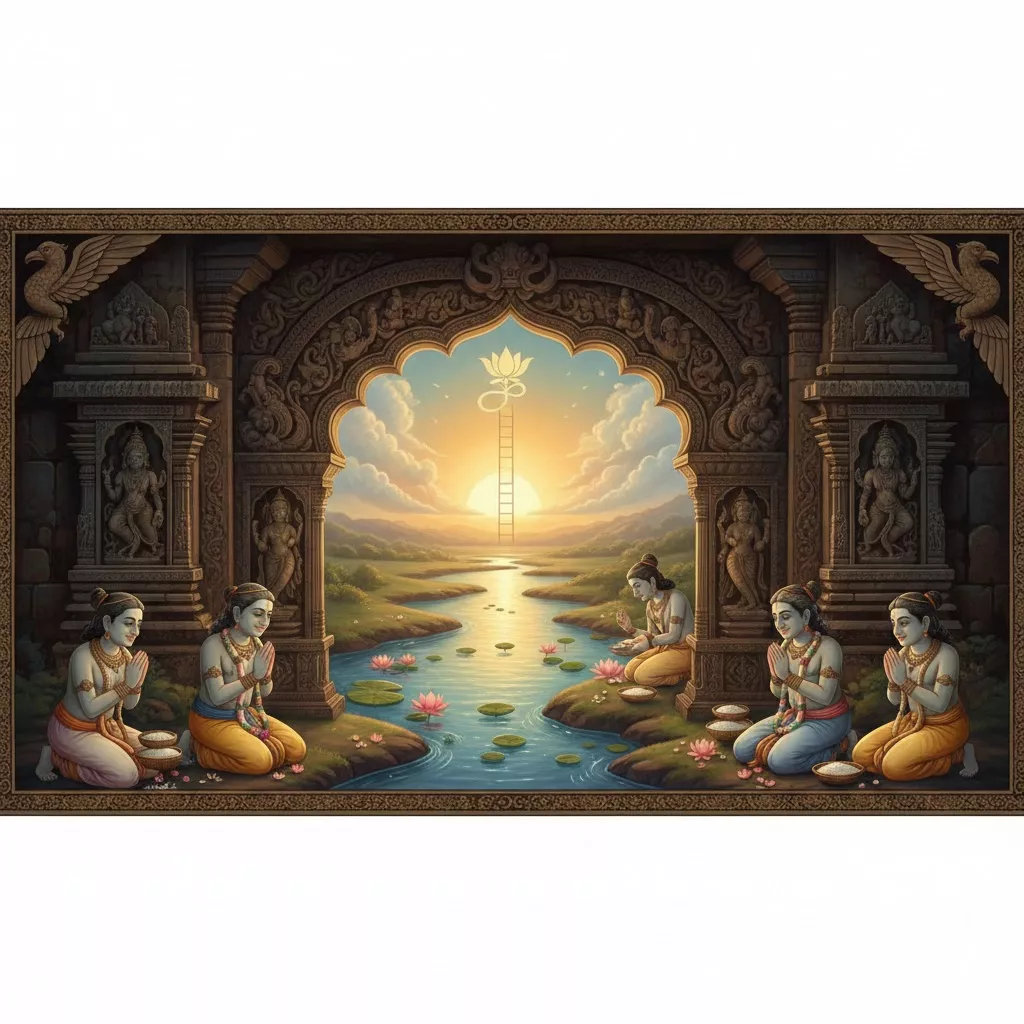
Tarpan involves offering water mixed with black sesame seeds (til), barley, and kusha grass to satisfy the thirst of ancestral souls. The offerings flow from the hand while facing south, the direction of the Pitrus.
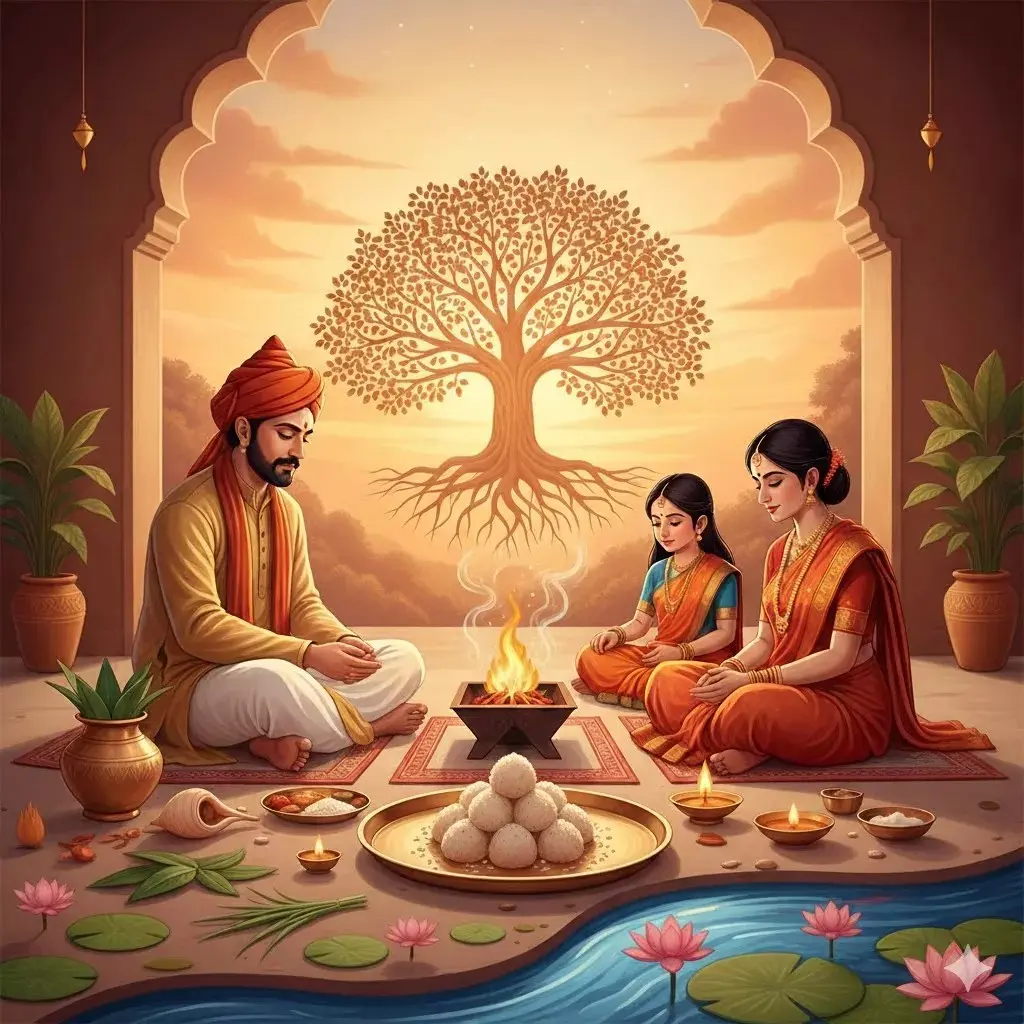
Pinda Daan is the central and most sacred act within Shraddha. Rice balls mixed with cow’s milk, ghee, sesame seeds, and honey are offered to ancestors. These pindas symbolize the physical body and provide subtle nourishment to departed souls during their journey.
Garuda Purana: The Scriptural Foundation
The Garuda Purana, one of the eighteen Mahapuranas and a primary text on death rituals and ancestor worship, provides explicit guidance on who can perform Shraddha. While sons are traditionally given primary responsibility, the text makes clear provisions for women.
Key Scriptural Provisions
According to learned pandits and traditional scholars who have studied the Garuda Purana Pretakhanda (the section dealing with death and ancestral rites), specific verses address the eligibility hierarchy for performing Shraddha:
In the absence of a son, the following are eligible:
- Paternal grandson
- Paternal great-grandson
- Wife of the deceased
- Daughter
- Daughter-in-law
- Brother
- Nephew
- Other male relatives
The Garuda Purana explicitly mentions that wives are eligible to perform Shraddha and Pinda Daan for their deceased husbands, especially when no sons, grandsons, or direct male descendants are available. The text emphasizes that her performance is considered highly meritorious and crucial for the husband’s sadgati (good passage).
Daughters’ Scriptural Rights
Regarding daughters, the Garuda Purana acknowledges their eligibility under specific circumstances, particularly in the absence of male heirs. Many learned pandits, recognizing both scriptural guidance and practical realities, affirm the daughter’s right to perform Pinda Daan for her parents.
The scripture emphasizes three critical principles:
- Bhakti and Shraddha (devotion and faith) are more important than gender
- Practical necessity – if no male heir exists, ancestors must not be left without offerings
- Emotional connection – daughters’ love and devotion make their offerings valid and powerful
The Precedent of Sita Devi: When a Woman’s Pinda Daan Liberated a King
The most powerful scriptural precedent for women performing Pinda Daan comes from the Ramayana itself. This is not a minor incident but a foundational story that validates women’s spiritual authority in ancestral rites.
The Story at Gaya
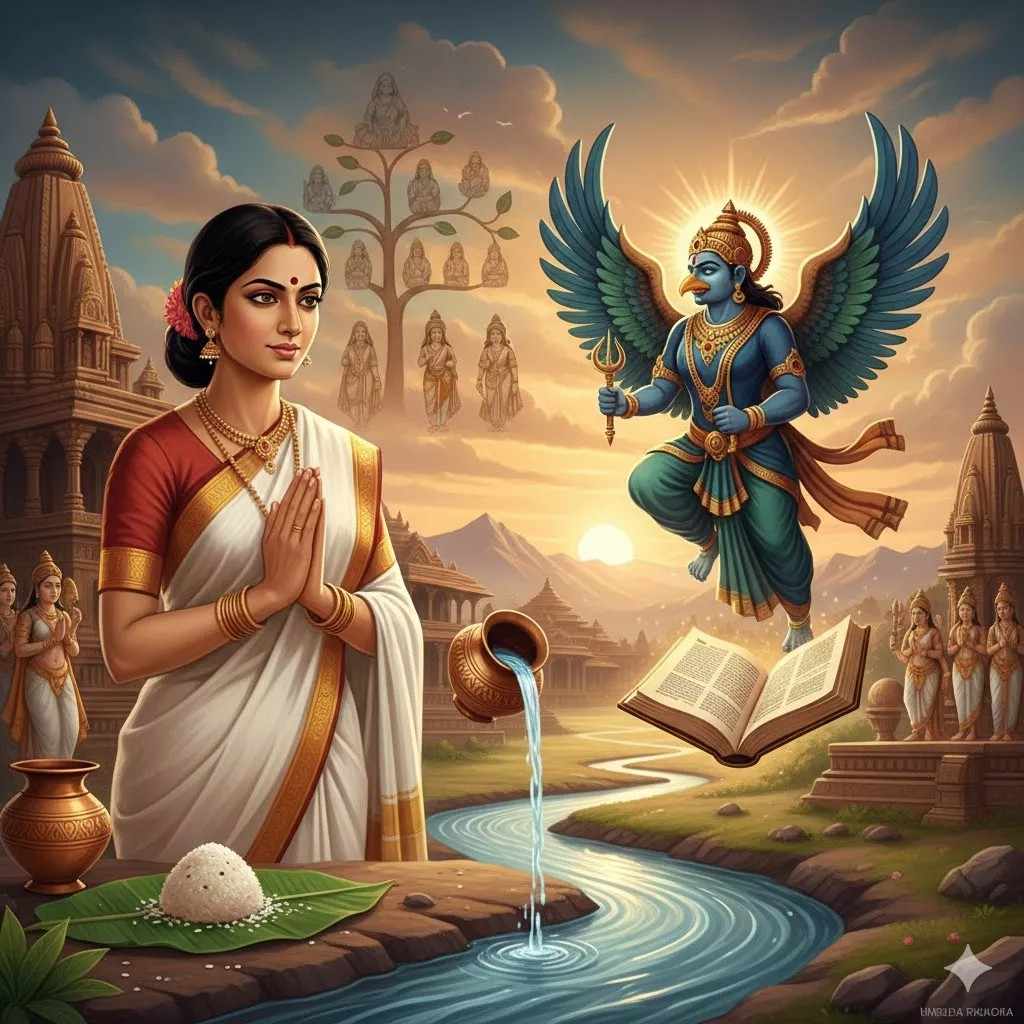
During their exile, Lord Rama, Sita Devi, and Lakshmana traveled to Gaya to perform Pinda Daan for King Dasharatha during Pitru Paksha. Lord Rama and Lakshmana went to procure necessary materials for the ceremony, leaving Sita waiting on the banks of the Phalgu River.
As the auspicious time for the ritual was passing and the brothers had not returned, King Dasharatha’s soul appeared before Sita, requesting immediate Pinda Daan. Recognizing the urgency of the moment, Sita made the profound decision to perform the rite herself.
With no rice available, she created pindas from the sand of the riverbank. She invoked the Phalgu River, a cow, a tulsi plant, and the ancient Akshayavat (banyan tree) as witnesses to her sacred act.
When Lord Rama returned, he initially questioned whether the ritual was valid. The river, cow, and tulsi plant initially denied witnessing the ceremony (for which Sita later cursed them). However, the banyan tree testified truthfully, and most significantly, King Dasharatha’s soul itself appeared and confirmed that Sita had successfully performed the Pinda Daan, bringing him peace and satisfaction.
The Profound Implications
This story establishes several revolutionary principles:
- A woman’s Pinda Daan is spiritually valid and effective – Dasharatha’s soul was satisfied and attained peace through Sita’s offerings
- Devotion transcends ritual materials – Sita used sand when rice was unavailable, yet the ritual bore complete fruit
- Women have independent spiritual authority – Sita didn’t need male permission or presence; she acted on her own spiritual understanding
- Urgent spiritual necessity overrides convention – When the moment required action, gender considerations became secondary
According to tradition, Sita proclaimed: “If a woman offers Pind with true devotion, it too satisfies the ancestors.” This declaration continues to resonate through millennia, establishing women’s rightful place in these sacred rites.
The Dauhitra (Daughter’s Son): A Unique Position
Hindu scriptures hold the daughter’s son in exceptionally high regard for ancestral rites. Performing Shraddha for one’s maternal grandfather is considered extraordinarily meritorious. The scriptures often state that pindas offered by a dauhitra bring immense satisfaction to the ancestors.
This recognition of the daughter’s son implicitly acknowledges the daughter’s lineage and her continued connection to her natal family – a principle that extends to the daughter herself.
Modern Scholarly Consensus
Contemporary pandits and scholars increasingly recognize women’s eligibility based on:
Scriptural Support
Multiple texts including Garuda Purana, Matsya Purana, and Agni Purana contain provisions for women performing Shraddha when male heirs are unavailable.
Practical Reality
In modern times, many families have only daughters, are nuclear families, or face situations where sons are unable or unwilling to perform rites. Denying daughters this right would mean ancestors receive no offerings.
Emotional and Spiritual Connection
Who has more love and devotion for parents than their daughter? The depth of a daughter’s shraddha makes her offerings valid and powerful.
The Example of Female Deities
Goddesses in Hindu tradition perform yajnas and sacred rites. If divine feminine power can conduct complex rituals, human women certainly can.
Important Considerations and Protocols
While women are eligible to perform these rites, certain considerations are traditionally observed:
When to Perform
- Unmarried daughters have clear rights to perform Shraddha for their fathers
- Married daughters can perform for parents when no suitable male heir exists
- Wives can always perform for deceased husbands in absence of sons
- Any woman can perform when the alternative is no rites being performed at all
Procedural Adaptations
Some traditional sources suggest minor variations:
- Women typically wear simple white or yellow clothing during the ritual
- Some traditions recommend simplified mantras or procedures
- The core offering of pinda and tarpan remains the same
The Gotra Question
Traditional concerns about married women changing gotra are addressed by recognizing that:
- A daughter honoring her natal lineage before marriage is fully appropriate
- Post-marriage, she can still honor parents with proper sankalpa (intention)
- Spiritual connection transcends gotra boundaries when performed with proper devotion
The Spiritual Principle: Bhakti Over Ritual
The fundamental principle underlying all Hindu worship is that sincere devotion (bhakti) and faith (shraddha) matter more than external forms. The scriptures repeatedly emphasize:
- Intention and love make offerings acceptable to ancestors
- Performing with a pure heart is more important than technical perfection
- Fulfilling dharma includes daughters honoring their parents
As one traditional verse states: “A daughter who performs Shraddha for her father with a true heart will find that even in the absence of a son, the father accepts her offerings and blesses her.”
Addressing Common Objections
“But tradition says only sons can perform these rites”
Tradition is not monolithic. The same scriptures that emphasize sons also make provisions for women. What many call “tradition” is often regional custom that varies across India.
“Won’t it be invalid if a woman performs it?”
Sita Devi’s successful Pinda Daan at Gaya definitively proves that women’s offerings are spiritually valid and effective. If a woman’s pinda could satisfy King Dasharatha, it can certainly honor any ancestor.
“What about the Gotra system?”
While gotra considerations exist, the scriptures prioritize ensuring ancestors receive offerings over rigid adherence to patrilineal structures. A daughter performing rites for parents honors her natal gotra.
“Our family priest says women cannot do this”
Priestly opinions vary. Many learned priests now recognize scriptural support for women’s participation. If your priest objects, you can:
- Show them the scriptural references discussed here
- Consult other learned pandits
- In extremis, perform simplified rites yourself with devotion
Practical Steps for Daughters Performing Shraddha
If you are a daughter wishing to honor your parents through these rites:
1. Preparation
- Fast or observe sattvic diet during Pitru Paksha
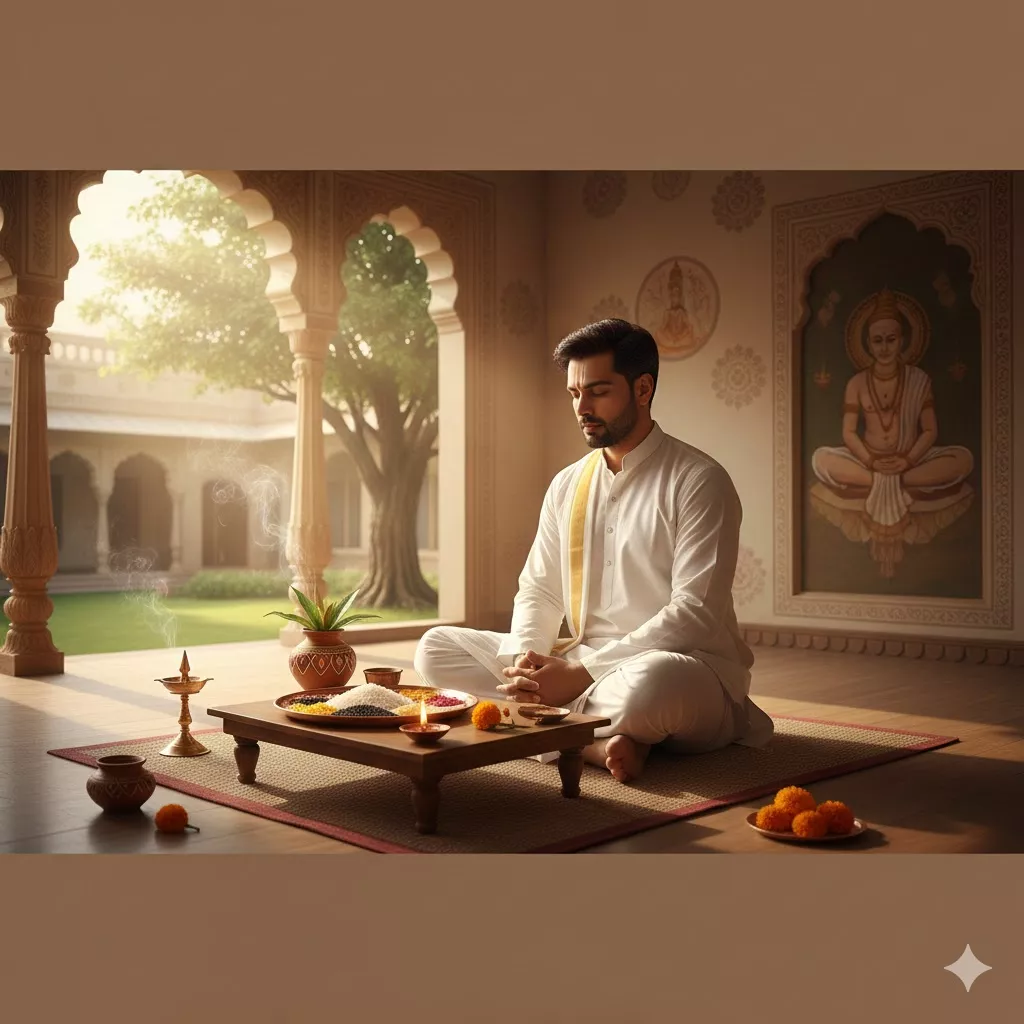
- Wear simple white or yellow clothing
- Gather materials: rice, sesame seeds, ghee, barley, kusha grass, water
2. The Ritual
- Face south (direction of Pitrus)
- Make sankalpa stating your intention and your parents’ names
- Prepare pindas (rice balls with sesame, ghee, honey)
- Offer tarpan (water with sesame seeds)
- Feed Brahmins or donate to charity
- Offer food to crows (considered messengers of ancestors)
3. Alternatives
- If unable to perform full ritual, offer simple tarpan at home
- Donate food or money in parents’ names
- Visit sacred places like Gaya, Haridwar, or Prayagraj
- Engage a priest to perform on your behalf while you participate
The Spiritual Significance: Why This Matters
Recognizing women’s right to perform ancestral rites is not merely about equality – it’s about:
Spiritual Fulfillment
Daughters deserve the opportunity to express gratitude and fulfill their debt (rina) to parents who raised them.
Ancestral Peace
Souls should not go without offerings simply because cultural prejudice excludes qualified, devoted daughters.
Dharmic Justice
Hindu dharma is built on principles of righteousness and compassion, not arbitrary exclusion based on gender.
Family Unity
Allowing all children to participate in honoring ancestors strengthens family bonds and spiritual connection.
Conclusion: Reclaiming Women’s Spiritual Authority
The evidence is clear: Hindu scriptures, particularly the Garuda Purana, explicitly provide for women performing Shraddha, Tarpan, and Pinda Daan. The precedent of Sita Devi at Gaya stands as eternal proof that women’s offerings are spiritually valid, effective, and acceptable to ancestors.
For too long, custom and misinterpretation have obscured these scriptural truths. But dharma evolves with understanding, and we now recognize what our ancestors always knew: devotion, not gender, determines the efficacy of ancestral rites.
To every daughter who wishes to honor her parents, to every woman who yearns to fulfill her spiritual duties: You have scriptural authority. You have divine precedent. You have every right to perform these sacred rites.
May your pindas be accepted. May your tarpan satisfy your ancestors. May your devotion bring peace to departed souls and blessings to your life.
References and Further Reading
Primary Scriptures
- Garuda Purana (particularly Pretakhanda section)
- Valmiki Ramayana (Sita’s Pinda Daan at Gaya)
- Matsya Purana (on Shraddha procedures)
- Vishnu Purana (significance of Gaya)
Key Concepts Covered
- Daughter performing shraddha
- Women in Hindu rituals
- Female eligibility for pinda daan
- Garuda Purana women’s rights
- Pitru paksha for daughters
- Can married daughters perform shraddha
- Sita performing pinda daan
- Women performing tarpan
- Scriptural support for women in ancestral rites
This article aims to educate and empower based on scriptural evidence. For specific family situations, consult with learned, progressive pandits who understand both tradition and spiritual principles.


 ︎
︎

