Monday Rituals in Hinduism — Somavar Shiva Puja, Vrat & Complete NRI Guide for 2026
Monday Hindu rituals — Somavar Shiva puja, Solah Somvar vrat, fasting guidelines, mantras, NRI home-altar guide. Why Monday is Shiva's day in Sanatana Dharma.
Monday Hindu rituals — Somavar Shiva puja, Solah Somvar vrat, fasting guidelines, mantras, NRI home-altar guide. Why Monday is Shiva's day in Sanatana Dharma.
Quick Answer: Monday (Somavar / Sombaar) is dedicated to Lord Shiva and the Moon (Chandra) in Hindu tradition. The name Somavar literally derives from Soma — the divine drink/Moon — making Monday the day governed by lunar energy and by Shiva (who wears the crescent moon on his head). Monday observance is anchored by Shiva puja, white-clothing wear, milk abhishekam to a Shivalingam, recitation of Om Namah Shivaya 108 times, and various Somavar vrats (fasts). The Solah Somvar Vrat (16 consecutive Mondays) is among Hindu practice's most popular family observances — particularly performed by unmarried women seeking a good husband and married women for marital harmony. The Sawan Somvars (Mondays of the lunar month Shravan, July-August) carry exponentially multiplied merit. For NRI Hindus, Monday is the easiest day to maintain a simple weekly Hindu practice — most workplaces accommodate brief morning observance, and Shiva's universal accessibility makes apartment-friendly puja straightforward.
1. Why Monday Is Dedicated to Shiva
In Hindu cosmology, each day of the week is associated with a planetary deity (graha) and a primary Hindu deity:
- Monday (Somavar) · Chandra (Moon) · Shiva
- Tuesday (Mangalvar) · Mangal (Mars) · Hanuman / Kartikeya
- Wednesday (Budhvar) · Budha (Mercury) · Ganesha / Vishnu
- Thursday (Guruvar) · Brihaspati (Jupiter) · Vishnu / Guru
- Friday (Shukravar) · Shukra (Venus) · Lakshmi / Devi
- Saturday (Shanivar) · Shani (Saturn) · Hanuman / Shani Dev
- Sunday (Ravivar) · Surya (Sun) · Surya / Vishnu
Shiva's association with Monday emerges from:
- The crescent moon on Shiva's head — making him the Lord of the Moon (Chandrashekhara, Chandramauli)
- The cooling, soothing quality of Monday and Shiva — both pacify and heal
- Shiva's role in mind-balance — the Moon governs the mind (manas); Shiva is the consciousness above the mind
- Soma (the divine nectar) — the original Vedic offering associated with both the Moon and Shiva's worship
2. The Soma — Moon — Shiva Connection
The Vedic ritual centred on Soma — a divine plant/drink offered in fire sacrifices. Over time, Soma also came to mean the Moon itself (because of similar luminous, cooling, nectar-giving qualities). The Monday-Shiva-Moon-Soma association consolidated in the Puranic period.
Spiritually: Monday-practice is meant to calm the mind, cool emotional turbulence, and elevate consciousness above the lunar mental fluctuations. The reason Hindus across the world have found Monday observance personally transformative is precisely this mental-emotional cooling function.
3. Somavar Puja Vidhi
Materials needed
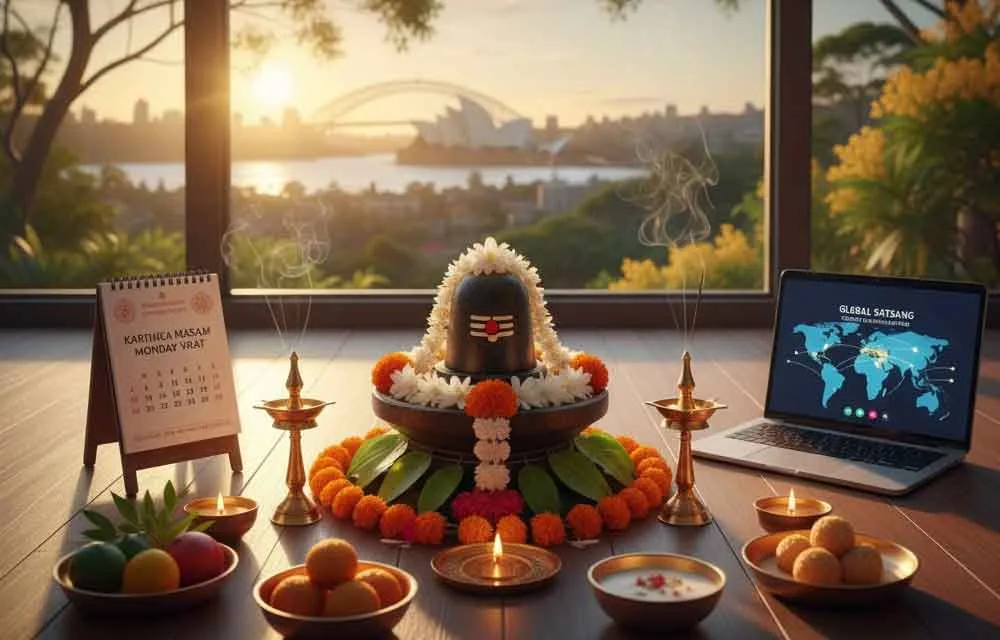
- A Shivalingam (or printed image of Shiva, or a small representation)
- White flowers (jasmine, white lotus, lily)
- Bilva patra (bel leaves) — Shiva's favoured offering
- Milk + water mixed (for abhishekam)
- Ganga jal (or holy water substitute)
- White rice (akshat)
- Vibhuti (sacred ash) or sandalwood paste
- A small ghee lamp (LED acceptable for NRI apartments)
- Incense
- White sweets (kheer, peda, milk-based)
Step-by-step procedure
- Wake before sunrise (Brahma Muhurta if possible)
- Bathe and wear clean white clothes (the colour for Monday)
- Clean the puja space facing north or northeast
- Light the diya and incense
- Begin with three rounds of Om Namah Shivaya — the supreme Shiva mantra
- Apply vibhuti to your forehead in three horizontal stripes
- Offer water and milk abhishekam to the Shivalingam (pour gently while chanting Om Namah Shivaya)
- Offer bilva patra — the most beloved Shiva offering. Three leaves placed in a single bilva-shaped pattern
- Offer white flowers and akshat
- Read or recite the Shiva Tandava Stotram, Lingashtakam, or Shiva Mahimna Stotram
- 108 mantra japa of Om Namah Shivaya (use rudraksha mala if available)
- Aarti — Om Jai Shiv Omkara
- Offer naivedya — milk-based sweet, fruit
- Conclude with samarpanam — dedicating the puja's merit to Shiva
- Distribute prasad to family
Total time: 30-45 minutes for full observance; 10-15 minutes for compressed version.
4. The Solah Somvar Vrat (16 Consecutive Mondays)
The Solah Somvar Vrat is among Hinduism's most popular family vrats — performed across India and the diaspora.
Who performs it
- Unmarried women seeking a good husband (the most common reason)
- Married women for marital harmony and husband's longevity
- Anyone seeking Shiva's specific blessing for a defined aim
The 16-week protocol
- Begin on a Shukla Paksha Monday (the first Monday of a waxing fortnight)
- Maintain fast — typically one meal per day after sunset, or fruits-only depending on capability
- Perform full Shiva puja every Monday for 16 consecutive weeks
- Recite the Solah Somvar Vrat Katha (the traditional story of Shiva and Parvati's worship)
- Observe sattvic diet — no onion, garlic, meat, alcohol on Mondays
- Closing puja (Udyapan) — on the 17th Monday, perform a more elaborate closing ceremony with brahmins or community
Outcomes (as taught in tradition)
- Marriage proposals materialise
- Marital relationships heal
- Children's prospects improve
- Family financial situations stabilise
For NRI Hindus, the 16-week format fits well with semester-length time-blocks; many begin in January or August for completion in April-May or November-December.
5. Sawan Somvars — The Most Powerful Mondays
The lunar month of Shravan / Sawan (July-August in Gregorian terms) is Shiva's most sacred month. Sawan Mondays carry exponentially multiplied merit.
Sawan Somvars 2026:
- Aug 3, 2026 (1st Sawan Somvar)
- Aug 10, 2026 (2nd Sawan Somvar)
- Aug 17, 2026 (3rd Sawan Somvar)
- Aug 24, 2026 (4th Sawan Somvar — final)
For dedicated Shiva devotees, the Sawan Somvar fast is the most rigorous and merit-rich Monday observance of the year. Many pilgrims undertake the Kanwar Yatra (carrying Ganga water on shoulders to home Shiva temples) during this period.
6. Mantras for Monday Practice
Primary mantra
Om Namah Shivaya
The five-syllable (Panchakshari) mantra — recite 108 times minimum on Mondays.
Maha Mrityunjaya Mantra (most powerful Shiva mantra for protection and healing)
Om Tryambakam Yajamahe Sugandhim Pushtivardhanam
Urvarukamiva Bandhanan Mrityor Mukshiya Maamritat
Recite 108 times on Monday mornings; powerful for healing, longevity, and protection from premature death.
Lingashtakam (8 verses on the Shivalingam)
Opening verse:
Brahmamurari Surarchita Lingam
Nirmala Bhasitasundara Lingam
Janmaja Duhkha Vinashaka Lingam
Tat Pranamami Sadashiva Lingam
(I bow to that Shivalingam, worshipped by Brahma, Vishnu, and the devas; pure, beautifully adorned with sacred ash; destroyer of suffering born of birth.)
Bilvashtakam (8 verses on the bilva leaf)
The bilva leaf has its own short stotra; reciting while offering bilva multiplies the merit.
7. NRI Apartment-Friendly Monday Practice
For working NRI Hindus in apartments with time and space constraints:
10-minute version
- Light an LED diya at your home altar
- Wash a small Shiva idol or picture with water (over a plate)
- Apply one bilva leaf (substitute: any small green leaf if bilva unavailable)
- Chant Om Namah Shivaya 108 times (5 minutes)
- Sit in silence for 3 minutes
- Eat one sattvic meal during the day
30-minute version
- Full bath; white clothes
- Light diya, incense
- Pour milk-water abhishekam over Shivalingam (use bowl/plate to catch)
- Offer bilva patra (or print of bilva leaves; the bhava matters)
- Recite Maha Mrityunjaya Mantra 27 times
- Recite Lingashtakam
- 108 chants of Om Namah Shivaya
- Aarti
- Eat phalahara (fruits) during day; one meal after sunset
Family with kids version
- Involve children in lighting diya, offering flowers
- Tell a Shiva story (Samudra Manthan-Halahala, Ganga descent, Markandeya, Bhasmasura)
- Sing Om Namah Shivaya together
- Make milk-based sweet (kheer or basundi) together
Sourcing bilva leaves in NRI cities
- USA: Indian groceries (Patel Brothers, Indian Cash & Carry, Subzi Mandi) sometimes carry; Hindu temples often have bilva trees on premises and welcome devotees taking leaves
- UK: BAPS Neasden, Hindu temples in Leicester, ISKCON Bhaktivedanta Manor often have bilva trees
- Canada: Hindu Sabha Mandir Brampton, BAPS Toronto
- Australia: Sri Venkateswara Helensburgh, Shree Shiva Vishnu Carrum Downs Melbourne
- GCC: BAPS Hindu Mandir Abu Dhabi
- Where unavailable: A printed image of bilva leaves or any green leaf offered with sincere bhava is acceptable substitute
8. FAQs
Q: What if I can't fast on Mondays due to work demands?
A: Phalahara (fruits-only) is the modified observance. Or eat only sattvic food (no onion/garlic/meat/alcohol). The bhava of restraint matters; the rigid fast is not mandatory.
Q: Can I do Monday Shiva puja in my office cubicle?
A: Yes — silent chanting (manasika japa) of Om Namah Shivaya is acceptable anywhere. Many NRI techies chant during lunch breaks or commutes.
Q: Is Solah Somvar Vrat only for women?
A: Traditionally yes, but men can also perform it. The vrat is for those seeking specific Shiva blessings.
Q: What if I miss a Monday during Solah Somvar Vrat?
A: Restart counting from the missed week, or do an extra Monday at the end to make 16 total. The continuity is the merit.
Q: Do I need a real Shivalingam for Monday puja?
A: Printed image or a small idol works for NRI home practice. Many families use a Banaras or Tirupati-purchased small Shivalingam. The energetic intention is what activates the worship.
Q: When is the most auspicious Monday of 2026?
A: First Sawan Somvar (Aug 3, 2026). Also Maha Shivaratri Monday-coincidence days when applicable.
Q: How does Monday practice connect to Maha Shivaratri?
A: Monday practice is the weekly preparation that builds toward Maha Shivaratri annual observance (Feb 15, 2026). Regular Monday practitioners experience Maha Shivaratri with significantly deeper resonance.
Final Words
Monday is the foundation of weekly Hindu practice. For NRI Hindus building sustainable spiritual rhythm amid demanding work weeks, Monday morning Shiva observance is the practice most easily integrated and most rapidly transformative. Ten minutes before opening the laptop. White clothes one day a week. Om Namah Shivaya 108 times. A bilva leaf offered when available, a green leaf or printed image when not.
Over months and years, this simple weekly practice generates cooling of the mind, stabilisation of emotions, and deepening of the relationship with the dharma. The Sawan Somvars amplify the merit; the Solah Somvar Vrat provides structure for those seeking specific outcomes; the daily Maha Mrityunjaya practice protects health and family.
Om Namah Shivaya. Om Tryambakam Yajamahe.
Jai Shiv Shankara! Har Har Mahadev! Soma Som Somaaya Namah!
HinduTone Editorial Team · Tags: Monday Rituals Hinduism, Somavar Vrat, Shiva Monday Puja, Solah Somvar, Sawan Somvar, Maha Mrityunjaya, Om Namah Shivaya, NRI Weekday Practice
Frequently Asked Questions
When is Monday Rituals in Hinduism 2026?
Monday Rituals in Hinduism is observed on its traditional tithi in the Hindu lunar calendar; refer to the year's panchang for the exact date in your region.
What is the significance of Monday Rituals in Hinduism?
Monday (Somavar / Sombaar) is dedicated to Lord Shiva and the Moon (Chandra) in Hindu tradition. The name Somavar literally derives from Soma — the divine drink/Moon — making Monday the day governed by lunar energy and by Shiva (who wears the crescent moon on his head).
How is Monday Rituals in Hinduism celebrated?
Devotees observe it with puja, fasting or special offerings, visiting temples, chanting mantras, and gathering with family. Customs vary by region and tradition.
What should devotees do on Monday Rituals in Hinduism?
Worship Lord Shiva, perform the day's puja and offerings, observe the fast where prescribed, and chant the associated mantras with devotion.
You might also like
Thursday Rituals in Hinduism — Guruvara Vishnu Puja, Guru Worship & Complete NRI Guide for 2026
Friday Rituals in Hinduism — Shukravar Lakshmi Puja, Devi Worship & Complete NRI Guide for 2026
Somavar Vrat Katha: The Complete Monday Fast Story for Lord Shiva Devotees