Parinita
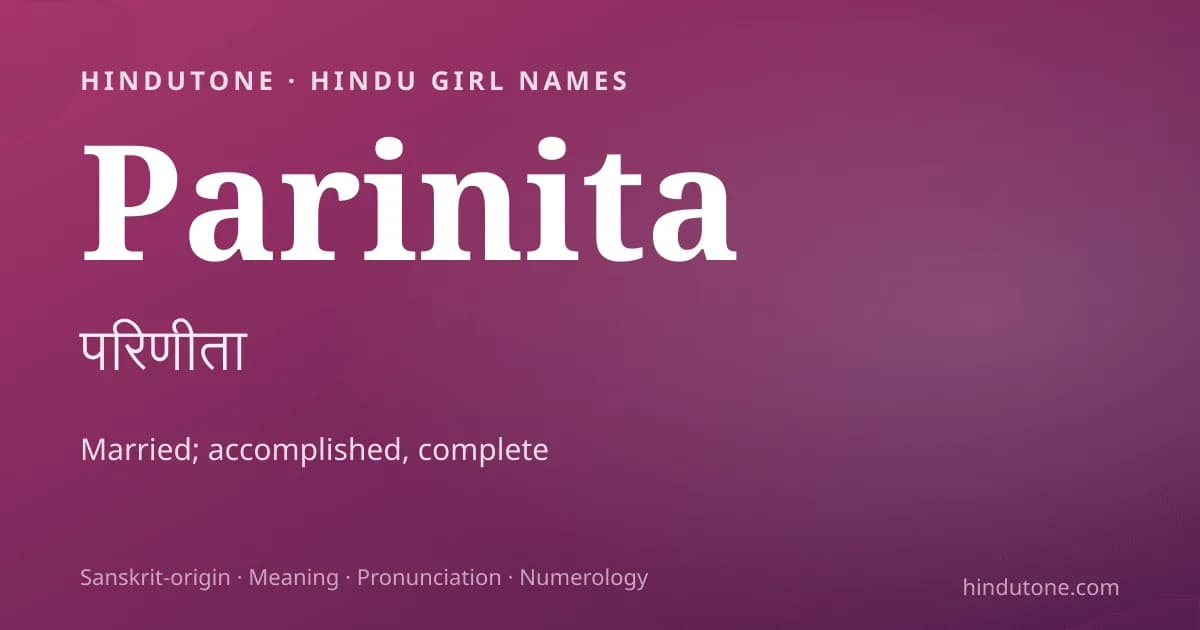
Parinita (परिणीता) is a Sanskrit-origin Hindu girl-name meaning “Married; accomplished, complete”. Find pronunciation, origin, deity association, popularity and similar Hindu baby names.
Parinita (परिणीता) is a Sanskrit-origin Hindu girl-name meaning “Married; accomplished, complete”. Find pronunciation, origin, deity association, popularity and similar Hindu baby names.
Parinita (परिणीता, IAST: pariṇītā) is a Sanskrit-origin Hindu girl-name meaning “Married; accomplished, complete”. From pari (around, fully) and nī (to lead) — one who has been led to fulfilment.
Meaning, etymology & significance
Parinita (परिणीता) is built from the Sanskrit pari (around, completely) and the past participle of nī (to lead). The literal sense is “one who has been led around (the sacred fire),” which gives the marriage-related meaning. By extension Parinita means “accomplished, complete, brought to fulfilment.”
The marriage ritual of pradakṣiṇa — circumambulation of the sacred fire — is the central act that makes a Hindu marriage. The seven pheras around the fire are seven vows; each circumambulation is itself an act of pari-nayanam, “leading around.” To name a girl Parinita is to wish her completeness — the kind that comes from being led to her highest fulfilment.
In contemporary Bengali tradition Parineeta (the same name) is also the title of a celebrated Sarat Chandra Chattopadhyay novella, which has shaped the cultural memory of the name across India.
Pronunciation: pa-ri-NI-ta. The shorter Parineeti is also widely used.
Astrology — nakshatra & rashi
By the standard Vedic correspondence between the first syllable of a name and the lunar mansion (nakshatra), Parinita aligns with the Uttara phalguni nakshatra, under the Kanya rashi (Moon sign).
Similar names
Hindu names with a similar feel or meaning include: Parineeti, Parnika, Paridhi. Each is a distinct choice with its own etymology — explore them on their own pages for fuller context.
The meaning and Sanskrit roots of Parinita
Parinita (परिणीता, IAST pariṇītā) is a Sanskrit-origin girl-name meaning "married; accomplished, complete." It is built from pari — around, fully, completely — and the past participle of nī, to lead. The literal sense is "one who has been led around" the sacred fire, giving both the marriage meaning and the deeper sense of one led to fulfilment.
Because pari intensifies to "fully, all the way," pariṇītā also carries the sense of something brought to completion — an accomplishment carried through to its finish. So the name speaks not only of marriage but of wholeness: a person or a work led fully to its intended end, perfected and complete.
Parinita in Hindu culture and tradition
The imagery behind Parinita is the saptapadi and the pheras — the sacred circumambulation of the fire that, in Hindu marriage, joins two lives. To be pariṇītā is to have walked those steps, sealing a bond witnessed by Agni. The name thus carries the auspiciousness and solemn beauty of the Hindu wedding rite.
Beyond its nuptial sense, the word's flavour of completeness aligns it with the ideal of a life brought to fullness — matured, settled and whole. In Sanskrit literary usage the participle can describe anything accomplished or perfected, so the name blends the auspicious with the accomplished, the wedded with the well-finished.
The spirit of the name Parinita
Parinita suggests grace, completeness and auspicious fulfilment. It suits a girl imagined as poised and whole-hearted, one who carries things through to their finish. The name evokes:
- Fulfilment — one led fully to her purpose
- Auspiciousness — the grace of the sacred rite
- Completeness — a life or work brought to wholeness
Names similar to Parinita
Related names include Parineeta (variant spelling), Nita and Neeta (led, guided, well-conducted), and Pranita (led forward). Names sharing themes of completeness and grace — such as Purnima (full), Sampada (accomplishment) and Suhasini — belong to Parinita's harmonious family.
Frequently Asked Questions
What does the name Parinita mean?
Parinita ( परिणीता , IAST: pariṇītā ) is a Sanskrit-origin Hindu girl-name meaning “Married; accomplished, complete” . From pari (around, fully) and nī (to lead) — one who has been led to fulfilment.
Is Parinita a good Hindu baby name?
Yes — it is a traditional Hindu name with an auspicious meaning, suitable for a baby and rooted in Sanatana Dharma values.
What is the origin of the name Parinita?
It has Sanskrit/Hindu origins; its roots, deity association and significance are detailed above.
Are there variations or similar names to Parinita?
Related and similarly-themed Hindu names, along with their meanings, are listed in the guide above to help you choose.
Parinita — Name Facts
- Meaning
- Married; accomplished, complete
- Gender
- Hindu girl name
- Nakshatra
- Uttara Phalguni
- Rashi
- Kanya (Virgo)
- Numerology
- 5
Frequently asked questions
What does the name Parinita mean?
Parinita is a Sanskrit-origin Hindu girl name meaning “Married; accomplished, complete”.
Is Parinita a boy or girl name?
Parinita is traditionally a Hindu girl name.
Which nakshatra and rashi suit the name Parinita?
By the first-syllable rule of Vedic naming, Parinita aligns with the Uttara Phalguni nakshatra, under the Kanya (Virgo) rashi.
What is the numerology number of Parinita?
The Chaldean name number of Parinita is 5.
Explore more: Uttara Phalguni nakshatra names · Kanya rashi names · Hindu girl names with P · All Hindu names A–Z
Deepen the naming journey
Choosing a name is one step. Continue with:
- Find your child’s nakshatra from today’s panchangam — verify the Uttara Phalguni assignment against your birth chart.
- Hindu gods & goddesses — the pantheon behind Hindu names — Vishnu, Shiva, Devi, and the deities most Hindu names honour.
- Slokas & mantras for the family altar — chant ashtottaras and daily prayers as your child grows.
- The Namakaranam ceremony — 11th-day naming ritual — samskara vidhi, prasadam, and family customs.
- Auspicious Hindu festivals & naming muhurats — best tithis in 2026 for a namakarana ceremony.
- Temple for the first darshan — take the newborn to the family deity temple within 40 days.
- Hinduism guide for young parents — samskaras, dharma, and raising children in the tradition.