Dussehra 2025 in Vijayawada: A Grand Celebration at Sri Durga Malleswara Swamy Varla Devasthanam
Vijayawada, the spiritual capital of Andhra Pradesh, is once again at the heart of divine festivities as the city hosts Dussehra 2025 with grandeur and…
Vijayawada, the spiritual capital of Andhra Pradesh, is once again at the heart of divine festivities as the city hosts Dussehra 2025 with grandeur and…
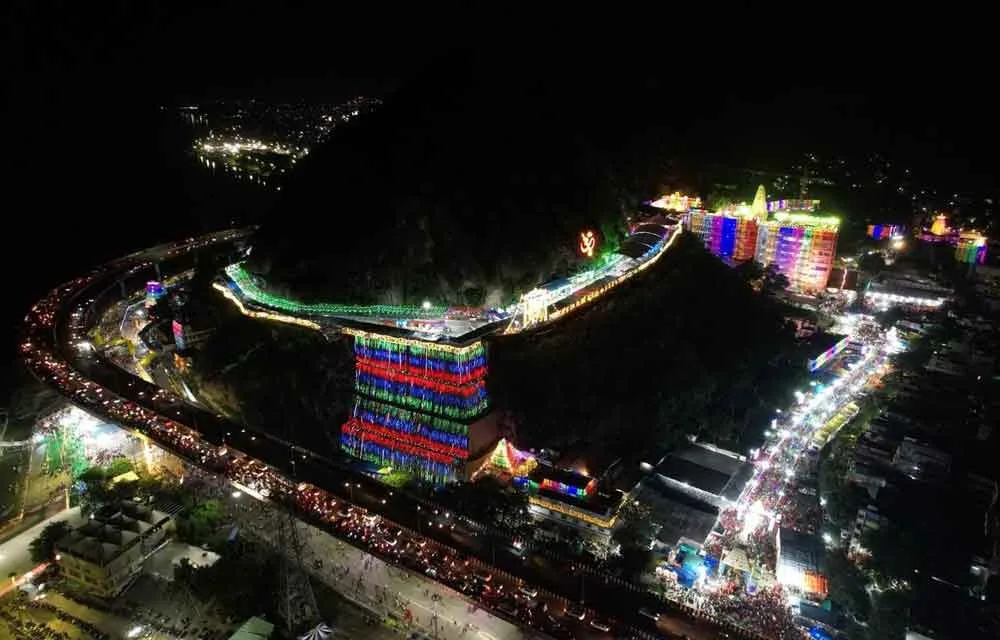
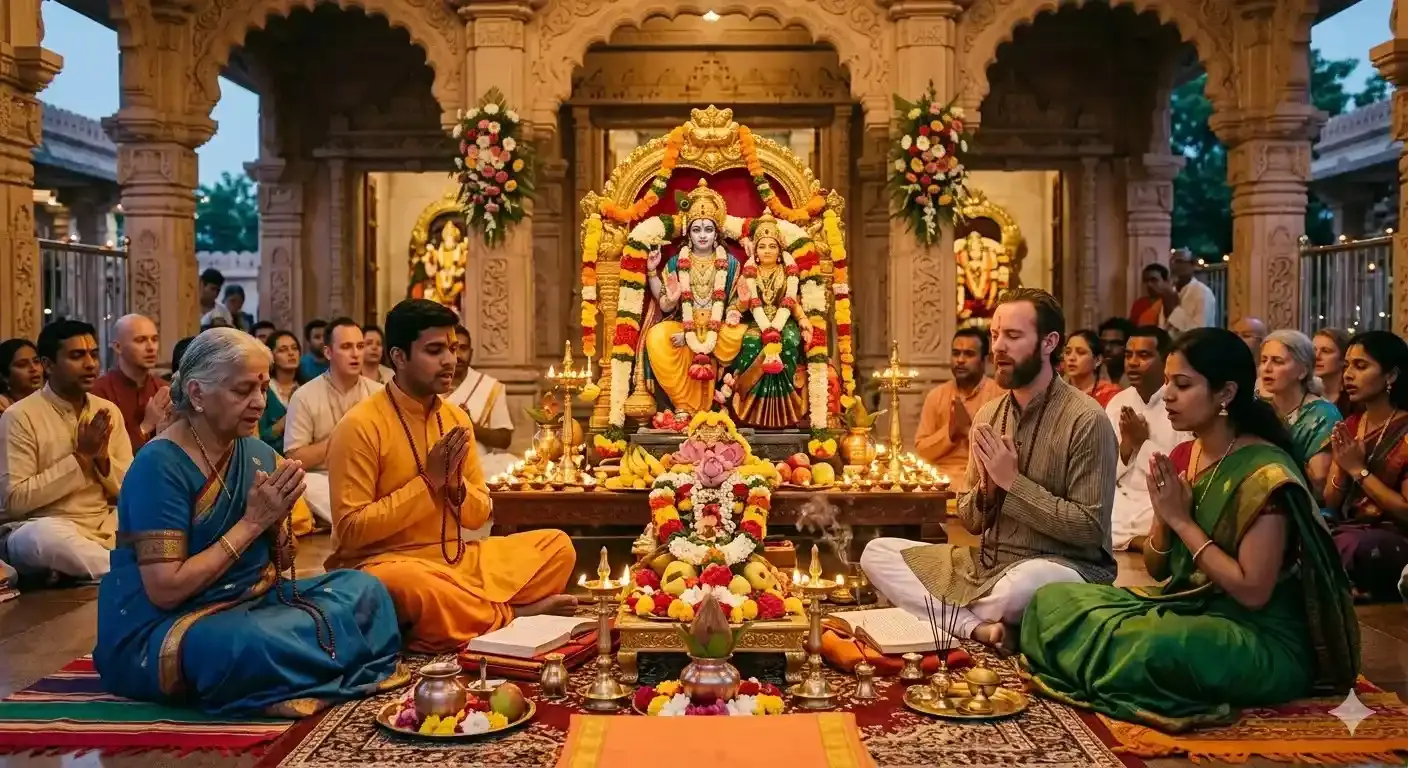
Vijayawada, the spiritual capital of Andhra Pradesh, is once again at the heart of divine festivities as the city hosts Dussehra 2025 with grandeur and devotion. The iconic Sri Durga Malleswara Swamy Varla Devasthanam (Kanaka Durga Temple) atop Indrakeeladri Hill is the focal point of celebrations, drawing lakhs of devotees from across India and abroad.
This year, the festival began on September 22 and will conclude on October 2, 2025, with each day highlighting a different form of Goddess Durga.
Highlights of the Celebration
1. Daily Alankarams (Deity Decorations)
Each of the nine days of Navaratri sees Goddess Kanaka Durga adorned in a unique avatar, from Sri Bala Tripura Sundari Devi to Sri Mahishasura Mardini Devi, symbolizing power, beauty, and divinity.
2. Chanting & Rituals
- Manta recitations and Vedic rituals are conducted daily by temple priests.
- Special homams and poojas are organized to invoke blessings of prosperity and protection.
3. Cultural Programs
Evenings come alive with traditional dance performances, classical music concerts, and devotional recitals at cultural venues in Vijayawada, celebrating the region’s rich artistic heritage.
4. Spiritual Processions
On select days, processions of the deity’s idol take place around the temple premises, accompanied by drum beats, bhajans, and chanting, creating a vibrant spiritual atmosphere.
The Significance of Vijayawada Dussehra
The Kanaka Durga Temple holds a special place in Hindu mythology, believed to be the very site where Goddess Durga annihilated the demon Mahishasura. Dussehra here is not just a festival—it is a reaffirmation of faith, victory of good over evil, and devotion that binds millions together.
Devotee Footfall & Arrangements
Authorities anticipate lakhs of devotees over the course of the nine days.
- Special queues and darshan passes are being arranged for smooth crowd management.
- Free meal services (annadanam) are provided daily.
- Extra trains, buses, and local transport options are available for pilgrims.
Why You Should Visit This Year
If you want to witness the perfect blend of devotion, culture, and tradition, Vijayawada Dussehra 2025 is unmissable. From the spiritual energy at the temple to the cultural vibrancy across the city, this festival offers an unforgettable experience.
Final Word
As Vijayawada lights up with prayers, music, and festivities, Dussehra 2025 at Kanaka Durga Temple promises to be a divine celebration of faith and culture. Whether you are a devotee, a culture enthusiast, or a traveler, this is the perfect time to immerse yourself in the city’s spiritual aura.
Mark your calendars: September 22 – October 2, 2025.
Celebrate the victory of good over evil, Vijayawada style!
The Mythological Roots of Indrakeeladri and Kanaka Durga
Indrakeeladri Hill, upon which the Sri Durga Malleswara Swamy Varla Devasthanam stands, derives its name from Indra, the king of the devas, who is said to have worshipped Goddess Durga at this very spot. The Skanda Purana, in its Revakhanda section, specifically references this sacred hill as a Shakti Peetha of immense spiritual potency, where the divine feminine energy known as Shakti is believed to be permanently present in a self-manifested or Swayambhu form.
According to temple lore rooted in the Devi Bhagavata Purana, the goddess here is called Kanaka Durga — 'Kanaka' meaning gold — reflecting her radiant, luminous form. The Krishna River flowing at the foot of Indrakeeladri is considered equivalent to the Ganges at this location, and a ritual bath in the river followed by darshan of Kanaka Durga is believed to bestow moksha. The confluence of the river and the hill creates what is known in Agama Shastra as a Kshetra-tirtha combination, amplifying the sanctity of any worship performed here.
The Nine Alankarams: Significance of Each Divine Form
Each of the nine days of Navaratri corresponds to a distinct avatar of the goddess, rooted in the Devi Mahatmyam (also called the Chandi or Durga Saptashati), a text of 700 verses from the Markandeya Purana. The progression of alankarams at Kanaka Durga Temple moves from gentle, nurturing forms such as Sri Bala Tripura Sundari Devi — representing the goddess as the universal child consciousness — to fierce, protective forms like Sri Mahishasura Mardini Devi, who slays the buffalo demon Mahishasura.
Other celebrated alankarams during the nine days include Sri Durga Devi, Sri Maha Lakshmi Devi, Sri Saraswati Devi, and Sri Rajarajeswari Devi, each decorated with specific colours, flowers, jewellery, and vahanas (divine vehicles) as prescribed in the temple's Agama tradition. The tenth day, Vijayadasami, holds special importance: the goddess is adorned as Sri Vijaya Durga, and the day commemorates her ultimate victory (vijaya) over adharma, making it the culminating and most auspicious darshan of the entire festival cycle.
Chandika Homam and Vedic Rituals: The Sacrificial Heart of the Festival
Among the most spiritually significant rituals conducted during Dussehra at the Kanaka Durga Temple is the Chandika Homam, a fire sacrifice performed using the Chandi path (recitation of the Devi Mahatmyam) as its liturgical backbone. Trained Vedic priests recite all thirteen chapters of the Devi Mahatmyam in sequence while offerings of ghee, sesame, and sacred wood are made into the sacred fire (agni), believed to purify the environment and invoke the goddess's direct presence.
Additionally, the Kumkuma Archana — an offering of vermilion powder symbolising the goddess's Shakti — is performed thousands of times each day, often by groups of devotees simultaneously chanting the Lalitha Sahasranama or the Durga Ashtottara Shatanamavali (108 names of Durga). The Suvasini Puja, honouring married women as living embodiments of the goddess, is also observed, reflecting the Shakta theological principle that the divine feminine is immanent in every woman.
Vijayadasami and the Tradition of Shastra Puja and Vidyarambham
The tenth day, Vijayadasami (Dussehra), carries a distinctive set of observances beyond the grand temple rituals. Across Andhra Pradesh and Telangana, this day marks Shastra Puja — the ritual worship of tools, instruments, and weapons — derived from the ancient tradition described in texts like the Nirnaya Sindhu, where artisans, farmers, soldiers, and scholars offer their implements to the deity, seeking blessings for the coming year's work.
Vijayadasami is also universally observed as Vidyarambham, the auspicious commencement of formal learning. Parents bring young children to the Kanaka Durga Temple to write their first letters on a bed of raw rice (akshara abhyasam), a ritual guided by a priest or elder. This practice traces its scriptural basis to the Saraswati Vandana tradition and the Taittiriya Upanishad's exhortation 'Satyam vada, Dharmam chara, Svadhyayan ma pramadah' — speak truth, follow dharma, and never neglect your learning.
The Role of Vijayawada in the Broader Shakta Pilgrimage Circuit
Sri Durga Malleswara Swamy Varla Devasthanam is recognised as one of the Ashtadasa Shakti Peethas — the eighteen principal seats of the goddess — a classification detailed in several Tantric and Pauranika texts. This places Vijayawada on the same sacred geography as Kamakhya in Assam, Kolhapur in Maharashtra, and Kanyakumari in Tamil Nadu, making the Navaratri festival here an event of pan-Indian Shakta significance.
Pilgrims who undertake the Shakti Peetha Yatra (the pilgrimage circuit of all eighteen shrines) invariably include Indrakeeladri among their destinations. During Navaratri, the temple administration coordinates with the Endowments Department of Andhra Pradesh to manage the surge in outstation pilgrims, offering designated dharmashalas (pilgrim rest houses) and multi-lingual guidance services in Telugu, Hindi, Tamil, and Kannada to ensure that devotees from across India can participate fully in the celebrations.
How to Plan Your Darshan: Practical Guidance for Devotees
The Kanaka Durga Temple offers multiple darshan options during Navaratri, including Sarva Darshan (general free queue), Special Darshan (with a nominal fee and reduced waiting time), and Seeghra Darshan (priority access). Online booking for Special and Seeghra Darshan is available through the official temple website managed by the Andhra Pradesh Endowments Department, and devotees are advised to book well in advance as slots fill quickly during Navaratri.
Vijayawada is well-connected by rail to major cities including Hyderabad, Chennai, Mumbai, and Delhi; the Vijayawada Junction railway station is approximately 3 kilometres from the base of Indrakeeladri Hill. Rope-car (ropeway) services operate from the foot of the hill to near the temple entrance, offering an accessible option for elderly devotees and families with young children. The best time for a relatively comfortable darshan is early morning, between 4:30 AM and 7:00 AM, when the first ritual (Nijaroopa Darshan) takes place and crowds are comparatively manageable.
Frequently Asked Questions
When is Dussehra in Vijayawada?
Dussehra in Vijayawada falls on October 2, 2025.
What is the significance of Dussehra in Vijayawada?
Vijayawada, the spiritual capital of Andhra Pradesh, is once again at the heart of divine festivities as the city hosts Dussehra 2025 with grandeur and devotion. The iconic Sri Durga Malleswara Swamy Varla Devasthanam (Kanaka Durga Temple) atop Indrakeeladri Hill is the focal point of celebrations, drawing lakhs of devotees from across India and abroad.
How is Dussehra in Vijayawada celebrated?
Devotees observe it with puja, fasting or special offerings, visiting temples, chanting mantras, and gathering with family. Customs vary by region and tradition.
What should devotees do on Dussehra in Vijayawada?
Worship Goddess Durga, perform the day's puja and offerings, observe the fast where prescribed, and chant the associated mantras with devotion.
You might also like
Jyeshtha Masam 2026: Dates, Significance, Festivals, Mantras, and Danas – Complete Guide
Gita Jayanti 2026 Prasad Recipes — Tulsi-Honoring Sweets, Krishna's Favourites & December 10 Bhog Plate
Navratri 2026 — Sharad Navaratri Dates (October 2-11), 9 Goddess Forms, Garba Events & Complete NRI Celebration Guide