Telangana Government Proposes Law to Deduct Salary from Employees Neglecting Parents
Hyderabad, October 19, 2025 – In a bold initiative to uphold filial piety and ensure elderly care, Telangana Chief Minister A.
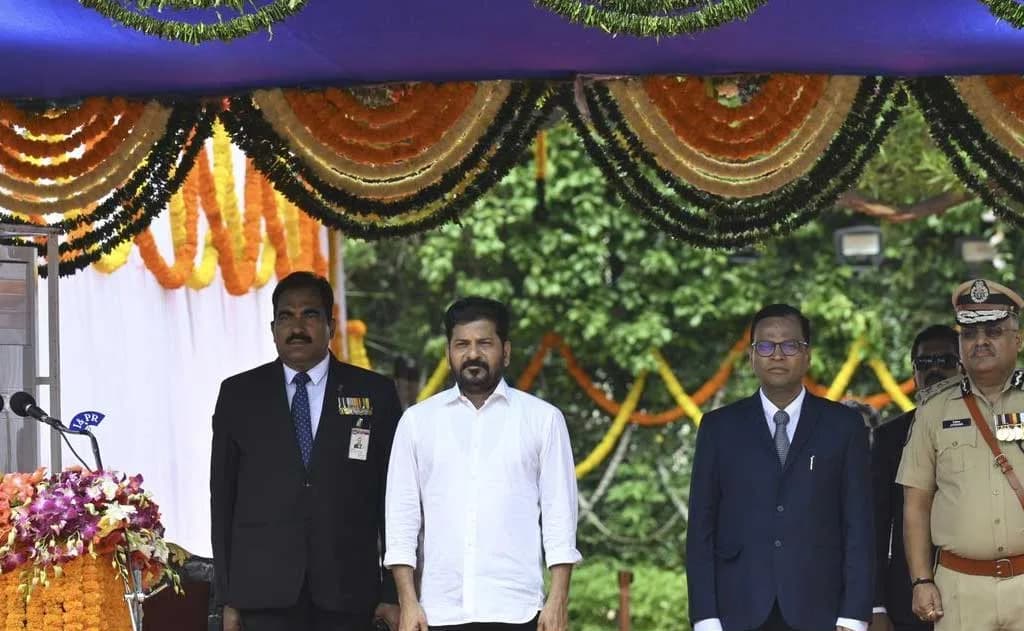
Hyderabad, October 19, 2025 – In a bold initiative to uphold filial piety and ensure elderly care, Telangana Chief Minister A.
Hyderabad, October 19, 2025 – In a bold initiative to uphold filial piety and ensure elderly care, Telangana Chief Minister A. Revanth Reddy has unveiled plans for landmark legislation that would slash 10-15% from the salaries of government employees who fail to support their parents. The withheld funds would be seamlessly transferred to the parents' bank accounts, providing direct financial aid on a monthly basis.
The proposal was revealed on October 18, 2025, at a ceremonial event where the Chief Minister distributed appointment letters to freshly recruited Group-II employees. Underscoring the sacred duty of children toward their elders, Reddy declared, "If any employee fails to look after their parents, 10 to 15 percent of their salary will be deducted and transferred to their parents' accounts. Just as employees receive their salary on the first of every month, their parents will also receive the amount on the same day."
Reddy called on children of all genders to embrace their responsibilities without exception. "Daughters should care for their parents even after marriage. Sons may receive dowries or other benefits, but they must never abandon their parents. You owe what you are today to them," he emphasized, evoking a sense of gratitude and moral obligation.
In a hands-on approach to policy-making, the Chief Minister tasked Chief Secretary Ramakrishna Rao with assembling a committee of officials—including the new appointees—to draft the bill. While no firm implementation date has been set, the government is committed to swift action.
This announcement also served as a pointed critique of the erstwhile Bharat Rashtra Samithi (BRS) regime, which Reddy lambasted for stalling job recruitments over its 10-year tenure. In stark contrast, his Congress-led administration has onboarded 60,000 employees in its inaugural year alone, including no fewer than Group-I and Group-II notifications. Reddy paid tribute to the perseverance of students and jobless youth from the Telangana statehood agitation, imploring the recruits to play their part in the state's resurgence.
The idea isn't entirely new; Reddy first floated a comparable 10% deduction policy on September 27, 2025, while handing out Group-I letters. This latest endorsement underscores the administration's resolve to enshrine it in law.
The measure has ignited fervent discourse across the state and beyond. Supporters hail it as a progressive safeguard for vulnerable seniors, aligning with cultural values of respect for elders. Detractors, however, question its practicality—citing enforcement hurdles, privacy issues, and the risk of overburdening families already stretched thin. As the drafting committee convenes, expect intensified scrutiny on how Telangana balances tradition with modern governance.
(This article draws from verified reports and official announcements.)
How does Dharmaśāstra ground the duty of children toward parents?
The obligation of children to care for their parents is not merely a social convention in Hindu thought — it is classified as ṛṇa, a sacred debt. The Taittirīya Upaniṣad (1.11.2) famously enjoins the graduating student: 'Mātṛdevo bhava, Pitṛdevo bhava' — treat your mother as a goddess, treat your father as a god. This instruction is placed before even the duties toward a teacher or a guest, signalling the primacy of parental reverence in the moral hierarchy.
Manusmṛti (2.227-228) elaborates that the father embodies Prajāpati and the mother embodies the Earth herself; no other act of piety can compensate for neglecting them during their lifetime. The Mahābhārata's Anuśāsana Parva (chapter 105) further states that a son who feeds, clothes, and tends to aged parents earns merit equivalent to performing the Aśvamedha sacrifice. Chief Minister Revanth Reddy's invocation of filial duty at the appointment ceremony thus resonates with a theological tradition stretching back millennia.
What existing Indian laws already protect elderly parents, and how does this proposal differ?
India already has a central framework for elder care: the Maintenance and Welfare of Parents and Senior Citizens Act, 2007, amended in 2019. Under this Act, children — including daughters — are legally obligated to provide maintenance to parents unable to support themselves, and a tribunal can order up to ₹10,000 per month. However, enforcement has historically been slow, relying on aggrieved parents to file complaints, endure hearings, and await tribunal orders that may take months to execute.
The Telangana proposal marks a structural departure: rather than reactive litigation, it envisions proactive, automatic salary deduction with direct bank transfer — removing the burden of proof and petition from elderly parents entirely. By targeting government employees specifically, the state leverages its existing payroll infrastructure to act as an immediate enforcement mechanism. If enacted, this would be among the first state-level laws in India to embed elder maintenance directly into public-sector salary disbursement, setting a potential precedent for other states.
Why does the proposal specifically address daughters, and what does tradition say about their responsibilities?
Chief Minister Reddy's explicit inclusion of daughters — even after marriage — challenges a cultural assumption deeply entrenched across much of India: that a daughter's primary filial duty transfers to her husband's household upon marriage. In legal terms, the 2019 amendment to the Senior Citizens Act already includes daughters and sons-in-law within the ambit of 'children' obligated to maintain parents, but social practice often lags behind statute.
Interestingly, the Rāmāyaṇa and regional Telugu literature offer examples of daughters who upheld their natal family's honour and welfare even after marriage. The concept of dāyadā (one who shares in inherited responsibility) in classical texts was not strictly gender-limited in its moral dimension, even when property inheritance was. By naming daughters explicitly, the Telangana government aligns its legislation with both the letter of the 2019 amendment and the broader dharmic principle that parental debt belongs equally to all children regardless of gender.
How does the Pitṛpakṣa tradition reflect a living culture of parental reverence in Telangana?
Telangana, like other Telugu-speaking regions, observes Pitṛpakṣa (locally called Mahālaya Pakṣamu) with considerable seriousness — a sixteen-day period in the Bhādrapada month during which families perform tarpaṇa and śrāddha rites for deceased ancestors. The rites presuppose that honouring one's elders is not a one-time act but a continuous, generational obligation. The great pilgrimage site of Nāgārjuna Sāgar–Srisailam region draws thousands for ancestral rites, and the ghāṭs of the Krishna and Godavari rivers in Telangana witness mass śrāddha ceremonies annually.
These living practices underscore that the proposed legislation is not being introduced into a cultural vacuum. The societal conscience around elder neglect already exists; the law seeks to enforce what community and tradition once enforced organically. When economic migration, nuclear family structures, and urban pressures erode informal support systems, codified law becomes the modern vehicle for an ancient value — precisely the argument the Chief Minister appeared to make at the October 18 ceremony.
What implementation challenges must the drafted committee address?
The committee headed by Chief Secretary Ramakrishna Rao will need to resolve several practical questions before the bill can be tabled. Chief among them is defining 'neglect' in legally actionable terms: does it refer solely to financial non-support, or does it extend to physical absence and emotional abandonment? Clear criteria are essential to prevent misuse, particularly in cases where parents and children may have estranged relationships for reasons unrelated to the employee's conduct.
A second challenge involves verification of parental bank accounts and ensuring that deducted funds actually reach the intended beneficiaries rather than being subject to third-party claims or court attachments. The committee must also deliberate on appeal mechanisms — an employee who is already supporting parents through alternate means, or whose parents have formally waived such support, should have a fair redress process. Getting these safeguards right will determine whether the law becomes an effective instrument of elder welfare or a source of administrative disputes.
How do comparable elder-care models elsewhere in the world approach filial obligation by law?
Several Asian nations have codified filial responsibility in ways that offer instructive comparisons. Singapore's Maintenance of Parents Act (1995) allows parents aged 60 and above to apply to a tribunal for monthly allowances from their children — a complaint-driven model similar to India's 2007 Act. China's Amendment to the Law on Protection of the Rights and Interests of the Elderly (2013) goes further, requiring adult children to visit parents 'often' and providing courts the authority to mandate such visits, though enforcement of the emotional-care clause has proven difficult.
What distinguishes the Telangana proposal is its direct payroll-deduction mechanism, which removes reliance on the elderly parent's ability or willingness to initiate legal proceedings — a significant barrier for many elderly individuals who fear family conflict or social stigma. If the bill passes legal scrutiny (particularly regarding the right to property and due process under the Indian Constitution), it could become a model studied by other state governments grappling with similar demographic challenges as India's elderly population continues to grow.
Frequently Asked Questions
What is Telangana Government Proposes Law to Deduct Salary?
H yderabad, October 19, 2025 – In a bold initiative to uphold filial piety and ensure elderly care, Telangana Chief Minister A. Revanth Reddy has unveiled plans for landmark legislation that would slash 10-15% from the salaries of government employees who fail to support their parents.
What are the key points about Telangana Government Proposes Law to Deduct Salary?
The withheld funds would be seamlessly transferred to the parents' bank accounts, providing direct financial aid on a monthly basis. The proposal was revealed on October 18, 2025 , at a ceremonial event where the Chief Minister distributed appointment letters to freshly recruited Group-II employees.
Why does Telangana Government Proposes Law to Deduct Salary matter in Hinduism?
It reflects core values of Sanatana Dharma and offers practical and spiritual guidance that remains relevant across generations.
How can devotees apply Telangana Government Proposes Law to Deduct Salary in daily life?
By reflecting on its teaching, incorporating the related practices or observances into daily routine, and approaching it with sincere devotion and understanding.
You might also like

Shani Deva Temples Worldwide & Must-Performed Rituals — Complete Devotee's Guide

ISKCON to Serve Pure Sattvik Mid-Day Meals to School Children in Bengal | Suvendu Adhikari Initiative

The Resolve of a Monk – A Divine Incident Showcasing Kanchi Paramacharya’s Compassion