


World Cancer Day 2026: Hindu Perspective on Cancer – United by Unique Theme

On February 4, 2026, the world observes World Cancer Day under the ongoing “United by Unique” theme from the Union for International Cancer Control (UICC). This campaign (2025-2027) highlights people-centered care, honoring the distinct spiritual, emotional, cultural, and personal journeys of those affected by cancer. For Hindu families in India and the diaspora, this theme deeply resonates—cancer is not just a physical ailment but intersects with profound spiritual questions about suffering, purpose, and the soul’s eternal nature.
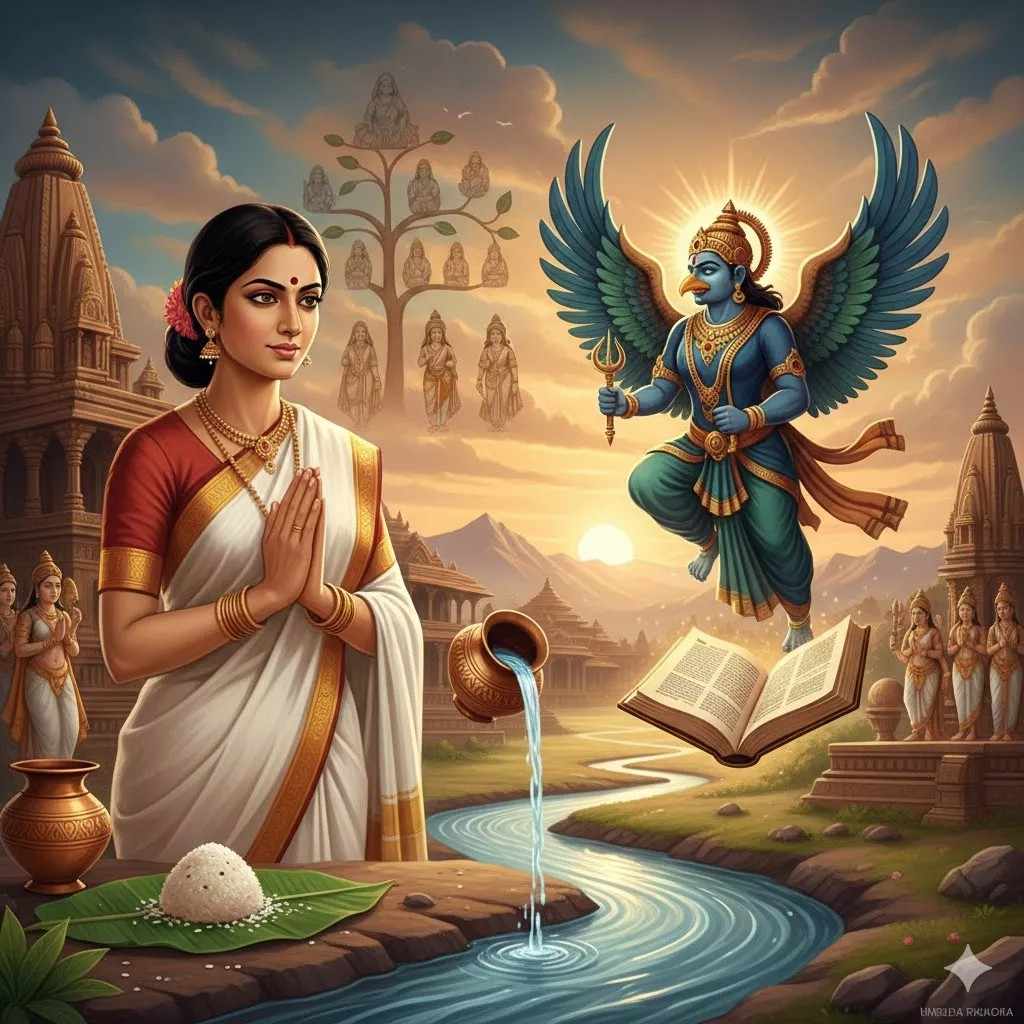
Hinduism views illness through lenses of karma (actions and their consequences), atman (the eternal soul), and samsara (the cycle of birth, death, and rebirth). These concepts offer a framework for understanding why suffering arises and how to navigate it with acceptance, devotion, and hope. While modern medicine treats the body, Hindu traditions provide spiritual tools for the mind and soul, fostering resilience. Blending these with evidence-based care creates a holistic path, aligning perfectly with “United by Unique”—meeting each person’s spiritual needs while uniting medical and devotional support.
Hinduism’s View on Illness: Karma, Atman, and Samsara
In Hindu philosophy, the atman—the unchanging, divine self—is eternal and identical with Brahman (ultimate reality). The physical body is temporary, part of samsara, the endless cycle of rebirth driven by karma. Actions (good or bad) accumulate karmic impressions that influence future lives, including health challenges.
Cancer, like other illnesses, may be seen as a manifestation of past karma, a means for spiritual growth, or part of life’s impermanence. Studies on Hindu cancer patients in palliative care, such as a qualitative study published in the Indian Journal of Palliative Care (Simha et al., 2013), reveal common spiritual concerns: belief in karma, concept of rebirth, faith in God, benefit of pooja, acceptance of one’s situation, and questions like “Why me?” Participants often viewed their diagnosis as karmic fruition but found solace in devotion, noting that karma is not binding—devotion and good actions can mitigate effects.
Another review emphasizes that Hindus may accept suffering as transitory, using it for spiritual advancement toward moksha (liberation from samsara). This perspective reduces fear of death, viewing it as a transition rather than an end. Importantly, teachings clarify that not all diseases stem solely from “bad” past karma—multiple causes exist, and ordinary people cannot pinpoint exact origins (as per Bhagavad Gita insights). Blaming oneself harshly can cause distress; instead, focus on present devotion and acceptance fosters peace.
Coping Through Rituals, Family Support, and Acceptance
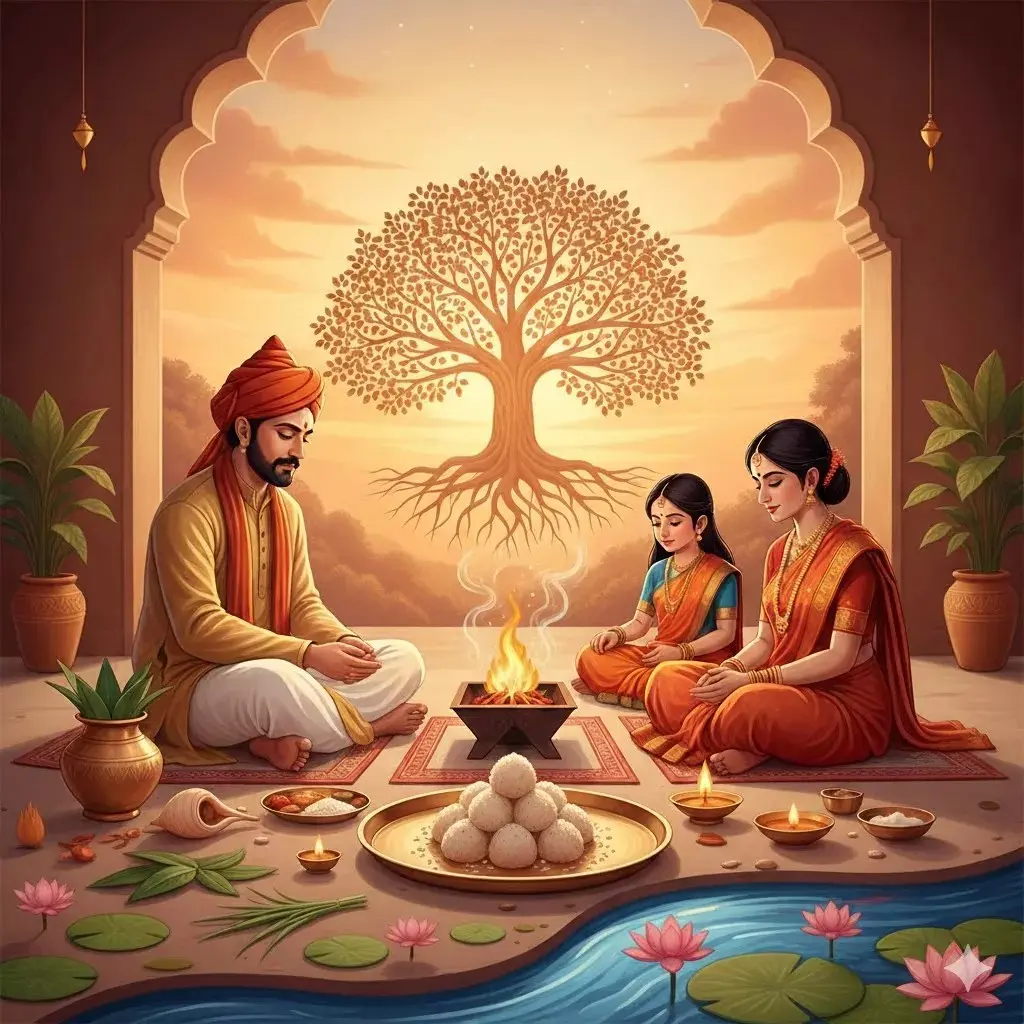
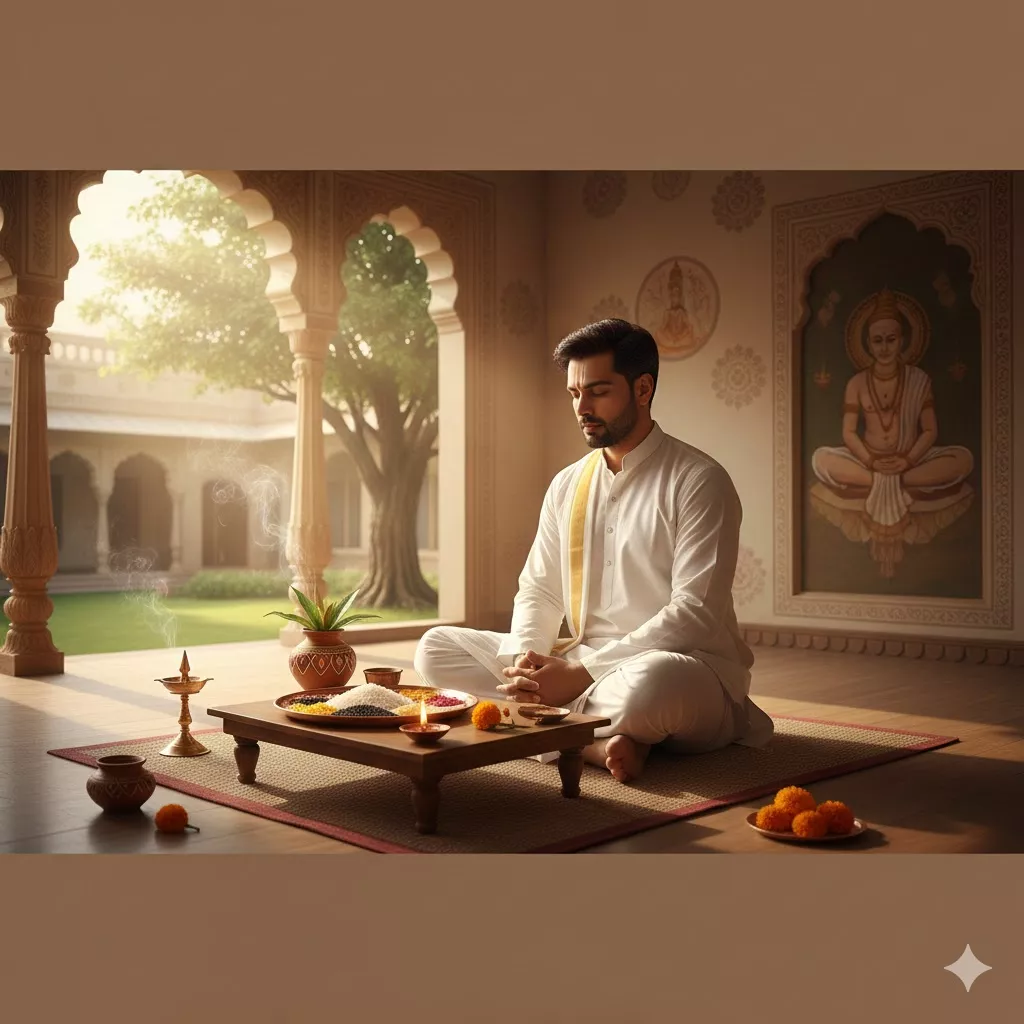
Hindu coping often involves daily rituals for emotional and spiritual strength. In palliative settings, patients report pooja as beneficial—offering prayers, lighting lamps, or chanting mantras like the Mahamrityunjaya Mantra invokes protection and healing vibrations.
Common practices include:
- Daily pooja at home altars, even bedside during treatment.
- Tulsi (holy basil) leaves or water infused with tulsi for purification.
- Ganga jal (holy Ganges water) sipped or sprinkled for blessings.
- Yoga and pranayama to calm the mind and strengthen the body.
- Family involvement—joint prayers, reading scriptures like Bhagavad Gita, or singing bhajans—provides communal support, reducing isolation.
Acceptance is key: illness as karma encourages detachment from the body while nurturing the atman. This avoids stigma—framing cancer as “punishment” can cause shame, but Hinduism teaches compassion, viewing suffering as an opportunity for growth and atonement through devotion.
Blending Ayurveda, Yoga with Modern Treatment
Increasingly, integrative approaches combine Ayurveda and yoga with conventional oncology. Studies show benefits: an observational study on integrated-pathy (Ayurveda, yoga, naturopathy) reported reduced cancer-related fatigue. Pilot programs with Ayurvedic herbs during chemotherapy improved nausea, appetite, and quality of life. The Ministry of Ayush’s Integrative Oncology Research and Care Centre (launched 2025) exemplifies this, merging Panchakarma, yoga, and modern rehab.
Yoga strengthens mind-body connection, alleviates stress (a cancer risk factor), and supports recovery. Ayurveda offers herbs like turmeric (curcumin) for anti-inflammatory effects, used complementarily—not as replacement. Oncologists recommend consulting qualified practitioners to avoid interactions.
Avoiding Stigma and Embracing Compassion
Stigma around karma as “fault” can burden patients—studies note self-blame or “Why me?” questions cause distress, especially in women worried about family futures. Hinduism counters this: karma explains without condemning, emphasizing present actions, forgiveness, and divine grace. Families and caregivers should offer empathy, not judgment—focus on love, service (seva), and shared rituals.
Survivor Stories and Healing Shrines for Hope
Hindu survivors often credit faith alongside treatment. One devotee described cancer as a “blessing” for deeper Krishna devotion during illness, finding pain eased by temple visits and kirtan. Another shared miraculous improvement after pilgrimage, attributing recovery to divine intervention.
Healing shrines provide hope: Vaitheeswarankoil (Tamil Nadu), dedicated to Lord Shiva as healer, draws devotees for sacred water believed to cure chronic ailments. Karkateswarar Temple (Kumbakonam) is renowned for cancer relief through faith. Thottuva Dhanvantari Temple (Kerala) offers Ayurvedic blessings. Visits involve prayers, offerings, and immersion in positive energy—many report emotional upliftment, even if physical healing varies.
These stories highlight “United by Unique”: each journey personal, yet united in devotion.
Resources for Hindu Families
- Spiritual support: Consult temple priests or ISKCON centers for Bhagavad Gita readings.
- Integrative care: All India Institute of Ayurveda centers or Patanjali Yoggram.
- Palliative guidance: Indian Journal of Palliative Care resources; organizations like Cancer Patients Aid Association with cultural sensitivity.
- Hotlines: National Cancer Helpline (India) alongside spiritual counseling.
On World Cancer Day 2026, let us unite in compassion—honoring unique spiritual needs while embracing medical advances. Hinduism teaches that true healing encompasses body, mind, and atman. May faith, rituals, and modern care bring strength, peace, and hope to all affected.
Keywords: Hindu view on cancer, cancer and karma Hinduism, World Cancer Day Hindu families 2026.
Sources: Indian Journal of Palliative Care (Simha et al., 2013); various palliative care reviews; integrative oncology studies (Patanjali, AIIA); Hindu philosophical texts (Bhagavad Gita, Upanishads). For hindutone.com—empathetic, authoritative, culturally resonant.
Related posts:
 Malabar Gold Faces Boycott After Hiring Pakistani Influencer Who Mocked Operation Sindoor
 PM Modi Celebrates Diwali 2025 Aboard INS Vikrant with Navy Personnel
 President Droupadi Murmu’s Historic Visit to Sabarimala Temple: A Milestone for Devotion and Tradition
 PM Modi to Hoist Saffron Flag at Ram Temple in Ayodhya Today: Historic Dhwajarohan on Vivah Panchami 2025
 How British Rule Popularized January 1 in India
 Shatak Teaser Showcases RSS’s 100-Year Journey


 ︎
︎

