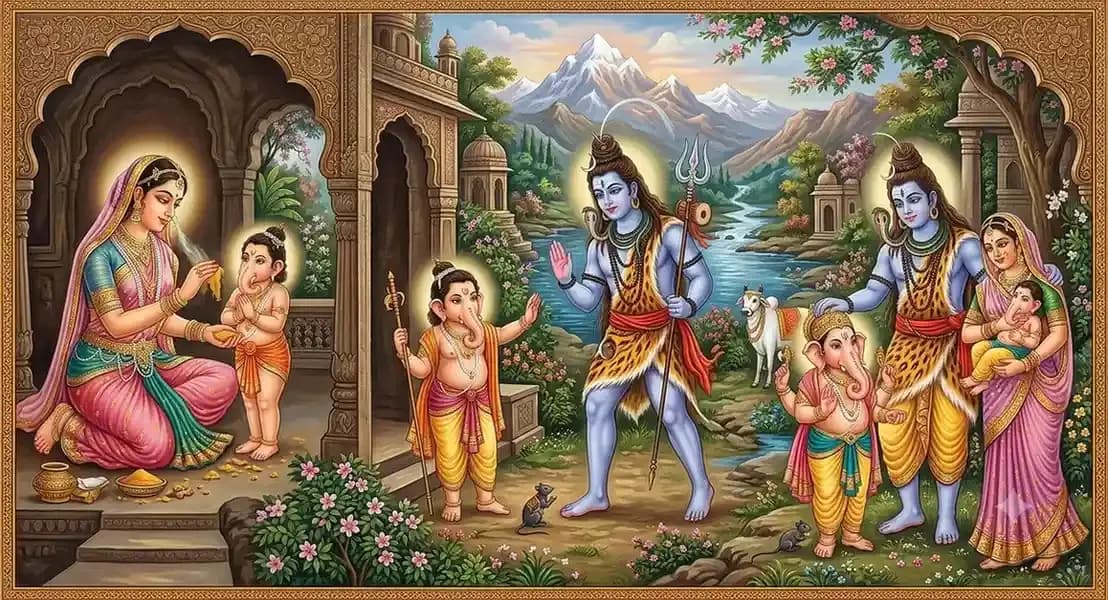
Amavasya Rituals & Mantras (New Moon Day Complete Guide)
अमावस्या व्रत एवं पूजा विधि | HinduTone.com "Honour your ancestors, appease departed souls, and harness the profound spiritual power of the New Moon with these…

अमावस्या व्रत एवं पूजा विधि | HinduTone.
अमावस्या व्रत एवं पूजा विधि | HinduTone.com
"Honour your ancestors, appease departed souls, and harness the profound spiritual power of the New Moon with these sacred Amavasya rituals and mantras."
What Is Amavasya & Why Is It Sacred in Hinduism?
अमावस्या का महत्त्व
Amavasya (अमावस्या) is the New Moon day — the 30th and final tithi (lunar day) of the Krishna Paksha (dark fortnight) in the Hindu lunar calendar. It occurs once every month when the Sun and Moon are conjunct in the same zodiac sign and the Moon is completely invisible in the night sky.
In Hindu tradition, Amavasya is considered one of the most spiritually potent days of the entire lunar month. The veil between the world of the living and the realm of ancestors (Pitru Loka) is believed to be at its thinnest on this day, making it the most auspicious time for:
- [image: 👴] Pitru Tarpan — offering water and prayers to departed ancestors
- [image: 🕉️] Shiva worship — Lord Shiva is the presiding deity of the New Moon
- [image: 🌑] Kali Ma puja — Goddess Kali's energy is most potent on Amavasya
- [image: 🌿] Deep meditation and spiritual sadhana — the dark moon amplifies inner work
- [image: 🔥] Havan and Pitru Shanti — fire rituals to pacify ancestral souls
Important: Amavasya is not considered inauspicious — it is deeply sacred. It is a day of inward reflection, ancestral honour, and powerful spiritual practice.
Special Amavasyas of the Year
Deities Worshipped on Amavasya
Must-Perform Amavasya Rituals (Step-by-Step)
पूजा विधि
Ritual 1 — Brahma Muhurta Snan (Pre-Dawn Holy Bath)
ब्रह्म मुहूर्त स्नान
The Amavasya bath is one of the most purifying acts in Hindu tradition. Taking a bath in a sacred river, lake, or at home with holy water before sunrise is considered equivalent to thousands of regular baths on Amavasya.
Steps:
- Wake up during Brahma Muhurta (4:00–6:00 AM)
- Add black sesame seeds (til), Gangajal, and tulsi leaves to your bath water
- Recite "Om Namah Shivaya" or "Om Pitru Devaya Namah" during the bath
- If possible, take a bath in a sacred river (Ganga, Yamuna, Godavari) — bathing in a holy river on Amavasya is considered supremely meritorious
- Wear clean white or black clothes after bathing
- Do NOT apply oil to hair or body on Amavasya
Ritual 2 — Pitru Tarpan (Ancestral Water Offering)
पितृ तर्पण
Pitru Tarpan is the single most important ritual on Amavasya. It is the sacred act of offering water mixed with black sesame seeds to departed ancestors, seeking their blessings and freeing them from any lingering earthly attachments.
Who should perform Tarpan? Every Hindu — male or female — whose parents, grandparents, or great-grandparents have passed away should ideally perform Tarpan on every Amavasya.
Steps:
- Stand facing South (the direction of Pitru Loka / the realm of ancestors)
- Fill a copper or clay pot with clean water
- Add black sesame seeds (til), kusha grass, and a few drops of Gangajal
- Hold the pot in both hands and pour water slowly through the gap between your thumb and index finger (this mudra is called Pitru Tirtha)
- As you pour, recite the departed person's name and gotra (ancestral lineage): "(Name) Sharma/Varma/Gupta Gotraya, Pitru Devaya Tarpayami"
- Offer Tarpan 3 times for each ancestor (father, paternal grandfather, great-grandfather; mother's side similarly)
- After Tarpan, offer food (kheer, til laddoo, or rice) near a body of water or at the base of a Peepal tree
Sequence of Ancestors to Remember in Tarpan:
Ritual 3 — Pind Daan (Ancestral Rice Ball Offering)
पिण्ड दान
Pind Daan is the offering of rice balls (pinda) made from cooked rice, black sesame, honey, and ghee — representing the physical body being offered to nourish the ancestral soul. While the full Pind Daan ceremony is traditionally performed at sacred sites like Gaya, Prayagraj, or Varanasi, a simplified version can be performed at home on Amavasya.
Steps:
- Cook plain rice; mix with black sesame (til), ghee, honey, and milk
- Shape into three round balls (pinda) — one for father, one for grandfather, one for great-grandfather
- Place the pindas on kusha grass or a banana leaf
- Face South and place the pindas on the ground
- Offer water from a copper vessel over each pinda
- Recite the Pitru Gayatri Mantra while offering
- Leave the pindas at a river bank, Peepal tree base, or a cow pasture — crows eating the pindas is considered an extremely auspicious sign that the ancestors have accepted the offering
Ritual 4 — Peepal Tree Worship on Amavasya
अमावस्या पीपल पूजा
The Peepal tree is believed to be the abode of ancestors and Lord Vishnu on Amavasya. Circumambulating and worshipping the Peepal tree on the New Moon day is one of the most powerful Pitru Shanti (ancestral peace) rituals.
Steps:
- Visit a Peepal tree before noon on Amavasya
- Pour water mixed with black sesame and milk at the base of the tree
- Light a sesame oil diya at the base
- Tie a white or black thread around the trunk while chanting "Om Pitru Devaya Namah"
- Circumambulate (Parikrama) the Peepal tree 108 times (or 11, 21, or 51 times based on capacity)
- Offer kheer (sweet rice pudding) at the base of the tree
- Do NOT cut, break, or disturb the Peepal tree on Amavasya
Ritual 5 — Shiva Puja on Amavasya
अमावस्या शिव पूजा
Lord Shiva is intimately connected with Amavasya — He wears the crescent Moon (Chandra) on his head and presides over the dark moon's transformative energy. Worshipping Shiva on Amavasya is said to grant liberation from the cycle of birth and death.
Steps:
- Perform Shivling Abhishek with water, milk, honey, curd, ghee, and sugar (Panchamrit)
- Offer bilva (bael) leaves in sets of three while reciting "Om Namah Shivaya"
- Offer dhatura flowers, white flowers, and blue flowers to Shiva
- Light a ghee diya with five wicks before the Shivling
- Recite the Shiva Panchakshara Stotra or Maha Mrityunjaya Mantra 108 times
- Offer belpatra (bilva leaves) while chanting each name of the Shiva Sahasranama
- This puja is especially powerful if Amavasya falls on a Monday (Somvati Amavasya)
Ritual 6 — Kali Puja on Amavasya
काली पूजा — अमावस्या
Goddess Kali's energy is at its absolute peak on Amavasya — the dark moon mirrors her fierce, transformative, and protective nature. Kali puja on Amavasya night (especially Kartik Amavasya) is one of the most powerful tantric-devotional practices.
Steps:
- Begin Kali puja after sunset — the night energy of Amavasya is Kali's domain
- Set up Kali Ma's image or yantra on a red or black cloth
- Offer red hibiscus flowers, red sindoor, and black mustard seeds
- Light mustard oil diyas — the more the better; 11 or 108 diyas for full Kali Amavasya puja
- Offer red wine (symbolic), rice, coconut, and black sesame laddoo as naivedya
- Burn loban (benzoin), gugal, and camphor as dhoop
- Recite the Kali Beej Mantra and Mahakali Stotram
- This puja is especially observed in Bengal (Kali Puja / Shyama Puja) and throughout India on Kartik Amavasya
Ritual 7 — Amavasya Havan (Sacred Fire Ritual)
अमावस्या हवन
Performing a Havan (sacred fire ritual) on Amavasya is one of the most powerful ways to collectively benefit all ancestors, remove negative energies, and purify the home environment.
Steps:
- Set up the Havan Kund (fire pit) using bricks or a copper/clay vessel
- Use mango wood, peepal wood, or samidha (sacred sticks) as the primary fuel
- Prepare Havan samagri — mix of sesame, barley, ghee, dried fruits, sandalwood, and herbs
- Light the sacred fire while reciting "Om Agnaye Namah"
- Offer oblations (ahuti) with each mantra — at minimum use Gayatri Mantra or Pitru Mantra
- Offer til (sesame), ghee, and barley as the core Amavasya Havan offering
- Conclude with Poorna Ahuti (the final grand offering of coconut, ghee, and camphor)
- The smoke from the Havan is believed to carry messages and nourishment directly to the Pitru Loka
Powerful Amavasya Mantras to Chant
अमावस्या के पवित्र मंत्र
Use a rudraksha or crystal mala (108 beads) for chanting. Face South for Pitru mantras and North or East for Shiva and Kali mantras.
[image: 👴] Mantra 1 — Pitru Tarpan Mantra
पितृ तर्पण मंत्र
ॐ पितृभ्यः स्वधायिभ्यः स्वधा नमः ।
पितामहेभ्यः स्वधायिभ्यः स्वधा नमः ।
प्रपितामहेभ्यः स्वधायिभ्यः स्वधा नमः ॥
Transliteration:
Om Pitribhyah Swadhayibhyah Swadha Namah | Pitamahebhyah Swadhayibhyah Swadha Namah | Prapitamahebhyah Swadhayibhyah Swadha Namah
Meaning: "I offer this Swadha (sacred ancestral water) to my fathers, grandfathers, and great-grandfathers. May they be nourished, satisfied, and liberated."
Benefits: Directly nourishes and appeases ancestral souls; removes Pitru Dosha; brings peace to the lineage Recite: Once for each generation of ancestor during Tarpan offering
[image: 🌿] Mantra 2 — Pitru Gayatri Mantra
पितृ गायत्री मंत्र
ॐ पितृगणाय विद्महे
जगत् धारिणे धीमहि ।
तन्नः पितरः प्रचोदयात् ॥
Transliteration:
Om Pitriganaya Vidmahe Jagat Dharinae Dhimahi | Tannah Pitarah Prachodayat
Meaning: "We meditate upon the assembly of ancestral souls — the sustainers of the world. May our ancestors inspire and guide our intellect and actions."
Benefits: Deepest Pitru Shanti; heals ancestral karma; opens blessings from departed souls for the entire family lineage Chant: 108 times on every Amavasya
[image: 🔱] Mantra 3 — Maha Mrityunjaya Mantra (For Ancestral Liberation)
महामृत्युञ्जय मंत्र
ॐ त्र्यम्बकं यजामहे
सुगन्धिं पुष्टिवर्धनम् ।
उर्वारुकमिव बन्धनान्
मृत्योर्मुक्षीय माऽमृतात् ॥
Transliteration:
Om Tryambakam Yajamahe Sugandhim Pushtivardhanam | Urvarukamiva Bandhanat Mrityormukshiya Maamritat
Meaning: "We worship the three-eyed Lord Shiva who is fragrant and nourishes all. May He liberate us — like a ripe cucumber from its vine — from death, granting us immortality."
Benefits: Liberates ancestral souls trapped in lower realms; removes fear of death; powerful healing and protection mantra; most important mantra for Amavasya Shiva puja Chant: 108 times during Shiva puja on Amavasya
[image: 🌑] Mantra 4 — Kali Beej Mantra
काली बीज मंत्र
ॐ क्रीं काल्यै नमः ॥
Transliteration:
Om Kreem Kalyai Namah
Meaning: "I bow to Goddess Kali — the primordial dark mother, the destroyer of all that is false."
Benefits: Removes deep-rooted negative energies, black magic, evil eye; grants fierce protection; transforms fear into fearlessness; most powerful on Amavasya night Chant: 108 times after sunset on Amavasya
[image: 🕉️] Mantra 5 — Pitru Moksha Mantra
पितृ मोक्ष मंत्र
ॐ नमो भगवते वासुदेवाय ।
पितृ तृप्तये स्वधा ।
ॐ पितृ देवतायै नमः ॥
Transliteration:
Om Namo Bhagavate Vasudevaya | Pitru Triptaye Swadha | Om Pitru Devatayai Namah
Meaning: "I bow to Lord Vasudeva (Vishnu). May my ancestors be fully satisfied and nourished. I bow to the divine assembly of ancestral deities."
Benefits: Grants moksha (liberation) to ancestral souls; removes Pitru Dosha from the family; invites Vishnu's grace upon all ancestors Chant: 108 times while facing South on Amavasya
[image: 🌑] Mantra 6 — Mahakali Mantra (Amavasya Night)
महाकाली मंत्र
ॐ ह्रीं श्रीं क्लीं
परमेश्वरि कालिके
स्वाहा ॥
Transliteration:
Om Hreem Shreem Kleem Parameshwari Kalike Swaha
Meaning: "O supreme Goddess Kali — the universal mother and destroyer of all illusion — I offer this mantra as a sacred oblation to you."
Benefits: Removes all obstacles, enemies, and negative karmic influences; grants divine protection; supremely powerful on Amavasya night Chant: 108 times after sunset during Kali puja on Amavasya
[image: 🔥] Mantra 7 — Havan Mantra for Pitru Shanti
पितृ शांति हवन मंत्र
ॐ पितृभ्यो नमः स्वाहा ।
ॐ पितामहेभ्यो नमः स्वाहा ।
ॐ प्रपितामहेभ्यो नमः स्वाहा ।
ॐ मातामहेभ्यो नमः स्वाहा ।
ॐ सर्व पितृभ्यो नमः स्वाहा ॥
Transliteration:
Om Pitribhyo Namah Swaha | Om Pitamahebhyo Namah Swaha | Om Prapitamahebhyo Namah Swaha | Om Matamahebhyo Namah Swaha | Om Sarva Pitribhyo Namah Swaha
Meaning: "I offer this sacred oblation into the fire for my father, grandfather, great-grandfather, maternal grandfather, and all ancestral souls. May they be nourished and liberated."
Benefits: Most powerful fire offering for ancestral peace; removes all Pitru Dosha; purifies the home and lineage Offer: One ahuti (oblation) per line into the sacred Havan fire on Amavasya
[image: 🌿] Mantra 8 — Shiva Mantra for Amavasya
अमावस्या शिव मंत्र
ॐ नमः शिवाय ।
ॐ तत्पुरुषाय विद्महे
महादेवाय धीमहि ।
तन्नो रुद्रः प्रचोदयात् ॥
Transliteration:
Om Namah Shivaya | Om Tatpurushaya Vidmahe Mahadevaya Dhimahi | Tanno Rudrah Prachodayat
Meaning: "I bow to Lord Shiva. We meditate upon the Supreme Being (Shiva), the Great God. May Rudra inspire and guide our intellect."
Benefits: Liberates ancestral souls, purifies the home on Amavasya, destroys negative karma accumulated over lifetimes Chant: 108 times during Shiva Abhishek on Amavasya
Amavasya Fasting Rules & Guidelines
अमावस्या व्रत नियम
Amavasya Puja Offerings (Samagri) at a Glance
पूजा सामग्री
Pitru Dosha — Key Information & Remedies
पितृ दोष और उपाय
What is Pitru Dosha? Pitru Dosha is a karmic affliction caused by unfulfilled obligations toward ancestors — when proper last rites (Antim Sanskar) were not performed, or when ancestors died in distress or with unfulfilled desires. It manifests in the birth chart through specific planetary placements (usually Sun, Moon, or Rahu in certain houses).
Signs of Pitru Dosha:
- Repeated miscarriages or difficulty having children
- Unexplained illnesses or mental health struggles in the family
- Persistent financial difficulties despite hard work
- Marital problems or delay in marriage
- Recurring nightmares or a sense of ancestral presence
- Untimely deaths in successive generations
Best Remedies for Pitru Dosha:
- Perform Pitru Tarpan on every Amavasya
- Observe Mahalaya Amavasya (most powerful annual Pitru Paksha day) with full Shraddha rituals
- Feed crows (Shani and Pitru's bird), cows, dogs, and Brahmins on Amavasya
- Perform Pind Daan at Gaya (Bihar), Prayagraj, or Varanasi for permanent Pitru Shanti
- Recite Pitru Gayatri Mantra 108 times every Amavasya
- Plant a Peepal tree and care for it — this is considered an act of giving a new body to ancestral souls
- Donate rice, sesame, white cloth, and silver on Amavasya to a Brahmin or temple
Somvati Amavasya — The Rarest & Most Powerful Amavasya
सोमवती अमावस्या
When Amavasya falls on a Monday (Somvar), it is called Somvati Amavasya — one of the rarest and most powerful tithis in the Hindu calendar. It occurs only 2–5 times per year.
Special Rituals for Somvati Amavasya:
- Women circumambulate the Peepal tree 108 times while wrapping white thread around the trunk — this is said to grant protection for the husband's long life
- Offer milk, honey, and white flowers to the Shivling — Soma (Moon) is Shiva's crown jewel
- Donate white sesame, rice, and silver to Brahmins on this day
- The merit of Somvati Amavasya rituals is said to be equivalent to a full year of daily worship
Benefits of Observing Amavasya Rituals
- [image: 👴] Ancestral Blessings — Departed souls bless the entire family lineage
- [image: 🛡️] Removal of Pitru Dosha — Karmic ancestral debt is cleared
- [image: 👶] Fertility & Progeny — Pitru Shanti opens blocked blessings for children
- [image: 💰] Financial Healing — Ancestral karma released; prosperity flows to the family
- [image: 🧘] Deep Spiritual Growth — Dark moon amplifies meditation and inner work
- [image: 🔮] Psychic & Intuitive Development — Kali's energy sharpens the third eye
- [image: 🛡️] Protection from Negative Forces — Kali puja on Amavasya removes evil eye and black magic
- [image: ❤️] Healing Family Wounds — Tarpan and Pind Daan heal generational trauma
- [image: 🕉️] Liberation (Moksha) — Maha Mrityunjaya Mantra frees both the devotee and their ancestors
- [image: 🌿] Peace in the Home — After Amavasya rituals, many families notice a palpable lightness in the household
Frequently Asked Questions (FAQ)
Q1: Is Amavasya inauspicious or auspicious in Hinduism? Amavasya is often misunderstood as inauspicious. In reality, it is deeply sacred and spiritually potent. While Amavasya is not ideal for starting new worldly ventures (marriages, business launches), it is supremely auspicious for spiritual practices, ancestral rituals, Shiva and Kali worship, deep meditation, and charity. The power of any mantra chanted on Amavasya is multiplied many times over.
Q2: Can women perform Pitru Tarpan on Amavasya? Yes. According to many contemporary scholars and dharmic teachers, women — especially widows or those whose fathers, husbands, or sons have passed — can and should perform Tarpan on Amavasya. Some traditional schools differ, but the intent and devotion behind Tarpan is universally accepted. Women may also perform Peepal tree worship and Shiva puja on Amavasya without any restriction.
Q3: What is the difference between Amavasya Shraddha and Mahalaya Shraddha? Every Amavasya allows for basic Pitru Tarpan and Shraddha rituals for one's immediate departed ancestors. Mahalaya Amavasya (the Amavasya at the end of Pitru Paksha in Ashwin month) is the grand annual Shraddha ceremony where one can perform Shraddha for ALL departed ancestors across multiple generations, including those whose death dates are unknown. It is the single most important Pitru ritual of the entire year.
Q4: What if I don't know my gotra (ancestral lineage) for Tarpan? If you don't know your gotra, you may use "Kashyapa Gotra" — Kashyapa Muni is considered the ancestral sage of all humanity. When reciting the Tarpan mantra, say "Kashyapa Gotrasya" in place of your gotra name. The sincerity of the offering is more important than the precise ritual formulation.
Q5: Which Amavasya is the most powerful for removing Pitru Dosha? Mahalaya Amavasya (end of Pitru Paksha) is the most powerful for Pitru Dosha removal. Among regular monthly Amavasyas, Somvati Amavasya (Monday + New Moon) and Shani Amavasya (Saturday + New Moon) are considered especially potent. Performing Pitru Pind Daan at Gaya, Prayagraj, or Varanasi even once is said to permanently resolve Pitru Dosha.
Q6: Can I perform Amavasya rituals at home or must I go to a river? All Amavasya rituals can be performed at home. For Tarpan, if a river is not accessible, use a clean copper or clay vessel filled with water, perform the ritual facing South, and then pour the remaining water at the base of a Peepal tree or into a flowing water source (canal, lake). The intention and mantra are the most important components — the sacred river is ideal but not mandatory.
Quick Reference — Amavasya Ritual Checklist
- Wake up during Brahma Muhurta and take a bath with til and Gangajal
- Wear white or black clean clothes
- Perform Surya Arghya facing East at sunrise
- Perform Pitru Tarpan facing South with copper vessel, til, and kusha grass
- Prepare and offer Pinda (rice balls with sesame) for ancestors
- Visit and circumambulate the Peepal tree
- Perform Shiva Abhishek with Panchamrit and bilva leaves
- Chant Maha Mrityunjaya Mantra 108 times
- Perform Havan with sesame, ghee, and barley for Pitru Shanti
- Perform Kali puja after sunset with red flowers and mustard oil diyas
- Chant Pitru Gayatri Mantra 108 times
- Feed crows, cows, dogs, and Brahmins or the poor
- Donate black sesame, rice, white cloth, and silver
- Observe fast — break at sunset after evening puja
- Sit in silent meditation for at least 20 minutes on Amavasya night
Amavasya Ritual Timings at a Glance
"Pitru Devo Bhava — May your ancestors be like God to you. Honour them and they shall bless you across generations." — Ancient Taittiriya Upanishad Principle
May Your Ancestors Be at Peace and Shower Their Blessings Upon You
For more Hindu rituals, mantras, vrat kathas, and devotional guides — visit HinduTone.com
You might also like
Pushya Masam: The Most Auspicious Month for Pithru Tarpanam in Hindu Tradition

Pitru Paksha 2026 — 16 Days of Ancestor Worship (September 26 – October 10), Daily Rituals & Complete NRI Tarpan Guide for USA, UK, Canada
Bhagya Suktam: The Vedic Dawn Hymn for Fortune, Prosperity and an Auspicious Day