


Mahamrityunjaya Mantra: Healing, Protection & Inner Strength

A Living Experience of Grace: When Death Stepped Back
There are moments in life when fear grips the heart so tightly that even breath feels uncertain. A few years ago, during one such moment, I witnessed the living power of the Mahamrityunjaya Mantra—not as a theory from scriptures, but as an intimate, soul-shaking experience.
A close family member was rushed into emergency care after a sudden medical collapse. Doctors spoke in guarded tones, machines beeped relentlessly, and time seemed suspended between hope and despair. That night, helpless yet refusing to surrender to fear, I sat outside the ICU and began chanting softly:
“Om Tryambakam Yajamahe
Sugandhim Pushtivardhanam
Urvarukamiva Bandhanan
Mrityor Mukshiya Maamritat”
With each repetition, something shifted. Fear loosened its grip. Tears flowed, but alongside them came a deep, inexplicable calm—as if Lord Shiva himself was present, assuring protection. Over the following days, against grim odds, recovery unfolded. Doctors called it “unexpected.” For us, it was grace.
That is the power of the Mahamrityunjaya Mantra—the Conqueror of Death, the chant that heals the body, steadies the mind, and liberates the soul from fear.
What Is the Mahamrityunjaya Mantra?
The Mahamrityunjaya Mantra is one of the most powerful and revered mantras in Hinduism, dedicated to Lord Shiva, the eternal yogi, destroyer of ignorance, and compassionate healer.
It originates from the Rig Veda (7.59.12) and is also known as:
- Trayambakam Mantra
- Mrityunjaya Mantra
- Rudra Mantra
Unlike mantras that seek material prosperity alone, this mantra addresses the deepest human fear: death, disease, and suffering—and transforms it into fearlessness, longevity, and liberation (moksha).
The Full Mahamrityunjaya Mantra (Sanskrit & Meaning)
Sanskrit Mantra
Om Tryambakam Yajamahe
Sugandhim Pushtivardhanam
Urvarukamiva Bandhanan
Mrityor Mukshiya Maamritat
Literal Meaning: Line-by-Line Explanation
Om
The primordial sound of creation, aligning the chanter with cosmic consciousness.
Tryambakam
“One with three eyes” — Lord Shiva:
- Sun (past)
- Moon (future)
- Fire (present awareness)
These eyes symbolize total awareness beyond time.
Yajamahe
“We worship, we invoke with reverence.”
Sugandhim
“The fragrant one” — Shiva whose presence purifies existence, like divine aroma cleansing negativity.
Pushtivardhanam
“The nourisher and sustainer of health, vitality, and spiritual growth.”
Urvarukamiva Bandhanan
“Like a ripe cucumber effortlessly separating from the vine…”
Mrityor Mukshiya
“Liberate us from death, fear, and bondage.”
Maamritat
“Not from immortality, but towards immortality.”
Esoteric Meaning: The Cucumber of Mortality
The metaphor of the ripe cucumber is deeply symbolic.
- A cucumber, when ripe, naturally detaches from the vine without force.
- Similarly, the mantra prays not for violent escape from death, but for graceful liberation from the bondage of mortality and fear.
- Death becomes a transition, not terror.
This is why the Mahamrityunjaya Mantra is not just for the sick—it is for anyone seeking freedom from fear.
Vedic Origins and Spiritual Authority
- Found in the Rig Veda
- Associated with Sage Markandeya, who conquered death itself through devotion to Shiva
- Central to Shaiva traditions, temple rituals, and healing ceremonies across India
For thousands of years, saints, yogis, householders, and even kings have relied on this mantra during:
- Epidemics
- Wars
- Personal crises
- Spiritual sadhana
Its power is time-tested and eternal.
Mahamrityunjaya Mantra Benefits for Health
1. Healing Chronic and Acute Illness
Regular chanting is believed to:
- Activate self-healing mechanisms
- Improve recovery from surgery or long-term disease
- Support patients during critical conditions
2. Protection from Accidents and Untimely Death
Traditionally chanted for:
- People with dangerous professions
- Travelers
- During planetary doshas (especially Markandeya Dosha)
3. Strengthening the Immune System
Modern practitioners report:
- Reduced stress hormones
- Better sleep
- Improved overall vitality
Spiritual Benefits of Mahamrityunjaya Mantra
1. Fearlessness in the Face of Death
The mantra dissolves:
- Fear of death
- Anxiety about the future
- Trauma from past losses
2. Karmic Cleansing
Chanting helps:
- Burn past karmic impressions
- Reduce suffering caused by unseen karmas
- Create spiritual protection (kavach)
3. Emotional & Mental Healing
- Calms grief
- Heals heartbreak
- Brings emotional stability during chaos
Modern Benefits: Science Meets Spirituality
Though ancient, the mantra aligns beautifully with modern science:
- Sound vibrations calm the nervous system
- Repetition induces meditative alpha brain waves
- Breath regulation improves oxygen flow
- Mantra focus reduces cortisol (stress hormone)
Many practitioners experience:
- Relief from anxiety and panic
- Mental clarity
- Deep peace during uncertainty
How to Chant Mahamrityunjaya for Healing
Ideal Time
- Early morning (Brahma Muhurta)
- Sunrise or sunset
- During illness or crisis: anytime
Number of Repetitions
- 108 times daily (recommended)
- During emergencies: 11, 21, or continuous chanting
- Advanced sadhana: 1.25 lakh repetitions
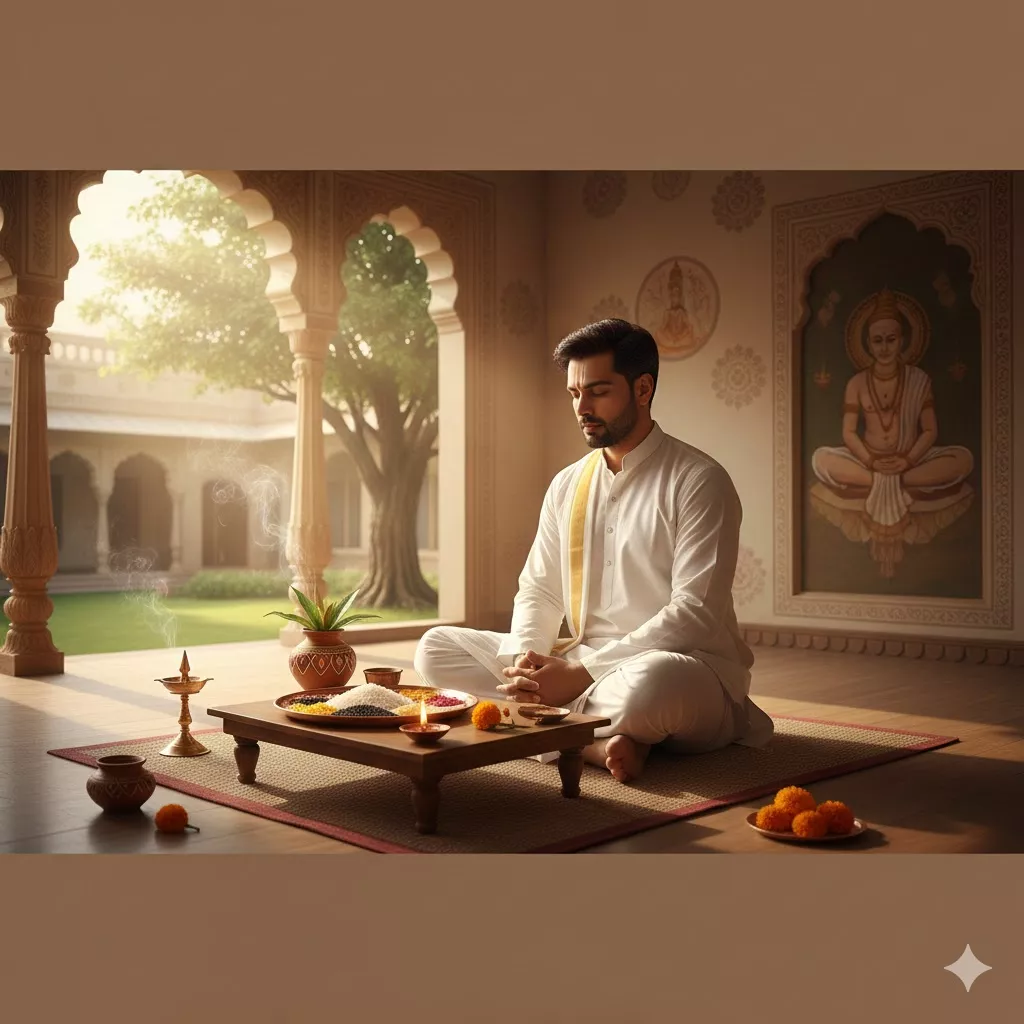
Method
- Sit facing east or north
- Light a lamp
- Offer water or bel patra to Shiva (if possible)
- Chant slowly with devotion, not speed
- Focus on Shiva’s compassionate form
Precautions While Chanting
- Chant with faith and purity of intention
- Avoid chanting casually or mockingly
- Maintain mental calm
- Do not stop midway during a sankalpa (vow period)
The mantra is protective, not dangerous—but sincerity matters.
Combining Mantra with Yoga & Pranayama
For deeper healing:
- Practice Anulom Vilom before chanting
- Gentle Shavasana after chanting
- Visualize healing white light around the body
This combination amplifies physical and spiritual benefits.
Stories of Power: Sage Markandeya
Sage Markandeya was destined to die at 16. On the appointed day, he embraced the Shiva Lingam and chanted the Mahamrityunjaya Mantra with total surrender.
When Yama, the god of death, arrived, Lord Shiva emerged from the lingam and defeated death itself, granting Markandeya eternal youth and immortality.
This story is not mythology—it is a symbol of devotion overpowering destiny.
Temple Rituals & Collective Chanting
Across India:
- Mahamrityunjaya Homas are performed for the sick
- Continuous chanting (Akanda Japam) during pandemics
- Offered during Maha Shivaratri and Pradosham
Collective chanting multiplies energy and healing.
40-Day Mahamrityunjaya Sadhana Plan
Daily Practice:
- 108 chants
- Same time, same place
- Light lamp daily
Diet & Lifestyle:
- Simple vegetarian food
- Reduce negativity and anger
- Practice silence for few minutes daily
Result:
- Noticeable inner strength
- Reduced fear
- Improved health and clarity
Chanting During Crisis: Why It Works
In moments of danger:
- The mantra anchors the mind
- Prevents panic
- Invokes divine protection instantly
Even silent mental chanting carries power.
Mahamrityunjaya and Moksha
Ultimately, the mantra does not merely prolong life—it prepares the soul for liberation.
It teaches us:
- Life is sacred
- Death is not the enemy
- Fear is the real bondage
Shiva grants Amritatva—spiritual immortality.
A Final Invocation: Embrace the Protective Grace of Shiva
In a world of uncertainty, where health, stability, and peace can vanish in a moment, the Mahamrityunjaya Mantra stands as an eternal refuge.
Chant it not only when fear arrives—but before fear is born. Let it become your daily shield, your inner strength, your reminder that divine grace is always closer than death.
May Lord Shiva, the compassionate healer, protect you, heal you, and lead you from fear to fearlessness, from illness to wholeness, and from mortality to eternal peace.
Om Namah Shivaya. 
Related posts:
 Powerful Mantras for Mental Health and Strength
 Mantras, Slokas, and Poojas for Real Estate Agents
 The Power of Ancient Hindu Mantras in Modern Times
 Nagula Chavithi Puja at Home: A Step-by-Step Guide
 Mantras to Chant This Diwali for Health, Wealth, and Peace
 The Spiritual Benefits of Chanting Vishnu Sahasranamam During Margasira Masam: A Sacred Practice for Modern Lives


 ︎
︎

