Antyesti — Hindu Last Rites: A Respectful Guide (for NRIs)
Antyesti — the Hindu last rites: the meaning of the rite, what families traditionally do, and gentle guidance for NRI families abroad. Written with compassion and dignity.
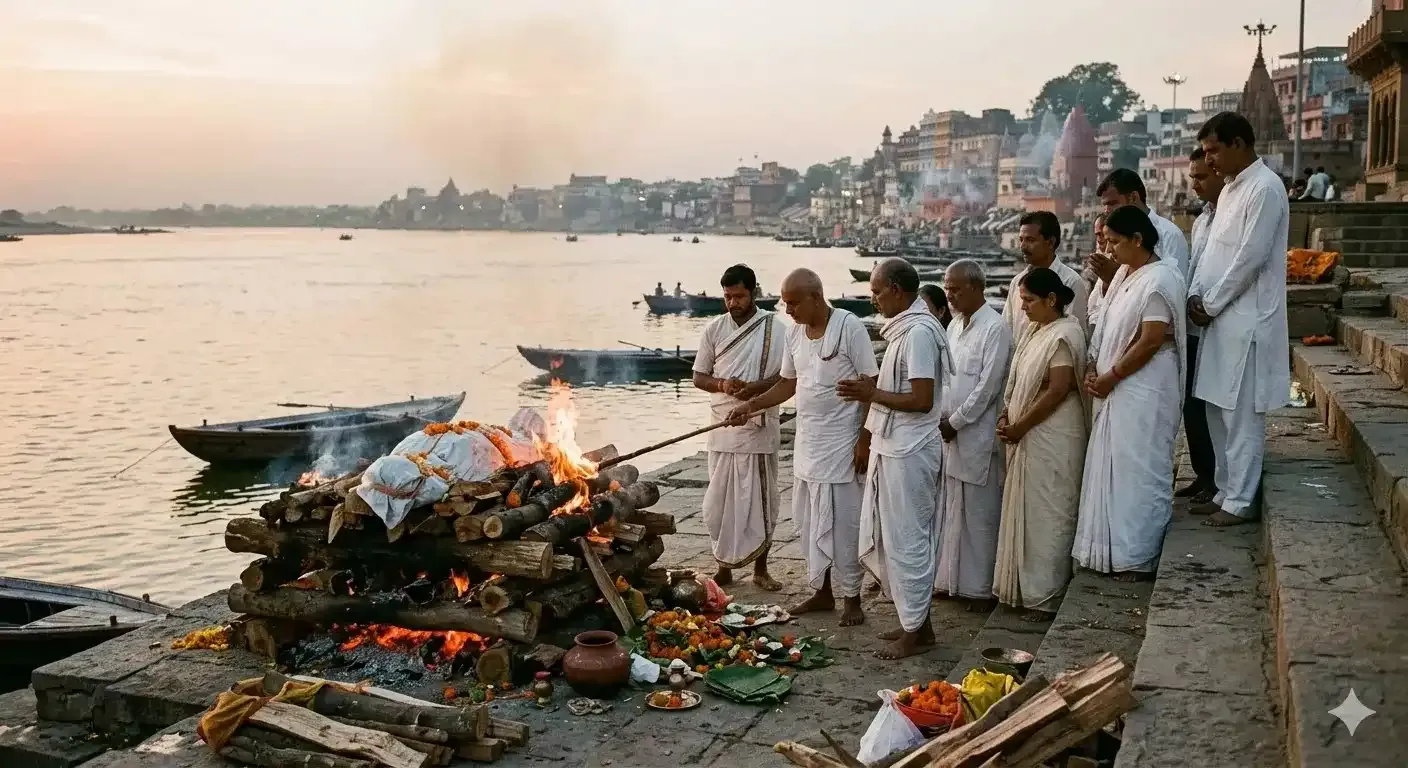
Antyesti — the "last sacrament" — is the final samskara of life, by which a family lovingly bids farewell to a departed loved one and prays for the peace and onward journey of the soul. This guide is written gently, to help grieving families understand what is traditionally done; please lean on your family priest (purohit) and elders, who will guide you with care.
The Meaning of the Rite
In Sanatana Dharma, the body is understood to return to the five elements while the eternal soul (atma) continues its journey. The last rites are an act of love, gratitude and release — offering prayers for the departed and comfort for those who remain. The tone of these days is one of dignity, simplicity and remembrance.
What Families Traditionally Do
- Inform and rely on a Hindu priest, who conducts the rites with the prescribed prayers; close family members participate as guided.
- Observe a period of mourning, during which the family gathers, prays, and is supported by the community.
- After the prescribed days, the family observes further remembrance rites and, in time, the annual Shraddha.
Customs vary by region, community and tradition; your purohit and elders will guide the specific procedure with sensitivity.
For NRI Families (Logistics Abroad)
- Coordinate gently with a local funeral home experienced in Hindu rites and with a Hindu priest; many temples abroad can help connect you.
- Families decide, according to their circumstances and wishes, between local rites and repatriation; a priest can guide either path.
- Where family cannot travel, priests can offer guidance and prayers online, and relatives can participate and grieve together over video call.
- Allow yourselves to grieve and to receive the community’s support — you do not have to manage everything alone.
Remembering with Love
Beyond the rites, families keep the memory of their loved ones alive through prayer, a lamp, acts of charity and the annual remembrance. Grief is honoured, and love continues.
See also Shraddha & Pitru Paksha (the ongoing remembrance of ancestors) and the 16 Samskaras guide.
This article is for understanding and comfort, not a procedural manual. Please be guided by your family priest and elders.
Frequently asked questions
What does Antyesti mean in Hinduism?
Antyesti means the last sacrament, the final samskara of life. Through it a family lovingly bids farewell to the departed and prays for the peace and onward journey of the soul.
What do Hindu families traditionally do after a death?
The family informs a Hindu priest, who conducts the rites with the prescribed prayers, and close relatives participate as guided. A period of mourning follows, then remembrance rites and, in time, the annual Shraddha.
How can NRI families arrange Antyesti abroad?
Coordinate with a local funeral home experienced in Hindu rites and with a Hindu priest; many temples abroad can help connect you. Families decide between local rites and repatriation, and a priest can guide either path.
Can relatives who cannot travel take part in the rites?
Yes. Priests can offer guidance and prayers online, and relatives can participate and grieve together over video call.
Do last rites differ between regions and communities?
Yes, customs vary by region, community and tradition. Your family priest (purohit) and elders will guide the specific procedure with sensitivity.
How do families remember the departed after the rites?
They keep the memory alive through prayer, a lamp, acts of charity and the annual remembrance of Shraddha.
Share this with family and friends
Send it on WhatsApp, post it, or copy the link.
More from Spirituality
- Sri Medha Dakshinamurthy Swami Dhyanam | Meditation Sloka for Intelligence, Eloquence & Self-Realization
- What Is True Poverty? | Dharma Is the Greatest Wealth | Sanatana Dharma
- Correct Yourself First! | The Power of Constructive Criticism for Personal Growth
- Trees: Abodes of the Divine | Spiritual and Environmental Significance of Trees
- Dashaphala Rahasyalu Part 3: When Do Planetary Dashas Give Full Results?
You might also like
Surya Puja at Home: A Practical Guide for NRIs

Chilkur Balaji 'Visa Balaji' Temple: The 11 and 108 Pradakshina Custom Explained for NRIs

Ekagrata (One-Pointedness): Yoga Concentration and Samyama Glossary