Shraddha & Pitru Paksha 2026 — Honouring Ancestors (NRI Guide)
Shraddha & Pitru Paksha 2026 (26 Sep–10 Oct) — the meaning of honouring ancestors, tarpanam, and how NRIs can observe it abroad with dignity. Confirm dates with a panchang.
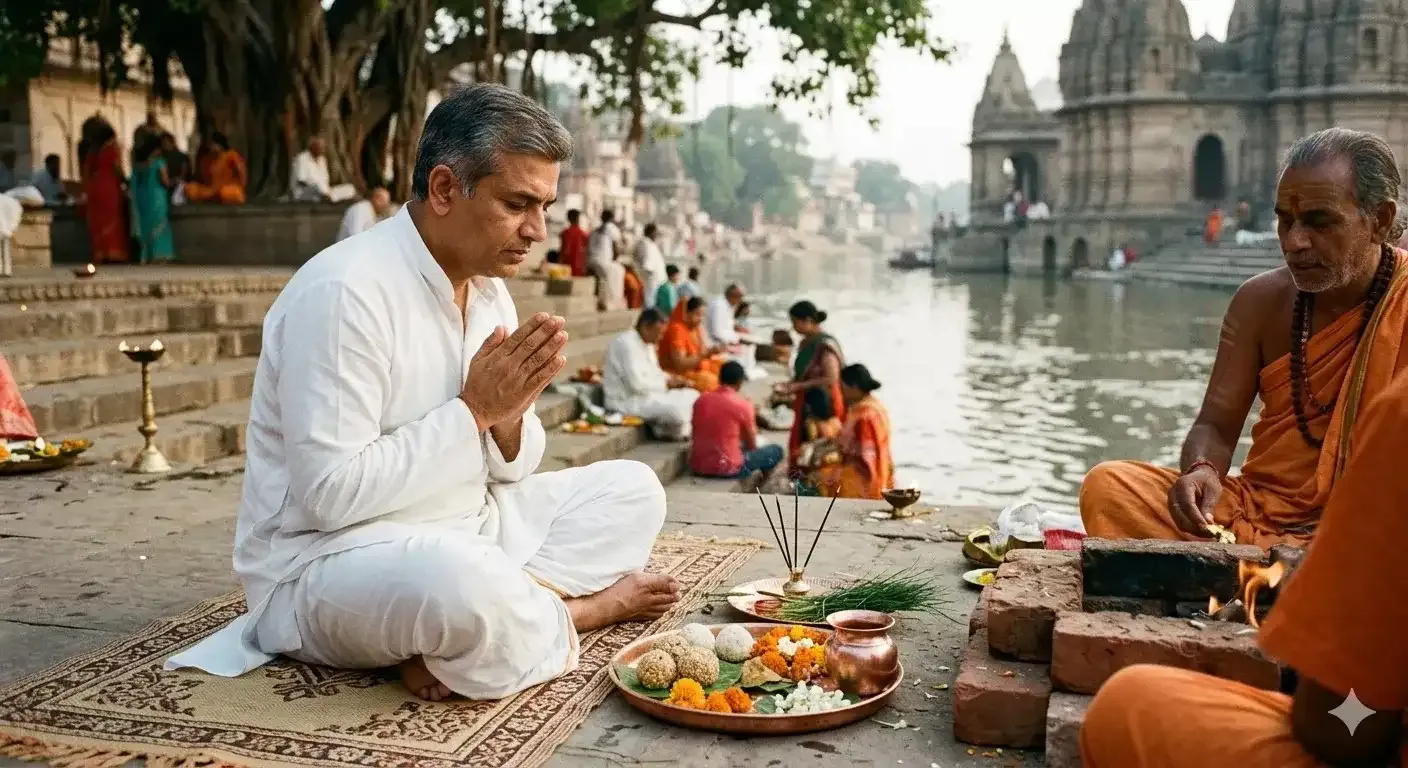
Shraddha is the loving rite by which Hindus remember and honour their departed ancestors (pitrus), offering gratitude and prayers for their peace. During Pitru Paksha — a fortnight set aside each year for the ancestors — families perform tarpanam (the offering of water) and shraddha with quiet devotion.
Pitru Paksha 2026 — Dates
- Pitru Paksha 2026 is observed from about 26 September to 10 October 2026.
- The final and most significant day, Sarva Pitru Amavasya (Mahalaya Amavasya), falls on 10 October 2026.
- Each ancestor’s shraddha is performed on the tithi corresponding to their passing. Tithi timings shift by local sunrise, so confirm the exact day for your location with a panchang or your purohit.
Significance
Shraddha expresses gratitude to those who came before us and seeks blessings for the family. It is a gentle, dignified observance — a way of keeping love and remembrance alive across generations.
What Is Done (common form)
- Tarpanam: offering water (often with sesame seeds) to the ancestors with prayers.
- Shraddha on the appropriate tithi, traditionally guided by a purohit.
- Offering food and giving in charity (anna-daana) in the ancestors’ name; feeding others is especially valued.
- Many remember their elders with a simple, sincere prayer and a lamp.
Performing Tarpanam Abroad (for NRIs)
- A simplified, sincere tarpanam at home is meaningful; a purohit can guide you in person or online.
- Donation and feeding others in the ancestors’ name is a cherished way to observe Pitru Paksha wherever you are.
- Note the date by your own local sunrise/tithi — confirm with a panchang for your city/time zone.
This is a sensitive observance; lean on your family purohit and elders for the exact procedure, which varies by region and tradition.
See also the 16 Samskaras guide.
Frequently asked questions
When is Pitru Paksha in 2026?
Pitru Paksha 2026 runs from about 26 September to 10 October 2026. The final day, Sarva Pitru Amavasya (Mahalaya Amavasya), falls on 10 October 2026.
How do I know which day to perform shraddha for my ancestor?
Each ancestor's shraddha is performed on the tithi corresponding to their passing. Tithi timings shift by local sunrise, so confirm the exact day for your location with a panchang or your purohit.
What is tarpanam in Pitru Paksha?
Tarpanam is the offering of water, often with sesame seeds, to the ancestors along with prayers. It is performed during the fortnight set aside each year to remember departed pitrus.
Can NRIs perform tarpanam and shraddha abroad?
Yes. A simplified, sincere tarpanam at home is meaningful, and a purohit can guide you in person or online. Note the date by your own local sunrise and tithi, and confirm it with a panchang for your city and time zone.
What can I do if I cannot perform a full shraddha?
Many remember their elders with a simple, sincere prayer and a lamp. Giving food and charity (anna-daana) in the ancestors' name is also especially valued wherever you are.
Share this with family and friends
Send it on WhatsApp, post it, or copy the link.
More from Spirituality
- Chilkur Balaji 'Visa Balaji' Temple: The 11 and 108 Pradakshina Custom Explained for NRIs
- Ekagrata (One-Pointedness): Yoga Concentration and Samyama Glossary
- Complete MBBS Once in Life: The Spiritual Meaning of Mahabharata, Bhagavatam, Bhagavad Gita & Ramayana
- Sri Medha Dakshinamurthy Swami Dhyanam | Meditation Sloka for Intelligence, Eloquence & Self-Realization
- What Is True Poverty? | Dharma Is the Greatest Wealth | Sanatana Dharma
You might also like
Mahalaya Amavasya 2026 — Date (October 10), Pitru Paksha Conclusion, Tarpan Vidhi & NRI Guide
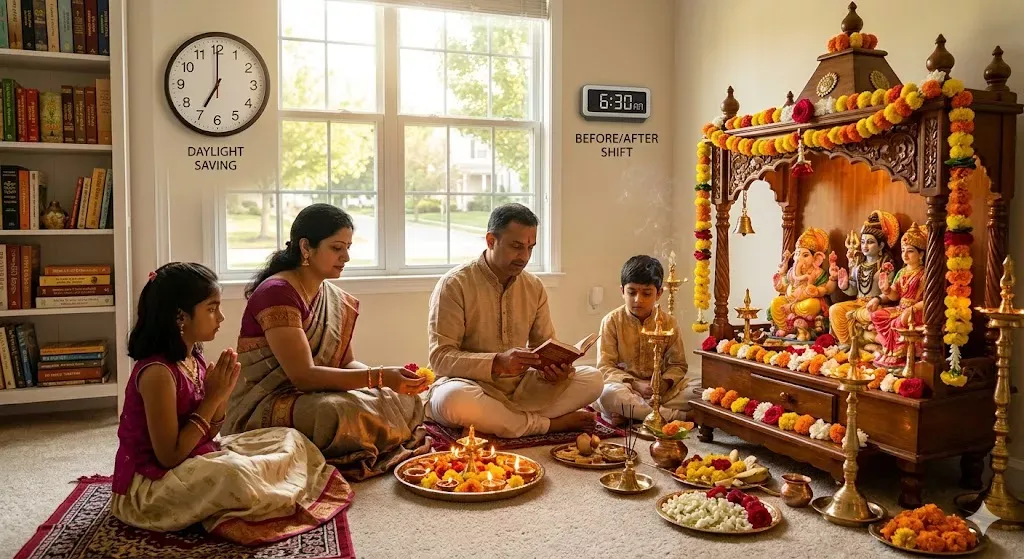
Daylight Saving & Hindu Puja Timings: An NRI Guide

Daiva Sankalpam (Divine Will): The Story of the Sadhu on the Sinking Boat