
How to Do Abhishekam at Home for Shiva or Ganesha
A simple step-by-step guide to performing Abhishekam at home for Lord Shiva or Ganesha — materials, the procedure with mantras, a short version, best days and tips for NRIs.
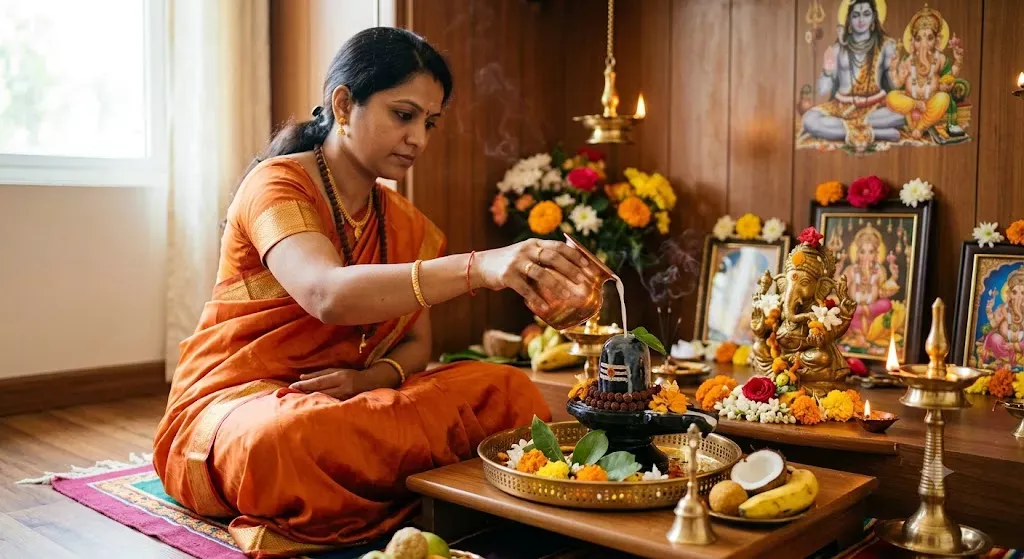
Abhishekam is the sacred ritual of bathing a deity with holy substances such as water, milk, curd, honey and ghee. It is one of the most loved ways of worshipping Lord Shiva and Lord Ganesha. Many NRIs perform a simple abhishekam at home — here is a practical guide.
Materials (use whatever is available)
- Pure water, milk, curd (yogurt), honey, ghee and a little sugar/mishri
- Sandalwood paste and rose water
- Bilva (bael) leaves for Shiva; fresh flowers
- A small idol or a symbolic Lingam, a lamp and incense
Simple Procedure
- Take a bath and wear clean clothes; clean the puja area and place the idol or symbolic Lingam.
- Light a lamp and incense; sit before the deity and make a brief sankalpa (resolve) for the well-being of your family.
- Pour the items one by one while chanting the mantra.
For Lord Shiva: chant "Om Namah Shivaya" while pouring water, then milk, curd, honey, ghee and sugar-water.
For Lord Ganesha: chant "Om Gam Ganapataye Namaha" while offering milk, curd, honey and ghee.
- Gently wipe the deity clean with water or rose water.
- Apply sandalwood paste and kumkum; offer flowers and Bilva leaves (for Shiva).
- Light camphor and perform aarti; offer fruit, sweets or coconut as prasadam, and share it.
A Short Version for Busy Days
- Light a lamp.
- Pour a little milk and water on the deity while chanting the mantra 11 or 21 times.
- Offer flowers and perform a short aarti.
Best Days
- Lord Shiva: Monday, Pradosha Kaalam, Maha Shivaratri.
- Lord Ganesha: Wednesday, Ganesh Chaturthi.
Tips: in cold climates use slightly warm milk and water; if you don’t have a Lingam, a small clean stone or a picture can serve as a symbol. Note: procedures vary by tradition — follow what your family or purohit teaches. Devotion matters more than elaborate materials.
Frequently asked questions
What materials do I need for abhishekam at home?
Use pure water, milk, curd, honey, ghee and a little sugar or mishri, plus sandalwood paste, rose water and fresh flowers. Add Bilva leaves for Shiva, and keep a small idol or symbolic Lingam, a lamp and incense.
Which mantra should I chant during abhishekam?
For Lord Shiva chant "Om Namah Shivaya" while pouring water, milk, curd, honey, ghee and sugar-water. For Lord Ganesha chant "Om Gam Ganapataye Namaha" while offering milk, curd, honey and ghee.
What is the best day to perform abhishekam?
For Lord Shiva, the best times are Monday, Pradosha Kaalam and Maha Shivaratri. For Lord Ganesha, Wednesday and Ganesh Chaturthi are preferred.
Is there a short abhishekam for busy days?
Yes. Light a lamp, pour a little milk and water on the deity while chanting the mantra 11 or 21 times, then offer flowers and perform a short aarti.
Can I do abhishekam without a Lingam, especially in a cold climate abroad?
Yes. A small clean stone or a picture can serve as a symbol if you have no Lingam. In cold climates, use slightly warm milk and water.
Share this with family and friends
Send it on WhatsApp, post it, or copy the link.
More from Spirituality
- Ekagrata (One-Pointedness): Yoga Concentration and Samyama Glossary
- Complete MBBS Once in Life: The Spiritual Meaning of Mahabharata, Bhagavatam, Bhagavad Gita & Ramayana
- Sri Medha Dakshinamurthy Swami Dhyanam | Meditation Sloka for Intelligence, Eloquence & Self-Realization
- What Is True Poverty? | Dharma Is the Greatest Wealth | Sanatana Dharma
- Correct Yourself First! | The Power of Constructive Criticism for Personal Growth
You might also like
Surya Puja at Home: A Practical Guide for NRIs
Rudrabhishekam at Home: A Simplified Step-by-Step Guide
The Power of Rudrabhishekam: Performing Sacred Offerings from Your US Home
