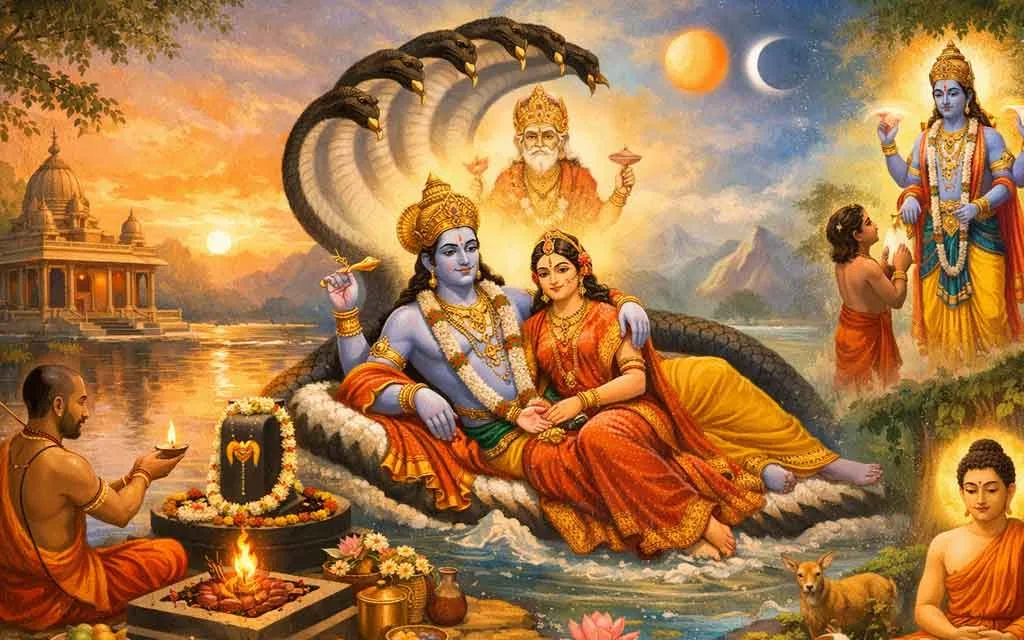
Vaishaka Masam Fasting and पूजा: Simple Steps for Devotees | HinduTone
Om Namo Bhagavate Vasudevaya! Hare Krishna! Jai Shri Vishnu! Namaste dear friends and new devotees, Vaishaka Masam (also called Vaishakha Maasam) is one of the…
Om Namo Bhagavate Vasudevaya! Hare Krishna! Jai Shri Vishnu!
Namaste dear friends and new devotees,
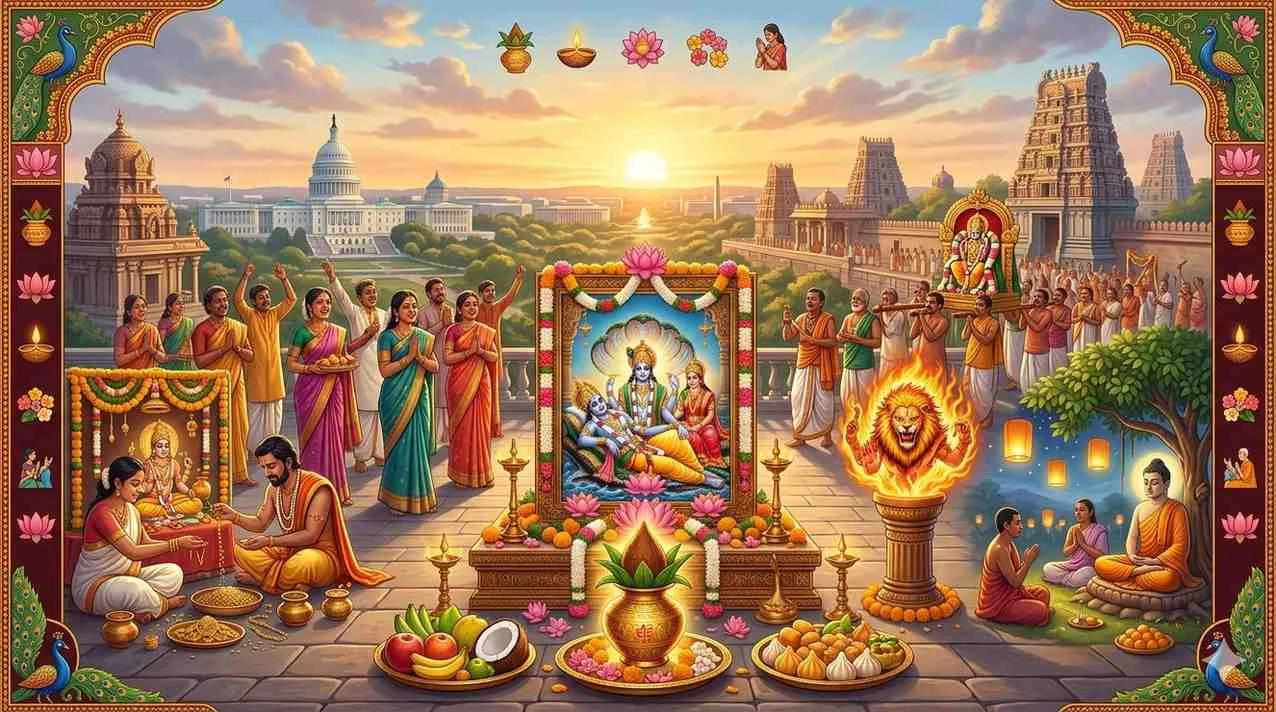
Vaishaka Masam (also called Vaishakha Maasam) is one of the most auspicious months in the Hindu lunar calendar, falling roughly in April-May. This sacred month is especially dear to Lord Vishnu, the preserver of the universe. Observing simple fasting (vrat) and daily पूजा (puja) during Vaishaka Masam brings immense spiritual merit, helps purify the mind and body, and pleases Bhagavan Vishnu.
This beginner-friendly guide for www.hindutone.com explains everything in easy language. No prior experience needed! We focus on simple, practical steps that anyone can follow at home with love and devotion (bhakti). Start small, be consistent, and feel the divine grace.
Why Observe Fasting and पूजा in Vaishaka Masam?
According to Puranas like Skanda Purana, Vaishaka is the favourite month of Lord Vishnu. Simple acts like early morning holy bath (Vaishakha Snanam), charity (daan), fasting on special days, and Vishnu puja destroy sins, bring peace, health, and prosperity, and lead towards moksha (liberation).
Even if you are new to Hinduism or have a busy schedule, you can begin with 5-10 minutes of daily puja and light fasting on key days.
Important Days for Fasting & Special Observance in Vaishaka Masam
Vaishaka Masam has many auspicious tithis. Focus on these for beginners:
- Daily Practice: Vaishakha Snanam (holy bath before sunrise) + simple evening or morning Vishnu puja.
- Ekadashi Vrat: Two Ekadashis occur in the month (Shukla and Krishna Paksha). These are the most important fasting days dedicated to Lord Vishnu.
- Akshaya Tritiya (Vaishakha Shukla Tritiya): Very auspicious for starting new things, charity, and light fasting or special puja. Marks the beginning of Treta Yuga and Parashurama Jayanti.
- Narasimha Jayanti (Vaishakha Shukla Chaturdashi): Observe fasting or light fast and worship Lord Narasimha for protection.
- Vaishakha Purnima (Buddha Purnima / Kurma Jayanti in some traditions): Special puja and possible fast.
- Amavasya: Ideal for Pitru tarpan (simple offerings to ancestors) if you wish.
Note: Exact dates change every year according to the Panchang. For 2026, please check your local Hindu calendar or reliable app for precise tithis in your region (e.g., Hyderabad, Telangana).
Beginner-Friendly Fasting (Vrat) Guide for Vaishaka Masam
Fasting in Vaishaka mainly means observing Ekadashi Vrat and optional light fasting on Akshaya Tritiya or Narasimha Jayanti. The goal is purity and devotion, not hardship.
Simple Rules for Beginners
- Make a Sankalp (Vow): On the morning of the fast day, stand before your Vishnu photo or idol, fold hands, and say sincerely: “Om Vishnu Devaya Namah. Today I observe this fast with devotion for the pleasure of Lord Vishnu. Please give me strength and remove obstacles.”
- What to Avoid on Fasting Days:
- All grains (rice, wheat, roti, bread, etc.)
- Pulses (dal, beans)
- Onion, garlic, and non-vegetarian food
- Avoid heavy or spicy meals
- Beginner-Friendly Fasting Levels (Choose what suits your health):
- Phalahari (Fruit Fast): Easiest for beginners. Eat only fruits, milk, yogurt, coconut water, nuts, and sabudana (if needed). Ideal first-time option.
- Milk-based (Ksheerbhoji): Only milk, curd, paneer, and sweets made from milk.
- Water-only or Light: Drink water, lemon water, or coconut water. Have one light sattvic meal after sunset if needed.
- Nirjala (No water): Only for experienced devotees with good health. Not recommended for beginners, pregnant women, elderly, or those with medical conditions.
- When Does the Fast Start and End?
- Start after sunrise on Ekadashi day (skip grains from previous night dinner if possible).
- Break the fast (Parana) on the next day (Dwadashi) after sunrise, ideally before noon. Offer something to Lord Vishnu first, then eat.
- Tips for Success:
- Stay hydrated with water or coconut water if not doing strict fast.
- Keep yourself busy with Vishnu kirtan, reading stories, or listening to Vishnu Sahasranama.
- Pregnant women, children, elderly, or sick people should consult a doctor and do very light or no fasting — Lord Vishnu values your sincere intention more than strict rules.
- Break the fast gently with fruits or light sattvic food.
What You Can Eat on Light Fasting Days:
- Fruits (banana, apple, mango, etc.)
- Milk, curd, buttermilk
- Sabudana khichdi, potato dishes (no grains)
- Coconut water, lemon water with rock salt
- Nuts and dry fruits in moderation
Simple Step-by-Step Vishnu पूजा at Home (Beginner Version)
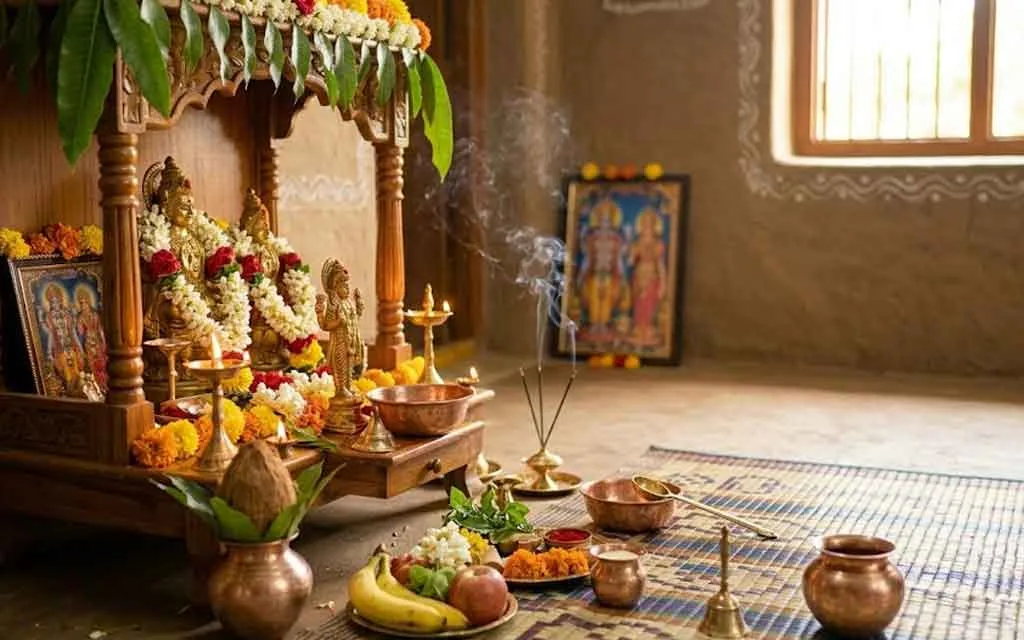
You don’t need expensive items. A clean space, love, and basic things are enough.
Items Needed (Keep it Minimal):
- Photo or small idol of Lord Vishnu / Lakshmi-Narayana / Krishna
- Clean cloth or altar mat (yellow or white preferred)
- Ghee lamp (diya) + cotton wick
- Incense sticks (agarbatti)
- Fresh flowers or Tulsi leaves (do not pluck Tulsi on Ekadashi if possible)
- Water in a small bowl or lota
- Fruits or a simple sweet (banana, mishri)
- Chandan (sandalwood paste) or kumkum (optional)
- Bell (ghanti)
Easy 10-15 Minute Daily Puja Steps:
- Prepare Yourself: Take a bath or wash hands and face. Wear clean clothes. Sit facing east or north.
- Clean the Altar: Wipe the place. Place the Vishnu photo/idol on a clean cloth.
- Light the Lamp and Incense: Light the diya with ghee or oil while chanting “Om Deepajyoti Param Brahma Deepajyoti Janardana, Deepo Haratu Me Papam Deepa Jyotir Namostute.” Light incense.
- Invoke the Lord (Avahana): Sprinkle a few drops of water and say: “Om Vishnu Devaya Namah. Avahayami.” Imagine inviting the Lord with love.
- Offer Seat and Basic Items (Simple Panchopachara – 5 offerings):
- Offer water for feet (Padyam): “Om Vishnu Devaya Namah. Padyam Samarpayami.”
- Offer water to wash hands/mouth.
- Offer a flower or Tulsi leaf: “Om Vishnu Devaya Namah. Pushpam Samarpayami.”
- Offer incense: “Om Vishnu Devaya Namah. Dhoopam Samarpayami.”
- Offer the lighted lamp: “Om Vishnu Devaya Namah. Deepam Samarpayami.”
- Offer fruit or sweet: “Om Vishnu Devaya Namah. Naivedyam Samarpayami.” (Show the food to the Lord, then you can eat it later as prasad.)
- Chant Mantras (Repeat 11, 21, or 108 times – use a mala if available):
- Basic mantra: Om Namo Narayanaya or Om Namo Bhagavate Vasudevaya
- Vishnu Gayatri: Om Narayana Vidmahe, Vasudevaya Dheemahi, Tanno Vishnu Prachodayat
- Or simply play Vishnu Sahasranama on your phone and listen with devotion.
- Aarti: Sing a simple Vishnu aarti or “Om Jai Jagdish Hare” while circling the lamp gently.
- Pray with Heart: Talk to the Lord in your own words. Ask for strength, peace, and bhakti. Offer pranams (bow down).
- Conclude: Sprinkle water around and say “Om Shanti Shanti Shanti.” Distribute prasad to family.
Daily Tip: Combine with morning Vaishakha Snanam – bathe early, add Ganga jal if available, and chant Vishnu’s name while bathing.
Additional Simple Practices for Beginners in Vaishaka Masam
- Offer water (Jal Daan) daily to a plant, cow, or thirsty person — this is highly meritorious in summer.
- Read or listen to one short Vishnu story (like Prahlada or Dhruva) every day.
- Avoid daytime sleep, excessive oil on body, and anger.
- Involve family — children can offer flowers and chant simple names like “Hare Krishna.”
Spiritual Benefits You Will Experience
- Peace of mind and reduced stress
- Better focus and positive energy
- Removal of obstacles
- Blessings of health, prosperity, and protection from Lord Vishnu
Lord Krishna says in Bhagavad Gita (9.26) that even a leaf, flower, fruit, or water offered with love is accepted by Him.
Final Encouragement
Dear beginner devotee, Vaishaka Masam is Vishnu’s loving invitation to come closer to Him. Start with one small puja and one light fasting day. Your sincere effort matters more than perfection.
May Lord Madhusudana (Vishnu) bless you with pure bhakti and happiness.
Jai Shri Vishnu! Om Namo Narayanaya! Hare Krishna!
This guide is written in simple devotional language based on traditional Hindu practices from Puranas and common Vaishnava customs. Always consult a family elder, guru, or doctor for health-related fasting advice. Check your local Panchang for exact dates. For more beginner guides, stotras, and festival articles, keep visiting www.hindutone.com.
Share this with friends and family who want to start their devotional journey.
HinduTone – Nourishing Devotion Daily
Frequently Asked Questions
When is Vaishaka Masam observed?
Vaishaka Masam falls roughly in April-May in the Hindu lunar calendar. Exact dates change every year, so check your local Panchang or a reliable Hindu calendar app for precise tithis.
Which are the main fasting days in Vaishaka Masam?
Ekadashi is the main fast, with two Ekadashis in the month (Shukla and Krishna Paksha). Light fasting or special puja is also kept on Akshaya Tritiya and Narasimha Jayanti.
What can beginners eat while fasting in Vaishaka Masam?
The easiest option is Phalahari: fruits, milk, yogurt, coconut water, nuts and sabudana. Grains, pulses, onion, garlic and non-vegetarian food are avoided on fasting days.
When and how should the Ekadashi fast be broken?
Break the fast (Parana) on Dwadashi, the next day, after sunrise and ideally before noon. Offer something to Lord Vishnu first, then eat gently with fruits or light sattvic food.
What is a simple daily Vishnu puja at home during Vaishaka Masam?
A 10-15 minute puja: light a ghee lamp and incense, invoke the Lord, offer water, a flower or Tulsi leaf, incense, lamp and fruit, chant Om Namo Narayanaya 11, 21 or 108 times, then do aarti.
Should pregnant women or elderly people observe a strict fast?
No. Pregnant women, children, the elderly and the sick should consult a doctor and keep a very light fast or none. Nirjala, the waterless fast, is not recommended for beginners.
Share this with family and friends
Send it on WhatsApp, post it, or copy the link.
More from Spirituality
- Ahankara, the Wall Before Self-Knowledge | True Knowledge Dawns When the Ego Goes
- Daiva Sankalpam (Divine Will): The Story of the Sadhu on the Sinking Boat
- Deeparadhana: Significance of Lighting the Lamp, Deepam Jyoti Parabrahma Meaning, Oil and Wicks
- Chilkur Balaji 'Visa Balaji' Temple: The 11 and 108 Pradakshina Custom Explained for NRIs
- Ekagrata (One-Pointedness): Yoga Concentration and Samyama Glossary
You might also like
Vaishaka Masam Festivals 2026: Complete List with Dates, Importance & Rituals | HinduTone
Charity (Daan) During Vaishaka Masam: Importance, Popular Donations & Complete Mythological Story from Skanda Purana | HinduTone
Vaishaka Masam Festivals 2026: Complete Guide with Dates, Importance & Rituals for Hindu Devotees in USA