
Navratri Golu
Navratri Golu is the South Indian tradition of arranging dolls on a series of steps during the nine nights of Navratri. Known as Bommai Kolu in Tamil Nadu, Bombe Habba in Karnataka and Bommala Koluvu in Telugu homes, it turns the living room into a miniature world of deities, saints, village scenes and stories from the epics.
Families often keep dolls passed down through generations and add a few new ones every year, sometimes built around a theme. Evenings are for visiting: women and children go from home to home, sing a song before the display and receive a small return gift, a custom that keeps neighbourhoods and extended families close.
HinduTone articles on this page explain how to plan and arrange the steps, which dolls traditionally go where, theme ideas, simple daily offerings and how families abroad keep Golu going in small apartments. Related pages include Navratri and the temple traditions of Tamil Nadu and Karnataka.
Latest Articles
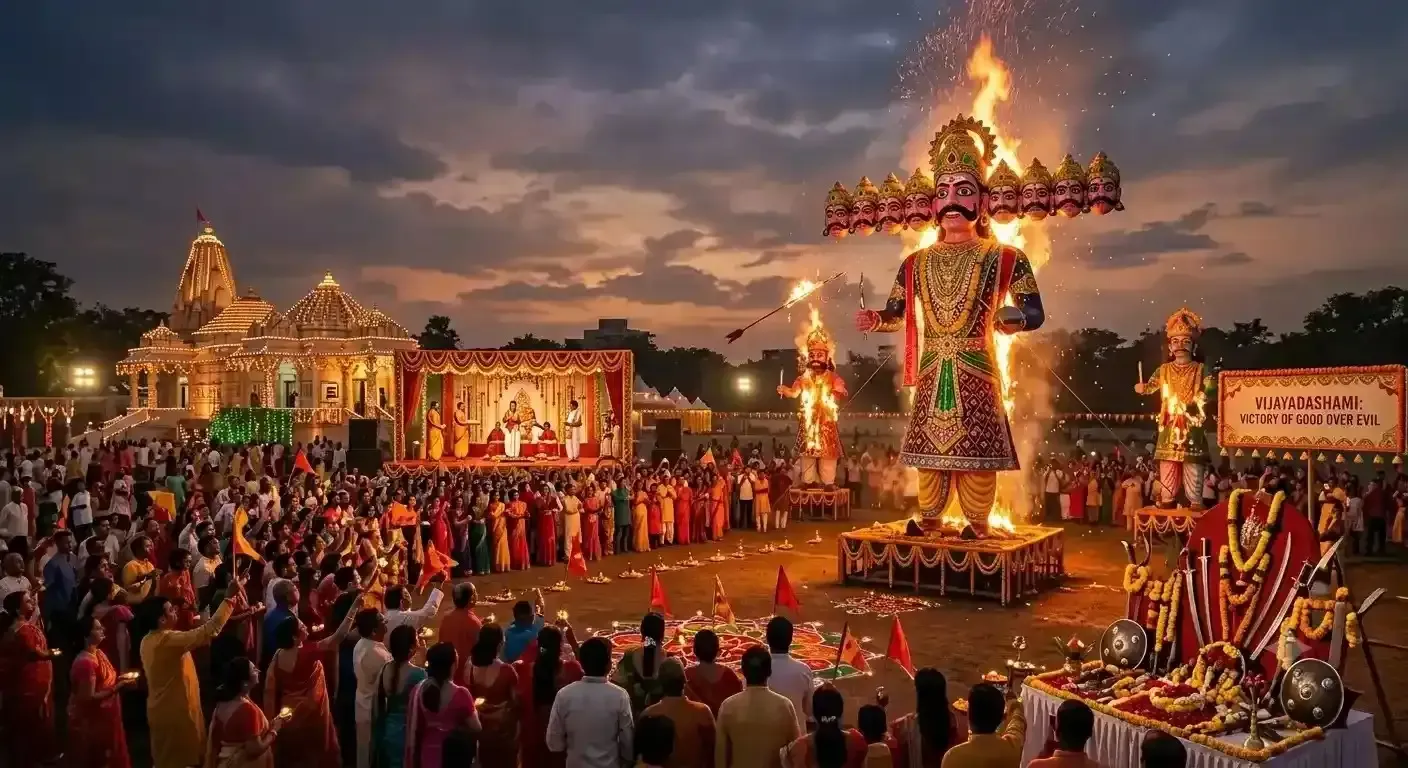
Dasara 2026 in Karnataka: Date, Vijay Muhurat, Mysuru Dasara, Bombe Habba and Ayudha Puja
Dasara 2026 in Andhra Pradesh: Date, Vijay Muhurat, Kanaka Durga Alankarams, Bommala Koluvu and Jammi Puja

Bommala Koluvu / Golu 2026 — Doll Display Setup & Meaning

Navratri Golu (Kolu) Installation at Home: A Step-by-Step Guide for Beginners
FAQs
What is Navratri Golu?
Golu, also called Kolu or Bommai Kolu, is a Navratri tradition from Tamil Nadu, Karnataka and Andhra Pradesh in which families arrange dolls of deities, saints, village scenes and everyday life on odd-numbered steps. Neighbours and friends are invited to view it, sing and receive small gifts.
How do you arrange Golu steps?
Steps are traditionally kept in odd numbers and covered with cloth. Deity dolls usually go on the top steps, followed by saints and avatars, then festivals, village and daily-life scenes lower down. A kalasham and the customary wooden couple dolls are commonly placed too. Families adapt the layout freely.
When is Golu kept?
Golu is set up at the start of Sharad Navratri, usually in September or October, and kept for the nine nights. Many families take one doll down on Vijayadashami as a symbolic close, then pack the rest. Check our panchang for this year's Navratri dates.