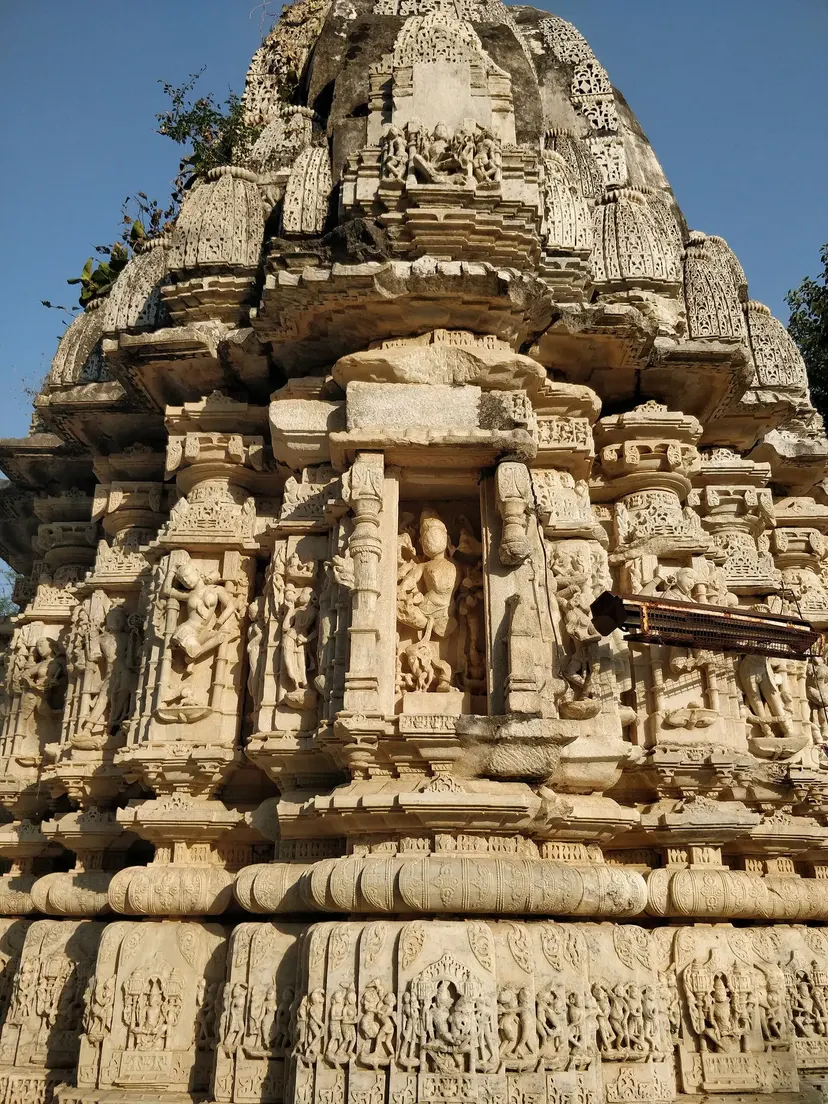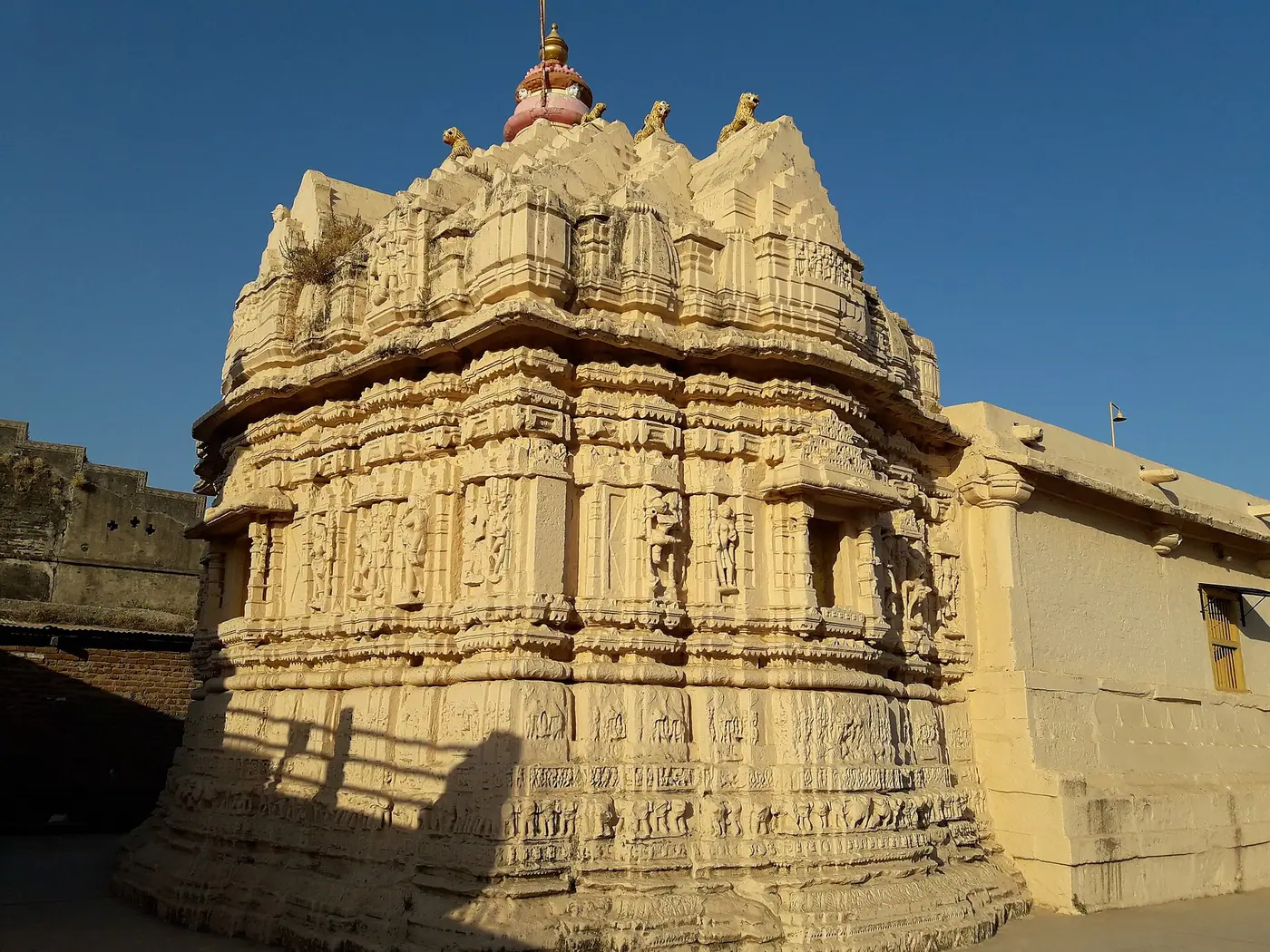
Brahma Temple (Brahmaji Mandir), Khedbrahma
Khedbrahma, Sabarkantha, Gujarat, India
Photo: Gazal world · CC BY-SA 4.0 · via Wikimedia Commons
The Brahmaji Mandir is a temple dedicated to Brahma, the creator god of the Hindu trinity, in the town of Khedbrahma in north Gujarat (Archaeological Survey of India; Gazetteer of the Bombay Presidency; Department of Archaeology, Idar State). Khedbrahma is today a taluka of Sabarkantha district (Sabarkantha District Administration); in the colonial period it lay in Idar State in the Mahi Kantha region (Gazetteer of the Bombay Presidency; Archaeological Survey of India).
The town stands where three streams meet before flowing on towards the Sabarmati, and the Brahma temple stands in the middle of the town, facing east (Archaeological Survey of India; Department of Archaeology, Idar State).
Faith & Tradition
Religious Significance of Brahma Temple (Brahmaji Mandir), Khedbrahma
Temples to Brahma are uncommon in India: the Archaeological Survey of India's 1906–07 report noted that the worship of Brahma is rare and that temples dedicated to him are few and far between (Archaeological Survey of India). The Bombay Presidency gazetteer described the Khedbrahma shrine as sacred to Brahma, with an image of Brahma that was worshipped there (Gazetteer of the Bombay Presidency).
According to local tradition recorded in the gazetteer, the site is linked with a sacrifice performed by Brahma and with the sage Bhrigu, after whom the shrine was also known (Gazetteer of the Bombay Presidency). These are traditional accounts, not historical record.
Heritage
History of Brahma Temple (Brahmaji Mandir), Khedbrahma
The present temple is a rebuilding of an older one. The Archaeological Survey of India found that the carved walls of the shrine were old, while the hall in front and the roof were modern (Archaeological Survey of India). The Idar State archaeology department similarly reported that the lower part of the main shrine had survived with its carving intact, and that the spire, dome and front portion had been rebuilt in brick and mortar (Department of Archaeology, Idar State).
Henry Cousens of the Archaeological Survey judged that the carving on the old walls belongs to the twelfth-century style (Archaeological Survey of India), a view repeated in the Idar State survey of 1936 (Department of Archaeology, Idar State).
The image of Brahma inside the sanctum was described in 1906–07 as a modern plaster figure (Archaeological Survey of India). The Idar State survey suggested that an original stone image may have been damaged and later covered over with white plaster (Department of Archaeology, Idar State).
Architecture and sacred features
The gazetteer describes the temple as built of white sandstone and cement-covered brick (Gazetteer of the Bombay Presidency). Its old shrine walls carry carved panels, mostly of female figures such as goddesses and dancers, along with figures of deities including Indra and Yama, and Ganesha over the doorway (Archaeological Survey of India). Images of Brahma, holding the ladle, book, rosary and water pot, occupy the three main outer niches on the west, north and south faces of the shrine (Archaeological Survey of India), while the interior of the temple is plain (Department of Archaeology, Idar State).
The image in the sanctum shows Brahma standing, with three faces and four arms, and a goose on either side (Archaeological Survey of India); the Idar State survey describes it as about five and a half feet tall and flanked by two consorts (Department of Archaeology, Idar State).
Plan Your Visit
Darshan and Visitor Information
No official timings or visitor rules were found for this temple. Confirm current arrangements with the temple management or the Sabarkantha district administration before visiting.
Timings and arrangements change with seasons and festivals. Confirm current details with the temple administration before travelling. Last reviewed 11 October 2026.
Location
How to Reach Brahma Temple (Brahmaji Mandir), Khedbrahma
The Sabarkantha district administration names Ahmedabad as the nearest airport for the district (Sabarkantha District Administration). Khedbrahma is the end point of the Himmatnagar–Khedbrahma railway line, which has recently been converted to broad gauge (Indian Infrastructure); check current train services with Indian Railways before travelling.
Location: Khedbrahma, Sabarkantha, Gujarat, India
Nearest airport: Ahmedabad
Nearest railway station: Khedbrahma (Himmatnagar–Khedbrahma line)
More in Hindu temples in Gujarat · Temples in Khedbrahma · Temples in Khedbrahma Taluka · Temples in Sabarkantha District
Questions
Brahma Temple (Brahmaji Mandir), Khedbrahma: Frequently Asked Questions
Which deity is worshipped at the Brahmaji Mandir in Khedbrahma?
The temple is dedicated to Brahma, the creator god (Archaeological Survey of India; Gazetteer of the Bombay Presidency). The sanctum image shows him with three faces and four arms (Archaeological Survey of India).
Where is the Khedbrahma Brahma temple?
It stands in the middle of Khedbrahma town, in Khedbrahma taluka of Sabarkantha district, Gujarat (Archaeological Survey of India; Sabarkantha District Administration). The town lies where three streams meet (Archaeological Survey of India; Department of Archaeology, Idar State).
Why is this temple considered unusual?
The Archaeological Survey of India's 1906–07 report noted that temples dedicated to Brahma are few and far between (Archaeological Survey of India); the Khedbrahma shrine is one of them, sacred to Brahma (Gazetteer of the Bombay Presidency; Archaeological Survey of India).
How old is the temple?
The carved shrine walls are old and were judged by the Archaeological Survey of India to be in the twelfth-century style, while the hall and roof were rebuilt later (Archaeological Survey of India; Department of Archaeology, Idar State).
Is the image in the sanctum original?
The sanctum image was described in 1906–07 as a modern plaster figure (Archaeological Survey of India). The Idar State survey thought an older stone image may have been covered over with plaster (Department of Archaeology, Idar State).
What is the temple built of?
It is built of white sandstone and cement-covered brick (Gazetteer of the Bombay Presidency), with the upper parts and front rebuilt in brick and mortar (Department of Archaeology, Idar State).
Sources and attribution
- © OpenStreetMap contributors — location data © OpenStreetMap contributors (ODbL)
- Wikidata Q108699808 — structured data (CC0)
- Wikipedia — Brahma Temple, Khedbrahma — text facts from Wikipedia, licensed CC BY-SA 4.0
- Archaeological Survey of India — The Temple of Brahma at Khed-Brahma (Henry Cousens), Annual Report of the Archaeological Survey of India 1906-07 (1909)
- Gazetteer of the Bombay Presidency (Government Central Press, Bombay) — Gazetteer of the Bombay Presidency, Vol. V: Cutch, Palanpur and Mahi Kantha (1880), Places of Interest: Khed Brahma
- Department of Archaeology, Idar State — Some Archaeological Finds in the Idar State (P. A. Inamdar, 1936)
- Sabarkantha District Administration — About District
- Sabarkantha District Administration — How to Reach
- Indian Infrastructure — Centre inaugurates various railway projects in Gujarat
Further reading: Brahma Temple (Brahmaji Mandir), Khedbrahma on Wikipedia (CC BY-SA 4.0).
Spotted an error? Write to info@hindutone.com — see our editorial policy.