The Divine Shell: Unveiling the Mystical Significance of Srikurmam Temple
Nestled on the serene shores of the Bay of Bengal in Andhra Pradesh's Srikakulam district, Srikurmam Temple stands as a timeless beacon of devotion, where the…
Nestled on the serene shores of the Bay of Bengal in Andhra Pradesh's Srikakulam district, Srikurmam Temple stands as a timeless beacon of devotion, where the…
Nestled on the serene shores of the Bay of Bengal in Andhra Pradesh's Srikakulam district, Srikurmam Temple stands as a timeless beacon of devotion, where the second avatar of Lord Vishnu—the mighty Kurma (tortoise)—takes center stage. As the world's only shrine dedicated to this enigmatic form, it whispers ancient secrets of cosmic balance, resilience, and divine intervention. Far beyond a mere place of worship, Srikurmam embodies the harmonious blend of Shaivite and Vaishnavite traditions, drawing pilgrims seeking solace, liberation, and a glimpse of eternity. In this October exploration—aligning with the season's spiritual fervor—let's peel back the layers of its profound significance, from legendary origins to sacred rituals. Whether you're a devout seeker or a curious wanderer, this temple's story will leave you in awe.
A Legend Born from the Churning of the Cosmos
The heart of Srikurmam's lore pulses with the epic tale from the Bhagavata Purana's 8th Skandha: the Samudra Manthan, where gods and demons churned the Kshira Sagara (Ocean of Milk) to unearth the nectar of immortality. As Mount Mandara threatened to sink into the depths, Lord Vishnu manifested as Kurma, the steadfast tortoise, supporting the mountain on his unyielding shell to ensure the universe's equilibrium. This act of selfless stability—symbolizing patience, endurance, and the foundation of creation—forms the temple's spiritual core.
Local legends trace the shrine's earthly manifestation to the Satya Yuga, during the reign of the seventh Manu, Vaivaswata. King Sweta Chakravarti, tormented by illness and marital discord, was guided by Sage Narada to perform intense penance invoking the Kurma-Narayana Mantra. In a divine lila (play), Lord Kurmadeva appeared as a swayambhu (self-manifested) idol, 2.5 feet long, comprising a lotus head, body, and Shaligrama shila embedded with the Sudarshana Chakra. Lord Brahma himself consecrated it with the Gopala Yantra, marking the site's antiquity—believed to predate even Lord Rama's Treta Yuga by over a million years. The adjacent Sweta Pushkarini lake, formed by the Chakra's strike, is said to have birthed Sri Kurmanayaki (Lakshmi Devi) in Varada Mudra on Garuda, her waters purifying sins like the Ganga's annual bath on Maagha Shuddha Chaviti.
Another transformative myth highlights the temple's syncretic soul: Originally a Shaivite haven as Kurmeswara (dedicated to Shiva), the deity miraculously turned westward in 1281 CE at Ramanujacharya's prayers, affirming its Vaishnava essence and ushering in a golden era of devotion. Visited by luminaries like Adi Shankaracharya, Narahari Teertha, and Chaitanya Mahaprabhu—who left preserved lotus footprints—this site has weathered invasions by camouflaging as a limestone hillock, its walls still bearing those scars.
Architectural Wonders: A Symphony of Stone and Spirit
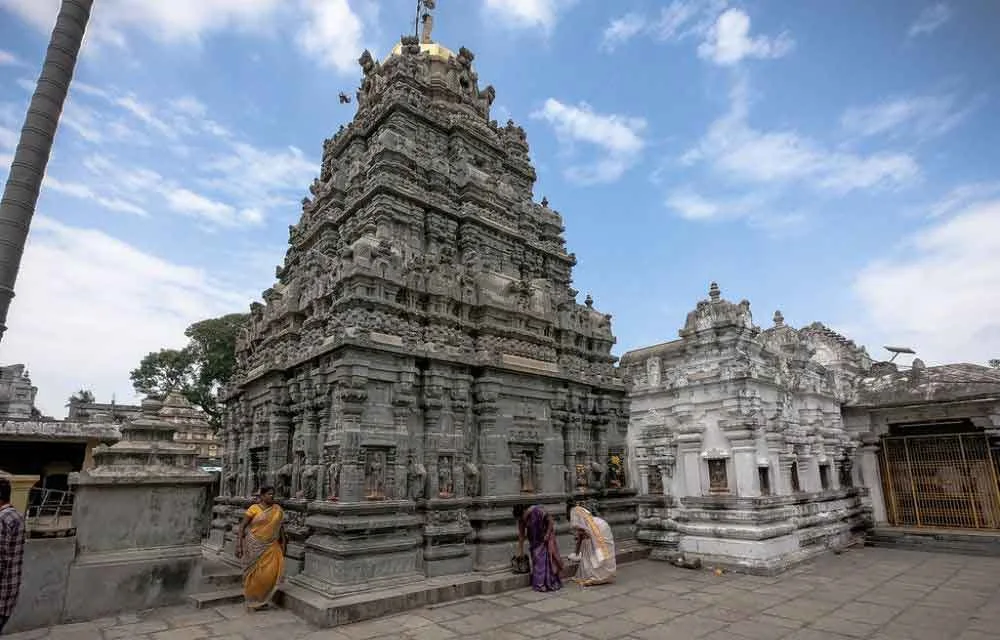
Srikurmam's Dravidian architecture, infused with Kalinga and Eastern Ganga influences, is a visual poem of devotion. The sanctum's Ashtadala Padmam (eight-petalled lotus) head cradles the Kurma idol, facing west—a rarity symbolizing the sunset of ego and dawn of enlightenment. Flanking it are two Dhwajastambhas (flagstaffs), one east and one west, honoring the dual traditions. The 108 eka-shila (single-stone) pillars in the mandapam, each etched with dynastic tales, hum with magnetic energy; devotees circle them, holding one and turning 180° to manifest wishes.
Gaze upward at the 20 restored murals of Krishna-Vishnu, painted with vegetable dyes akin to Ajanta-Ellora, or marvel at the underground Kaasi Dwaram tunnel (now sealed), once linking to Varanasi for moksha rites. Guardian deities like Paatala Siddeshwara and a rare Vaishno Devi-form Durga add layers of protection. And don't miss the star tortoise park—home to endangered species fed by pilgrims as prasad to Kurmanatha, echoing the avatar's gentle guardianship.
Rituals and Festivals: Daily Devotion Meets Celestial Celebrations
Life at Srikurmam pulses with rhythmic sanctity. Dawn's abhishekam (4:30–6 AM) bathes the idol in milk and sandal, a Shiva-like honor for Vishnu, followed by darshan (6 AM–11 AM, 3–8 PM). Devotees apply Gopi Chandanam tilak from the Pushkarini's white clay, believed to ward off Saturn's doshas—making it a Saturn-relief powerhouse. As Pitrukshetra (ancestral liberation field), last rites here rival Varanasi's efficacy; ashes in the lake transmute to Shaligramas, granting moksha.
Festivals ignite the spirit: The three-day Dolotsavam (with Kamadahanam fire ritual) swings the deities in ornate cradles, while Kalyanotsavam on Vaishakha Shuddha Ekadashi enacts their celestial wedding. Kurma Jayanti (Jyeshtha Bahula Dwadashi) commemorates the avatar's jayanti, and low-key Janmashtami or Rama Navami draw quiet crowds. Prasaadam—laced with curative lore, from healing leprosy to quelling wars—seals the divine pact.
Spiritual Essence: Stability in a Turbulent World
At its soul, Srikurmam teaches the Kurma way: Withdraw inward like a tortoise into its shell for introspection, then emerge with unshakeable resolve. It symbolizes dharma's foundation amid chaos, reminding us that true power lies in silent support, not flashy conquests. As a moksha sthaanam, it liberates from samsara's churn, blending bhakti's surrender with jnana's wisdom. In our frenetic lives, a visit here fosters resilience—proving that, like the tortoise's shell, faith shields and sustains.
Journey to the Turtle's Abode: A Pilgrim's Guide
Perched 14.5 km from Srikakulam on NH-16, reach via bus (every 10 mins), Srikakulam Road station (30 km), or Vizag airport (130 km). Stay in modest TTD guesthouses (Rs 50/night) or dorms; entry is free, with special darshan tickets for haste. Best time? February's Ganga Snan or festival peaks—pack devotion and eco-respect for the tortoises.
Sources: Insights from temple archives and cultural explorations.
Frequently Asked Questions
Where is The Divine Shell located?
Nestled on the serene shores of the Bay of Bengal in Andhra Pradesh's Srikakulam district, Srikurmam Temple stands as a timeless beacon of devotion, where the second avatar of Lord Vishnu —the mighty Kurma (tortoise)—takes center stage. As the world's only shrine dedicated to this enigmatic form, it whispers ancient secrets of cosmic balance, resilience, and
Who is the presiding deity of The Divine Shell?
The temple's presiding deity and its significance are described in the guide above.
What are the timings and how do I reach The Divine Shell?
Temples typically open early morning and evening; confirm current darshan timings before visiting. The nearest airport, railway station and road routes are covered in the guide above.
What is the best time to visit The Divine Shell?
Major festival days and the cooler months are popular, though weekday mornings offer a calmer darshan. Plan around the temple's key festivals for the most vibrant experience.