BJP at 45: A Journey of History, Success, and Shaping a New India
The Bharatiya Janata Party (BJP), founded on April 6, 1980, recently celebrated its 45th anniversary, marking a remarkable journey from humble beginnings to…
The Bharatiya Janata Party (BJP), founded on April 6, 1980, recently celebrated its 45th anniversary, marking a remarkable journey from humble beginnings to…
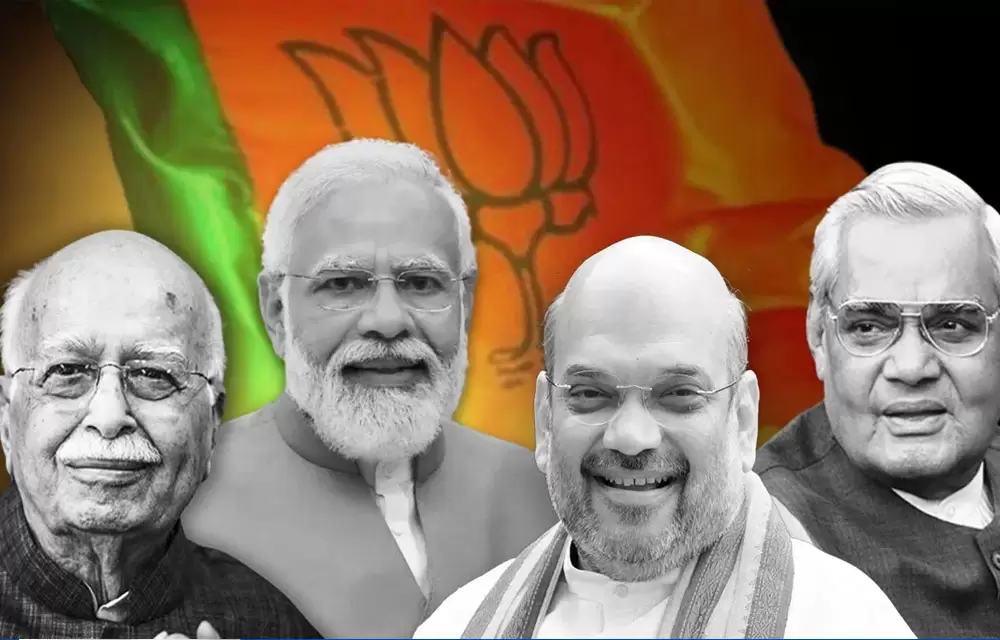
The Bharatiya Janata Party (BJP), founded on April 6, 1980, recently celebrated its 45th anniversary, marking a remarkable journey from humble beginnings to becoming the world’s largest political party. Over these four and a half decades, the BJP has transformed India’s political landscape, emerging as a dominant force under the leadership of iconic figures like Atal Bihari Vajpayee and Narendra Modi.
Rooted in the ideology of Hindutva and cultural nationalism, the party has not only achieved electoral success but also played a pivotal role in shaping a modern, self-reliant India. This article explores the BJP’s history, its milestones, contributions to nation-building, and how it continues to shape India’s future.
The Genesis of BJP: From Bharatiya Jana Sangh to a National Force
Early Roots in Bharatiya Jana Sangh (1951–1977)
The BJP’s origins lie in the Bharatiya Jana Sangh (BJS), established in 1951 by Dr. Syama Prasad Mookerjee, a staunch nationalist and former Union Minister. The BJS, as the political wing of the Rashtriya Swayamsevak Sangh (RSS), aimed to challenge Congress dominance and promote a vision of India grounded in Hindu cultural values and unity.
Dr. Mookerjee’s activism focused on integrating Jammu & Kashmir into the Indian Union, opposing Article 370. His mysterious death in 1953 was a major blow, but the movement continued under Pandit Deendayal Upadhyaya, who introduced the philosophy of Integral Humanism—a unique blend of cultural pride and economic self-reliance that remains central to BJP ideology.
The BJS grew gradually, participating in anti-Congress coalitions and expanding its base, especially during the Emergency (1975–77), when it merged with other opposition forces to form the Janata Party, defeating Indira Gandhi’s Congress in 1977.
Birth of the BJP (1980)
When the Janata Party experiment collapsed in 1980, former BJS members led by Atal Bihari Vajpayee and L.K. Advani formed the Bharatiya Janata Party on April 6, 1980. With the slogan “A party with a difference,” the BJP sought to distance itself from hardline images while retaining its ideological roots.
Initial years were challenging. In the 1984 Lok Sabha elections, it secured only 2 seats. However, this defeat became a foundation for strategic rethinking and long-term planning.
The Rise of BJP: Milestones in Electoral Success
The Ram Janmabhoomi Movement and the 1990s Surge
The late 1980s marked a critical shift with the BJP's endorsement of the Ram Janmabhoomi movement. L.K. Advani’s Rath Yatra in 1990 stirred Hindu sentiment across the country. From 85 seats in 1989 to 120 in 1991, the BJP’s growth was swift and formidable.
The demolition of the Babri Masjid in 1992, though controversial, solidified its image as a protector of Hindu interests. In 1996, it became the single-largest party, and despite a brief 13-day government, it proved its political arrival.
In 1998, the BJP-led National Democratic Alliance (NDA) secured a stable majority, with Vajpayee serving a full term as Prime Minister until 2004.
Vajpayee Era: Governance and Global Recognition (1998–2004)
Under Atal Bihari Vajpayee, the BJP balanced Hindutva with good governance. Major highlights:
- Pokhran-II Nuclear Tests (1998): Showcased India’s strategic autonomy.
- Kargil War Victory (1999): Strengthened national security credentials.
- Economic Initiatives: Projects like the Golden Quadrilateral and telecom liberalization laid the foundation for modern infrastructure.
Though it lost in 2004, the BJP was now firmly entrenched as a national alternative to the Congress.
Modi Era: A New Political Dominance (2014–Present)
The BJP’s transformation peaked with Narendra Modi, who led the party to a historic 282-seat victory in 2014. In 2019, the BJP increased its tally to 303 seats, cementing its dominance.
Key Milestones:
- Abrogation of Article 370 (2019): Ended Jammu & Kashmir’s special status.
- Ram Mandir Consecration (2024): Fulfilled a long-standing cultural promise.
- Economic Growth: India’s GDP rose from $2 trillion in 2014 to over $3.5 trillion by 2024, placing it among the world’s top five economies.
Today, the BJP governs in 18 states, either directly or through coalitions.
Shaping a New India: BJP’s Contributions Over 45 Years
1. Economic Transformation and Self-Reliance
The BJP promotes Atmanirbhar Bharat, emphasizing:
- Make in India (2014): Boosted manufacturing and FDI.
- GST Implementation (2017): Unified India's complex tax system.
- Digital India: Brought over 1.2 billion people online, linking bank accounts, Aadhaar, and welfare.
2. Social Welfare and Inclusive Development
The BJP’s approach to governance blends development with empowerment:
- Jan Dhan Yojana: 50 crore+ bank accounts opened.
- Ayushman Bharat: Free healthcare for over 50 crore Indians.
- Ujjwala Yojana: 10 crore LPG connections for poor households.
3. Cultural Renaissance and National Identity
The BJP has emphasized India’s civilizational identity:
- Ram Temple: A 500-year aspiration fulfilled.
- Kashi Vishwanath Corridor: Revitalizing spiritual heritage.
- Statue of Unity: World’s tallest statue honoring Sardar Patel.
4. Assertive Foreign Policy
The BJP has enhanced India’s global image:
- Act East Policy: Deepened ties with ASEAN and countered China.
- Neighborhood First: Strengthened bonds with South Asian allies.
- Vaccine Diplomacy & G20 Leadership: India emerged as a global leader.
The BJP’s Organizational Strength: Pillar of Success
1. RSS Cadre Support
With a disciplined, ideology-driven cadre from the RSS, the BJP has built the world’s largest political party, boasting 180+ million members.
2. Dynamic Leadership
From Vajpayee’s diplomacy to Modi’s charisma, and Amit Shah’s electoral strategy, BJP leaders have redefined political campaign dynamics in India.
3. Strategic Alliance Building
Through the NDA, the BJP has expanded its footprint even in regions like the Northeast, Bengal, and South India.
Challenges and Criticisms
Despite successes, the BJP faces hurdles:
- Religious Polarization: Critics cite the CAA, NRC, and communal narratives.
- Economic Inequality: Unemployment and rural distress remain concerns.
- Federal Frictions: Tensions with states like Tamil Nadu and Kerala persist.
The party counters these concerns with its focus on development, governance, and nationalism.
BJP at 45: The Road Ahead
From 2 seats in 1984 to 303 in 2019, the BJP’s 45-year journey has redefined Indian politics. It has combined Hindutva, governance, economic vision, and cultural resurgence into a powerful national movement.
As Prime Minister Narendra Modi puts it:
“This is not just a government; it’s a movement for a Viksit Bharat (Developed India).”
At 45, the BJP stands not just as a political party—but as a transformative force shaping the future of the world’s largest democracy.
Frequently Asked Questions
What is BJP at 45?
The Bharatiya Janata Party ( BJP ), founded on April 6, 1980, recently celebrated its 45th anniversary, marking a remarkable journey from humble beginnings to becoming the world’s largest political party. Over these four and a half decades, the BJP has transformed India’s political landscape, emerging as a dominant force under the leadership of iconic figure
What are the key points about BJP at 45?
Rooted in the ideology of Hindutva and cultural nationalism , the party has not only achieved electoral success but also played a pivotal role in shaping a modern, self-reliant India. This article explores the BJP’s history, its milestones, contributions to nation-building, and how it continues to shape India’s future.
Why does BJP at 45 matter in Hinduism?
It reflects core values of Sanatana Dharma and offers practical and spiritual guidance that remains relevant across generations.
How can devotees apply BJP at 45 in daily life?
By reflecting on its teaching, incorporating the related practices or observances into daily routine, and approaching it with sincere devotion and understanding.
You might also like

Purushottam Maas 2026: Lord Vishnu's Sacred Gift of Spiritual Multiplication & Divine Grace
Shani Jayanti 2026: Date, Significance, Rituals & Powerful Mantras
Hindu Priest Jobs New Zealand 2026 — Auckland, Wellington, Christchurch Vacancies & NZ Religious Worker Visa Guide