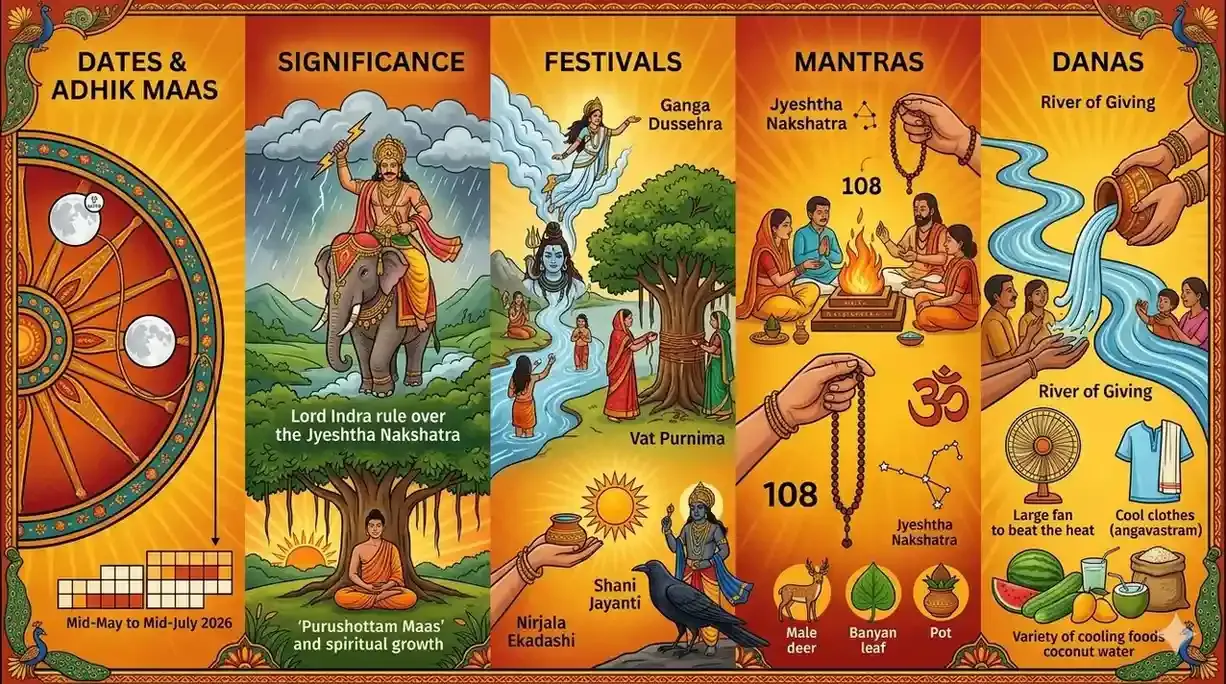
Global Sri Rama Navami 2025: How the Diaspora Celebrates Lord Rama
As the sacred festival of Sri Rama Navami 2025 draws near, the global Hindu community is preparing to honor the birth of Lord Rama with deep…
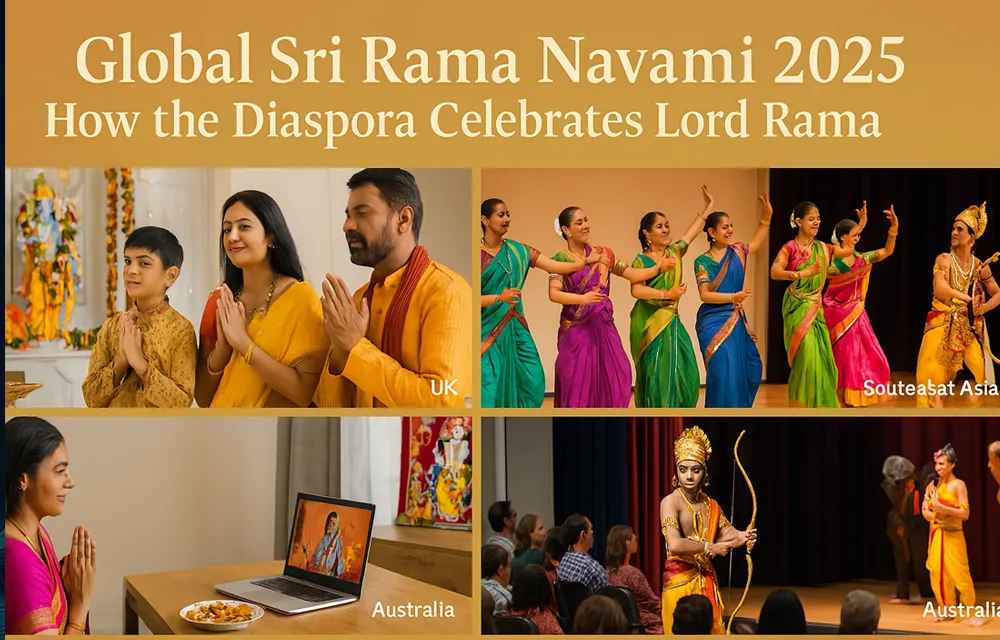
As the sacred festival of Sri Rama Navami 2025 draws near, the global Hindu community is preparing to honor the birth of Lord Rama with deep…
Update (October 2026): In 2026, Sri Rama Navami fell on Thursday, 26 March. This article describes an earlier observance — for current dates and guidance, see our Sri Rama Navami 2026.
As the sacred festival of Sri Rama Navami 2025 draws near, the global Hindu community is preparing to honor the birth of Lord Rama with deep devotion—transcending borders and time zones. While the spiritual heart of the celebration beats in Ayodhya and across India, the echo of bhajans, pujas, and cultural expressions resonates powerfully within diaspora communities in the United States, United Kingdom, Australia, and Southeast Asia.
Celebrating Across Continents
United States
In the United States, temples across New Jersey, California, and Texas have organized week-long festivities, featuring Sita-Rama Kalyanam ceremonies, Ramayan recitations, and children’s drama performances reenacting episodes from the epic. Families gather at community centers adorned with flowers and diyas, fostering a sense of shared heritage.
Anita Reddy from Chicago shares, “We host a virtual satsang with our extended family in India and offer homemade panakam and kosambari to Lord Rama. Our kids look forward to it every year—it’s how we pass on our culture.”
United Kingdom
In the UK, historic temples in London, Leicester, and Birmingham prepare for grand celebrations. Bhajans and classical dance performances are often streamed online, allowing for broader participation across time zones. For many, Sri Rama Navami is both a spiritual observance and an opportunity to educate younger generations about the values of dharma, truth, and compassion.
Australia
In Sydney and Melbourne, the Indian-Australian community celebrates with prasad potlucks, devotional singing, and storytelling sessions for children. Temples and cultural organizations host virtual lectures from Indian spiritual leaders, drawing in audiences from all over the region and keeping the spirit of Rama Navami alive and vibrant.
Southeast Asia
Countries like Singapore, Malaysia, and Indonesia—home to significant Indian populations—observe Sri Rama Navami with colorful temple processions, interfaith dialogues, and joint celebrations among Tamil, Telugu, and North Indian communities. These events foster not only devotion but cultural unity and harmony in multicultural settings.
A Global Spiritual Bridge: Hindutone.com
To make this Sri Rama Navami truly global, www.hindutone.com offers:
- Customized Puja Timings for various time zones to ensure rituals are performed at the most auspicious hours.
- Live-Streaming Links to major temple events around the world, making darshan and blessings accessible to all.
- Diaspora-Friendly Prasad Recipes, adapted to local ingredients and global kitchens—helping families recreate the tastes of tradition wherever they are.
Whether you are in Hyderabad or Houston, Chennai or Canberra, Hindutone is your digital companion—bridging hearts and heritage across the world.
Jai Shri Ram, Across the Globe
This Sri Rama Navami 2025, let the devotion ripple far and wide. As families chant the name of Lord Rama in diverse languages and settings, the timeless message of righteousness, courage, and love continues to unite souls across continents. No matter the geography, the divine light of Sri Rama shines universally.
For global schedules, spiritual resources, and community stories, visit www.hindutone.com.
What does Sri Rama Navami commemorate and why is its timing sacred?
Sri Rama Navami marks the birth of Lord Rama, the seventh avatar of Lord Vishnu, on the ninth day (Navami tithi) of the bright fortnight (Shukla Paksha) of the month of Chaitra. According to the Valmiki Ramayana (Bala Kanda, Sarga 18), Rama was born at midday—the Abhijit muhurta—when the Sun was in Aries, the Moon was in Cancer, and Jupiter and Saturn occupied auspicious positions, a constellation that Sage Vashishtha himself identified as divinely ordained.
This solar-lunar alignment gives the festival both an astrological and a devotional significance. The midday hour is therefore treated as the most sacred moment of the observance, during which temples worldwide perform the symbolic cradle ceremony—Jhoola or Unjal seva—placing the deity's infant icon in a flower-decked swing and singing lullabies called Lali. Diaspora temples that span multiple time zones often calculate this precise noon moment for Ayodhya and replicate it locally, so the spirit of simultaneous worship is maintained across continents.
The Sita-Rama Kalyanam ritual: meaning and practice for diaspora communities
The Sita-Rama Kalyanam—the ceremonial reenactment of the divine wedding of Sita and Rama—is the liturgical centerpiece of Rama Navami observances in South Indian tradition, especially among Telugu and Tamil communities. Rooted in the account described in the Valmiki Ramayana's Bala Kanda and elaborated in the Brahma Purana, the ritual involves a full Vedic wedding sequence: the exchange of garlands (Mala Dharana), the tying of the sacred thread (Mangala Sutra), and the circumambulation of the sacred fire (Agni Parikrama) on behalf of the deities.
In diaspora settings, temples in New Jersey's Edison corridor, the Bay Area's Milpitas, and Houston's Stafford neighborhood engage trained Agamic priests to conduct the Kalyanam with full Vedic recitation of the Vivaha Sukta. Devotees sponsor individual rituals—such as the Vastram (sacred cloth offering) or the Mangalya Dharana—as an act of piety. The prasad distributed afterward, classically panakam (jaggery lemonade), neer mor (spiced buttermilk), and vadapappu (soaked lentils), carries specific symbolic value: panakam's sweetness represents Rama's benevolence, while the cooling buttermilk is offered in gratitude for the spring harvest season.
How the Ramayana is recited and interpreted across different diaspora traditions
The Ramayana is not a single text but a living textual family. North Indian diaspora communities—particularly those with roots in Uttar Pradesh, Bihar, and Madhya Pradesh—center their Rama Navami observances on Goswami Tulsidas's Ramcharitmanas, reading the Bal Kand in its entirety over the preceding days and culminating in a community Akhand Path (unbroken recitation) through the night. South Indian communities primarily draw from Valmiki's Sanskrit Ramayana and, in Tamil circles, from Kamban's Kamba Ramayanam, both of which render distinct emotional and devotional textures to the celebration.
In the United Kingdom and Canada, Hindu cultural organizations have begun hosting comparative Ramayana symposiums around Rama Navami, inviting scholars and storytellers to present regional retellings—including the Adhyatma Ramayana, which frames the entire narrative as a conversation between Shiva and Parvati, emphasizing Rama's nature as the supreme Brahman rather than solely a heroic king. These sessions have proven especially meaningful for second-generation diaspora youth, connecting them to regional roots while demonstrating the philosophical depth of the epic.
Fasting practices and the spiritual discipline of the Rama Navami Vrata
The Rama Navami Vrata is one of the Mahavrats enumerated in the Bhavishyottara Purana. Observants traditionally fast for the entire Navami day, taking only fruit, milk, and water until the midday Abhijit muhurta, after which a ritual bath and puja precede the breaking of the fast. The Vrata is considered particularly efficacious when combined with recitation of the Aditya Hridayam—the hymn taught by Sage Agastya to Rama on the battlefield—which connects solar veneration directly to Rama's divine lineage from the Ikshvaku Solar dynasty (Surya Vamsha).
Diaspora observers often adapt the fast to fit work schedules and local food availability, substituting traditional ingredients with locally sourced equivalents—for instance, using maple syrup in place of jaggery for panakam in Canada, or substituting tapioca-based flours for the sabudana dishes common in Maharashtra. Religious authorities at temples such as the Sri Venkateswara Temple in Pittsburgh and the Swaminarayan Mandir in London have published Vrata guidelines tailored to diaspora contexts, ensuring doctrinal fidelity without creating unnecessary hardship.
Rama Navami and its role in transmitting dharmic values to diaspora youth
For Hindu families settled abroad, Rama Navami serves a dual function: it is simultaneously a religious observance and a structured cultural transmission event. The values Lord Rama embodies—Maryada (righteous boundaries), Satya (truth), Pitru Bhakti (filial devotion), and Danda Niti (just governance)—are drawn from his characterization in the Valmiki Ramayana as the Maryada Purushottama, the ideal upholder of Dharmic conduct. Parents and community leaders use the festival season to narrate specific episodes—Rama's acceptance of exile, his protection of sages in the Dandaka forest, his covenant with Sugriva—as ethical parables relevant to contemporary life.
Temples across Sydney, Singapore, and the United States have developed structured Ramayana programs for children, including quiz competitions (Ramayana Bowl), theatrical presentations, and art workshops centered on episodes from the epic. In Leicester, UK, the annual Rama Navami procession through the city's Golden Mile has become one of the most visible expressions of Hindu identity in Britain, drawing participation from non-Hindu neighbors and local civic leaders, effectively making dharmic values part of the shared public conversation.
The Ayodhya connection: how the 2025 Ram Mandir transforms the global celebration
The consecration of the Shri Ram Janmabhoomi Mandir in Ayodhya in January 2024 has lent Rama Navami 2025 an unprecedented emotional and spiritual charge for the global diaspora. Ayodhya, identified in the Valmiki Ramayana as the capital of the Kosala kingdom situated on the banks of the Sarayu River, is revered as the Janmabhoomi—the actual birthplace—of Lord Rama. For many diaspora Hindus, the newly constructed temple represents the culmination of a centuries-long aspiration, and the first Rama Navami fully observed in the new sanctum carries deep personal meaning.
Several temples abroad have established direct live-stream partnerships with the Shri Ram Janmabhoomi Teertha Kshetra Trust so that diaspora congregations can participate in the Ayodhya Abhishekam and Aarti in real time, regardless of time zone. Community members in cities from Toronto to Kuala Lumpur are organizing 'virtual yatra' evenings where the Ayodhya broadcast is projected in temple halls, creating a shared physical-spiritual space. Many families are also planning pilgrimage trips timed to coincide with Rama Navami 2025, viewing a visit to the new temple on this particular tithi as a once-in-a-generation spiritual opportunity.
Frequently Asked Questions
What is Global Sri Rama Navami?
As the sacred festival of Sri Rama Navami 2025 draws near, the global Hindu community is preparing to honor the birth of Lord Rama with deep devotion—transcending borders and time zones. While the spiritual heart of the celebration beats in Ayodhya and across India, the echo of bhajans, pujas, and cultural expressions resonates powerfully within diaspora com
What are the key points about Global Sri Rama Navami?
Celebrating Across Continents United States In the United States, temples across New Jersey, California, and Texas have organized week-long festivities, featuring Sita-Rama Kalyanam ceremonies, Ramayan recitations, and children’s drama performances reenacting episodes from the epic. Families gather at community centers adorned with flower
Why does Global Sri Rama Navami matter in Hinduism?
It deepens a devotee's connection with Lord Rama and with the values of Sanatana Dharma — clarity, devotion and dharmic living.
How can devotees apply Global Sri Rama Navami in daily life?
By reflecting on its teaching, incorporating the related practices or observances into daily routine, and approaching it with sincere devotion and understanding.
You might also like
Gita Jayanti 2026 Prasad Recipes — Tulsi-Honoring Sweets, Krishna's Favourites & December 20 Bhog Plate
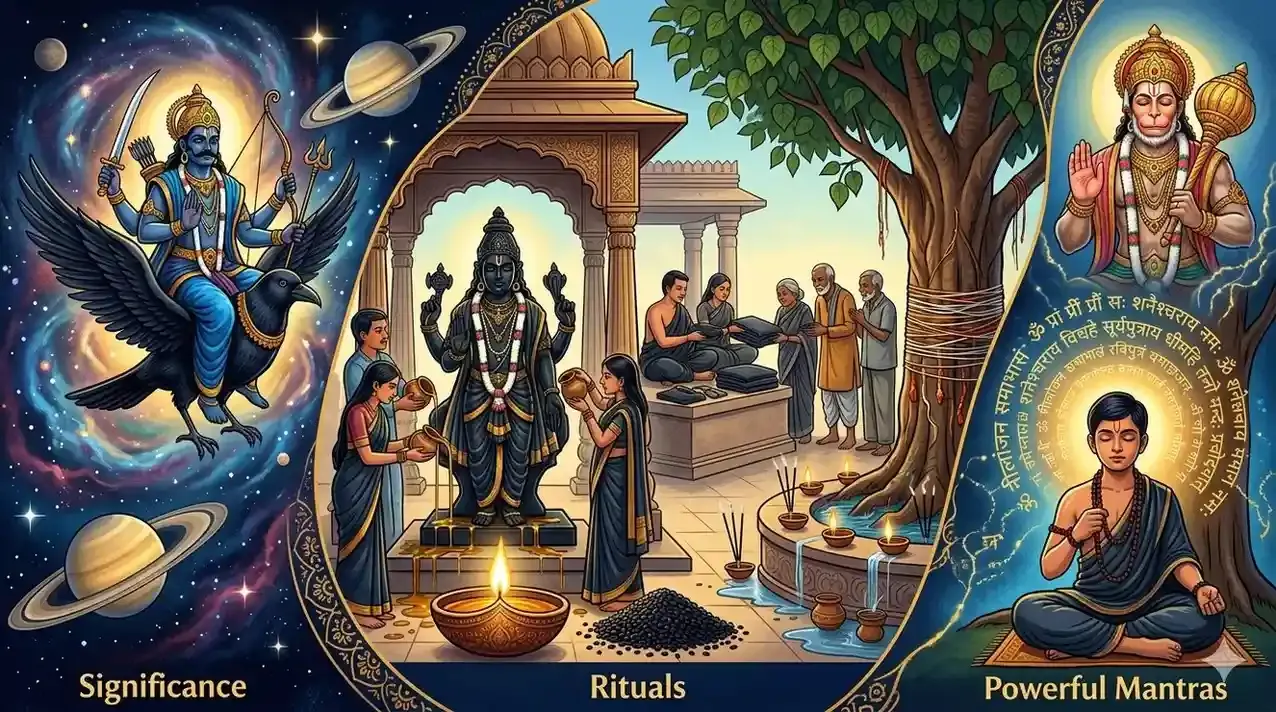
Shani Deva Temples Worldwide & Must-Performed Rituals — Complete Devotee's Guide
Maha Shivratri 2026 Vrat Recipes — Sabudana Khichdi, Singhada Halwa, Phalahara Foods Complete Fasting Guide