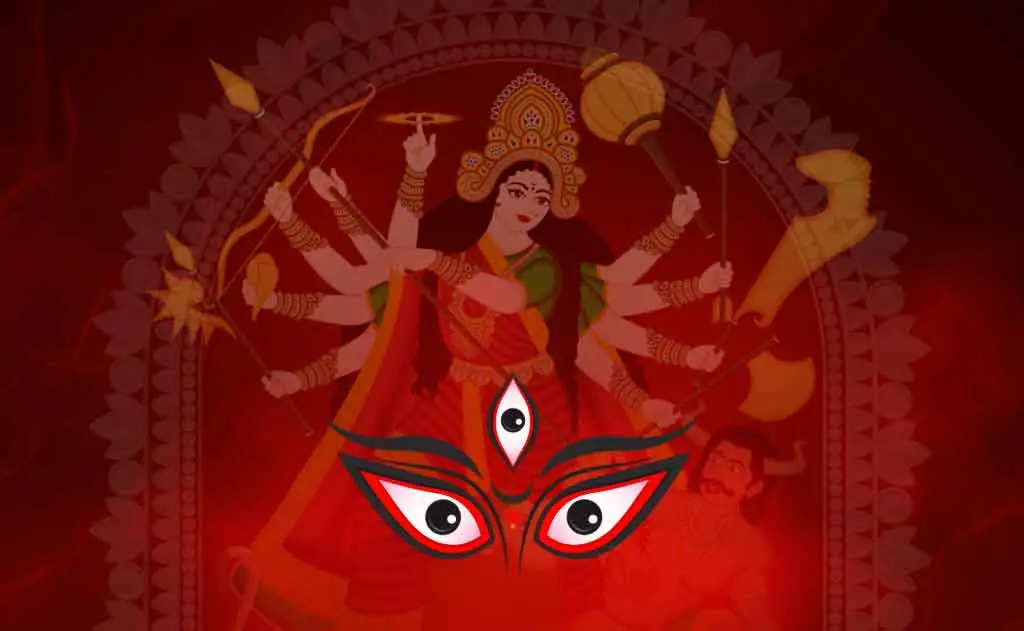
Ashadha Gupt Navratri 2026: Dates, Mahavidya Sadhana & Significance
Ashadha Gupt Navratri 2026 begins 14 July — the “secret” Navratri of the ten Mahavidyas, devoted to Shakti and tantric sadhana. Dates, the nine days, significance and how to observe it.

Ashadha Gupt Navratri 2026 begins 14 July — the “secret” Navratri of the ten Mahavidyas, devoted to Shakti and tantric sadhana. Dates, the nine days, significance and how to observe it.
Ashadha Gupt Navratri 2026 begins on Tuesday, 14 July 2026 (Ashadha Shukla Pratipada) and runs nine nights — the “secret” Navratri devoted to Shakti in her ten Mahavidya forms. Where Sharad and Chaitra Navratri are public and festive, the two Gupt Navratris are inward and intense, treasured by sadhakas for Devi worship. This HinduTone guide covers the dates, the nine days and how to observe it.
See it in context in the July 2026 Hindu festivals calendar, alongside the season of
Chaturmas 2026.Ashadha Gupt Navratri 2026 Dates
Because Hindu festivals follow the tithi at local sunrise, the observance date can differ by a day between India and the West. Confirm the exact day and muhurat with your local temple or panchang.
| Day | Date (US ref, 2026) | Focus |
|---|---|---|
| Pratipada (Ghatasthapana) | Tue, 14 Jul | Kalash sthapana; Maa Kali |
| Ashtami | Tue, 21 Jul | Durga Ashtami; intensified worship |
| Navami | Wed, 22 Jul | Maha Navami; concluding puja |
// VERIFY: nine-day tithi sequence and India (IST) start day against a local panchang; tithi kshaya/vriddhi can shift dates.
What Is Gupt Navratri & Why “Secret”?
There are four Navratris in the year: the famous Sharad (autumn) and Chaitra (spring), and two Gupt (hidden) Navratris in Magha (winter) and Ashadha (monsoon). “Gupt” means secret — these nights are kept privately, their power guarded rather than paraded. They are the special season of the Dasha Mahavidyas, and of sadhakas seeking the Mother’s grace through disciplined practice. For most devotees they are simply nine days of heightened Devi worship.
The Ten Mahavidyas
The Dasha Mahavidyas are the ten great wisdom-goddesses — Kali, Tara, Tripura Sundari, Bhuvaneshwari, Bhairavi, Chhinnamasta, Dhumavati, Bagalamukhi, Matangi and Kamala. Together they express the entire range of the Divine Mother, from the fierce to the serene. (We introduced one of them in our Dhumavati Jayanti guide.)
How to Observe (Householder Vidhi)
- On Pratipada, perform Ghatasthapana (kalash and barley sowing) if it is your custom.
- Light a lamp daily before the Devi; keep an akhand jyoti if you can.
- Recite Durga Saptashati, the Devi Kavacham, or simple Devi mantras each day.
- Fast on the first and the Ashtami/Navami days as your health allows.
- Conclude on Navami with kanya-puja (honouring young girls as the Devi) and havan.
Mantra
ॐ ऐं ह्रीं क्लीं चामुण्डायै विच्चे — Oṃ Aiṃ Hrīṃ Klīṃ Cāmuṇḍāyai Vicce — the Navarna (Chandi) mantra, the core mantra of Durga Saptashati, suitable for all devotees during Navratri.
Deeper Mahavidya bija-sadhana is initiation-specific and should be done only under a qualified guru. // VERIFY: omit individual Mahavidya bija-mantras for the uninitiated.
How the Diaspora Can Observe Gupt Navratri
- Keep it simple and private — a daily lamp, the Navarna mantra, and a Devi reading fit any schedule abroad.
- Fast on Pratipada and Ashtami/Navami; phalahar (fruit, sendha namak) is the usual diaspora-friendly form.
- Do kanya-puja on Navami with the children of family or friends.
- If drawn to Mahavidya sadhana, seek a qualified guru rather than online ritual.
Frequently Asked Questions
Is Gupt Navratri only for tantriks?
No. While it is the favoured season for advanced Mahavidya sadhana, any devotee can observe it as nine days of Devi worship with the Navarna mantra and Durga Saptashati.
How is it different from Sharad Navratri?
Sharad Navratri (Sep–Oct) is public and festive with Garba and Durga Puja; Gupt Navratri is private, inward and Mahavidya-focused — “secret” worship rather than celebration.
Quick Summary
- Ashadha Gupt Navratri 2026 = 14–22 July (begins Ashadha Shukla Pratipada).
- The secret Navratri of the ten Mahavidyas — inward Devi sadhana.
- Householders: daily lamp, Navarna mantra, Durga Saptashati, kanya-puja.
- Advanced Mahavidya sadhana is guru-guided only.
Continue in the July 2026 calendar, and the related Devi day Parvati Jayanti 2026.
You might also like
Kokila Vrat & Ashadha Purnima 2026: Date, Story & Significance

Ashadha Masam 2026 — Start Date, End Date, Complete Festivals List & Devshayani Ekadashi Guide
Tulsi Vivah 2026: Date, Puja Vidhi, Samagri, Katha and Significance