

Ganesh Chaturthi in South Africa 2026: Mandapams, Permits and Immersion
Ganesh Chaturthi 2026 falls on Monday 14 September in South Africa, with Anant Chaturdashi immersion on Friday 25 September and a Heritage Day long weekend. A full guide to the community, mandapam design, the Regulation of Gatherings Act, and safe immersion in Durban, Gauteng and Cape Town.
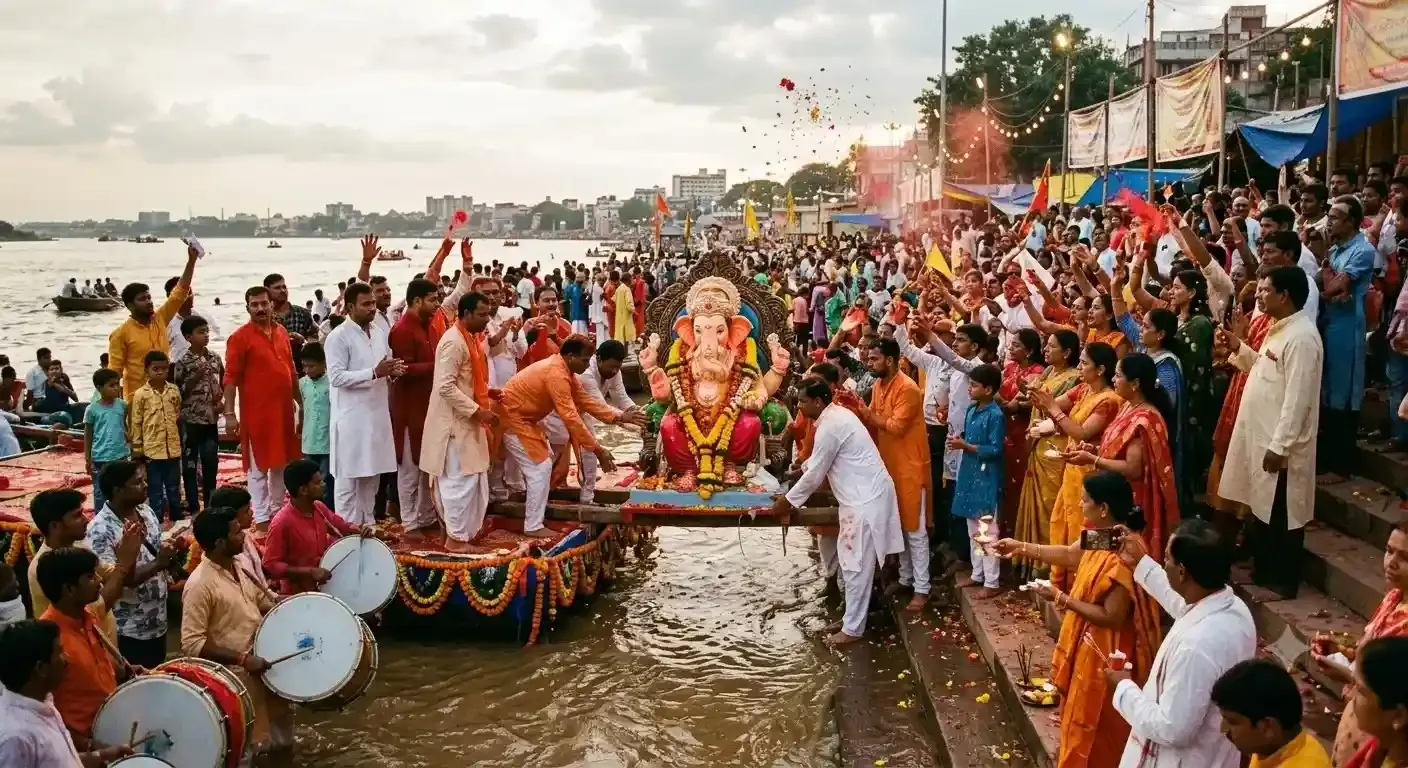
Ganesh Chaturthi 2026 falls on Monday 14 September in South Africa, with Anant Chaturdashi immersion on Friday 25 September and a Heritage Day long weekend. A full guide to the community, mandapam design, the Regulation of Gatherings Act, and safe immersion in Durban, Gauteng and Cape Town.
Quick answer: Ganesh Chaturthi 2026 in South Africa is Monday 14 September, with Anant Chaturdashi immersion Friday 25 September — and Heritage Day (Thursday 24 September) makes a four-day weekend. Home puja needs no permit; public processions/gatherings over 15 people need a convener and notice under the Regulation of Gatherings Act (via SAHMS or your temple), plus a municipal permit, SAPS coordination and insurance. Durban (eThekwini) is the centre; immerse only at a lifeguarded beach between the flags, or use an artificial tank or home immersion (the default for landlocked Gauteng and for Cape Town in winter). Use natural clay, never plaster of Paris; order murtis early as SA supply is limited.
Ganesh Chaturthi 2026 falls on Monday 14 September, with Anant Chaturdashi on Friday 25 September. Scheduling detail for South African readers: Thursday 24 September 2026 is Heritage Day, a public holiday, and Anant Chaturdashi falls the next day — take the Friday off and you have a four-day weekend running 24 to 27 September, wrapped around the most important day of the festival.
Temple committees, immersion organisers and families travelling to the coast should build around it, as accommodation and beach access will be busier than usual. South Africa also offers something no other market in this series does: it is spring — Durban in mid-September sits in mild, bright, early-summer weather.
Part 1 — The South African Context
A 165-Year-Old Community
The Hindu community in South Africa numbers in the region of half a million, within a broader Indian South African population of well over a million, the great majority in KwaZulu-Natal and specifically in and around Durban — one of the largest concentrations of people of Indian descent outside India.
The community arrived in two waves: indentured labourers from 1860, arriving aboard ships such as the SS Truro, to work the Natal sugar plantations, and passenger Indians (traders, largely Gujarati) from the 1870s. Four linguistic communities took root: Tamil, Telugu, Hindi-speaking (Bhojpuri heritage), and Gujarati; all four observe Ganesh Chaturthi, with Tamil and Telugu families particularly prominent.
Mohandas Gandhi practised law in Durban and Johannesburg from 1893 to 1914 and founded the Phoenix Settlement north of Durban.
Constitutional Protection
South Africa's Constitution provides among the strongest religious-freedom protections anywhere. Section 15 guarantees freedom of religion, belief and opinion; Section 31 protects the right of cultural, religious and linguistic communities to practise their religion and maintain their associations.
The South African Hindu Maha Sabha
SAHMS, founded 1912, is the national umbrella body for Hindu organisations in South Africa, the institutional voice of the community, coordinating major festivals and holding relationships with municipalities and government. For any organised public celebration or immersion, SAHMS and your affiliated temple are the correct starting point.
The Temples
| Temple | Where | Note |
|---|---|---|
| Shree Ambalavaanar Alayam (Second River Temple) | Umbilo, Durban | Built 1875, the oldest Hindu temple in South Africa and a declared heritage site. |
| Sri Sri Radha Radhanath Temple (Temple of Understanding) | Chatsworth, Durban | ISKCON, one of the largest and most striking Hindu temples in Africa, major festival programmes. |
| Mount Edgecombe temples | North of Durban | Long-established Tamil temples, historically associated with firewalking observances. |
| Umgeni Road Temple / Durban Hindu Temple | Durban | Central and long-established. |
| Melrose and Lenasia temples | Johannesburg | The Gauteng community's principal sites. |
| Laudium temples | Pretoria | Established Tshwane community. |
Where the Community Lives
- Durban and KZN — Chatsworth, Phoenix, Verulam, Tongaat, Isipingo, Merebank, Reservoir Hills, Overport, Stanger/KwaDukuza, Pietermaritzburg.
- Gauteng — Lenasia, Fordsburg, Mayfair, Extension areas (Johannesburg), Laudium (Pretoria).
- Western Cape — Rylands, Athlone (Cape Town), smaller community.
Part 2 — Spring, the Season Works for You
South Africa is the only Southern Hemisphere market in this series and September is early spring.
| City | September Conditions | Implication |
|---|---|---|
| Durban | Mild and bright, roughly 22 to 26°C, low humidity by Durban standards, sea warming, the best time of year for outdoor events | Outdoor mandapams, garden pandals and beach immersion are all genuinely comfortable. |
| Johannesburg / Pretoria | Warm, dry, sunny days, cool evenings, windy and dusty, Highveld thunderstorm season only beginning | Outdoor daytime events work well, plan for a cool evening. |
| Cape Town | Late winter into early spring, wet, windy, cold, sea temperatures low and swells significant | Indoor mandapam, sea immersion is genuinely inadvisable in Cape Town in September. |
Two South Africa-specific planning realities are load shedding and security.
Load Shedding
Electricity supply interruptions remain a planning fact. Any event that depends on power needs a backup plan: confirm your area's schedule for the festival dates and check again close to the time; for a home mandapam use battery-powered LED lighting and a power bank for the sound; for a community event an inverter or generator is a line item, not a luxury; keep genuine oil lamps and candles available as a devotional and practical fallback.
Security
Security is a legitimate and necessary budget line for any public event. Engage a registered PSIRA-accredited security provider for community events; plan lit, monitored parking; advise attendees on safe arrival and departure, particularly for evening programmes and beach immersions.
Part 3 — Mandapam Design
Home Mandapam
- Console or altar-table mandapam.
- Removable adhesive hook backdrop (no wall damage in rented flats or townhouses).
- Tension-rod arch.
- Garden or patio mandapam (viable in Durban and Gauteng in September).
- Fresh flowers (marigold, jasmine, roses and proteas; Durban's Indian markets carry proper garland flowers).
- Banana leaf and banana trunk (abundant in KZN, biodegradable).
- Brass kuthuvilakku and dipa (traditional lamp anchor, load-shedding-proof).
- Three-point lighting (warm key front-left, soft fill front-right, cool backlight).
- Battery LED backup for every lighting element.
- Turn off the overhead white light during aarti.
Community and Temple Scale
- Modular truss and pipe-and-drape from event hire companies in Durban, Johannesburg and Cape Town.
- Printed tension backdrop on flame-retardant fabric (specify FR at quotation).
- Marquee with proper wind rating (Highveld spring wind is serious; a cheap marquee in Johannesburg in September will fail).
- Generator or inverter, sized properly and with fuel.
- Accessible darshan path.
- Live-stream to India (South Africa is 3.5 hours behind IST; a 6pm Durban aarti is 9:30pm IST).
- Bilingual QR storytelling placards (English plus Tamil, Telugu, Hindi or Gujarati).
Sourcing
| What | Where |
|---|---|
| Murtis, puja samagri, Indian goods | Victoria Street Market and the Grey Street/Dr Yusuf Dadoo Street precinct, Durban; Chatsworth and Phoenix shopping centres; Fordsburg and Lenasia, Johannesburg; Laudium, Pretoria. |
| Fresh flowers and garlands | Durban's Indian markets; Johannesburg flower market; temple-linked vendors. |
| Banana leaf, trunk, coconut | KZN markets. |
| Fabric and textiles | Durban CBD Indian textile shops; Fordsburg, Johannesburg. |
| Clay murtis | Temple-linked artisans and importers, order by early August, supply is limited and sells out. |
| Truss, marquee, AV, generators | Event hire companies in all major centres. |
A note on murti supply: South Africa does not have the domestic murti-making industry that India or even Malaysia does; clay murtis with natural colours are often imported or made by a small number of local artisans, and they run out — order early.
Part 4 — Permissions
Note: this is a general framework, not legal advice; requirements vary by municipality and change; confirm with your local municipality, SAPS, and SAHMS or your temple before finalising plans.
4.1 At Home: Nothing Required
A puja in your own home with family and invited guests requires no permit; religious practice in a private residence is constitutionally protected under Sections 15 and 31. Practical only: complex/estate/body corporate rules on common-area use, guest parking, amplified sound; municipal noise by-laws; a courteous heads-up to neighbours; standard fire caution with oil lamps and load-shedding candles.
4.2 The Regulation of Gatherings Act
The Regulation of Gatherings Act 205 of 1993 applies to a gathering — more than 15 people assembled in a public road or public place. A Ganesh Chaturthi procession or a large public immersion gathering falls within this.
The framework: appoint a convener (a named responsible person); give notice to the responsible officer of the relevant local authority at least seven days before, and in any case not less than 48 hours except in defined circumstances; this is notice, not permission — the local authority may call a meeting to discuss conditions and may impose reasonable conditions on time, route and conduct, but the Act is a notification framework, not a permit regime; in 2018 the Constitutional Court in Mlungwana v S struck down Section 12(1)(a), which had criminalised the failure to give notice, as unconstitutional — the notice obligation remains, the criminal sanction for not giving it does not.
Practical advice: give the notice well ahead through your temple or SAHMS; it triggers police and traffic coordination you actually want.
4.3 What Else You Need
| Requirement | Authority |
|---|---|
| Municipal events permit | Your metro — eThekwini (Durban), City of Johannesburg, City of Tshwane, City of Cape Town. |
| Gatherings Act notice | Responsible officer at the local authority. |
| SAPS coordination | South African Police Service; Joint Operations Committee (JOC) for larger events. |
| Event safety certification | Where the Safety at Sports and Recreational Events Act 2 of 2010 (SASREA) applies. |
| Traffic and road closure | Metro Police / traffic department. |
| Fire clearance | Municipal Fire Department. |
| Environmental health | Municipal Environmental Health (food handling). |
| Public liability insurance | Required by most municipalities and venues. |
| Beach or public open space use | Metro parks / beach management department. |
| Private security | PSIRA-registered provider. |
Lead time is 6 to 12 weeks for a significant public event.
4.4 Go Through SAHMS or Your Temple
Established temples and SAHMS have run these events for decades, hold municipal relationships, and can often bring your event under an existing arrangement.
Part 5 — Immersion
5.1 The Legal and Environmental Framework
| Instrument/Authority | Role |
|---|---|
| National Environmental Management: Integrated Coastal Management Act 24 of 2008 | Governs discharge and activity in the coastal zone. |
| National Water Act 36 of 1998 | Inland water bodies, rivers, dams. |
| Department of Forestry, Fisheries and the Environment (DFFE) | National environmental authority. |
| Municipality (eThekwini, etc.) | Beach management, access, cleanup, public open space. |
| Blue Flag beach programme | Several South African beaches hold Blue Flag status, with strict water-quality and cleanliness requirements. |
Practical position: organised immersion at designated sites with biodegradable murtis and proper cleanup is the workable and accepted model; uncontrolled immersion of plaster-of-Paris murtis with synthetic paint is an environmental problem and jeopardises the arrangements the community depends on. Durban's beaches are a major civic asset and several carry Blue Flag status; the community's continued beach access rests on being visibly responsible.
5.2 The Four Options, Ranked
- Temple or SAHMS-organised collective immersion (best) — designated site, group safety, municipal coordination, organised cleanup; contact your temple in early September.
- Artificial immersion tank — on temple grounds or a community venue; full ritual integrity, no coastal impact, no drowning risk, dissolved clay to the garden; the right default for Gauteng, which is landlocked.
- Home immersion — a large tub or drum for a household murti; full uttar puja, immerse, let the clay dissolve over 24 to 48 hours, use the water and sediment for the garden; the practical answer for flat-dwellers and for Cape Town in September.
- Sea or river immersion at an organised site — traditional and long-practised in Durban, with group organisation and the safety discipline below.
5.3 By Region
Durban and KwaZulu-Natal — the heart of South African immersion practice; coastal and river-mouth sites around Durban have been used for generations, with the Umgeni River mouth / Blue Lagoon area historically significant alongside beachfront locations; confirm your site with your temple, SAHMS, or eThekwini Municipality for the current year, and note 2026's Heritage Day long weekend will make the coast busier.
Johannesburg and Pretoria — Gauteng is landlocked; realistic options are artificial immersion tanks at temples (the standard and best solution), home immersion in a tub, or travelling to the KZN coast (feasible in 2026 given the 24 to 27 September long weekend); do not immerse in Gauteng rivers, dams or streams without confirmed arrangements.
Cape Town — September is late winter, cold water, strong winds, significant swell, dangerous surf; sea immersion in Cape Town in September is not advisable; use an artificial tank or home immersion.
5.4 Materials
Acceptable: natural clay with natural pigments; paper mâché with natural binders; fresh flowers and organic offerings in reasonable quantity.
Never: plaster of Paris; chemical or synthetic paints; thermocol or polystyrene; plastic-threaded garlands; glitter, foil, plastic ornaments; batteries or electrical parts. Strip the murti completely before immersion; on a Blue Flag beach this is the condition on which access continues.
5.5 Water Safety
South African coastal waters are dangerous; South Africa has a high drowning rate and rip currents along the KZN and Cape coasts are strong and frequently fatal.
Non-negotiable rules:
- Immerse only at a beach with lifeguards on duty, between the bathing flags.
- Waist-deep is the absolute limit, for anyone including strong swimmers.
- Never turn your back on the sea.
- Children stay on the sand, always.
- Designated spotters — sober, strong swimmers, not participating, watching the water only.
- Nobody who cannot swim enters the water.
- No alcohol.
- Daylight only, and check conditions on the day.
- Know the rip current signs — discoloured churning water, a gap in the breaking waves, debris moving seaward; if you see one, that is not the spot.
- If caught in a rip, do not swim against it — swim parallel to the shore until free, then in; signal for help and float.
- NSRI emergency number saved on every organiser's phone before you leave home.
Artificial tanks and home immersion eliminate this risk entirely.
Part 6 — Planning Timeline for 2026
| When | Action |
|---|---|
| Early July | Community events: begin municipal event application, book venue, contact SAHMS or temple. |
| Late July | Submit Gatherings Act notice pathway via temple, book security provider, arrange public liability insurance. |
| Early August | Order your clay murti (supply is limited and sells out), book generator or inverter. |
| Late August | Confirm all permits in writing, confirm immersion arrangements with temple, check load-shedding schedule. |
| Early September | Test-build the mandapam, brief volunteers, confirm beach and lifeguard arrangements. |
| Monday 14 September | Ganesh Chaturthi, sthapana in the madhyahna muhurat. |
| 19 to 20 September | Community celebration weekend. |
| Thursday 24 September | Heritage Day public holiday. |
| Friday 25 September | Anant Chaturdashi, immersion, daylight, lifeguarded beach, organised group. |
| 26 to 27 September | Long weekend continues. |
This article is general information, not legal advice. Requirements vary by municipality and change over time. Confirm current requirements with your municipality, SAPS, and the South African Hindu Maha Sabha or your temple before finalising plans.
Frequently Asked Questions
When is Ganesh Chaturthi 2026 in South Africa?
It falls on Monday 14 September, with Anant Chaturdashi on Friday 25 September. Heritage Day, a public holiday, falls on Thursday 24 September, creating a potential four-day weekend around the main immersion day.
Do I need a permit to celebrate Ganesh Chaturthi in South Africa?
Not for a home celebration — religious practice in a private residence is constitutionally protected. For public processions or gatherings of more than 15 people in a public place, the Regulation of Gatherings Act requires a named convener and notice to the local authority, ideally seven days ahead. Municipal event permits, SAPS coordination, fire clearance and public liability insurance also apply for organised events.
Where can I immerse the Ganesha idol in Durban?
Coastal and river-mouth sites around Durban have been used for generations, with the Umgeni River mouth area historically significant. The best approach is a temple or SAHMS-organised collective immersion — confirm the designated site and arrangements with your temple or eThekwini Municipality for the current year. Only immerse at a lifeguarded beach, between the flags, in waist-deep water at most.
Where can I immerse the Ganesha idol in Johannesburg?
Gauteng is landlocked, so the standard options are an artificial immersion tank at a temple, or home immersion in a large tub using a natural clay murti. Do not immerse in Gauteng rivers or dams without confirmed arrangements. In 2026, the Heritage Day long weekend makes travelling to the KZN coast feasible.
Can I immerse a Ganesha idol at Cape Town beaches?
It is not advisable in September. Cape Town is in late winter, with cold water, strong winds and dangerous swell. Use an artificial tank or home immersion instead.
Where can I buy a clay Ganesha idol in South Africa?
Through temple-linked artisans and importers, and Indian retail precincts including the Victoria Street area in Durban, Chatsworth and Phoenix, Fordsburg and Lenasia in Johannesburg, and Laudium in Pretoria. Order by early August — South Africa has limited murti supply and stock sells out.
What is the South African Hindu Maha Sabha?
Founded in 1912, SAHMS is the national umbrella body for Hindu organisations in South Africa. It coordinates major festivals and holds relationships with municipalities and government, and is the correct starting point for anyone organising a public celebration or immersion.
How does load shedding affect Ganesh Chaturthi planning?
It should be planned for. Check your area's schedule for the festival dates, use battery-powered LED lighting for home mandapams, budget for a generator or inverter for community events, and keep traditional oil lamps available — they are devotionally appropriate and unaffected by the grid.
You might also like
Ganesh Chaturthi 2026 in Fahaheel: Mandapam Ideas, Where to Buy & Visarjan
Ganesh Chaturthi 2026 in Salmiya: Mandapam Ideas, Where to Buy & Visarjan
Ganesh Chaturthi 2026 in Doha: Mandapam Ideas, Where to Buy & Visarjan