Hanuman Jayanti 2026 in Afghanistan, Bangladesh & Pakistan: Date, Timings, Complete Birth Story, Puja Vidhi & Community Observances
Hanuman Jayanti 2026 / Hanuman Janmotsava / Chaitra Purnima Vrat falls on Thursday, April 2, 2026.
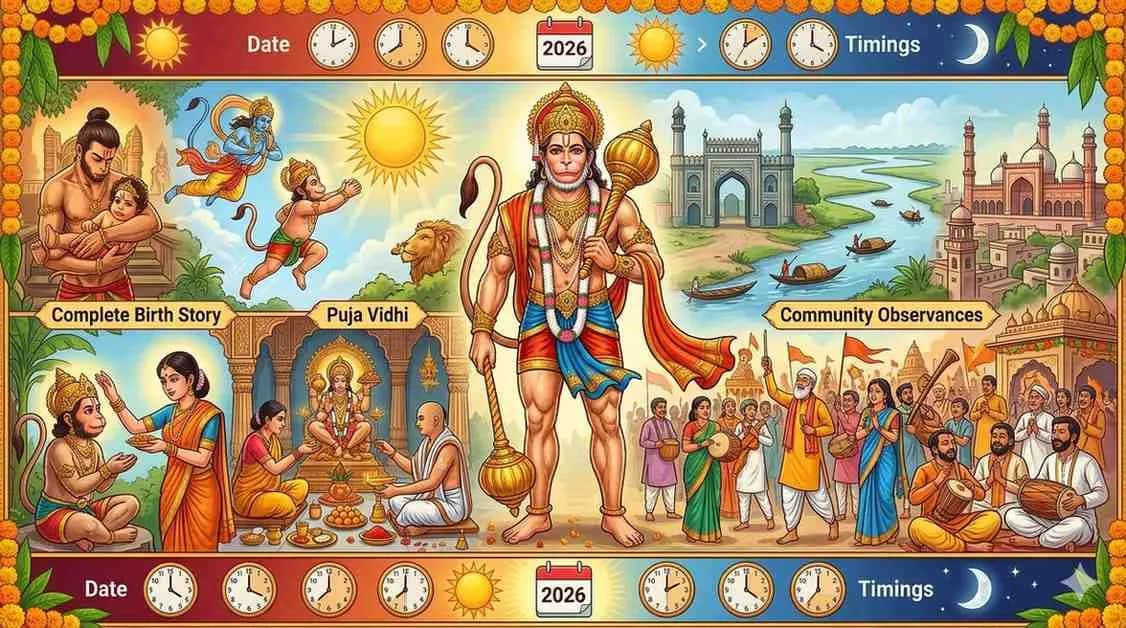
Hanuman Jayanti 2026 / Hanuman Janmotsava / Chaitra Purnima Vrat falls on Thursday, April 2, 2026.
Hanuman Jayanti 2026 / Hanuman Janmotsava / Chaitra Purnima Vrat falls on Thursday, April 2, 2026. This sacred day celebrates the birth anniversary of Lord Hanuman (Bajrangbali, Pawan Putra, Anjaneya, Maruti) — the embodiment of immense strength, courage, selfless bhakti (devotion), loyalty, humility, and obstacle removal.
In North Indian traditions, it coincides with Chaitra Shukla Purnima. Hindu communities in Afghanistan, Bangladesh, and Pakistan observe the day with Chaitra Purnima Vrat, Hanuman Chalisa recitation, special prayers, and quiet community gatherings, adapting to local conditions.
Hanuman Jayanti 2026 Date & Timings
- Main Celebration Date: Thursday, April 2, 2026
- Purnima Tithi: Begins ~7:06 AM IST on April 1 | Ends ~7:41 AM IST on April 2
- Best Time for Puja & Vrat: Early morning to afternoon on April 2
- Moonrise: Evening of April 1 / early April 2 (ideal for Chandra Arghya)
Note: Adjust timings according to local time zones (Afghanistan: UTC+4:30; Bangladesh & Pakistan: UTC+6).
Significance of Hanuman Jayanti
This day grants physical and mental strength, removes obstacles, and inspires unwavering devotion. For Hindu communities in these countries, it serves as a source of spiritual resilience and cultural continuity.
Complete Story of Lord Hanuman’s Birth (Hanuman Janmotsava Katha)
According to the Valmiki Ramayana, Puranas, and Ananda Ramayana:
An apsara named Anjana (Anjani) was born on Earth as a vanara due to a curse. She married the brave vanara king Kesari. Longing for a child, Anjana performed rigorous tapasya to Lord Shiva. Pleased, Shiva blessed her with a son endowed with divine power and extraordinary strength.
Meanwhile, the gods prepared for Lord Vishnu’s incarnation as Sri Rama to defeat Ravana. They contributed portions of the sacred payasam (divine pudding) from King Dasharatha’s yajna. The Wind God Vayu (Pawan Dev) carried a portion and placed it in Anjana’s hands while she meditated.
Anjana consumed it reverently. Through Shiva’s boon, Vayu’s energy, and the payasam, she conceived a glorious son.
On Chaitra Purnima, in a cave on Anjanadri mountain, Anjana gave birth to a radiant baby boy with a reddish glow. Hungry, the infant saw the rising red sun and leaped powerfully into the sky, mistaking it for fruit.
Indra struck him with his Vajra (thunderbolt). The baby fell, slightly injuring his jaw (hanu). Hence, he was named Hanuman.
Vayu withdrew air from the world in rage. The gods pacified him and granted boons: immense strength, speed like wind, size-changing ability, invulnerability, wisdom, and protection.
Lord Brahma, Shiva, and others further empowered him. Named Anjaneya, Maruti, Bajrangbali, and Pawan Putra, young Hanuman learned scriptures from Surya Dev. His legendary devotion to Lord Rama inspires millions even today.
This story teaches pure devotion, humility despite great power, and complete surrender to dharma.
How to Celebrate Hanuman Jayanti 2026 – Puja Vidhi (Adapted for Local Conditions)
- Vrat / Fasting: Observe a full or partial fast (fruits, milk, sweets). Break after puja.
- Abhishekam: Bathe the Hanuman murti or photo with panchamrita, Gangajal, rose water, and milk.
- Hanuman Chalisa Recitation: Chant individually or in small groups — 11, 21, 108, or more times.
- Offerings: Sindoor, laddoos, betel leaves, coconut, red or saffron flowers.
- Mantras: “Om Hanumate Namah”, “Jai Bajrangbali”, Bajrang Baan.
- Sundara Kanda Path: Recite or listen to the Sundara Kanda from Ramayana.
- Community Events: Join quiet home or temple gatherings, bhajans, or online prayers.
- Charity: Donate food or help the needy discreetly.
Wear saffron or red clothes where possible. Many observe the day privately or through virtual connections.
Observances in Afghanistan
The Hindu community in Afghanistan is very small (a few hundred individuals, mostly in Kabul). Public celebrations are limited due to the current situation.
- Asamai Hindu Temple, Kabul (on Asamai hill, named after Goddess Asha): This historic temple, linked to the ancient Hindu Shahi period, remains a focal point for the remaining community. Prayers and simple observances may take place here or in homes.
- Devotees often perform private puja, Hanuman Chalisa recitation, and seek blessings for safety and strength. Some Afghan Hindus living abroad (e.g., in the USA) organize larger events and remember their roots.
Security and access can be challenging; many observe the day quietly at home.
Observances in Bangladesh
Bangladesh has a significant Hindu minority with several active temples. Celebrations are generally low-key but heartfelt.
- Shri Hanuman Mandir, Brahmanbaria: A notable temple dedicated to Lord Hanuman.
- Hanumanji Temple, Ganok Para, Rajshahi: Devotees gather for special pujas.
- Other temples like Dhakeshwari National Temple (Dhaka) and various community mandirs in different districts may include Hanuman prayers during the festival.
- Hindu associations organize group Chalisa recitations, bhajans, and small community events where possible. Due to recent challenges, many prefer private or temple-based observances.
Observances in Pakistan
Pakistan has a small but resilient Hindu community, particularly in Sindh and Punjab, with some historic Hanuman temples.
- Shri Panchmukhi Hanuman Mandir, Soldier Bazaar, Karachi: One of the oldest temples in Pakistan (over 1,500 years old). It houses a unique, naturally formed five-faced (Panchmukhi) statue of Lord Hanuman. This is a major site for Hanuman Jayanti, with devotees offering prayers, sindoor, and laddoos. It is recognized as a national heritage site.
- Other mentions of Hanuman worship appear in temples like Naval Mandir (Gujranwala) and various shrines in Sindh.
- In cities like Karachi, Lahore, and Umarkot, small community gatherings or home pujas take place. The Hindu community celebrates with devotion while maintaining harmony with local conditions.
Important Note for Devotees in Afghanistan, Bangladesh & Pakistan: Due to varying ground realities, security concerns, and local laws, celebrations are often private or limited to temple premises. Prioritize safety, follow local guidelines, and connect with community elders or trusted associations. Many Hindus from these regions living abroad also observe the day and pray for the well-being of their communities back home.
Benefits of Observing Hanuman Jayanti
- Grants physical and mental strength
- Removes obstacles, fears, and doshas
- Enhances focus, discipline, and devotion
- Brings family harmony, health, success, and protection
Jai Shri Ram! Jai Hanuman! Bajrangbali Ki Jai!
This guide is prepared with respect and sensitivity for the Hindu communities in Afghanistan, Bangladesh, and Pakistan. May Lord Hanuman bless all devotees with courage, protection, and inner strength on April 2, 2026.
For hindutone readers: Share your experiences (respectfully and safely) in the comments or join online global Hanuman Jayanti streams. Download the Hanuman Chalisa and celebrate with family while staying rooted in traditions.
Wishing all a blessed, powerful, and obstacle-free Hanuman Jayanti! [image: 🕉️] [image: 🙏]
Frequently Asked Questions
When is Hanuman Jayanti in Afghanistan, Bangladesh & 2026?
Hanuman Jayanti in Afghanistan, Bangladesh & 2026 falls on April 2, 2026.
What is the significance of Hanuman Jayanti in Afghanistan, Bangladesh &?
Hanuman Jayanti 2026 / Hanuman Janmotsava / Chaitra Purnima Vrat falls on Thursday, April 2, 2026 . This sacred day celebrates the birth anniversary of Lord Hanuman (Bajrangbali, Pawan Putra, Anjaneya, Maruti) — the embodiment of immense strength, courage, selfless bhakti (devotion), loyalty, humility, and obstacle removal .
How is Hanuman Jayanti in Afghanistan, Bangladesh & celebrated?
Devotees observe it with puja, fasting or special offerings, visiting temples, chanting mantras, and gathering with family. Customs vary by region and tradition.
What should devotees do on Hanuman Jayanti in Afghanistan, Bangladesh &?
Worship Lord Hanuman, perform the day's puja and offerings, observe the fast where prescribed, and chant the associated mantras with devotion.
You might also like
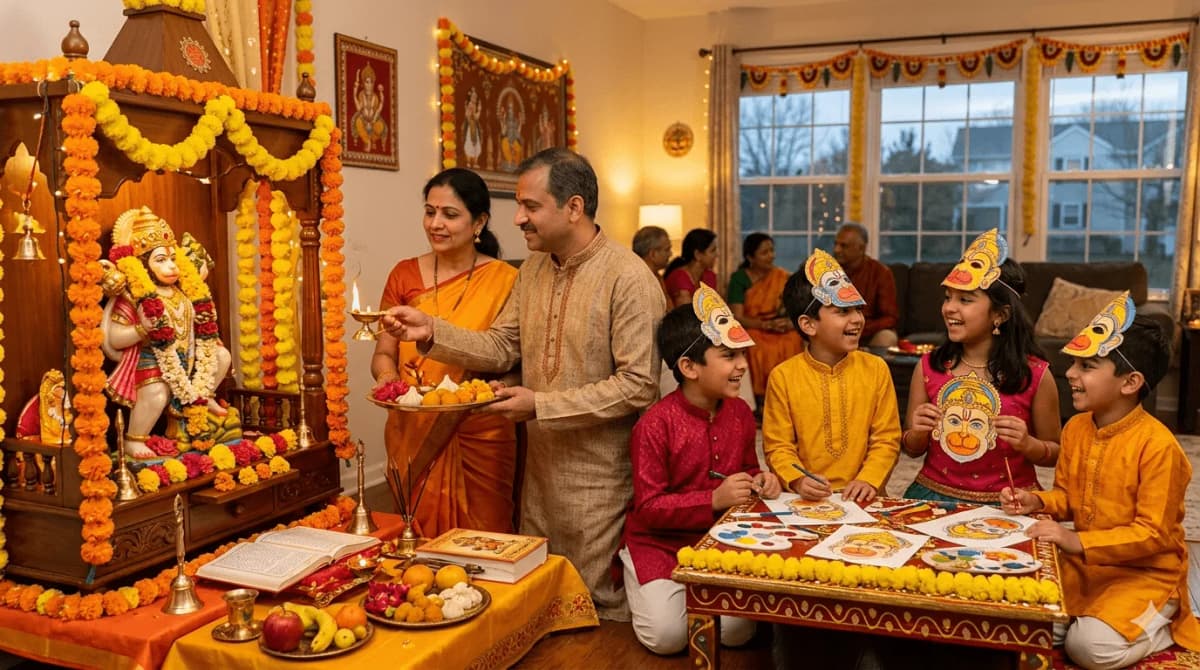
How NRI Families Celebrate Hanuman Jayanti in America: Traditions, Pooja Rituals & Fun Kids Activities for Second-Generation Hindus

Hanuman Worship on Saturday: Powerful Rituals & Remedies for Shani Dosha
Hanuman Chalisa: Complete Lyrics, Meaning of All 40 Verses & Benefits