Holi 2026 Date & Time (USA / NRI Guide) –Festival of Colors
Holi 2026 Dates (Global / USA) In 2026, the Hindu festival of Holi—also known as the Festival of Colors—falls across two days:Holika Dahan (Chhoti Holi /…
Holi 2026 Dates (Global / USA) In 2026, the Hindu festival of Holi—also known as the Festival of Colors—falls across two days:Holika Dahan (Chhoti Holi /…
Holi 2026 Dates (Global / USA)
In 2026, the Hindu festival of Holi—also known as the Festival of Colors—falls across two days:
Holika Dahan (Chhoti Holi / Bonfire Night): Tuesday, March 3, 2026
Rangwali Holi (Main Colour Festival): Wednesday, March 4, 2026
Though the Indian lunar calendar governs the dates, Holi celebrations in the United States and other countries align with Indian timings, adjusted for local time zones.
Exact Timing (USA Time Zones)
Holika Dahan (Bonfire Ritual) – March 3, 2026
The sacred Holika Dahan ceremony, symbolizing the triumph of good over evil, is traditionally held after sunset on March 3. In the USA this typically corresponds to:
- EST (Eastern US): ~6:23 PM – 8:51 PM
- Local Variations: Depending on city and temple traditions (NYC, Chicago, Atlanta, etc.)
Hindu communities and temples in major US cities (like New York, San Francisco, Houston, and Los Angeles) organize bonfire rituals, prayers, and cultural gatherings on this evening followed by festive events.
Rangwali Holi (Colour Play) – March 4, 2026
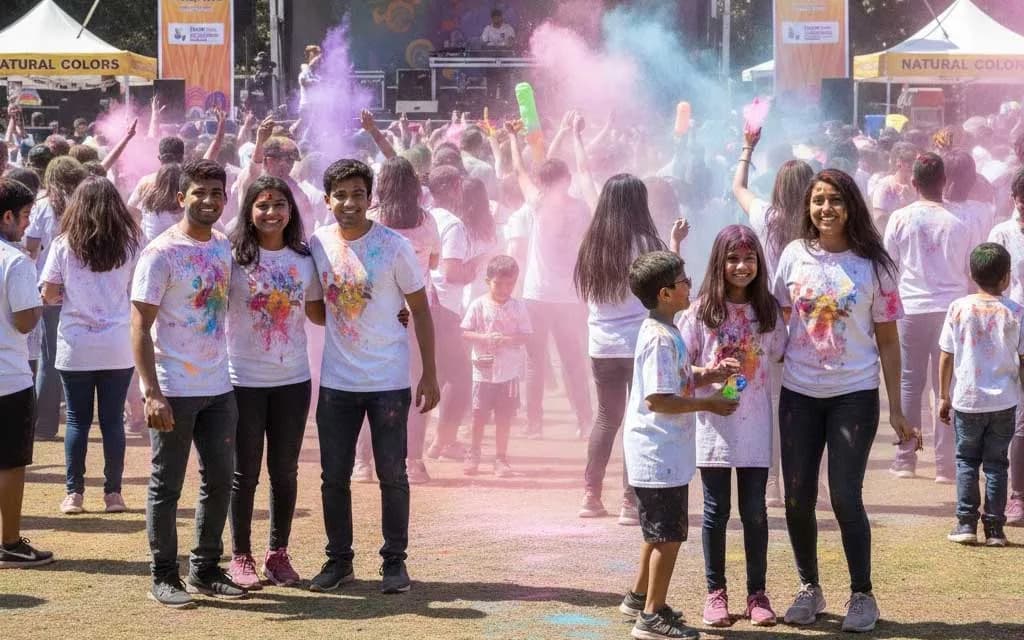
The main day of Holi is celebrated on morning to afternoon of March 4. People gather in parks, community centers, and temple grounds to throw colored powders (gulal), splash colored water, dance to music, and enjoy festive foods.
Why is Holi Celebrated Across Two Days?
Holi’s timing is based on the full moon (Phalguna Purnima) in the traditional Hindu lunar calendar, usually falling in late February or early March.
- Holika Dahan: Ignites the festive spirit with bonfires the night before Holi.
- Rangwali Holi: The joyful Festival of Colors played the next day, representing unity, renewal, and the arrival of spring.
Astrologically, the full moon and tithi (lunar day) determine the exact dates, which can slightly vary by region and time zone details.
Holi Celebrations in the USA
In the United States, vibrant and diverse Holi celebrations are organized each year by Indian diaspora communities, temples, and cultural organizations.
Typical USA Events Include:
- Temple Holika Dahan Ceremonies – bonfire rituals with prayers and community feasts.
- Color Festivals & Melas – open parks and venues full of color throws, DJ music, dancing, yoga, and traditional rituals.
- City Events: Celebrations in New York, San Francisco, Houston, Atlanta, Chicago, Seattle, and Los Angeles often draw hundreds to thousands of participants.
Spiritual & Cultural Significance
Holi is more than color play—its roots go deep into Hindu mythology and cultural heritage:
- Holika Dahan: Commemorates the burning of the demoness Holika and Prahlad’s unwavering devotion, symbolizing good’s victory over evil.
- Rangwali Holi: Celebrates Radha–Krishna’s divine love and the beauty of spring.
Unity & Renewal: A joyous occasion to mend relationships, forgive, and spread happiness worldwide.
Tips for NRI & USA Celebrations
- Check your local temple or community center for exact ritual timing.
- Bring natural colors and biodegradable powders for eco-friendly celebration.
- Parents attending with kids should carry extra clothes, water, and sunscreen for daytime events.
- Respect local regulations when organizing colors and water play in public spaces.
Final Summary – Holi 2026 Dates (USA focused)
Plan early, celebrate with joy, and share the incredible spirit of colors with your global community!
What is the Mythological Story Behind Holika Dahan?
The bonfire ritual of Holika Dahan is rooted in the story of Prahlada and Holika, narrated in detail in the Bhagavata Purana (Saptama Skandha). Prahlada, a devoted young prince and ardent worshipper of Lord Vishnu, was the son of the demon king Hiranyakashipu, who demanded that all beings worship him alone. When Prahlada refused to renounce his devotion to Vishnu, his father devised numerous plots to kill him — all of which failed because of the boy's unwavering bhakti.
In the final attempt, Hiranyakashipu enlisted his sister Holika, who possessed a divine boon making her immune to fire. She sat in a blazing pyre with Prahlada in her lap. Yet the divine will prevailed: Holika was consumed by the flames while Prahlada emerged unharmed. This event is commemorated every Phalguna Purnima through Holika Dahan, reminding devotees that adharma (unrighteousness) cannot ultimately overcome those who abide in dharma and divine grace.
The same Purana goes on to describe how Lord Vishnu manifested as Narasimha — the half-man, half-lion avatara — and slew Hiranyakashipu at the threshold of his palace at dusk, fulfilling the exact conditions of the demon king's own boon. Together, these events make Holi not merely a seasonal festival but a profound theological statement about the protection Vishnu extends to his devotees.
How Does the Hindu Lunar Calendar Fix the Date of Holi Each Year?
Holi is observed on Phalguna Purnima — the full moon tithi (lunar day) of the month of Phalguna in the Hindu Vikrama Samvata calendar. The Phalguna month typically coincides with late February to mid-March in the Gregorian calendar. Because the lunar month is approximately 29.5 days long, the Gregorian date of Holi shifts by a week or two from year to year, which is why NRIs and diaspora communities need to check a current Panchanga (traditional Hindu almanac) each year rather than assuming a fixed date.
The precise muhurta (auspicious time window) for lighting the Holika Dahan bonfire is determined by the Pradosha Kala — the period beginning roughly 45 minutes after sunset — combined with the duration of the Purnima tithi on that evening. If the Purnima spans two consecutive evenings, classical Dharmashastra texts prescribe that Holika Dahan be performed on the first evening when Pradosha Kala and Purnima coincide. This is why the bonfire falls on March 3 in 2026, with Rangwali Holi following on March 4.
NRIs observing the festival should note that the tithi shifts according to local time zones. The Purnima moment as calculated for India (IST, UTC+5:30) will correspond to different clock times in the USA (EST is UTC−5, PST is UTC−8). Most Hindu temples in the USA publish their own verified Panchanga timings; consulting the local temple's schedule is the most reliable approach for accurate muhurta observance.
What is the Spiritual Significance of Gulal and the Colors of Holi?
The tradition of smearing colored powder — called gulal — has its earliest textual roots in the Braj region associated with Sri Krishna's Vrindavana leelas. The Brahma Vaivarta Purana describes Krishna and the gopis (cowherd maidens) playing with colors in Vrindavana and Barsana, giving the festival its devotional dimension beyond the Prahlada narrative. To this day, the Lathmar Holi of Barsana (Mathura district, Uttar Pradesh) and the phoolon wali Holi at the Banke Bihari Temple in Vrindavana are among the most spiritually charged Holi observances in the world.
Symbolically, each color carries meaning. Red signifies love, fertility, and the energy of Shakti. Yellow (from turmeric/haldi) is associated with auspiciousness and the grace of Lord Vishnu. Green represents new life and the triumph of spring (Vasanta Ritu). Blue recalls the divine complexion of Lord Krishna. Traditionally, Holi powders were made from natural sources — tesu flowers (Butea monosperma, also called Palash), turmeric, and sandalwood paste — which had Ayurvedic benefits for the skin. NRIs celebrating Holi outdoors in the USA are increasingly returning to natural, skin-safe gulal as a health-conscious and spiritually authentic choice.
The act of applying color to another person dissolves social barriers — caste, age, gender, and status — for the duration of the festival, embodying the Vedic concept of Vasudhaiva Kutumbakam (the world is one family). Elders receive color from the young, and the community experiences a collective renewal that mirrors the ecological rebirth of spring.
Which Major US Cities Host Notable Holi Events and Temple Celebrations?
Across the United States, Hindu temples affiliated with ISKCON (International Society for Krishna Consciousness) host some of the largest and most devotionally structured Holi events. ISKCON temples in New York City (Sri Sri Radha Govinda Mandir, Brooklyn), Chicago, Houston, and Los Angeles typically hold both a formal Holika Dahan puja on the evening of March 3 and an outdoor Rangwali Holi festival on March 4, combining kirtan, bhajans, Vedic fire rituals, and color play.
Beyond ISKCON, South Asian community organizations in the Dallas–Fort Worth metroplex, the San Francisco Bay Area (particularly Fremont and Milpitas), and the New Jersey–New York corridor organize large open-air Holi festivals drawing thousands of attendees. Cities such as Edison (New Jersey), Artesia (Los Angeles), and Sugar Land (Texas) have dense Indian-origin populations that sustain neighborhood-level celebrations alongside temple programs. Attendees are generally advised to wear white clothing — a tradition that dramatically reveals every splash of color — and to verify start times with organizers, as outdoor events may be scheduled for a weekend nearest to March 4 for maximum community participation.
University campuses with active Hindu Student Council (HSC) or Indian Student Association (ISA) chapters — including the University of Texas at Austin, Purdue University, and the University of Illinois Urbana-Champaign — are well known for vibrant student-organized Holi events that serve as cultural bridges between Indian-origin students and the broader campus community.
How Should NRIs Observe Holika Dahan When a Large Bonfire Is Not Possible?
In many US cities and apartment communities, open bonfires are restricted by local fire codes and HOA regulations. In such cases, Hindu Dharmic tradition provides thoughtful alternatives. A small diya (earthen lamp) or an agni kunda — a contained fire in a copper or clay vessel — can serve as the ritual fire for Holika Dahan puja. The Skanda Purana affirms that the intention and mantra (sankalpa) of the worshipper, combined with even a modest flame, carry the full spiritual efficacy of the ritual.
The key elements of Holika Dahan that should be maintained wherever possible are: lighting the fire during Pradosha Kala (after sunset on March 3), performing a pradakshina (circumambulation) of the fire three or seven times while chanting prayers to Lord Vishnu or Narasimha, and offering raw coconut, sesame seeds (til), and wheat or barley stalks into the flame — all of which are traditional offerings mentioned in regional Holi customs across Maharashtra, Rajasthan, and Uttar Pradesh. Families can also sing the Holika Dahan stotra or simply recite the Narasimha Kavacham to mark the occasion with scriptural depth.
The following morning of March 4, regardless of large gatherings, families can observe Rangwali Holi by applying tilak of gulal to elders first (touching their feet as a mark of respect), then celebrating with children and neighbours. Serving traditional Holi foods — thandai (a spiced milk drink), gujiya (sweet dumplings), and malpua (fried sweet pancakes) — completes the domestic celebration and connects the diaspora household to centuries of unbroken festive tradition.
Frequently Asked Questions
When is Holi Date & Time (USA / ) –Festival of Colors 2026?
Holi Date & Time (USA / ) –Festival of Colors 2026 falls on March 3, 2026.
What is the significance of Holi Date & Time (USA / ) –Festival of Colors?
Holi 2026 Dates (Global / USA) In 2026 , the Hindu festival of Holi —also known as the Festival of Colors —falls across two days : Holika Dahan (Chhoti Holi / Bonfire Night): Tuesday, March 3, 2026 Rangwali Holi (Main Colour Festival): Wednesday, March 4, 2026 Though the Indian lunar calendar governs the dates, Holi celebrations in the United States and othe
How is Holi Date & Time (USA / ) –Festival of Colors celebrated?
Devotees observe it with puja, fasting or special offerings, visiting temples, chanting mantras, and gathering with family. Customs vary by region and tradition.
What should devotees do on Holi Date & Time (USA / ) –Festival of Colors?
Take a sacred bath, perform the day's puja and charity (dana), observe any prescribed fast, and chant mantras with sincere devotion.
You might also like
Hindu Festival Calendar 2026 — Complete Guide for NRIs (Dates, Tithis, Puja)
June 2026 Hindu Festival Calendar — Complete Dates, Vrat & Puja Guide for NRIs
Gayatri Jayanti 2026: Date, Gayatri Mantra, Puja Vidhi & Significance