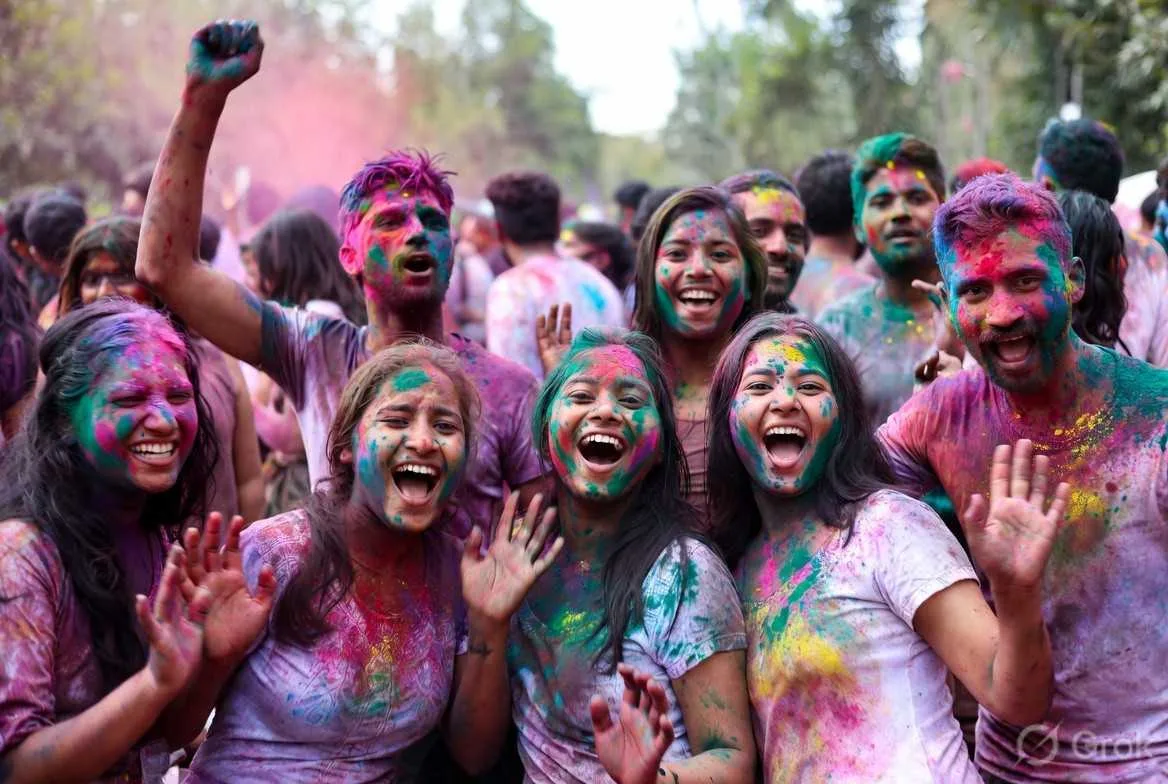
Holi Festival 2026 — Canada Edition
Complete Guide for Canadian Hindus — Dates · City-Wise Muhurat · Significance · Puja Vidhi · Mantras · Events HinduTone.com | Celebrating Sanatan Dharma Across…
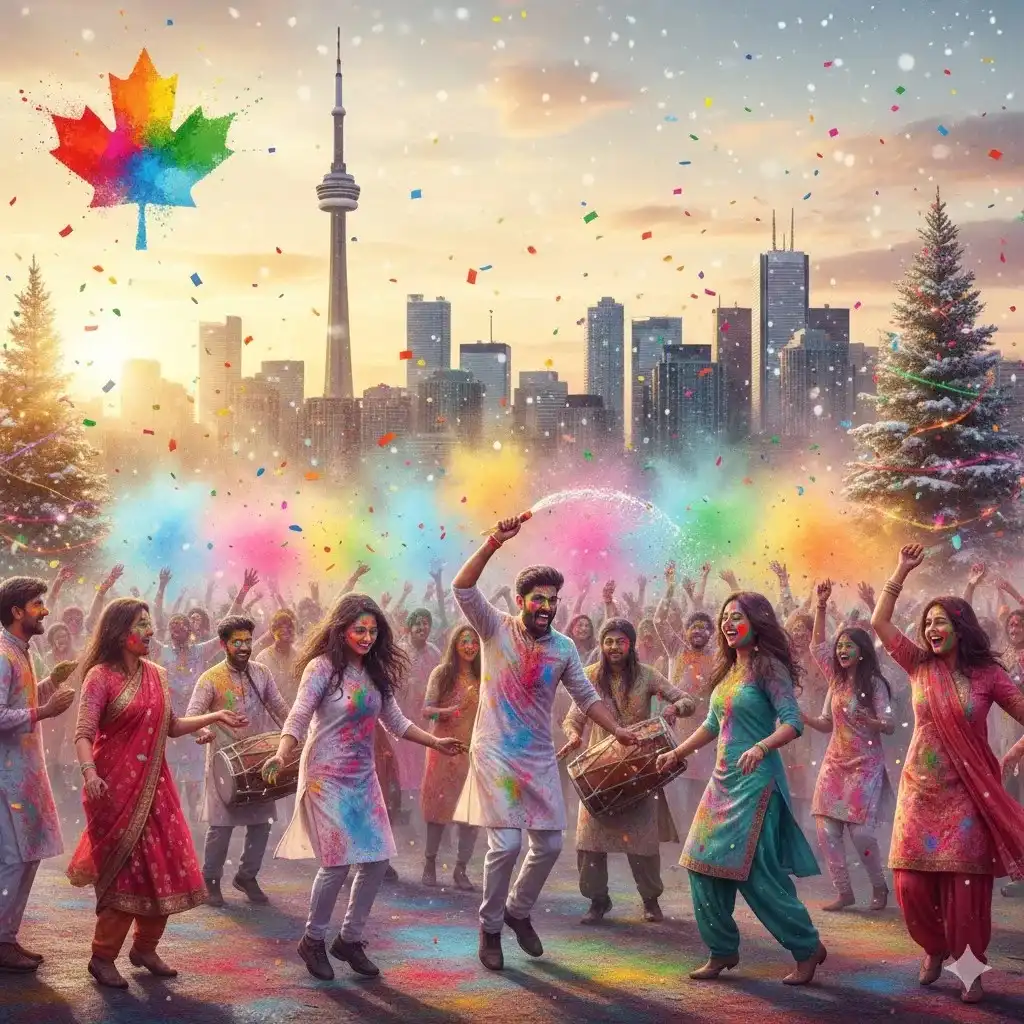
Complete Guide for Canadian Hindus — Dates · City-Wise Muhurat · Significance · Puja Vidhi · Mantras · Events HinduTone.
Complete Guide for Canadian Hindus — Dates · City-Wise Muhurat · Significance · Puja Vidhi · Mantras · Events
HinduTone.com | Celebrating Sanatan Dharma Across Canada [image: 🍁]
[image: 📅] Festival Dates at a Glance
[figure: 🔥]
[figure: 🎨]
[figure: 🌕]
[figure: 🌕]
[figure: 🍁]
Note for Canadian Hindus: Holi dates are determined by the Hindu lunar Panchang based on Indian Standard Time (IST). The dates of March 3–4 are observed universally by the global Hindu community. Since Canada's Daylight Saving Time does not begin until March 8, 2026, all Holika Dahan muhurat timings on this page are calculated in Standard Time (EST, CST, MST, PST) — no DST adjustment required.
[image: 🔥] Holika Dahan — Shubh Muhurat for Canada 2026
According to Hindu scriptures, Holika Dahan must be performed during Pradosh Kaal (after sunset) while Purnima Tithi is prevailing and Bhadra Kaal is not in effect. All three conditions are fully met on the evening of Tuesday, 3 March 2026, making this an especially clear and auspicious year for the global Hindu community.
The India IST muhurat window is 6:22 PM – 8:50 PM IST. The conversions below are calculated accurately for each Canadian time zone on March 3, 2026 (Standard Time).
[image: 🕰️] City-Wise Holika Dahan Muhurat — All Canadian Time Zones
[image: ⏰] Why is the muhurat in the morning? The Holika Dahan bonfire burns in India during evening (6:22–8:50 PM IST). Due to the time difference between India and Canada, this window falls in the morning hours of March 3 in Canadian time. This is entirely normal for diaspora Hindus. Canadian Hindu communities observe Holika Dahan rituals at their local temples and community centers in the evening of March 3 local time, which corresponds to the early hours of March 4 IST — still fully within the Purnima tithi window for community celebrations.
[image: 🙏] Practical Guidance for Canadian Families
Option 1 — Traditional Vidhi at Home (Morning, March 3): If you wish to perform puja precisely within the IST muhurat, conduct your home Holika puja on the morning of March 3 during the window listed for your city above. Light a small ceremonial diya, perform the prayers, and chant the mantras.
Option 2 — Evening Community Celebration (March 3 Evening, Local Time): Most Canadian Hindu temples and cultural organizations host Holika Dahan bonfires on the evening of Tuesday, March 3, local time. This is the most widely practised approach in the diaspora and is spiritually valid — Purnima tithi extends through the day, and community worship performed with devotion (bhav) is always accepted.
Option 3 — Full Day Rangwali Holi (March 4): The color celebration is held throughout the day on Wednesday, March 4. Many communities move their main outdoor event to the weekend of March 7–8 for larger attendance, though the actual festival day is March 4.
[image: ⚠️] Bhadra Kaal — Clear In 2026, Bhadra does not fall during the evening muhurat in India, making this a fully auspicious year for Holika Dahan. Canadian observers need not worry about Bhadra for their evening community events.
[image: 🌸] Why Holi is Sacred — धार्मिक महत्व
"रंगों का यह उत्सव केवल बाहरी नहीं — भीतर के अहंकार, ईर्ष्या और वैर को जलाकर प्रेम और भक्ति की विजय का उत्सव है।"
"This festival of colors is not merely external — it is the victory of love and devotion, born from burning away the ego, jealousy, and enmity within."
[image: 🔥] Prahlad & Holika — The Story at the Heart of Holi
King Hiranyakashyap declared himself God and forbade the worship of Lord Vishnu throughout his kingdom. His own son Prahlada refused, remaining an unwavering devotee of Vishnu. Despite multiple attempts on Prahlada's life, the Lord protected him each time.
Finally, Hiranyakashyap asked his sister Holika — who possessed a divine boon granting immunity from fire — to sit in a blazing pyre with Prahlada on her lap. By the grace of Lord Vishnu, Holika's boon was annulled in the face of pure devotion. Holika perished in the flames; Prahlada emerged unharmed and joyful.
Holika Dahan reenacts this cosmic moment. The bonfire represents the annual burning of ego, evil, jealousy, and all negativity — and the eternal triumph of Bhakti (devotion), Satya (truth), and Dharma (righteousness).
[image: 🪷] Radha-Krishna — The Divine Love Behind the Colors
Lord Krishna, troubled by his dark complexion compared to the fair Radha, was playfully told by his mother Yashoda to apply color on Radha's face. He did — and the entire land of Braj (Mathura, Vrindavan, Barsana) erupted in joyful color play.
This is why Holi is celebrated as Prem ka Utsav — the festival of divine love. The colors represent the joy, completeness, and bliss of the soul merging with the divine.
[image: 🌾] Vasant, Spring & Harvest
Holi marks the end of winter and the arrival of Vasant (Spring) — the most beloved season in the Hindu calendar. It is also a harvest celebration — farmers give thanks for the Rabi crop (wheat, barley, mustard). In Canada, while the harvest symbolism may not apply directly, the spirit of welcoming longer days, warmer temperatures, and the end of the hard Canadian winter aligns beautifully with Holi's universal message of renewal and new beginnings.
[image: 🤝] Vasudhaiva Kutumbakam — One World, One Family
Holi dissolves all barriers — caste, class, age, profession. In Canada's multicultural landscape, Holi has become a powerful bridge between communities. The Gulal that colors everyone equally embodies Canada's own ideals of equality, inclusivity, and unity. It is a celebration that says: we are all one family.
[image: 📿] पूजा सामग्री | Puja Samagri — What You Need
Most items are available at Indian grocery stores across Canadian cities (Gerrard India Bazaar in Toronto, Payal in Vancouver, Namaste India in Calgary, etc.)
[image: 🍁] Canadian Tip: If cow dung cakes are unavailable, use natural dried wood and add a generous pour of ghee to the flame for the puja. Intention and devotion (bhav) are paramount.
[image: 🔢] Complete Holika Dahan Puja Vidhi — Step by Step
Perform all steps with a calm, purified mind (Shuddha Bhav). Face East for all prayers.
Step 1 — Sthaan Shuddhi (Purify the Space)
Clean the area thoroughly. Sprinkle clean water (with a drop of Gangajal or with the mantra "Om Apavitrah Pavitro Vaa") over the area. If outdoors at a community event, sprinkle water around your personal space. If at home, clean the puja area and draw a Swastika symbol with Roli. This creates a sacred puja kshetra.
Step 2 — Holika Sthapana (Setting Up)
Arrange dry wood, twigs, and cow dung cakes (or natural wood) in a circular mound. Place a small clay or cloth effigy of Holika at the centre. Wrap the mound with Mauli (sacred red thread) 3 or 7 times clockwise — symbolising the binding and destruction of evil and negativity.
Step 3 — Sankalp (Sacred Vow)
Facing East, hold water, Akshat (unbroken rice), and a flower in your cupped palms. Speak your Sankalp:
"I perform this Holika Dahan puja for the protection, health, and happiness of my family, the destruction of all negativity, and the blessings of Lord Vishnu and Lord Narasimha. May Dharma always prevail."
Pour the water gently on the ground to seal the vow.
Step 4 — Ganesh Puja & Kalash Sthapana
Invoke Lord Ganesha first to remove all obstacles. Place a Kalash (pot or vessel with water) near the fire setup. Add a betel nut, a coin, and a mango leaf. Cover with a coconut and tie with Mauli. This Kalash represents the divine presence presiding over your ritual.
Step 5 — Puja & Upachar (Offerings)
Offer the following in sequence:
- Flowers, Akshat, Roli, Turmeric, Gulal, Sandalwood paste
- Sprinkle Panchamrit gently
- Sesame seeds (Til) and raw barley (Jau) or wheat stalks
- Light the Ghee Diya and wave it three times (aarti)
Chant the mantras (see section below) throughout the offerings.
Step 6 — Agni Pradip (Lighting the Sacred Fire)
At the appropriate time, light the bonfire from the East side using a flame from the Ghee Diya. The eldest member of the family or community priest traditionally lights it. As the fire rises, accompany with:
- Blowing of the Shankha (conch shell)
- Chanting of Vishnu mantras
- "Jai Sri Narasimha! Jai Bhakt Prahlada! Jai Sri Hari!"
Step 7 — Holika Parikrama (Circumambulation)
Walk around the bonfire 3 or 7 times in a clockwise direction (Pradakshina), chanting the Holika Dahan mantra continuously. Women may carry a small water vessel on their head. Children and elders circumambulate with folded hands (Anjali mudra). This parikrama purifies the body, mind, and soul, burns away sins, and removes all fears.
Step 8 — Prasad — Roasting in Sacred Fire
Hold pieces of coconut, popcorn (lahi), or barley near the flames to be gently blessed by the fire. Distribute as prasad to all family and community members. Consuming this fire-blessed offering is believed to bring health, protection from illness, and vitality for the year ahead.
Step 9 — Holika Bhasma (Sacred Ash)
The next morning, collect cooled ash from the Holika fire. Apply a small amount on the forehead as tilak. Sprinkle some mixed with water around the entrance and corners of your home for divine protection throughout the year.
Step 10 — Daan (Charity)
Charity on Phalguna Purnima is among the highest virtuous acts in the Hindu calendar. In Canada, consider:
- Donating to a Hindu temple or mandir
- Contributing to a South Asian community food bank
- Feeding the needy through a community langar or meal drive
- Donating to organizations supporting children and families
Giving on this day multiplies good karma (punya) manifold and invites divine grace.
[image: 🕉️] Sacred Mantras — पवित्र मंत्र
Chant with full Shraddha (devotion) and a pure heart. Minimum: 3, 11, or 108 repetitions. Use a Tulsi or Rudraksha mala for counting.
Mantra 1 — Holika Dahan Mool Mantra (Primary Mantra)
देवनागरी:
असृक्पाभयसंत्रस्तैः कृता त्वं होलि बालिशैः। अतस्त्वां पूजयिष्यामि भूते भूतिप्रदा भव॥
Transliteration: Asṛkpābhayasaṁtrastaiḥ kṛtā tvaṁ holi bāliśaiḥ. Atastvaṁ pūjayiṣyāmi bhūte bhūtipradā bhava.
Meaning: "O Holika! You were created by ignorant beings. I worship you — be the bestower of prosperity."
When: During Holika Sthapana, offerings, and throughout the Parikrama.
Mantra 2 — Vishnu Bhakti Mantra (Prahlad Stotra)
देवनागरी:
ॐ नमो भगवते वासुदेवाय। नमः प्रह्लाद वरदाय विष्णवे नमः॥
Transliteration: Oṁ namo bhagavate vāsudevāya. Namaḥ prahlāda varadāya viṣṇave namaḥ.
Meaning: "Salutations to Lord Vasudeva. Salutations to Vishnu who granted boons to Prahlada."
When: At the start of puja, during Sankalp, and after lighting the fire.
Mantra 3 — Agni Dev Mantra (Fire Invocation)
देवनागरी:
ॐ अग्नये नमः। अग्निं वर्चसे हवामहे महाशक्तिं शिखावलम्। अपां च त्वमग्ने सर्वेन भव सुमंगलम्॥
Transliteration: Oṁ Agnaye Namaḥ. Agniṁ varccase havāmahe mahāśaktiṁ śikhāvalam. Apāṁ ca tvamagne sarvena bhava sumaṅgalam.
Meaning: "Salutations to Agni. We invoke the fire of great power. O Agni — be auspicious to all."
When: At the precise moment of lighting the bonfire and during Parikrama.
Mantra 4 — Narasimha Kavach (Protection Mantra)
देवनागरी:
ॐ उग्रं वीरं महाविष्णुं ज्वलन्तं सर्वतोमुखम्। नृसिंहं भीषणं भद्रं मृत्युमृत्युं नमाम्यहम्॥
Transliteration: Oṁ ugraṁ vīraṁ mahāviṣṇuṁ jvalantaṁ sarvatomukham. Nṛsiṁhaṁ bhīṣaṇaṁ bhadraṁ mṛtyumṛtyuṁ namāmyaham.
Meaning: "I bow to the fierce, great Vishnu — blazing, facing all directions — the terrible yet auspicious Narasimha, death of death itself."
When: Lord Narasimha is the presiding deity of Holi. Chant 108 times for protection of the entire family.
Mantra 5 — Radha-Krishna Holi Mantra (Rangwali Holi)
देवनागरी:
राधे राधे राधे बरसाने वाली राधे। ॐ श्री राधा-कृष्णाभ्यां नमः। होरी खेलत नंदलाल बिरज में॥
Transliteration: Rādhe Rādhe Rādhe, Barsāne vālī Rādhe. Oṁ Śrī Rādhā-Kṛṣṇābhyāṁ Namaḥ. Horī khelat Nandlāl biraj meṁ.
Meaning: "Radhe Radhe! O Radha of Barsana — salutations to Shri Radha-Krishna. Lord Krishna plays Holi in the sacred land of Braj."
When: On Rangwali Holi (March 4), before and while applying Gulal. Invoke the joy of divine love.
Mantra 6 — Shanti Mantra (During Parikrama)
देवनागरी:
ॐ सर्वेष्वपि यदोष्माऽग्नि प्रविष्टस्त्वसि तत्र चेत्। तेनाऽग्ने कुरु शान्तिं मे त्वाहुती घृताहुती॥
Transliteration: Oṁ sarveṣvapi yadoṣmā'gni praviṣṭastvasi tatra cet. Tenā'gne kuru śāntiṁ me tvāhutī ghṛtāhutī.
Meaning: "O Agni — you are present as warmth in all things. Grant me peace through these offerings of ghee."
When: Once per round during the Parikrama. Invokes peace, health, and prosperity.
Mantra 7 — Aashirvad Mantra (Blessing Mantra)
देवनागरी:
ॐ होलिका देव्यै नमः। रंगों में रहे सदा प्रसन्नता, सत्य की हो जय, असत्य का नाश॥
Transliteration: Oṁ Holikā Devyai Namaḥ. Raṅgoṁ meṁ rahe sadā prasannatā, Satya kī ho jaya, asatya kā nāśa.
Meaning: "Salutations to Goddess Holika. May joy remain in life's colors. Victory to truth, destruction to untruth."
When: Rangwali Holi morning, before applying Roli-Tilak and seeking elders' Ashirvad.
[image: 🍁] Celebrating Holi in Canada — City by City Guide
[image: 🏙️] Greater Toronto Area (Ontario)
The GTA — including Toronto, Brampton, Mississauga, Markham, and Scarborough — is home to one of the largest South Asian diasporas in the world. The Hindu Sabha Mandir (Brampton), BAPS Swaminarayan Mandir (Toronto), Shri Shirdi Sai Baba Temple, and numerous South Indian and North Indian temples host Holika Dahan bonfires on the evening of March 3 and community color events on March 4. The Gerrard India Bazaar area comes alive with cultural energy. Many communities move their outdoor color events to the weekend of March 7–8 for larger participation.
What to expect: Temple puja, Holika bonfire, community kirtan, dhol, Bollywood music, color powder, traditional food (Gujiya, Thandai, Malpua, Dahi Bhalle). Check local temple and community Facebook pages for confirmed event listings.
[image: 🌊] Vancouver & Surrey (British Columbia)
Surrey and Vancouver have a substantial Punjabi-Hindu community. The Swaminarayan Temple (Surrey), Sanatan Mandir (Vancouver), and community halls across Surrey host vibrant Holi gatherings. Outdoor events are often held at Bear Creek Park or community centers. The Indo-Canadian community of Surrey celebrates with particular energy — expect dhol, bhangra, and a burst of color even in early March's cool weather.
Note for BC: Vancouver/Surrey is on PST (UTC−8). The India muhurat translates to 4:52 AM – 7:20 AM PST on March 3 — so evening temple events on March 3 local time are the practical and widely accepted community observance.
[image: 🌾] Calgary & Edmonton (Alberta)
Alberta's Hindu communities are growing rapidly. The BAPS Swaminarayan Mandir (Calgary), Hindu Society of Alberta, Vishnu Mandir (Edmonton), and the Swaminarayan Temple (Edmonton) organize Holika Dahan evenings on March 3 and color celebrations on March 4. Given Alberta's cold March temperatures, events are often held indoors or in covered outdoor spaces, with color play adapted accordingly. Community Thandai (traditional spiced milk drink) and potluck meals are hallmarks of Alberta Holi gatherings.
[image: 🏔️] Winnipeg (Manitoba) & Saskatoon/Regina (Saskatchewan)
Smaller but tightly knit Hindu communities celebrate with deep tradition. The Hindu Temple of Manitoba (Winnipeg), Hindu Society of Saskatchewan (Saskatoon), and the Sanatan Dharma Mandir (Regina) organize Holika Dahan evenings. These communities are known for warm, intimate gatherings where cultural heritage is preserved beautifully. Dress warmly — March in the Prairies can be brisk!
[image: 🌊] Halifax (Nova Scotia) & Atlantic Canada
Atlantic Canada's growing South Asian community — particularly in Halifax — celebrates Holi through university cultural associations, the Indo-Canadian Association of Nova Scotia, and local temples. AST is UTC−4, so the muhurat falls at 8:52 AM – 11:20 AM AST on March 3. Community events are generally held on the evenings of March 3 and 4.
[image: 🌟] Ottawa & Montréal (Ontario/Québec)
Ottawa's Hindu community gathers at the Ottawa Hindu Temple and community centers for Holika Dahan and Rangwali Holi. Montréal celebrates with a multicultural flair — the Hindu Mandir de Montréal and university communities host events that blend traditional rituals with the city's vibrant cultural energy.
[image: 🏠] Celebrating Holi at Home in Canada — Practical Tips
Indoors (for cold weather):
- Perform the Holika Dahan puja with a ghee diya and small ceremonial fire in a fireproof dish
- Play Bollywood Holi playlists and have family color each other with Gulal indoors
- Make traditional Gujiya, Thandai, and Mathri
- Video call family in India during the bonfire — stay connected to the motherland
Outdoors (if weather permits):
- Use organic, herbal Gulal — it is gentler in cold weather on skin
- Wear old white clothes — the stains are the memory
- Apply coconut oil to hair and skin before playing colors to ease cleanup
- Hot chai, Thandai, and warm mithai are essential for a Canadian Holi
For Children:
- Tell the story of Prahlad and Holika before the color play
- Make Holika Dahan craft with clay or paper
- Teach them the Hindi names of the colors: Laal (Red), Peela (Yellow), Neela (Blue), Hara (Green), Gulabi (Pink)
[image: ✅] Must Do | [image: ❌] Must Avoid
[image: ✅] Kartavya — What to Do
- Perform or attend Holika Dahan on the evening of Tuesday, March 3 at your local temple or at home
- Seek elders' Ashirvad with Roli-Tilak on the morning of March 4
- Use organic, herbal Gulal — kinder to Canadian skin, waterways, and the environment
- Offer grain, coconut, and popcorn to the sacred fire as prasad
- Perform Daan (charity) — donate to a temple, food bank, or community cause
- Collect the Holika Bhasma (sacred ash) the next morning and apply as tilak
- Share traditional sweets — Gujiya, Mathri, Thandai — with neighbors and colleagues
[image: ❌] Varjit — What to Avoid
- Avoid chemical / synthetic colors — harmful to skin, eyes, drains, and the environment
- Never perform Holika Dahan during Bhadra Kaal (not a concern in 2026 [image: ✅] )
- Do not apply color on anyone without their consent — keep it joyful and respectful
- Avoid alcohol and tamasic food during the sacred puja rituals
- Do not burn plastic, synthetic materials, or toxic items in the bonfire
- Avoid negativity, quarrels, and harsh speech — this is a day of forgiveness and love
[image: 🍬] Traditional Holi Foods — Easy Canadian Adaptations
Gujiya — Sweet dumplings filled with khoya and dry fruits. Available at Indian sweet shops across Toronto, Vancouver, Calgary, and Brampton. Or make at home with all-purpose flour, mawa (dried milk), and nuts.
Thandai — The iconic spiced cold milk drink of Holi. Blend milk with almonds, fennel seeds, rose petals, cardamom, pepper, and sugar. A warming cup of spiced Thandai chai is a perfect Canadian winter adaptation.
Malpua — Sweet pan-fried pancakes made with flour, milk, and sugar. Often served with Rabri (condensed sweet milk) or clotted cream.
Dahi Bhalle / Dahi Vada — Soft lentil dumplings soaked in sweet yogurt, topped with chutneys and chaat masala. A cooling counterpart to the spicy celebrations.
Namkeen / Mathri — Crispy savory crackers, perfect for sharing at community Holi gatherings.
[image: 🌺] Rangwali Holi Morning Puja (4 March 2026)
A short but meaningful morning ritual before the colors begin:
- Wake early and bathe in clean water, wear fresh clothes
- Light a diya and offer incense to your home mandir
- Recite the Radha-Krishna Holi Mantra (Mantra 5, above) 11 times
- Apply Roli-Tilak on your forehead and bow to the elders of the family
- Exchange Gulal with family members with the words: "Holi Mubarak! Jai Sri Radhe!"
- Then begin your joyful color celebration
[image: 🙏] A Message for the Canadian Hindu Community
होलिका की अग्नि में जलें सारे दुख और पाप, रंगों की होली में खिले जीवन का हर अध्याय।
"May all sorrows burn in Holika's sacred fire. May every chapter of life bloom in the colors of Holi."
Holi in Canada carries a special beauty — it is a bridge between two worlds, two cultures, two seasons of the soul. As snow gives way to the first hints of spring, as the maple stirs from its winter sleep, we carry the ancient fire of Prahlada's devotion in our hearts and the timeless colors of Braj in our hands.
Wherever you are in Canada — from St. John's to Victoria — celebrate with devotion, joy, love, and the unshakeable faith that Dharma always prevails.
Happy Holi 2026! Jai Sri Radhe! Jai Sri Narasimha! Jai Sri Hari!
© 2026 HinduTone.com · All Rights Reserved
Muhurat timings calculated from IST 6:22–8:50 PM (India Standard Time, UTC+5:30), converted to Canadian Standard Time zones. Canada DST begins March 8, 2026 — Standard Time applies on March 3–4. All Panchang data based on Phalguna Purnima 2026 (Vikram Samvat 2082). Consult your local pandit or mandir for event-specific guidance.
HinduTone.com — Preserving the Timeless Wisdom of Sanatan Dharma, One Festival at a Time
Frequently Asked Questions
When is Holi 2026 in Canada?
Holika Dahan is on Tuesday, March 3, 2026, and Rangwali Holi, the color celebration, is on Wednesday, March 4. Many Canadian communities hold their main outdoor event on the weekend of March 7-8.
Why does the Holika Dahan muhurat fall in the morning in Canada?
The India muhurat of 6:22 PM to 8:50 PM IST falls in the morning hours of March 3 in Canadian time zones. Most Canadian temples instead hold the bonfire on the evening of March 3 local time.
Do Canadian Hindus need to adjust for Daylight Saving Time?
No. Canada's Daylight Saving Time begins on March 8, 2026, so the muhurat timings are given in Standard Time for EST, CST, MST and PST.
What is the story behind Holika Dahan?
As commonly told, King Hiranyakashyap's sister Holika sat in a fire with his son Prahlada, a devotee of Vishnu. Holika perished while Prahlada emerged unharmed, so the bonfire stands for the victory of devotion and dharma over ego and evil.
What if I cannot find cow dung cakes for the Holika puja in Canada?
Use natural dried wood and pour ghee on the flame during the puja. Intention and devotion (bhav) matter most.
Where can Canadian Hindus buy puja samagri for Holi?
Indian grocery stores across Canadian cities stock most items, such as Gerrard India Bazaar in Toronto, Payal in Vancouver and Namaste India in Calgary.
You might also like
Holi 2026 in the UAE: A Complete Guide to Vibrant Celebrations, Top Events, Rules, and Cultural Harmony in Dubai, Abu Dhabi, Ras Al Khaimah & Beyond
Holi 2026 in Times Square New York: Ultimate Guide to Celebrations, Events, Recipes & NYC Color Fest Vibes
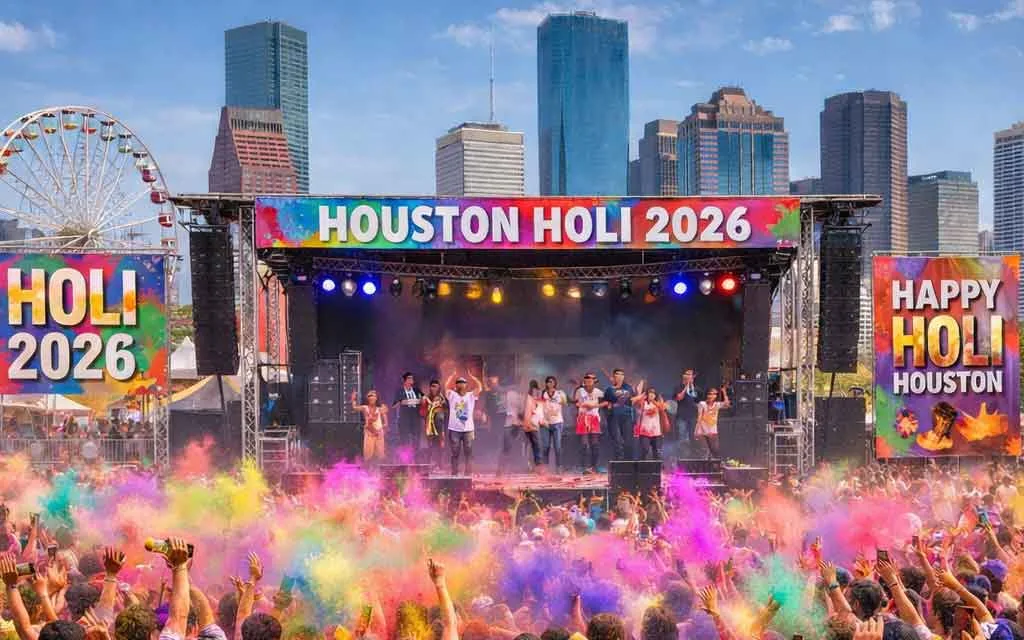
Holi 2026 Celebrations in Houston: Texas-Sized Festival of Colors, Energy, and South Asian Community Spirit