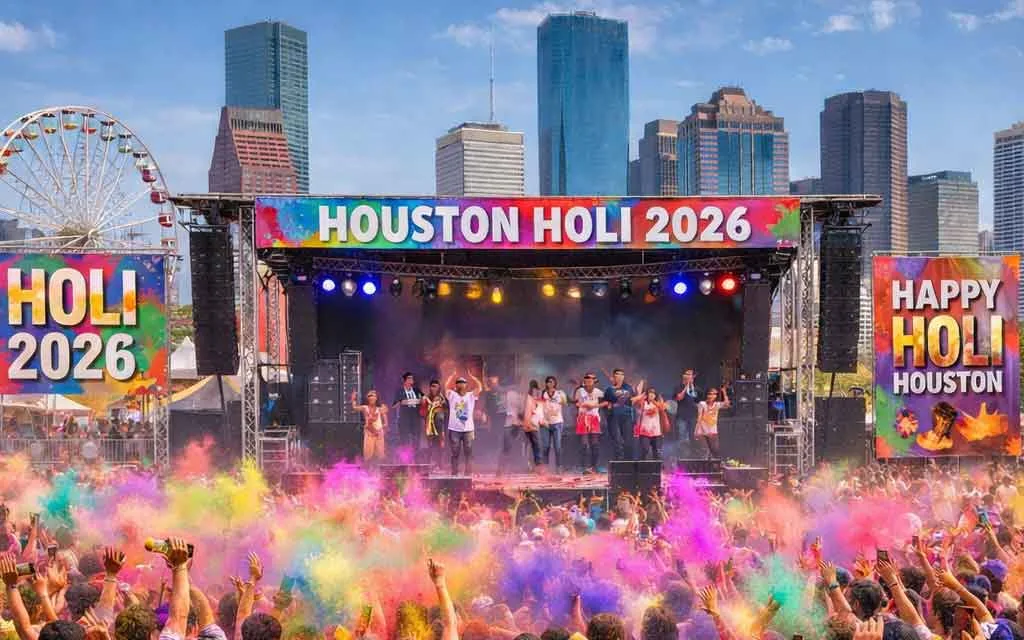
Radha Krishna and Holi: The Divine Love Story Behind the Festival of Colors
Introduction: Holi Is a Love Story Before It Is a Festival Every year, millions of people across India and the world drench each other in vibrant colors, dance…
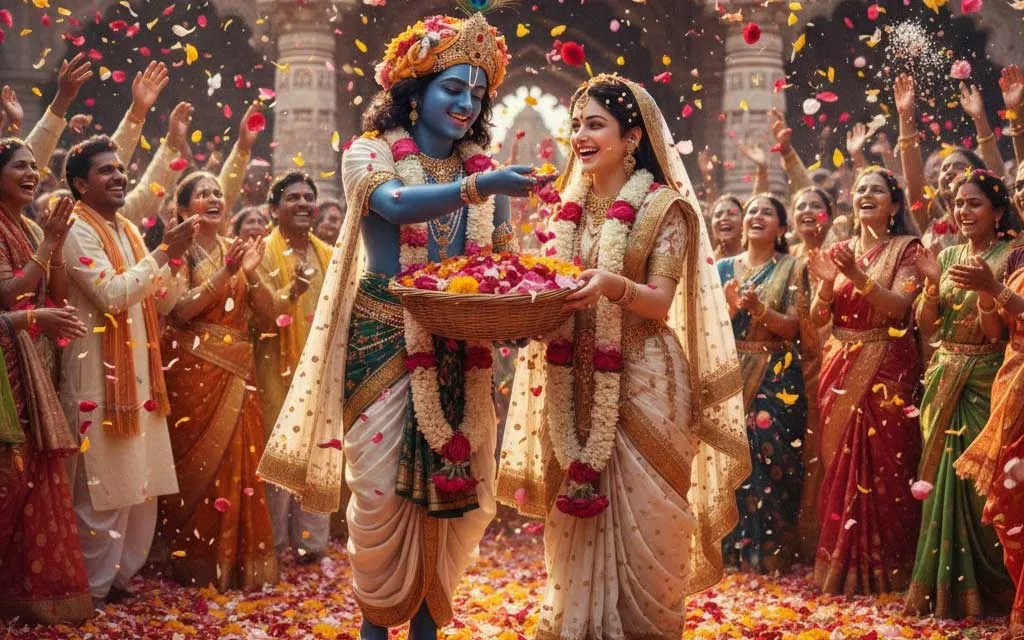
Introduction: Holi Is a Love Story Before It Is a Festival Every year, millions of people across India and the world drench each other in vibrant colors, dance…
Introduction: Holi Is a Love Story Before It Is a Festival
Every year, millions of people across India and the world drench each other in vibrant colors, dance to joyous music, and celebrate the arrival of spring during Holi. But behind the swirling clouds of gulal and the laughter of celebration lies a love story — one of the most tender, playful, and spiritually profound love stories ever told.
Holi is, at its heart, the festival of Radha and Krishna.
Long before Holi became the grand public celebration we know today, it was born in the sacred groves of Vrindavan — in the playful, colorful, and deeply loving interactions between Lord Krishna and Radha. Understanding this connection transforms Holi from a fun festival into a deeply moving spiritual experience.
At HinduTone.com, we bring you the full story of how Radha and Krishna's divine love gave birth to the world's most colorful celebration.
The Origin of Holi: Krishna's Childhood Complaint
The most beloved legend connecting Radha, Krishna, and Holi begins with a charming, very human moment — a young Krishna complaining to his mother.
According to tradition, Lord Krishna was famous for his unusually dark blue (Shyam) complexion. As a child, he grew troubled and a little envious watching the fair-skinned Radha and the Gopis of Vrindavan. One day, young Krishna went to his mother Yashoda and asked, almost sulkily:
"Mother, why is Radha so fair and I am so dark? Will she ever love someone who looks so different from her?"
Yashoda, both amused and full of love, gave her son a playful answer. She told him:
"Go, my son. Go to Radha. Apply color on her face — make her whatever color you wish. Then she will look just like you."
The young Krishna, delighted by this idea, ran to Vrindavan with his friends, carrying bright colors. He found Radha and the Gopis and lovingly — and mischievously — applied color on Radha's face, dyeing her cheeks with his favorite hues. The Gopis retaliated playfully, and soon all of Vrindavan erupted in joyous color play.
From that day, the tradition of playing Holi with colors is said to have begun — a celebration of love that erases all differences of color, caste, and condition.
The Spiritual Meaning: Love That Dissolves All Differences
This seemingly simple childhood story carries a profound spiritual truth at its core.
Krishna's dark complexion and Radha's fair complexion represent the apparent duality of existence — the gap between the individual soul and the Divine. When Krishna lovingly colors Radha's face and she colors his, the distinction dissolves. They become one in color, one in love, one in spirit.
This is the deepest teaching of Holi:
Love is the greatest equalizer. In the presence of true devotion, all differences disappear.
In the spiritual philosophy of Bhakti Yoga, Holi symbolizes the moment the devotee (Radha) and the Divine (Krishna) merge in joyful, colorful union. The colors of Holi are not just pigments — they are expressions of divine love, energy, and bliss spilling out into the world.
Holi in Vrindavan: Where the Festival Lives Its Truest Form
No place on earth celebrates Holi quite like Vrindavan and Mathura — the land where Radha and Krishna lived, loved, and played. Here, Holi is not a single day but an entire season of celebration lasting 40 days, beginning on the auspicious day of Basant Panchami (the onset of spring).
Phoolon wali Holi (Holi of Flowers)
At the Banke Bihari Temple in Vrindavan, Holi begins with the beautiful tradition of Phoolon wali Holi — where the priests shower devotees with thousands of fragrant flower petals instead of chemical colors. This gentle, fragrant celebration honors the love of Radha and Krishna in its purest, most tender form. The air fills with the scent of roses and marigolds as devotees sing devotional songs and dance in the temple courtyard.
Lathmar Holi: Barsana and Nandgaon
One of the most iconic and ancient Holi traditions in the world takes place in Barsana — the birthplace of Radha — and the neighboring village of Nandgaon — Krishna's home.
In this tradition known as Lathmar Holi, the women of Barsana (representing Radha and the Gopis) playfully beat the men of Nandgaon (representing Krishna and his friends) with long bamboo sticks called lathis, while the men try to shield themselves with leather shields. The men sing teasing songs, the women retaliate with their sticks, and the entire scene erupts in laughter, music, and color.
This tradition directly re-enacts the playful interactions of Radha and Krishna. Legend says that when Krishna and his friends came to Barsana to tease Radha and the Gopis, the women chased them away with sticks. Every year, this divine play is re-lived with pure joy and devotion.
Lathmar Holi attracts hundreds of thousands of pilgrims and visitors from across the world — all coming to witness and participate in the love story of Radha and Krishna played out in living color.
Widow's Holi: Breaking Boundaries Through Radha's Love
In a deeply moving modern tradition at Vrindavan's Gopinath Temple and Pagal Baba Ashram, widows — who were traditionally excluded from colorful celebrations — now play Holi together, reclaiming their right to joy in the name of Radha's all-inclusive love. This powerful tradition reflects the teaching that Radha's love for Krishna knows no social boundaries, and in that love, every person is equal and worthy of celebration.
Holi and the Rasa Lila Connection
The Rasa Lila — the cosmic dance of Krishna with Radha and the Gopis under the full moon — shares a deep spiritual connection with Holi. Both events celebrate the same truth: the soul's joyful, uninhibited union with the Divine.
In the Rasa Lila, Krishna plays his flute and the Gopis, hearing the divine music, abandon everything to dance with him. In Holi, the colors and music serve the same purpose — they break down inhibitions, dissolve the ego, and invite every person into a moment of pure, unfiltered joy.
Holi can thus be understood as the Rasa Lila made public — a day when all of society is invited to participate in the divine dance of love, color, and devotion that Radha and the Gopis experienced in Vrindavan.
The Colors of Holi and Their Spiritual Symbolism
The colors used during Holi are not random — in the Radha Krishna tradition, each color carries a spiritual meaning:
Red — Symbolizes love, passion, and the deep devotion of Radha for Krishna. It is the color of the heart fully surrendered.
Yellow (Golden) — Represents the sacred turmeric (haldi) used in religious rituals and the divine auspiciousness of Radha's presence.
Blue — The color of Krishna himself — the infinite sky, the deep ocean, the mystery and majesty of the Divine.
Green — Represents the forests of Vrindavan, new beginnings, life, and the spring season that Holi heralds.
Pink — Soft and joyful, representing the playfulness and tenderness of the Radha Krishna relationship.
When devotees throw these colors during Holi, they are, in a sense, painting the world in the colors of Radha and Krishna's love — bringing the divine palette of Vrindavan into every street and home.
Holi Songs: Devotional Music of Radha Krishna
Music is inseparable from Holi, and the most beloved Holi songs are devotional compositions celebrating Radha and Krishna. Known as Hori (Holi songs in the Braj Bhasha tradition), these songs describe Krishna's playful color games with Radha, the laughter of the Gopis, and the joy of divine love in spring.
Famous Hori compositions include those attributed to Surdas, Mirabai, and Tansen — all of whom saw Holi as a spiritual celebration of the Radha Krishna love story. Classical vocalists and Hindustani musicians still perform these Hori compositions during the Holi season, keeping the devotional tradition alive across generations.
Some beloved Holi song themes include:
- Krishna sneaking up to apply color on Radha
- Radha and the Gopis chasing Krishna with water and gulal
- The entire Vrindavan forest blooming with color and sound
- The union of souls in the joy of divine love
Why Holi Is Celebrated: Multiple Sacred Layers
While the Radha Krishna love story is the most devotionally celebrated reason for Holi, the festival carries multiple layers of meaning in Hindu tradition:
The Story of Prahlad and Holika — Perhaps the most widely cited origin of Holi, this story tells of the demon king Hiranyakashipu, his devoted son Prahlad (a devotee of Vishnu), and his evil sister Holika who burned in the flames meant for Prahlad. The Holika Dahan (bonfire on Holi eve) commemorates this victory of devotion over evil.
The Story of Radha and Krishna — The color play of Radha, Krishna, and the Gopis in Vrindavan, as described above, is the primary inspiration for the tradition of playing with colors during Holi.
The Arrival of Spring (Vasant) — Holi marks the end of winter and the beginning of spring — a time of renewal, fertility, and the blossoming of new life. In the Radha Krishna tradition, spring (Vasant) is the season most associated with their love, as Vrindavan blooms most beautifully during this time.
Together, these stories make Holi a festival that celebrates devotion over evil, love over separation, and life over darkness.
Holi Celebrations Around the World: Radha Krishna's Gift to Humanity
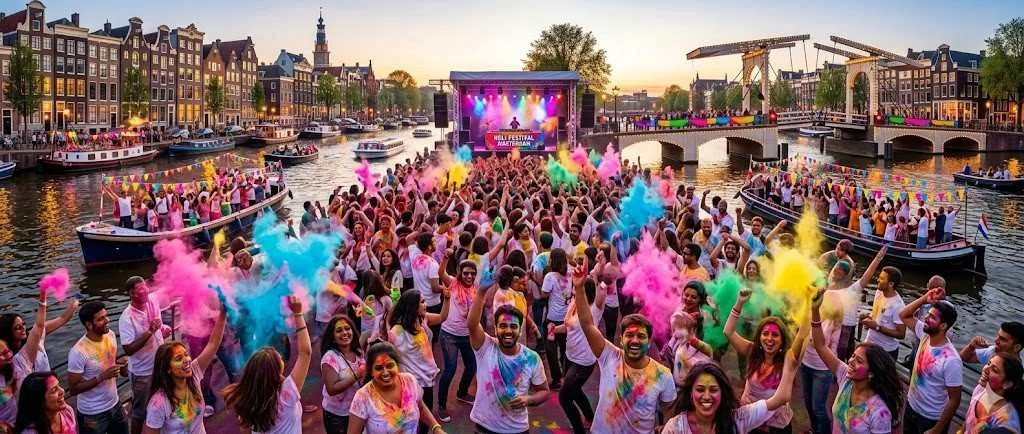
What began in the sacred groves of Vrindavan has now spread across the entire world. Today, Holi is celebrated joyously in:
- India — From the epic celebrations of Vrindavan, Mathura, and Barsana to massive public events in Delhi, Mumbai, Jaipur, and beyond
- Nepal — With deep Hindu traditions similar to those in India
- ISKCON Temples Worldwide — Bringing the Radha Krishna Holi tradition to every continent, with devotional singing, color play, and temple celebrations
- United States, United Kingdom, Canada, Australia — Large Indian diaspora communities and people from all backgrounds celebrate Holi as a festival of joy, unity, and color
The universality of Holi reflects the universality of Radha Krishna's love — it belongs to no single region, caste, or community. It is for every heart that longs for joy, color, and divine love.
How to Celebrate Holi in the Spirit of Radha Krishna
If you wish to celebrate Holi as a truly devotional experience in the spirit of Radha and Krishna, here are some meaningful ways:
1. Begin with Holika Dahan (Holi Eve Bonfire) — Gather with family and community, light the sacred bonfire, offer prayers, and reflect on the victory of devotion over negativity in your own life.
2. Chant Radha Krishna's Names — Begin the morning of Holi by chanting "Radhe Radhe" or the Hare Krishna Maha Mantra before playing with colors, setting a devotional intention for the day.
3. Use Natural, Organic Colors — Honor the tradition by using colors made from flowers and natural substances — turmeric (yellow), rose petals (pink), indigo (blue) — just as in the original Vrindavan traditions.
4. Visit or Virtually Join a Temple Celebration — ISKCON temples and Vaishnava communities worldwide hold beautiful Holi celebrations with kirtan, devotional music, and color play open to all.
5. Listen to Hori Bhajans — Spend part of Holi day listening to traditional Hori songs celebrating Radha and Krishna. Artists like Pandit Jasraj, Girija Devi, and devotional singers in the ISKCON tradition have recorded timeless Holi bhajans.
6. Reflect on the Teaching — Take a quiet moment to reflect on what Holi means spiritually: What colors of love, forgiveness, and joy can you bring into your relationships? Where can you erase differences and embrace unity?
Frequently Asked Questions (FAQs): Radha Krishna and Holi
Q1: Why is Holi associated with Radha and Krishna?
Holi's tradition of playing with colors is directly rooted in the legend of young Krishna applying color on Radha and the Gopis in Vrindavan. The festival celebrates their playful, loving relationship and the joy of divine love overcoming all differences.
Q2: What is Lathmar Holi and where is it celebrated?
Lathmar Holi is a centuries-old tradition celebrated in Barsana (Radha's village) and Nandgaon (Krishna's village) in Uttar Pradesh. Women playfully beat men with sticks, re-enacting the playful teasing between Radha, the Gopis, and Krishna.
Q3: What is the spiritual meaning of Holi colors in the Radha Krishna tradition?
Each color carries meaning — blue for Krishna, red for Radha's love, yellow for divine auspiciousness, green for Vrindavan's nature. Playing with colors symbolizes the soul's joyful union with the Divine, dissolving all ego and separation.
Q4: How long is Holi celebrated in Vrindavan?
In Vrindavan and Mathura, the Holi season begins on Basant Panchami and continues for 40 days, with different temples and villages holding special celebrations on different dates, culminating in the main Holi festival.
Q5: Can non-Hindus participate in Holi celebrations?
Absolutely. Holi, particularly in the spirit of Radha and Krishna's all-embracing love, is a festival for everyone. ISKCON temples and Vaishnava communities warmly welcome people of all backgrounds to participate in Holi celebrations.
Conclusion: Holi Is Love Made Visible
When you throw a handful of colors this Holi, remember — you are participating in a divine love story that is thousands of years old. You are re-enacting the moment when a young Krishna, full of love and a little mischief, colored Radha's face and made her smile. You are celebrating the moment when all differences dissolved in the joy of pure love.
Holi is Radha and Krishna's gift to the world — a reminder that love is the most powerful force in the universe, that joy is our natural state, and that in the presence of true devotion, every day can be as colorful, vibrant, and alive as the festival of colors itself.
From all of us at HinduTone.com — Holi Hai! Jai Radhe! Jai Sri Krishna! [image: 🌸] [image: 🎨]
Explore more articles on Hindu festivals, devotional traditions, and spiritual wisdom at HinduTone.com.
You might also like
Holi 2026 Celebrations in Dubai: UAE's Spectacular Festival of Colors, Desert Glamour, and Massive Indian Expat Energy
Holi 2026 in Singapore: Colors, Culture & Indian Community
Holi 2026 in Kuala Lumpur: Colors, Culture & Indian Diaspora