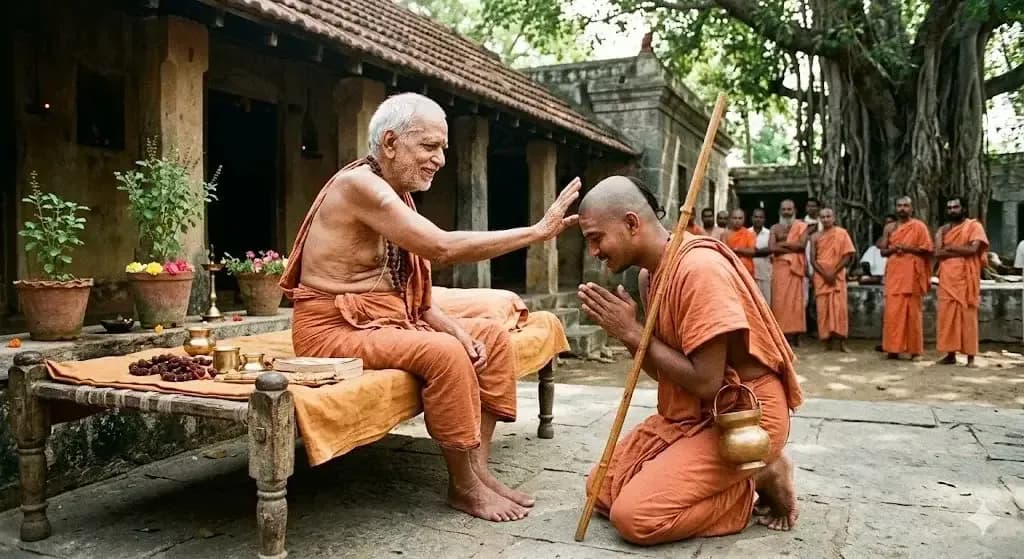
Holi's spiritual richness flows from ancient Puranic tales, Vedic symbolism, and devotional practices that guide seekers toward liberation.
The Prahlad-Holika story illustrates bhakti's supremacy over material power.
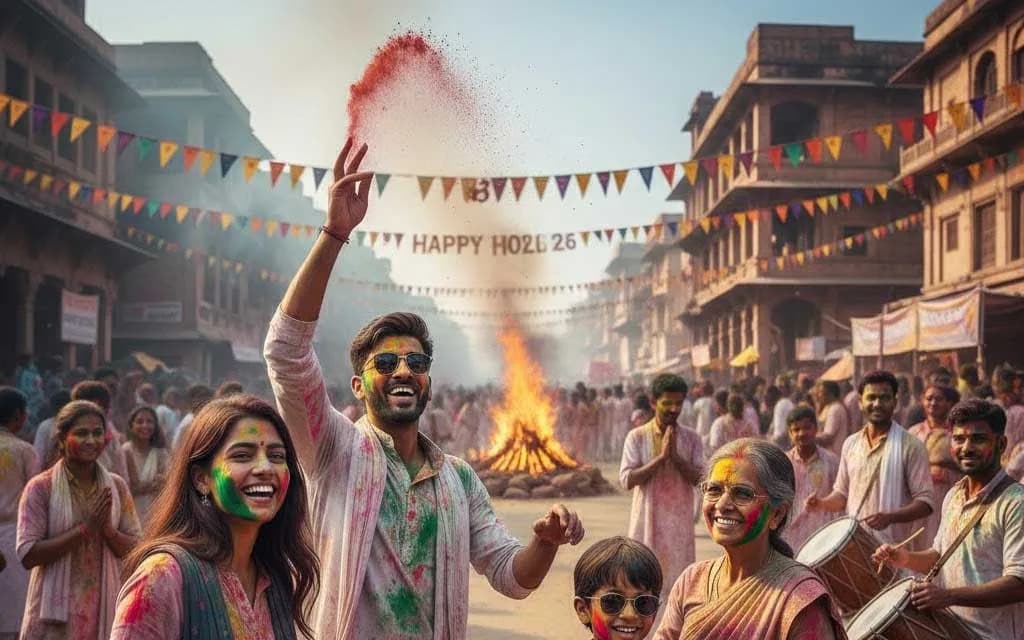
The Prahlad-Holika story illustrates bhakti's supremacy over material power.
The Prahlad-Holika story illustrates bhakti's supremacy over material power. Hiranyakashipu's arrogance blinded him to dharma, while Prahlad's childlike surrender to Vishnu exemplified true strength. Holika's failure reveals that boons misused for harm rebound as karma. During Holika Dahan rituals, devotees offer grains, sesame, coconuts, and cow dung cakes into the consecrated fire, circumambulating it while praying for release from inner "demons" like anger, envy, and attachment.
The Krishna-Radha narrative adds layers of divine romance. In Braj, Krishna's Holi play with the gopis represents the soul's longing for union with the Supreme. Colors symbolize ananda (bliss), and the playful teasing dissolves ego, teaching that God approaches devotees with humility and delight.
Symbolically:
- Colors (gulal): Represent joy, diversity, and oneness—red for passion and love, green for nature's renewal, yellow for auspiciousness, blue evoking Krishna's hue. They remind us all souls share the same atman.
- Fire: Acts as a purifying force, akin to tapas (austerity), burning vasanas (latent tendencies) and clearing the path for spiritual growth.
- Spring's arrival: Phalguna's full moon marks nature's rebirth, paralleling the soul's emergence from tamas (darkness) into sattva (purity).
- Forgiveness and equality: Smearing colors erases distinctions of caste, class, or creed, promoting vasudhaiva kutumbakam (the world is one family).
Astrologically, Holi aligns with Phalguna Purnima, a potent full moon for sadhana. The lunar energy heightens emotions and devotion, making it ideal for mantras, meditation, and forgiveness rituals.
Key mantras include:
- "Om Namo Bhagavate Vasudevaya" for Krishna bhakti.
- Gayatri Mantra for inner illumination.
- Traditional Holika prayers seeking protection and purification.
Holi invites transformative practices: mentally "offer" resentments to the bonfire, embrace seva through community sharing, and reflect on unity post-celebration.
Holi 2026 in India – Regional & City-Wise Guide
India pulses with Holi celebrations in 2026, where Holika Dahan lights up evenings on March 3 and Rangwali Holi fills March 4 with color and music. The Braj region begins festivities weeks earlier.
Mathura-Vrindavan: The Spiritual Epicenter Braj Holi unfolds as divine leela. Key highlights include:
- Lathmar Holi in Barsana and Nandgaon (women playfully "strike" men with sticks, echoing Radha's teasing of Krishna).
- Phoolon ki Holi (flower-petal play).
- Temple kirtans at Banke Bihari, ISKCON, and others, with ecstatic color-throwing.
Holi events in Mathura Vrindavan 2026 attract pilgrims for immersive bhakti and spiritual ecstasy.
Other Regional Traditions
- Barsana-Nandgaon: Laddu-throwing and Lathmar rituals.
- Jaipur: Royal elephant processions and palace celebrations.
- Udaipur: Lakeside festivities with folk performances.
- Shantiniketan (West Bengal): Basanta Utsav with Rabindra Sangeet and gentle color application.
- Punjab: Nearby Hola Mohalla with Nihang displays.
- West Bengal: Dol Jatra processions with Krishna idols on swings.
City-Specific Highlights
- Delhi Holi events 2026: Temple pujas at ISKCON, street parties in Hauz Khas and Connaught Place, eco-conscious gatherings.
- Mumbai Holi parties: Vibrant scenes in Juhu and Bandra, Bollywood-inspired events with gujiya and thandai.
- Bangalore college fests: Youth-driven campus celebrations with music and colors.
- Hyderabad: Traditional Golconda Fort echoes, temple-focused observances in the old city.
Spiritual & Practical Ways to Celebrate Use natural gulal made from turmeric, beetroot, and flowers. Prepare thandai (milk infused with nuts, saffron, cardamom) as a sacred offering. Gujiya—deep-fried pastries filled with khoya, nuts, and cardamom—symbolize sweetness of devotion. Focus on eco-friendly Holi celebration tips: herbal colors, minimal water use, biodegradable plates.
Internal link: Explore Krishna leela stories | Eco-friendly Holi guide
Holi in Nepal (Fagu Purnima) 2026
In Nepal, Holi is revered as Fagu Purnima, blending devotion with community joy. Dates vary by region: hilly areas (Kathmandu, Pokhara) celebrate on March 2, 2026, while the Terai observes on March 3, 2026.
Holi date in Nepal 2026 features:
- Chir pole erection and burning (bamboo pole with colorful flags symbolizing victory over evil).
- Water splashing, gulal play, folk songs, and dances.
- In Kathmandu, vibrant scenes in Thamel, Durbar Square, and Basantapur; Pokhara adds lakeside charm.
Rituals include temple visits, family gatherings, and prayers for harmony across ethnic groups, reinforcing Nepal's message of unity.
Holi/Phagwa in Caribbean & South America (Guyana, Suriname, Trinidad & Tobago) 2026
Known as Phagwa, Holi is a public holiday blending Indian heritage with local vibrancy. Celebrations align with March 3-4, 2026, featuring:
- Chowtaal devotional singing groups.
- Bonfires for Holika Dahan.
- Family feasts, tassa drumming, parades, and color play with Caribbean twists like calypso influences.
In Guyana (Phagwa in Guyana 2026), Suriname, and Trinidad & Tobago, events promote cultural fusion and inter-community bonds.
Holi in Mauritius & Fiji 2026
Mauritius marks Holi as a public holiday with beachside bonfires, sega folk dances, and colorful gatherings. In Fiji, Phagwa includes parades, community events, and temple rituals preserving Indo-Fijian traditions.
Global Diaspora Celebrations
Holi thrives in diaspora hubs:
- London: Large park gatherings and cultural fairs.
- New York: Flash mobs in Times Square or Union Square.
- Toronto, Sydney, Melbourne: Community parades and temple events.
- Singapore, Dubai, Qatar: Inclusive gatherings with music and colors.
Non-Hindus participate enthusiastically, embodying Holi's universal call for joy and unity.
How to Celebrate Holi Spiritually & Safely in 2026
Approach Holi with mindfulness:
- Eco-friendly Holi celebration tips: Choose natural gulal (herbal powders), avoid synthetic colors, use organic thandai ingredients, minimize water wastage.
- Health precautions: Wear sunglasses/eye protection, stay hydrated, apply oil beforehand to ease color removal, avoid overindulgence in bhang.
- Inclusive spirit: Invite neighbors and friends of all faiths; focus on forgiveness—hug and reconcile post-play.
- Spiritual rituals: Offer prayers at the bonfire, reflect on gratitude afterward, perform simple puja for renewal.
Rangwali Holi how to celebrate safely emphasizes respect, consent in color application, and inner joy over excess.
Conclusion
Holi 2026 renews the soul with colors of devotion, forgiveness, and unity. As gulal fades, may the light of dharma shine eternally. Embrace this sacred festival's essence—good triumphs, love unites, and spring awakens hope.
Subscribe to www.hindutone.com for insightful guides on Hindu festivals, rituals, and spiritual living. Hari Bol! [image: 🌸]
Frequently Asked Questions
When is Holi's spiritual richness flows from ancient Puranic?
Holi's spiritual richness flows from ancient Puranic is observed on its traditional tithi in the Hindu lunar calendar; refer to the year's panchang for the exact date in your region.
What is the significance of Holi's spiritual richness flows from ancient Puranic?
The Prahlad-Holika story illustrates bhakti's supremacy over material power. Hiranyakashipu's arrogance blinded him to dharma, while Prahlad's childlike surrender to Vishnu exemplified true strength.
How is Holi's spiritual richness flows from ancient Puranic celebrated?
Devotees observe it with puja, fasting or special offerings, visiting temples, chanting mantras, and gathering with family. Customs vary by region and tradition.
What should devotees do on Holi's spiritual richness flows from ancient Puranic?
Take a sacred bath, perform the day's puja and charity (dana), observe any prescribed fast, and chant mantras with sincere devotion.
You might also like
Hindu Festival Calendar 2026 — Complete Guide for NRIs (Dates, Tithis, Puja)
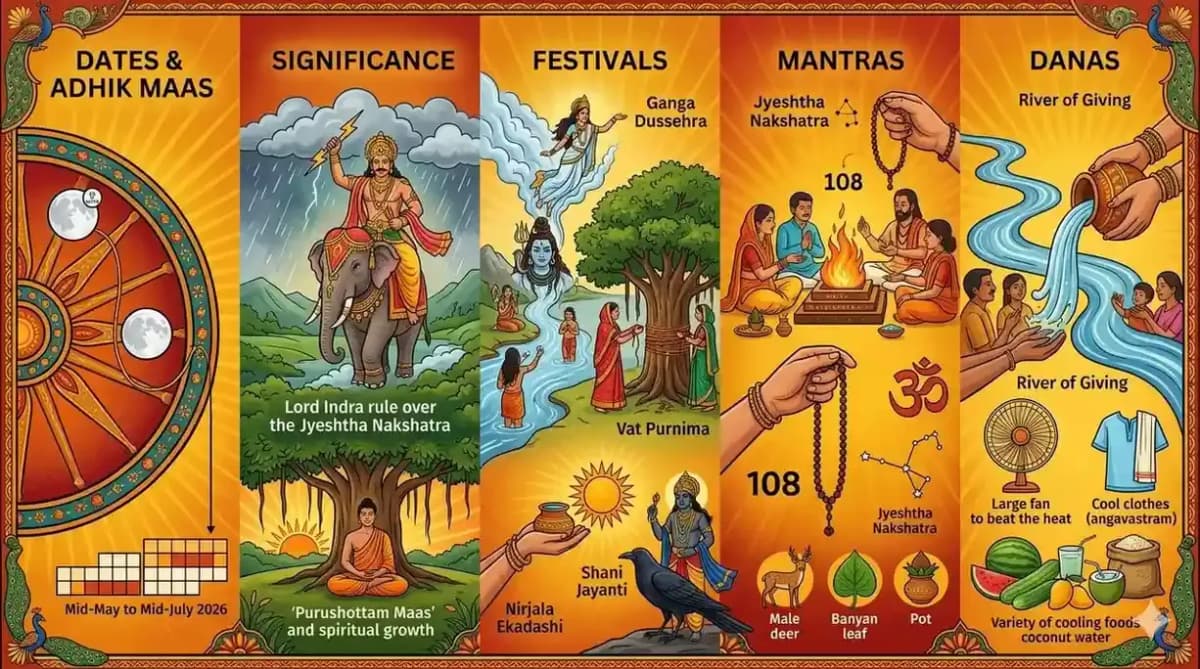
June 2026 Hindu Festival Calendar — Complete Dates, Vrat & Puja Guide for NRIs
Shani Deva Temples Worldwide & Must-Performed Rituals — Complete Devotee's Guide