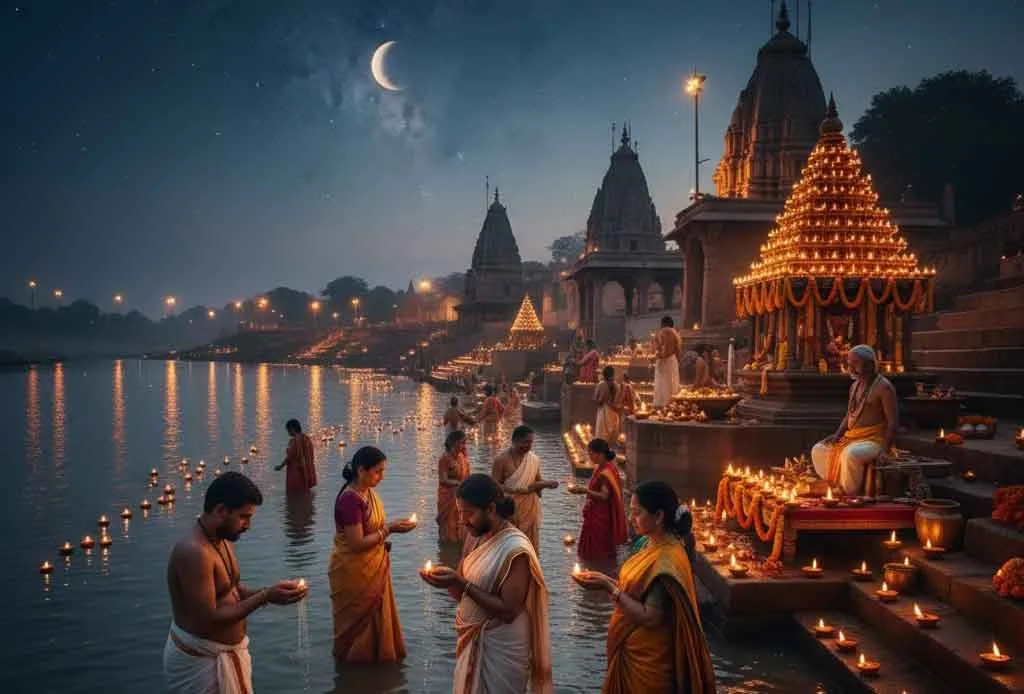
7 Common Mistakes to Avoid During Karthika Masam for USA Hindus
Karthika Masam (also known as Kartik month) is one of the most sacred months in the Hindu calendar, typically falling in October-November.
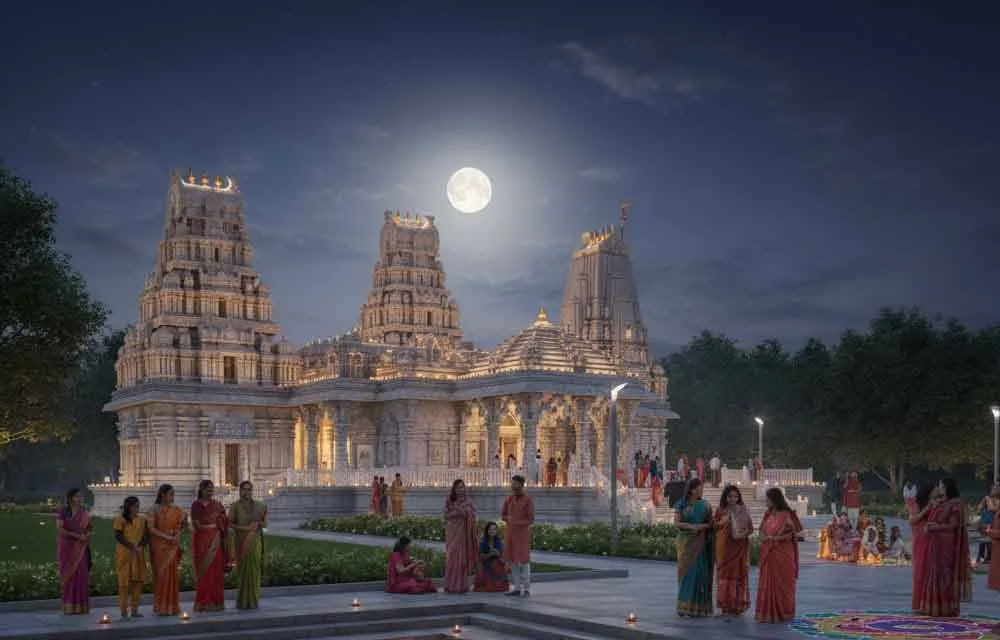
Karthika Masam (also known as Kartik month) is one of the most sacred months in the Hindu calendar, typically falling in October-November. Here are common mistakes to avoid while observing this holy month in the USA:
1. Skipping the Daily Lamp Lighting (Deepam)
One of the most important rituals is lighting a lamp (preferably with ghee or sesame oil) during the Pradosh Kala (evening twilight time, around 6-7 PM depending on your location). Many people forget due to busy work schedules. Set a daily reminder on your phone and keep your lamp supplies ready in advance.
2. Not Adjusting Fasting Times to Your Schedule
While traditional fasting runs from sunrise to sunset, trying to follow India timings in the USA can be impractical. Adapt the fasting schedule to your local sunrise/sunset times and work commitments. The devotion matters more than rigid timing - consult with your family priest if needed for guidance on modifications.
3. Neglecting Tulsi Worship
Daily worship of the Tulsi plant (Holy Basil) is significant during Karthika Masam. Many Hindu households in the USA don't maintain a Tulsi plant. If you don't have access to a live plant, you can use Tulsi leaves (available at Indian grocery stores), visit a temple with Tulsi, or even keep a small potted Tulsi indoors.
4. Overlooking the Importance of Saturdays (Shani Pradosham)
Saturdays during Karthika Masam hold special significance for Lord Shiva worship. Don't let weekend activities overshadow this. Try to visit a Shiva temple or perform a simple puja at home on these Saturdays.
5. Giving Up Too Easily on Dietary Restrictions
Many people start sattvic eating (avoiding onion, garlic, non-vegetarian food, alcohol) but struggle in social situations or at work. Plan ahead by:
- Packing your own lunch
- Politely explaining your observance to colleagues
- Choosing appropriate restaurant options when dining out
- Remember, even partial observance with sincere devotion is valuable
6. Forgetting About Kartik Purnima (Full Moon Day)
The final day, Kartik Purnima, is the most auspicious. Many people lose track of dates due to busy American lifestyles. Mark this date on your calendar in advance and plan to take time off if possible for a temple visit or extended puja at home. This year (2024), it falls in mid-November.
7. Not Involving Children or Family Members
In the USA, where children are growing up in a different cultural context, Karthika Masam is an excellent opportunity for spiritual education. Don't observe alone - involve your family by:
- Letting children help light the lamp
- Explaining the significance in English if needed
- Making it a family bonding time rather than a solitary ritual
- Sharing stories and legends associated with the month
Practical Tips for USA Hindus:
- Join or form a WhatsApp/community group for daily reminders and support
- Many temples offer special programs during Karthika Masam - check their schedules
- Stock up on puja supplies from Indian stores at the month's beginning
- Use YouTube or temple websites for guided pujas if you're unfamiliar with procedures
Remember, the essence of Karthika Masam is devotion, self-discipline, and spiritual growth. Adapt the traditions thoughtfully to your life in the USA while maintaining the sacred spirit of the observance.
Why is Karthika Masam Considered the Month of Lord Shiva and Lord Vishnu Together?
Karthika Masam holds the rare distinction of being simultaneously sacred to both Lord Shiva and Lord Vishnu, a convergence seldom seen in other Hindu months. The Skanda Purana explicitly states that Shiva himself declared Karthika as the holiest of all months, calling it 'Masanam Kartiko Masah' — the month among months. On the Vishnu side, Karthika Purnima marks the end of Chaturmasya, the four-month cosmic sleep of Lord Vishnu, making every day of this month auspicious for Vaishnava observances as well.
For USA Hindus, this dual significance means that visiting both Shaiva and Vaishnava temples during Karthika — such as a Shiva temple on Mondays and Saturdays, and a Venkateshwara or Narayana temple on Ekadashi and Purnima — can maximize the spiritual merit of the month. Many ISKCON centers and Sri Vaishnava temples in cities like Houston, Chicago, and the San Francisco Bay Area hold special Karthika programs that are open to all devotees regardless of sectarian affiliation.
What Does Karthika Deepam Symbolize and How Should It Be Lit Correctly?
The Karthika Deepam is not merely decorative — it carries profound symbolic weight rooted in the Shiva Purana's narrative of the Jyotirlinga, where Lord Shiva manifested as an infinite pillar of light (Jyoti Swarupa) to settle the dispute between Brahma and Vishnu. Lighting a lamp during Karthika Masam is therefore understood as an act of acknowledging Shiva's supreme, boundless luminosity. The Padma Purana further elaborates that one who lights a lamp in a Shiva temple during this month is freed from the cycle of rebirth.
For the ritual to be performed correctly, the lamp should ideally use cow's ghee or gingelly (sesame) oil, as both are considered purifying according to Ayurvedic and Agamic traditions. A cotton wick (varti) oriented toward the deity — not toward the worshipper — is the traditional method described in the Grihyasutras. For households in the USA where ghee lamps may trigger smoke alarms, placing the lamp near a kitchen exhaust vent or using a smaller flame in an open window area are practical adaptations that preserve the spirit of the ritual without compromising home safety.
How Can USA Hindus Observe Karthika Somavaram and Pradosha Vratam Without Missing Work?
Karthika Somavaram refers to the Mondays of Karthika Masam, each of which carries amplified significance for Shiva worship beyond an ordinary Monday. The Karthika Purana, recited across Telugu and Kannada households during this month, prescribes abhishekam (ritual bathing of the Shivalinga) with milk, honey, and water on these days. Similarly, Pradosha Vratam — observed on the Trayodashi tithi (13th lunar day) of both fortnights — is a fast that traditionally runs until the Pradosha Kala, approximately 90 minutes before and after sunset.
In the US context, Pradosha Kala in October-November typically falls between 5:30 PM and 7:00 PM Eastern Time, which is manageable even on weekdays for those who work standard office hours. A compact home puja — lighting a lamp before a Shivalinga or Shiva image, chanting the Panchakshara mantra 'Om Namah Shivaya' 108 times, and offering bilva (bel) leaves — takes roughly 20 minutes and fulfills the essential obligations of Pradosha Vratam. Many Hindu temples in the USA, including the Sri Siva Vishnu Temple in Lanham, Maryland, and the Shiva Vishnu Temple in Livermore, California, schedule evening abhishekams specifically timed for working devotees.
What Is the Significance of Karthika Snanam and Can It Be Observed in Cold US Weather?
Karthika Snanam — the practice of bathing before sunrise, ideally in a river or sacred body of water — is one of the most cherished observances of this month across Andhra Pradesh, Telangana, and Karnataka. The Skanda Purana asserts that a predawn bath in any flowing water body during Karthika is equivalent to bathing in all seven sacred rivers (Ganga, Yamuna, Saraswati, Godavari, Narmada, Sindhu, and Kaveri) simultaneously. The chill of the early morning is traditionally understood as a form of tapas (austerity) that intensifies the merit earned.
For Hindus in colder US states like Minnesota, Michigan, or the Northeast, a predawn river bath from late October onward is physically impractical and potentially hazardous. Shastra allows for the adaptation of intent: pouring a small amount of Ganga jal (Ganges water, widely available at Indian grocery stores) into your bath water, reciting the Saptanadi mantra that invokes all seven sacred rivers, and bathing before sunrise at home preserves the spiritual essence of the practice. The devotional intent (bhavana) and the predawn timing are the two elements the tradition insists upon most firmly; the specific body of water is secondary to these.
Which Karthika Masam Texts and Stotras Should Be Recited Daily and Where Can You Find Them?
The Karthika Purana, also called the Karthika Mahatmyam, is the primary scriptural text associated with this month. Across Telugu-speaking households, it is customary to read one chapter (adhyaya) of the Karthika Purana each evening after the deepam is lit, completing the entire text by Karthika Purnima. The text narrates stories of devotees who attained liberation through Karthika observances, reinforcing both the theological importance and the devotional mood of the month.
Key stotras recommended during Karthika Masam include the Shiva Panchakshara Stotram (composed by Adi Shankaracharya on the Namah Shivaya mantra), the Bilvashtakam (an eight-verse hymn praising the sacred bel leaf), and the Tulsi Stotram from the Skanda Purana. For USA-based devotees, all of these texts are freely accessible through platforms such as the Stotra Nidhi website and various devotional YouTube channels maintained by temples including the Sri Rama Temple in Pomona, California, and the Hindu Temple of Atlanta. Many temples also livestream their Karthika Purnima and Pradosha programs, enabling diaspora devotees to participate virtually in real time.
How Should USA Hindus Handle Karthika Masam Dana (Charitable Giving) and Community Observance?
Dana, or charitable giving, is an integral component of Karthika Masam observance that the existing checklist of common mistakes often overlooks. The Vishnu Dharmottara Purana specifies that dana given during Karthika — particularly of sesame seeds (tila), lamps, and clothing to the needy — yields merit multiplied manyfold compared to donations made in other months. Tila dana (gifting sesame) has specific relevance because sesame is also associated with ancestral rites, and Karthika is considered an opportune time to honor one's pitrus (ancestors) alongside the primary Shiva-Vishnu worship.
In the USA, the spirit of Karthika dana can be fulfilled by donating to a local Hindu temple's food program, contributing to a Seva organization such as Sewa International or Hindu Swayamsevak Sangh's community kitchens, or organizing a small potluck prasad event at your home temple or cultural association. Community group observances — where neighbors gather for a collective Karthika Puja, share sattvic food, and listen to a reading of the Karthika Purana — not only distribute the devotional effort but also strengthen the Hindu community fabric in the diaspora, an outcome that temple authorities and community elders across the USA actively encourage.
Frequently Asked Questions
How should USA Hindus adjust Karthika Masam fasting times?
Adapt the fast to your local sunrise and sunset and your work commitments instead of following India timings. Devotion matters more than rigid timing, and a family priest can advise on modifications.
What if I cannot keep a Tulsi plant at home in the USA?
Use Tulsi leaves from Indian grocery stores, visit a temple that has Tulsi, or keep a small potted Tulsi indoors. Daily Tulsi worship is significant during Karthika Masam.
When is the Pradosha Kala for the Karthika lamp in the USA?
Pradosha Kala is the evening twilight, around 6-7 PM depending on your location. In October-November it typically falls between 5:30 PM and 7:00 PM Eastern Time.
Why is Karthika Masam sacred to both Shiva and Vishnu?
As commonly told, the Skanda Purana has Shiva declare Karthika the holiest of months. Karthika Purnima also marks the end of Chaturmasya, Vishnu's four-month cosmic sleep, so the month is auspicious for Vaishnava observances too.
How can I take a Karthika Snanam in cold US weather?
A predawn river bath is impractical in colder states like Minnesota or Michigan. Pour a little Ganga jal into your bath water, recite the Saptanadi mantra and bathe before sunrise at home to keep the essence of the practice.
Can I keep sattvic eating during Karthika Masam at work or social events?
Pack your own lunch, politely explain your observance to colleagues and choose suitable restaurant options. Even partial observance with sincere devotion is considered valuable.
Share this with family and friends
Send it on WhatsApp, post it, or copy the link.
More from Karthika Masam 2025
- Kartika Amavasya: Significance, Importance & Must-Perform Rituals for Spiritual Blessings
- Karthika Masam Monday Rituals: Complete Guide for Hindus in USA, Canada, UK & Australia
- Karthika Masam Sunday Rituals: Sacred Sun Worship Traditions and Mantras
- How Cambodia Celebrated Karthika Pournami 2025: A Comprehensive City-Wise and Temple-Wise Exploration
- Celebrating Kartika Vana Bhojanalu: A Sacred Journey of Devotion Among Hindus in the USA
You might also like
Must-Visit Temples During Karthika Masam: A Complete Guide to Sacred Destinations
Karthika Amavasya for Hindus in the USA
Karthika Masam Monday Rituals: Complete State-wise Guide for India