Famous Temples Celebrating Karthika Pournami Across India
Introduction: A Divine Pilgrimage Through Sacred Light Karthika Pournami, the full moon night in the sacred month of Karthika, transforms temples across India…
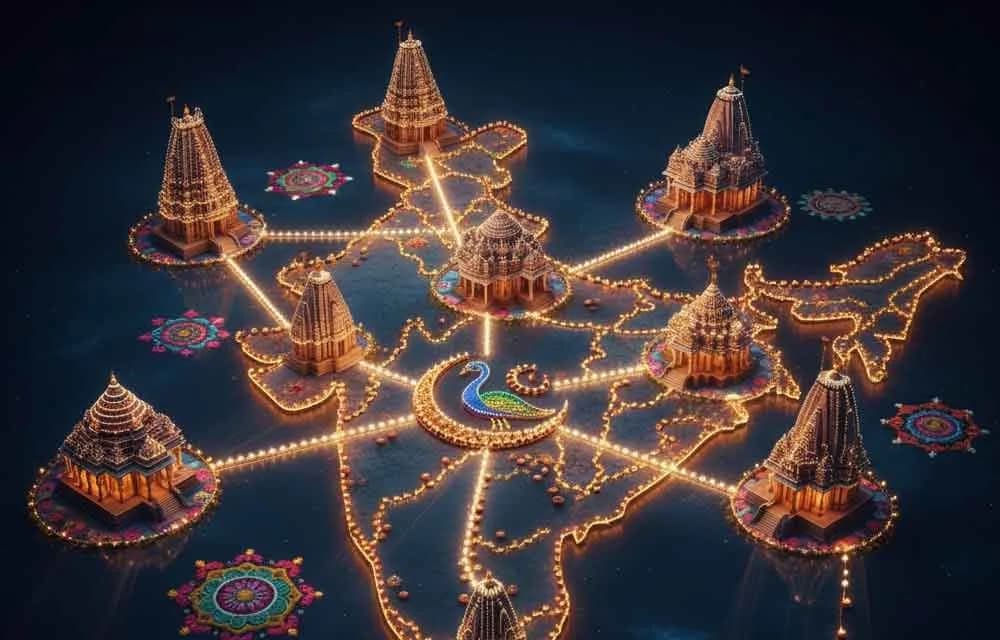
Introduction: A Divine Pilgrimage Through Sacred Light Karthika Pournami, the full moon night in the sacred month of Karthika, transforms temples across India…
Introduction: A Divine Pilgrimage Through Sacred Light
Karthika Pournami, the full moon night in the sacred month of Karthika, transforms temples across India into luminous sanctuaries of divine energy. This auspicious occasion witnesses some of the most spectacular spiritual celebrations in Hindu tradition, where ancient stone temples come alive with millions of flickering lamps, resonant chants, and the fervent devotion of countless pilgrims. The Karthika Deepam temples scattered across the Indian subcontinent each offer unique celebrations that blend local traditions with universal spiritual truths.
From the majestic Arunachaleswarar Temple in Tamil Nadu where a massive beacon blazes atop a sacred hill, to the mystical Kasi Vishwanath Temple in Varanasi where the Ganges itself becomes a river of lights, each famous Shiva temple presents its own interpretation of this cosmic festival. These Karthika festival celebrations are not merely religious events but profound spiritual experiences that have remained unchanged for centuries, offering modern seekers a direct connection to timeless wisdom.
This comprehensive guide takes you on a sacred journey through India's most renowned temples celebrating Karthika Pournami, exploring their unique traditions, historical significance, and the divine experiences they offer to devotees and spiritual seekers alike.
Arunachaleswarar Temple, Tiruvannamalai: The Crown Jewel of Karthika Deepam
The Sacred Significance of Arunachala
The Arunachaleswarar Temple in Tiruvannamalai, Tamil Nadu, stands as the undisputed epicenter of Karthika Pournami celebrations in India. This ancient temple, dedicated to Lord Shiva as Arunachaleswarar (the Lord of the Red Mountain), hosts the most spectacular Karthika Deepam festival that draws over two million pilgrims annually.
Arunachala Hill itself is considered a physical manifestation of Lord Shiva appearing as an infinite column of fire to settle the cosmic dispute between Brahma and Vishnu about supremacy. According to the Skanda Purana, Shiva proclaimed that Arunachala is his very form—not just a symbol but his actual presence. This makes the temple and hill among the most sacred sites in Hinduism.
The Ten-Day Karthika Deepam Festival
The Karthika festival celebrations at Arunachaleswarar Temple span ten magnificent days, culminating on the full moon night:
Day 1-9: Bharani Deepam
- Daily processions of Lord Shiva and Goddess Parvati
- Temple adorned with countless oil lamps
- Special abhishekams (ritual bathing of the deity)
- Vedic chanting and classical music performances
- Elaborate alankaram (decoration) of the deities
Day 10: Maha Karthikai Deepam
- The climactic event of the entire month
- Preparation begins days in advance
- Massive cauldron weighing several tons is prepared
- Filled with three tons of ghee and special herbal oils
- Enormous wick made from kilometers of cloth
The Moment of Ignition Around 6:00 PM on Karthika Pournami, as millions of devotees hold their breath in anticipation, the massive Maha Deepam is lit atop Arunachala Hill at an elevation of 2,668 feet. The lighting ceremony follows precise ritualistic protocols:
- Sacred fire is brought from the temple sanctum
- Priests carry this fire up the hill following ancient pathways
- Special mantras are chanted throughout the ascent
- The moment the flame touches the massive wick, the entire cauldron erupts into a towering column of fire
- This beacon is visible for miles in every direction
The sight of this colossal flame against the night sky creates an overwhelming spiritual experience. Devotees believe that merely seeing this sacred fire burns away sins accumulated over countless lifetimes.
Girivalam: The Sacred Circumambulation
A defining feature of Arunachaleswarar's Karthika Pournami celebration is Girivalam—the 14-kilometer barefoot circumambulation of Arunachala Hill. On the full moon night, the entire circumambulatory path becomes a continuous stream of humanity, with devotees walking throughout the night.
The Girivalam Path Features:
- Eight lingams at cardinal points (Ashta Linga Darshan)
- Numerous small shrines and sacred spots
- Natural springs and meditation caves
- Ancient trees considered sacred
- Continuous chanting of "Arunachala Shiva, Arunachala Shiva"
Spiritual Benefits Traditional Attributed to Girivalam:
- Complete dissolution of karmas
- Liberation (moksha) if done with proper devotion
- Fulfillment of sincere prayers and wishes
- Direct darshan (vision) of Shiva in the form of Arunachala
- Purification of body, mind, and soul
Temple Architecture and Special Features
The Arunachaleswarar Temple is one of the largest temple complexes in India:
- Total Area: 25 acres
- Temple Walls: Stretching nearly a mile in circumference
- Gopurams: Multiple towering temple gateways, the tallest reaching 217 feet
- Inner Sanctums: Multiple shrines dedicated to various deities
- Sacred Tanks: Brahma Tirtham and other holy water bodies
- Pillared Halls: Massive mandapams with intricate carvings
Best Time to Visit and Practical Information
Peak Celebration: The Karthika Pournami night (October-November, date varies by lunar calendar)
Crowd Management: Expect 1-2 million pilgrims during the main event
Accommodation: Book well in advance; ashrams, hotels, and guest houses fill months ahead
Dress Code: Traditional, modest clothing; dhoti for men and sarees for women preferred
Special Services: Free food (annadanam) provided by various organizations
Srisailam Mallikarjuna Temple: The Jyotirlinga of Divine Union
The Sacred Geography of Srisailam
Perched atop the Nallamala Hills in Andhra Pradesh, the Srisailam Mallikarjuna Temple represents one of the twelve Jyotirlingas—the most sacred Shiva shrines in India. The temple's location at the confluence of natural beauty and spiritual energy makes it a perfect setting for Karthika Pournami celebrations.
The temple is unique as it houses both a Jyotirlinga (Mallikarjuna) and a Mahashakti Peetha (Bhramaramba), making it a rare site where both Shiva and Shakti are worshipped with equal prominence. This divine union is especially celebrated during Karthika Pournami.
Karthika Pournami Celebrations at Srisailam
Pre-Festival Preparations:
- Entire temple complex cleaned and renovated
- Special decorations with flowers and lights
- Preparation of sacred oils and wicks
- Arrangement for lakhs of pilgrims
Main Celebration Features:
Maha Abhishekam: The Jyotirlinga receives elaborate ritual bathing with:
- Panchamritam (five sacred nectars)
- Sacred Ganges water
- Milk from specially selected cows
- Honey, yogurt, and ghee
- Sacred ash and turmeric
- Bilva leaves considered especially dear to Shiva
Laksha Deepa Pooja:
- Lighting of one hundred thousand lamps
- Lamps arranged in intricate geometric patterns
- Each lamp represents a prayer for world welfare
- The illumination visible across the Nallamala forest
Annadanam:
- Free meals served to thousands of pilgrims
- Traditional Telugu cuisine prepared with devotion
- Multiple sittings accommodating continuous flow of devotees
Unique Aspects of Srisailam Temple
The Jyotirlinga: Unlike other temples where the lingam is man-made, the Mallikarjuna Jyotirlinga is believed to be a swayambhu (self-manifested) representation of divine light.
Bhramaramba Devi: The Goddess shrine attracts equal devotion, with special rituals performed for Shakti worship during Karthika Pournami.
The Krishna River: Flowing beside the temple, devotees take sacred baths in the river before darshan, especially during Karthika Pournami.
Pathala Ganga: A sacred bathing spot reached by 852 steps, where devotees believe a dip purifies generations of ancestors.
Architectural Marvels
- Ancient Construction: Temple dates back over 1,000 years
- Gopuram: Towering gateway with intricate Dravidian architecture
- Mandapams: Multiple pillared halls with exquisite stone carvings
- Sacred Trees: Ancient trees within the complex considered wish-fulfilling
Visiting Information
Location: Kurnool District, Andhra Pradesh, approximately 220 km from Hyderabad
Accessibility: Well-connected by road; nearest airport is Hyderabad
Best Time: Karthika Pournami sees maximum spiritual energy but also maximum crowds
Special Facilities: Guest houses run by the temple administration and private accommodations available
Kasi Vishwanath Temple, Varanasi: The Eternal City's Divine Light
Varanasi: Where Every Day is Sacred
Kasi Vishwanath Temple in Varanasi (also called Banaras or Kasi) holds a unique position among famous Shiva temples. In the city where Lord Shiva himself is said to reside permanently, Karthika Pournami takes on additional significance as it aligns with the ancient tradition of Kartik Snan—the month-long practice of bathing in the Ganges.
The Kasi Vishwanath Temple houses one of the twelve Jyotirlingas, and darshan of this lingam is considered among the most auspicious acts in Hinduism. The temple's golden spire and golden dome, donated by Maharaja Ranjit Singh, shimmer magnificently during the Karthika festival celebrations.
Karthika Pournami in the City of Light
Dev Deepavali: Varanasi's Unique Celebration While technically celebrated on the next full moon after Diwali, Dev Deepavali often coincides closely with Karthika Pournami traditions:
The Ganges Transforms:
- Every ghat becomes a cascade of light
- Over one million earthen lamps lit simultaneously
- Boats carrying diyas float down the river
- The reflection creates a mirror of lights in the water
- This is called "Diwali of the Gods" as deities are believed to descend to Varanasi
Kasi Vishwanath Temple Rituals:
Maha Arati: The grand evening worship ceremony becomes even more elaborate:
- Massive brass lamps swung in synchronized patterns
- Priests performing intricate rituals
- Bells, conches, and drums creating divine resonance
- Devotees offering flowers and prayers
Rudrabhishek:
- Continuous abhishekam of the Jyotirlinga
- Thousands of devotees participating
- Offering of bilva leaves, milk, and Ganges water
- Chanting of Rudram and other sacred hymns
Special Darshan: Extended hours allowing maximum devotees to have darshan
The Sacred Ganges and Karthika Pournami
The confluence of Karthika Pournami with the Ganges creates unique spiritual opportunities:
Pre-Dawn Sacred Bath:
- Devotees gather at ghats before sunrise
- Ritual bathing in the holy Ganges
- Offering prayers to the rising sun
- Considered especially purifying during Karthika month
Ganga Arati: The famous evening Ganga Arati at Dashashwamedh Ghat reaches spectacular heights during Karthika Pournami:
- Synchronized movements of priests
- Massive fire lamps creating mesmerizing patterns
- Thousands of spectators on the ghats and boats
- Chanting that reverberates across the river
Boat Rides: Special night boat rides during Karthika Pournami offer:
- Views of illuminated temples and ghats
- Floating lamps creating magical atmosphere
- Peaceful meditation on the sacred river
- Unique perspective of celebrations
Kasi's Spiritual Significance
Moksha Kshetra: Varanasi is believed to grant liberation to those who die within its sacred boundaries. Karthika Pournami multiplies this blessing.
Annapurna Connection: The nearby Annapurna Temple, dedicated to the Goddess of nourishment, participates in Karthika celebrations with massive food distributions.
Bharat Mata Temple: This unique temple depicting mother India receives special worship during patriotic prayers on Karthika Pournami.
Practical Information for Visitors
Peak Season Challenge: Varanasi during Karthika Pournami is extremely crowded
Accommodation: Book months in advance; options range from budget hostels to luxury heritage hotels
Safety: Stay alert in crowds; follow ghat safety guidelines
Best Viewing Spots: Assi Ghat, Dashashwamedh Ghat, and boat rides offer excellent perspectives
Cultural Etiquette: Respect local customs; photography restrictions in certain temple areas
Trimbakeshwar Temple, Maharashtra: Source of Sacred Rivers
The Unique Trinity Temple
Trimbakeshwar Temple, located in Nashik district of Maharashtra, presents a unique configuration among Jyotirlinga temples. The temple houses three lingams representing Brahma, Vishnu, and Mahesh (Shiva) within a single sanctum—a rare architectural and spiritual feature found nowhere else among the twelve Jyotirlingas.
The temple's location at the source of the Godavari River adds immense significance. The Godavari, often called the "Ganges of the South," originates from Brahmagiri hills near the temple, making this a tirtha (pilgrimage site) of exceptional sanctity.
Karthika Pournami Celebrations at Trimbakeshwar
Unique Features of Trimbakeshwar's Celebration:
Kusavarta Kund: The sacred tank where the Godavari originates becomes the center of activity:
- Thousands take ritual baths at dawn
- Water level rises mysteriously during Karthika Pournami (traditional belief)
- Special water offering rituals performed
- Floating lamps create stunning visual displays
Triple Deity Worship: The unique three-lingam configuration receives elaborate worship:
- Brahma lingam honored with specific Vedic chants
- Vishnu lingam receives Vaishnava mantras
- Shiva lingam worshipped with Shaivite traditions
- This trinity worship represents cosmic balance
Maha Abhishekam:
- Performed throughout Karthika Pournami day and night
- Sacred water from Kusavarta Kund used
- Bilva leaves from temple's sacred trees
- Milk, honey, and panchamritam offerings
- Continuous chanting of mantras
Karthika Deepam Lighting:
- Temple complex illuminated with traditional oil lamps
- Special lighting around Kusavarta Kund
- Devotees offering lamps as part of vows
- Geometric patterns created with lamp arrangements
The Brahmagiri Hill Connection
Mountain Circumambulation: Similar to Girivalam at Tiruvannamalai, devotees circumambulate Brahmagiri hill, though the practice is less common:
- Approximately 8-kilometer path
- Several smaller shrines along the route
- Natural beauty of Western Ghats
- Waterfalls and streams considered sacred
Sunrise Viewing: Many devotees climb to viewpoints on Karthika Pournami morning:
- First rays of sun hitting the temple
- Panoramic views of Godavari valley
- Meditation in mountain atmosphere
Historical and Architectural Significance
Ancient Heritage:
- Temple rebuilt multiple times over centuries
- Current structure dates to 1786 (Peshwa period)
- Distinctive Nagara-style architecture
- Black stone construction with intricate carvings
The Crown (Mukut):
- Unique metal crown covers the three lingams
- Removes only once in six months during special ceremony
- Devotees consider crown darshan highly auspicious
Sacred Geometry:
- Temple designed according to Vastu Shastra
- Mandapas arranged in cosmic patterns
- Water flow system connects to Godavari source
Rituals Specific to Trimbakeshwar
Narayan Nagbali: Though performed year-round, many choose Karthika Pournami for this special ritual meant to:
- Liberate ancestral souls
- Resolve familial curses (kula dosha)
- Provide peace to restless spirits
Kaal Sarp Dosha Puja: Trimbakeshwar is famous for this specific astrological remedy, with increased participation during Karthika Pournami.
Visiting Trimbakeshwar
Location: Nashik District, Maharashtra, approximately 30 km from Nashik city
Connectivity: Well-connected by road from Mumbai (180 km) and Pune (150 km)
Climate: Pleasant during Karthika month (October-November)
Accommodation: Limited options in Trimbakeshwar town; Nashik offers extensive facilities
Special Note: Darshan queues can be several hours long during Karthika Pournami
Brihadeeswara Temple, Thanjavur: The Great Living Chola Temple
Architectural Marvel Meets Spiritual Grandeur
The Brihadeeswara Temple in Thanjavur, Tamil Nadu, represents one of the finest examples of Chola architecture and is a UNESCO World Heritage Site. Built by Raja Raja Chola I in 1010 CE, this temple stands as a testament to the magnificent integration of art, architecture, and spirituality.
While not as widely known for Karthika Pournami as Tiruvannamalai, the Brihadeeswara Temple's celebrations are deeply rooted in tradition and offer a unique blend of cultural heritage and spiritual devotion.
Karthika Festival Celebrations at Brihadeeswara
Architectural Illumination: The temple's grand scale makes its Karthika Deepam celebration visually spectacular:
- The 216-foot vimana (temple tower) illuminated with thousands of lamps
- Lamp arrangements following ancient geometric patterns
- Reflection in temple's water bodies creating mirror effects
- Interior corridors lined with traditional oil lamps
Cultural Programs:
- Classical Bharatanatyam performances in temple courtyards
- Carnatic music concerts honoring Lord Shiva
- Traditional drama depicting Shiva legends
- Tamil poetry recitations celebrating Karthika month
Ritual Observances:
- Special abhishekam for the massive Shiva lingam (nearly 12 feet high)
- Procession of the bronze Nataraja idol
- Alankaram (decoration) with rare flowers and jewels
- Vedic chanting by temple priests
Unique Features of Brihadeeswara Temple
The Massive Nandi:
- Monolithic Nandi bull carved from single stone
- Weighs approximately 25 tons
- Receives special worship during Karthika Pournami
- Devotees circumambulate Nandi before entering sanctum
Architectural Wonder:
- Vimana shadow never falls on ground (architectural precision)
- Temple built entirely with interlocking stones (no mortar)
- Frescoes depicting 108 dance poses of Bharatanatyam
- Inscriptions in Tamil providing historical documentation
Living Heritage:
- Temple maintained by Archaeological Survey of India
- Daily rituals continuing for over 1,000 years
- Training center for traditional arts
- Preservation of ancient crafts and practices
Visiting Information
Location: Thanjavur, Tamil Nadu, approximately 350 km from Chennai
Best Time: Karthika Pournami and the preceding festival days
Entry: No entrance fee; voluntary donations accepted
Photography: Allowed in outer areas; restricted in inner sanctum
Nearby Attractions: Thanjavur Palace, Art Gallery, Saraswati Mahal Library
Rameswaram Temple: Island Shrine of Redemption
The Southern Pilgrimage Pinnacle
The Ramanathaswamy Temple in Rameswaram represents one of the holiest pilgrimage sites in India, being part of the sacred Char Dham pilgrimage. According to legend, Lord Rama installed the lingam here after returning from Lanka, seeking absolution for the sin of killing Ravana (a Brahmin).
The temple's location on an island connected to mainland India by Pamban Bridge creates a unique atmosphere where land, sea, and spirituality merge.
Karthika Pournami at Rameswaram
Ocean and Temple Unite:
- Devotees bathe in the Indian Ocean before darshan
- 22 sacred wells (theerthams) within temple complex
- Ritual bathing in each well during Karthika Pournami
- Waters believed to have distinct properties and blessings
Agni Theertham:
- Most sacred bathing spot on the ocean shore
- Thousands gather for pre-dawn Karthika snanam
- Floating lamps released into ocean
- Sunrise prayers facing east
Temple Illumination:
- The longest temple corridor in India lit with oil lamps
- 4,000-foot corridor becomes river of light
- Pillared halls (1,200 pillars) creating spectacular shadows
- 22 theerthams surrounded by lamps
Special Rituals:
- Abhishekam to the main Ramanathaswamy lingam
- Special prayers to Goddess Parvati (Parvathavardhini)
- Hanuman worship (Hanuman had significant role in Rama's story)
- Reading of Ramayana episodes
Unique Aspects of Rameswaram
Dual Importance: Sacred to both Shaivites and Vaishnavites
- Shiva worship as Ramanathaswamy
- Commemoration of Lord Rama's worship
- Integration of both traditions in rituals
The Jyotirlinga: One of twelve Jyotirlingas, making darshan especially meritorious
Dhanushkodi: The tip of the island offers:
- Spectacular sunrise views
- Meeting point of Bay of Bengal and Indian Ocean
- Ruins of ghost town (destroyed by 1964 cyclone)
- Peaceful meditation spot
Practical Visitor Information
Location: Ramanathapuram District, Tamil Nadu, southernmost tip of Indian peninsula
Connectivity: Connected by rail and road; nearest airport Madurai (170 km)
Temple Timings: Extended during Karthika Pournami
Dress Code: Traditional attire required; men wear dhoti, women wear sarees
Special Services: Bathing at 22 theerthams requires guide services (available at temple)
Somnath Temple, Gujarat: The Eternal Shrine
The Temple That Refused to Die
Somnath Temple in Gujarat represents one of the most resilient symbols of faith in India. Despite being destroyed and rebuilt multiple times throughout history, the temple stands today as a magnificent structure facing the Arabian Sea. As the first among the twelve Jyotirlingas, Somnath holds special significance.
Karthika Pournami Celebrations at Somnath
Ocean Darshan:
- Temple positioned where land meets sea
- Sound of waves creating natural meditation ambiance
- Sunrise and moonrise views over ocean
- Legend says Krishna departed earth from this shore
Light and Sound Show:
- Special extended shows during Karthika Pournami
- Narration of temple's history
- Projection mapping on temple structure
- Multiple language options
Karthika Deepam Rituals:
- Temple illuminated against ocean backdrop
- Beach lighting ceremony
- Lamps placed on temple premises and beach
- Prayers for world peace and prosperity
Cultural Programs:
- Gujarati folk performances
- Classical music concerts
- Religious discourses by learned scholars
- Community feast (bhandara)
Architectural Beauty
Modern Construction: Current temple rebuilt in 1951
- Chalukya style of architecture
- Pink sandstone and ornate carvings
- Towering shikhara visible from distance
- Precise construction using traditional methods
Strategic Location:
- No land between temple and Antarctic (facing south to ocean)
- Sacred geography connecting to global energy patterns
- Sunset views considered especially auspicious
Visiting Somnath
Location: Prabhas Patan, Veraval, Gujarat, approximately 400 km from Ahmedabad
Accommodation: Good range of hotels and guest houses
Best Experience: Attend the evening arati followed by light and sound show
Nearby: Bhalka Tirtha, Triveni Sangam, Gita Temple
Kedarnath Temple: The Himalayan Abode
Mountain Monastery of Mahadev
Kedarnath Temple, situated at 11,755 feet in the Garhwal Himalayas, represents the northernmost Jyotirlinga and part of the Char Dham pilgrimage. Due to extreme winter conditions, the temple closes during winter months, but Karthika Pournami occurs when the temple is still open, making it a spectacular time to visit.
Karthika Pournami in the Himalayas
Mountain Illumination:
- Temple and surrounding peaks visible under full moon
- Traditional lamps providing only illumination (no electricity)
- Snow-covered peaks reflecting moonlight
- Stars visible in pristine mountain atmosphere
Special Challenges and Rewards:
- Cold weather requires preparation
- Smaller crowds due to difficulty
- More intimate spiritual experience
- Connection with elemental forces
Rituals in Thin Air:
- Abhishekam with ice-cold mountain water
- Lamp lighting in wind-protected areas
- Extended meditation in mountain energy
- Prayers for safe passage
Unique Kedarnath Features
Pandava Connection: Built by the Pandavas seeking Shiva's forgiveness after Mahabharata war
Architectural Strength: Survived 2013 devastating floods while buildings around it collapsed
Backend Appearance: Only the hump (back portion) of Shiva visible here; complete form distributed across Panch Kedar
Nandi Facing Away: Unique feature where Nandi faces away from sanctum
Visiting Information
Accessibility: Trek required (16 km from Gaurikund) or helicopter services available
Season: Temple closes in November; Karthika Pournami is among last celebrations before closure
Preparation: Physical fitness, warm clothing, altitude acclimatization essential
Accommodation: Limited options; booking mandatory
Mahakaleshwar Temple, Ujjain: The Lord of Time
The Jyotirlinga Facing South
Mahakaleshwar Temple in Ujjain, Madhya Pradesh, hosts one of the most unique Jyotirlingas. Unlike other Jyotirlingas, the Mahakaleshwar lingam faces south (dakshinamukhi), and the temple is one of the seven Mukti Sthal (places that grant liberation).
Karthika Pournami at Mahakaleshwar
Bhasma Aarti: The temple's famous Bhasma Aarti gains additional significance during Karthika Pournami:
- Performed at 4:00 AM daily
- Lingam adorned with sacred ash from cremation grounds
- During Karthika Pournami, special expanded ritual
- Limited entry through advance booking
Shipra River Rituals:
- Sacred river flowing beside temple
- Mass bathing during Karthika Pournami
- Floating lamps creating beautiful displays
- Connection to Kumbh Mela traditions (Ujjain hosts Kumbh)
Karthika Deepam Celebrations:
- Temple towers illuminated
- Geometric lamp patterns in courtyards
- Continuous chanting throughout night
- Special food distributions
The Time-Death Connection
Mahakal: Meaning "Great Time" or "Lord of Time"
- Shiva as destroyer of time and death
- Worship here said to transcend mortality
- Connection to cosmic cycles
Ujjain's Astronomical Significance:
- Ancient observatory (Jantar Mantar) nearby
- Prime meridian in ancient Indian astronomy
- Mathematical and astronomical heritage
- Sacred geography aligned to celestial patterns
Visiting Mahakaleshwar
Location: Ujjain, Madhya Pradesh, approximately 55 km from Indore
Bhasma Aarti: Must book online weeks in advance for Karthika Pournami
Best Time: October-March for pleasant weather; Karthika for spiritual intensity
Nearby: Kal Bhairav Temple, Ram Ghat, Harsiddhi Temple
Omkareshwar Temple: The Sacred Island
The OM-Shaped Island Temple
Omkareshwar Temple, located on an island in the Narmada River shaped like the sacred OM symbol, represents another significant Jyotirlinga. The temple's unique geography, where the Narmada River divides to encircle the island, creates powerful energy vortexes.
Karthika Pournami at Omkareshwar
River and Island Unite:
- Two temples: Omkareshwar on island, Mamleshwar on mainland
- Devotees visit both during Karthika Pournami
- Boat rides to island under full moon
- Parikrama (circumambulation) of entire island
Narmada's Sacred Waters:
- Ritual bathing in the holy Narmada
- River worship during Karthika month
- Floating lamps on river creating mystical atmosphere
- Natural rock formations considered sacred
Temple Illumination:
- Island covered in oil lamps
- Reflection in surrounding water
- Ancient caves on island also lit
- 24-hour devotional atmosphere
Spiritual Significance
Narmada Parikrama: The entire Narmada River is circumambulated by dedicated pilgrims
- Journey takes several years
- Omkareshwar is significant stop
- Karthika Pournami considered auspicious for beginning or continuing parikrama
Geological Wonder:
- Volcanic rock formations
- Natural caves for meditation
- Unique microclimate on island
Visiting Information
Location: Khandwa District, Madhya Pradesh, approximately 77 km from Indore
Access: Bridge connects island to mainland; boats also available
Accommodation: Hotels on mainland and limited guest houses on island
Special Feature: Two Jyotirlingas in close proximity (Omkareshwar and Mamaleshwar)
Ekambareswarar Temple, Kanchipuram: The Mango Tree Temple
Earth Element Temple
Ekambareswarar Temple in Kanchipuram, Tamil Nadu, represents the earth element among the Pancha Bhoota Sthalas (five elemental temples). The temple's most unique feature is the 3,500-year-old mango tree with four branches, each producing mangoes with different tastes representing the four Vedas.
Karthika Pournami Celebrations
Ancient Mango Tree Worship:
- Special prayers under the sacred tree
- Tree illuminated with traditional lamps
- Devotees circumambulate the tree
- Belief that wishes made under tree during Karthika Pournami are fulfilled
Massive Temple Complex:
- One of the largest temples in India (23 acres)
- 1,000-pillared hall illuminated
- Each pillar base receives lamp
- Creating forest of lights
Prithvi Linga Worship:
- The earth lingam receives special abhishekam
- Sand from sacred rivers offered
- Earth from holy places dedicated
- Symbolizing cosmic ground
Temple's Unique Features
Architectural Scale:
- 59-meter tall Raja Gopuram
- Massive walls enclosing complex
- Numerous shrines within premises
- Water tanks adding to beauty
Mythological Importance:
- Where Goddess Parvati worshipped Shiva
- Association with Adi Shankaracharya
- Temple of kamakshi (Goddess with loving eyes)
Visiting Information
Location: Kanchipuram, Tamil Nadu, approximately 75 km from Chennai
City of Temples: Kanchipuram has hundreds of temples; combined pilgrimage possible
Silk Sarees: Famous for Kanchipuram silk; temple offerings often include these
Best Time: Karthika Pournami and other major festivals
Preparing for Temple Visits During Karthika Pournami
General Guidelines for All Temples
Advance Planning:
- Book accommodation months ahead
- Arrange transportation early
- Check temple timings and special events
- Obtain necessary permissions if required
Dress Code:
- Traditional, modest clothing
- Men: Dhoti or traditional pants and shirt
- Women: Saree or salwar kameez
- Avoid western casual wear
- Remove shoes before entering temple premises
Physical Preparation:
- Some temples require trekking or climbing
- Build stamina beforehand
- Carry necessary medications
- Stay hydrated
Frequently Asked Questions
Where is Famous Temples Celebrating Karthika Pournami Across located?
Introduction: A Divine Pilgrimage Through Sacred Light Karthika Pournami, the full moon night in the sacred month of Karthika, transforms temples across India into luminous sanctuaries of divine energy. This auspicious occasion witnesses some of the most spectacular spiritual celebrations in Hindu tradition, where ancient stone temples come alive with millio
Who is the presiding deity of Famous Temples Celebrating Karthika Pournami Across?
The temple's presiding deity and its significance are described in the guide above.
What are the timings and how do I reach Famous Temples Celebrating Karthika Pournami Across?
Temples typically open early morning and evening; confirm current darshan timings before visiting. The nearest airport, railway station and road routes are covered in the guide above.
What is the best time to visit Famous Temples Celebrating Karthika Pournami Across?
Major festival days and the cooler months are popular, though weekday mornings offer a calmer darshan. Plan around the temple's key festivals for the most vibrant experience.
You might also like
Karthika Masam 2026: Dates, Rituals, Vrat, Festivals & North vs South India Guide
June 2026 Hindu Festival Calendar — Complete Dates, Vrat & Puja Guide for NRIs
Shani Deva Temples Worldwide & Must-Performed Rituals — Complete Devotee's Guide