Holy River Baths on Karthika Pournami: The Power of Purification
The full moon night of Karthika Pournami holds a sacred place in the Hindu calendar, when millions of devotees across India gather at the banks of holy rivers…
The full moon night of Karthika Pournami holds a sacred place in the Hindu calendar, when millions of devotees across India gather at the banks of holy rivers…
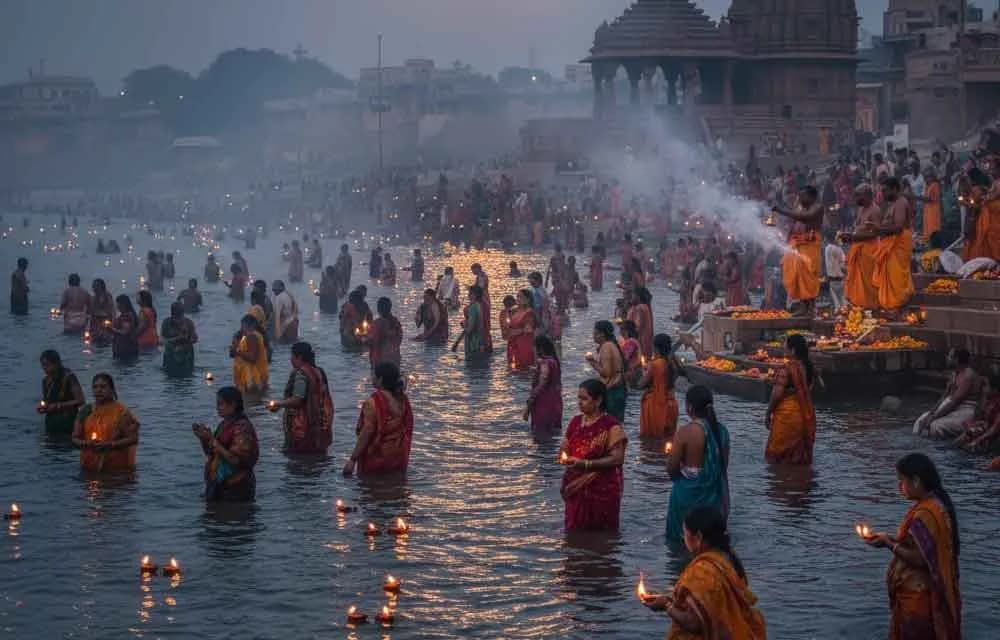
The full moon night of Karthika Pournami holds a sacred place in the Hindu calendar, when millions of devotees across India gather at the banks of holy rivers before dawn. As the first rays of sunlight touch the waters, a timeless ritual unfolds—the sacred bath that promises spiritual purification and divine grace.
The Sacred Tradition of Karthika Pournami Snanam
Karthika Pournami, occurring on the full moon day in the Hindu month of Karthika (October-November), is considered one of the most auspicious days for ritual bathing. According to ancient scriptures, the celestial energies on this day are uniquely aligned, making the waters of sacred rivers especially potent for spiritual cleansing.
The tradition of taking a holy dip, known as snanam, is rooted in the belief that sins accumulated over lifetimes can be washed away through this simple yet profound act. The Skanda Purana declares that bathing in sacred rivers on Karthika Pournami grants liberation (moksha) and absolves one of all karmic debts.
The Three Sacred Rivers: Ganga, Godavari, and Krishna
The Eternal Ganga
The Ganges, descending from the matted locks of Lord Shiva, is revered as the most sacred river in Hinduism. On Karthika Pournami, ghats from Varanasi to Haridwar overflow with devotees seeking purification. The river is believed to carry the divine essence of all three realms—heaven, earth, and the netherworld—making it the ultimate purifier.
At Varanasi's ancient ghats, the ritual takes on profound significance. Devotees believe that bathing here on this auspicious day not only cleanses physical impurities but also liberates ancestors trapped in the cycle of rebirth. The practice of offering prayers for departed souls after the bath has been observed for millennia.
The Divine Godavari
Known as the Dakshin Ganga (Ganges of the South), the Godavari River holds special importance during Karthika Pournami. The river originates in Maharashtra and flows through Telangana and Andhra Pradesh, blessing millions along its course.
Pushkar Ghats in Nashik and the sacred bathing spots in Rajahmundry witness massive congregations. Legend holds that Lord Rama himself bathed in the Godavari during his exile, sanctifying its waters forever. The river is particularly associated with the worship of Lord Shiva, whose temples line its banks.
The Sacred Krishna
The Krishna River, flowing through Maharashtra, Karnataka, Telangana, and Andhra Pradesh, derives its sanctity from numerous episodes in Hindu mythology. The river shares its name with Lord Krishna, though its etymology predates the deity's incarnation.
Pilgrimage centers like Srisailam, Alampur, and Vijayawada attract thousands on Karthika Pournami. The confluence points (sangams) where the Krishna meets other rivers are considered especially powerful for ritual bathing.
The Spiritual Symbolism of River Bath Purification
Water as the Universal Purifier
In Hindu philosophy, water represents both physical and metaphysical purification. The Sanskrit term apas (water) is linked to the root meaning "to purify" or "to cleanse." Rivers, constantly flowing and renewing themselves, symbolize the eternal cycle of creation and dissolution.
Taking a dip in sacred waters on Karthika Pournami represents the soul's journey from darkness to light. The act acknowledges human imperfection while expressing faith in divine grace. Water absorbs negative energies, carrying them away to be transformed and purified in the cosmic ocean.
The Lunar Connection
The full moon of Karthika month amplifies the spiritual potency of the ritual. In Vedic astrology, the moon governs the mind and emotions. A full moon represents completeness, clarity, and the fullest expression of lunar energy. Bathing under the Karthika Pournami moon is believed to calm mental turbulence and bring emotional balance.
The reflected moonlight on river waters creates a natural mandala, a sacred geometric pattern that aids meditation and spiritual focus. Ancient seers understood this phenomenon and prescribed the pre-dawn bath to harness these combined energies.
Symbolic Death and Rebirth
Immersing oneself completely in holy waters symbolizes a temporary death—the dissolution of ego and worldly attachments. Emerging from the water represents rebirth with renewed spiritual vitality. This symbolic death and resurrection mirrors the cosmic cycles described in Hindu scriptures.
The ritual bath is not merely physical cleansing but a declaration of intent to transform one's consciousness. By willingly entering the cold waters before sunrise, devotees demonstrate discipline, devotion, and readiness for spiritual evolution.
The Ritual Practice: How Devotees Observe Karthika Pournami Snanam
Pre-Dawn Preparations
Traditionally, devotees wake up during Brahma Muhurta (approximately 90 minutes before sunrise), considered the most spiritually charged time of day. They prepare for the bath by setting intentions, often through prayer or meditation at home.
Many observe a partial or complete fast from the previous evening, believing that a light body is more receptive to spiritual energies. Clean, simple clothing is prepared for after the bath, as the ritual marks a transition to a purified state.
The Sacred Bath
Upon reaching the riverbank, devotees first offer prayers to the river goddess, seeking permission to enter her sacred waters. Mantras invoking the presence of all holy rivers are chanted, including the famous verse: "Gange cha Yamune chaiva Godavari Saraswati, Narmade Sindhu Kaveri jalesmin sannidhim kuru" (O Ganges, Yamuna, Godavari, Saraswati, Narmada, Sindhu, and Kaveri, please be present in these waters).
The bath typically involves three complete immersions, each accompanied by specific mantras. Water is offered to the sun god (Surya) as he rises, acknowledging the life-giving force of solar energy. Some devotees also perform tarpan—offering water to ancestors—believing Karthika Pournami is particularly favorable for such rituals.
Post-Bath Observances
After the purifying bath, devotees wear fresh clothes and visit nearby temples to offer prayers. Lighting lamps (deep daan) is an integral part of Karthika Pournami observances. Clay lamps filled with ghee or oil are floated on the river or placed along the banks, symbolizing the offering of light to dispel darkness.
Many devotees complete the ritual by feeding Brahmins, distributing food to the poor, or making charitable donations. These acts of daan (giving) are believed to multiply the spiritual merit earned through the holy bath.
Scientific and Psychological Dimensions
Hydrotherapy and Natural Healing
Modern science recognizes the health benefits of immersion in flowing water. Rivers, especially those originating in the Himalayas, carry mineral-rich waters with therapeutic properties. The cold temperature of pre-dawn water stimulates circulation, boosts immunity, and increases mental alertness.
The practice of ritual bathing also involves exposure to early morning sunlight immediately after the bath, providing vitamin D and regulating circadian rhythms. The combination of cold water immersion followed by sun exposure creates a natural contrast therapy known for its invigorating effects.
Psychological Renewal
From a psychological perspective, the ritual of Karthika Pournami snanam provides a powerful reset mechanism. The act of traveling to a sacred site, joining a community of like-minded seekers, and performing a purification ritual creates a sense of renewal and purpose.
The sensory experience—cold water, the sound of flowing rivers, collective chanting, and the visual beauty of sunrise—engages multiple neural pathways, creating lasting positive memories. This communal spiritual experience strengthens social bonds and provides emotional support.
Regional Variations and Celebrations
North India: Ganga's Sacred Ghats
In Varanasi, Haridwar, and Rishikesh, Karthika Pournami is celebrated with elaborate ceremonies. The evening Ganga Aarti takes on special significance, with thousands of lamps creating a mesmerizing spectacle. Devotees believe that the goddess Ganga herself descends to bless those who bathe in her waters on this day.
South India: Godavari and Krishna Rivers
In the southern states, Karthika Pournami coincides with various regional festivals. The Godavari banks at Rajahmundry host the famous Pushkar Fair on specific years when the Pushkaram festival occurs. Even in non-Pushkaram years, the Karthika Pournami bath is considered highly meritorious.
Along the Krishna River, temples like Srisailam conduct special rituals. The practice of Kaarthika Masa Vratham—a month-long observance culminating on Pournami—includes daily early morning baths in the river.
Maharashtra: Bhima and Godavari Confluences
Maharashtra's spiritual geography centers around multiple sacred rivers. Pilgrims flock to places like Pandharpur, where the Bhima River flows, and Nashik, where the Godavari is especially revered. The tradition here often combines the holy bath with visits to ancient temples and participation in bhajan (devotional singing) sessions.
The Deeper Philosophy: Purification Beyond Ritual
Internal vs. External Cleansing
While the physical act of bathing in sacred rivers is important, Hindu scriptures emphasize that true purification is internal. The Bhagavad Gita teaches that no external ritual can substitute for purity of heart and clarity of intention.
The river bath serves as an external expression of an internal commitment to spiritual growth. Saints and sages have long taught that the sacred rivers flow not just on earth but within every individual—the sushumna nadi being the internal Ganga through which spiritual energy flows.
The Role of Faith and Devotion
The transformative power of Karthika Pournami snanam is amplified by the devotee's faith (shraddha) and devotion (bhakti). Ancient texts state that even a drop of Ganga water taken with complete faith has more purifying power than bathing mechanically in the entire river.
This emphasis on faith acknowledges the psychological and spiritual dimensions of religious practice. The ritual becomes a vehicle for transformation when approached with genuine reverence and openness to change.
Contemporary Relevance and Environmental Concerns
Balancing Tradition with Ecology
As millions continue to observe Karthika Pournami traditions, environmental concerns have emerged. River pollution, excessive waste from ritual offerings, and crowding at pilgrimage sites pose challenges to both ecology and spiritual experience.
Progressive religious leaders advocate for eco-friendly observances: biodegradable lamps instead of plastic, minimal use of flowers and offerings, and responsible waste disposal. The concept of prakriti puja (nature worship) inherent in Hinduism calls for protecting the very rivers venerated as divine.
Adapting Ancient Wisdom for Modern Times
Many contemporary practitioners find creative ways to honor the spirit of Karthika Pournami while addressing practical constraints. Those unable to reach sacred rivers perform the ritual at local water bodies or even at home, believing that with proper intention and mantras, any water can be sanctified.
Virtual participation has also emerged, with temples live-streaming ceremonies, allowing devotees worldwide to participate spiritually. While purists may question such innovations, they reflect Hinduism's inherent adaptability and the timeless principle that the divine is accessible to sincere seekers everywhere.
The Eternal Flow: Conclusion
The tradition of taking a holy dip in sacred rivers on Karthika Pournami embodies Hinduism's profound understanding of ritual, symbolism, and transformation. What appears as a simple bath transcends physical cleansing to become a gateway for spiritual renewal.
The sacred rivers—Ganga, Godavari, Krishna, and countless others—flow not just through the Indian landscape but through the collective consciousness of millions who seek their blessings. They represent the continuous flow of divine grace, ever-available to those who approach with humility and devotion.
In an age of increasing materialism and disconnection from nature, the Karthika Pournami snanam reminds us of our connection to the sacred elements that sustain life. It invites us to pause, reflect, and recommit ourselves to the eternal values of purity, truth, and spiritual evolution.
As the sun rises over the glistening waters and devotees emerge purified from their ritual bath, they carry forward an ancient legacy—the understanding that external rituals, when performed with internal awareness, have the power to transform human consciousness and connect the individual soul with the infinite divine.
May the sacred waters of Karthika Pournami cleanse all impurities and illuminate the path to spiritual awakening for all seekers.
Frequently Asked Questions
When is Holy River Baths on Karthika Pournami?
Holy River Baths on Karthika Pournami is observed on its traditional tithi in the Hindu lunar calendar; refer to the year's panchang for the exact date in your region.
What is the significance of Holy River Baths on Karthika Pournami?
The full moon night of Karthika Pournami holds a sacred place in the Hindu calendar, when millions of devotees across India gather at the banks of holy rivers before dawn. As the first rays of sunlight touch the waters, a timeless ritual unfolds—the sacred bath that promises spiritual purification and divine grace.
How is Holy River Baths on Karthika Pournami celebrated?
Devotees observe it with puja, fasting or special offerings, visiting temples, chanting mantras, and gathering with family. Customs vary by region and tradition.
What should devotees do on Holy River Baths on Karthika Pournami?
Take a sacred bath, perform the day's puja and charity (dana), observe any prescribed fast, and chant mantras with sincere devotion.
You might also like
Karthika Masam 2026: Dates, Rituals, Vrat, Festivals & North vs South India Guide
June 2026 Hindu Festival Calendar — Complete Dates, Vrat & Puja Guide for NRIs
Shani Deva Temples Worldwide & Must-Performed Rituals — Complete Devotee's Guide