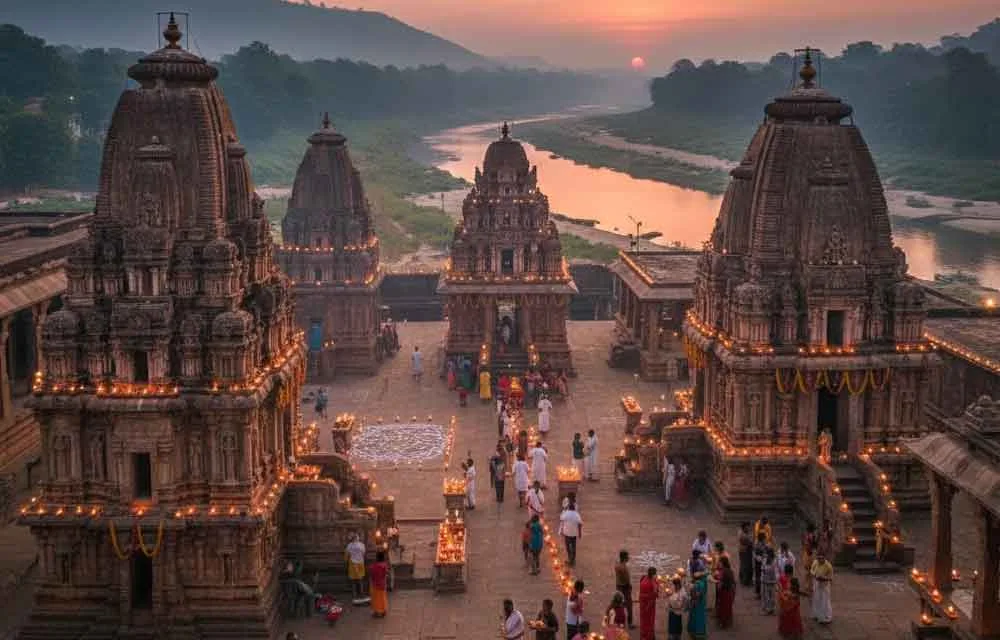
Karthika Deepam on Amla (Usiri) 2026: Dates by Country, Amla Tree Puja, Vidhi and Mantras
How to light Karthika lamps under the amla (usiri) tree in 2026: Akshaya Navami on 18 November, vana bhojanalu, Tulasi Vivah and Karthika Pournami dates for India, the USA, UK and Australia, with samagri, vidhi and health notes.

Quick answer: In Karthika Masam, families light lamps under or beside the amla (usiri, Indian gooseberry) tree and often share a meal there (vana bhojanam). The key dates in 2026 are Akshaya (Amla) Navami on Wednesday 18 November, Tulasi Vivah / Ksheerabdi Dwadashi on Saturday 21 November and Karthika Pournami on Tuesday 24 November. Karthika Masam runs from Tuesday 10 November to Tuesday 8 December in the Telugu and Kannada (amanta) calendar, and from 27 October to 24 November in North India (purnimanta).
Last updated: 30 October 2026
This guide explains why the amla tree is worshipped in Karthika, the dates by country, a simple vidhi and samagri list, and how to keep the custom abroad safely. It replaces our 2025 version. One correction: Amalaki Ekadashi, which is also associated with the amla tree, falls in the spring month of Phalguna, not in Karthika. The Karthika amla observances are Akshaya Navami, vana bhojanalu and the lamp offering described here.
Karthika amla observances 2026: dates by country
India's dates are from Drik Panchang. The columns for other countries follow the HinduTone panchang calculator, which matched Drik on every tithi we checked. Your local temple's calendar comes first.
| Observance | India | USA, Canada, UK, Brazil, Europe, UAE | Australia, Singapore, Malaysia |
|---|---|---|---|
| Karthika Masam begins (amanta) | Tue 10 Nov | Mon 9 Nov in USA, Canada, UK, Brazil; Tue 10 Nov in UAE and Europe | Tue 10 Nov |
| Akshaya (Amla) Navami | Wed 18 Nov | Wed 18 Nov | Thu 19 Nov |
| Devutthana (Prabodhini) Ekadashi | Fri 20 Nov (Smarta); Sat 21 Nov (Vaishnava) | Fri 20 Nov | Sat 21 Nov |
| Tulasi Vivah / Ksheerabdi Dwadashi | Sat 21 Nov | Sat 21 Nov | Sun 22 Nov |
| Karthika Pournami | Tue 24 Nov | Tue 24 Nov | Tue 24 Nov |
| Karthigai Deepam (Tamil Nadu) | Tue 24 Nov (Drik listing) | Tue 24 Nov | Tue 24 Nov |
Clock changes: the UK and Europe moved to winter time on 25 October and most of North America on 1 November. From November 2026 most of British Columbia, Alberta and Manitoba stay on daylight time. The dates in the table do not depend on the clocks, but your lamp-lighting time should follow your local sunset. See Akshaya Navami 2026 for the purvahna puja window by city.
Why the amla tree in Karthika
In Hindu tradition the amla (Amalaka) tree is sacred to Vishnu, and many families believe that Vishnu and Lakshmi are present in it during Karthika, which is why lamps and meals are offered beneath it. In the Telugu states the tree is called usiri, and in the Tulasi Vivah rite an usiri branch often represents Vishnu as Damodara beside the tulasi. The custom links the two plants of the month, tulasi and amla. These are devotional beliefs, and the practice is simple: offer a lamp, a prayer and a meal in a clean, green place.
Karthika Deepam, the festival of lights on the full moon with Krittika nakshatra, is celebrated especially by Tamil Hindus, and the Telugu Karthika Pournami deepam is its close cousin. The amla lamp is a family custom of the whole month rather than a single-day festival.
Amla tree puja: samagri
| For | Items commonly used |
|---|---|
| Cleaning and bathing | A broom, water, a clean cloth, and a bath before the puja |
| Offering to the tree | Water, haldi, kumkum, flowers, akshata (rice), a garland or cotton thread |
| Lamps | Clay or brass lamps, ghee or sesame oil, cotton wicks, matches, and a tray to keep lamps safe from wind |
| Tulasi | A tulasi plant with water and a lamp beside it |
| Naivedyam | Sweet pongal, jaggery rice, fruit or amla preparations, and a sattvic meal for vana bhojanam |
| Amla for the family | Fresh amla, rinsed and cut, or amla pickle or juice without added colour or preservatives |
Karthika amla deepam: step-by-step vidhi
- Wake before sunrise, bathe and wear clean clothes. Light a lamp at the home shrine.
- Clean the ground around the amla tree. If you do not have a tree, use a picture, a few amla fruits or a branch from the market.
- Pour water at the base of the tree, apply haldi and kumkum, and offer flowers and akshata.
- Light a lamp at the base. Many families light eight lamps, others one, five or eleven, so follow your own custom.
- Offer a short prayer to Vishnu and Shiva: chant Om Namo Narayanaya or Om Namah Shivaya, or read a chapter of the Karthika Puranam.
- Offer naivedyam, then share the meal in the shade (vana bhojanam) if the tree is in a garden or temple ground.
- Light the evening lamp at the tulasi and at the doorway after sunset. On Karthika Pournami, many families light 365 wicks.
For verified texts of the Damodarashtakam and other Karthika prayers, read our Damodarashtakam guide and Karthika Masam mantras. We have not reprinted Sanskrit verses here because only verified texts are published.
Vana bhojanalu: sharing a meal under the amla tree
In Andhra Pradesh and Telangana, vana bhojanalu are community picnics held in Karthika in gardens, temple grounds and farms with an usiri tree. Families cook sattvic food together, offer it to the deity and eat on leaf plates. Many groups hold them on Sundays of the month or on Karthika Pournami. Read our Karthika Vana Bhojanalu 2026 guide for more.
Tulasi Vivah and the usiri branch
On Ksheerabdi Dwadashi (Saturday 21 November 2026 in India, the USA, UK and Europe; Sunday 22 November in Australia and Singapore), the tulasi plant is ceremonially married to Vishnu, who is represented in many Telugu homes by an usiri (amla) branch or fruit placed in a pot beside the tulasi. The bride's side is dressed with a saree and flowers, a lamp is lit, and the evening ends with sweets. This is the day when Karthika's two sacred plants are worshipped together. Read the full vidhi in our Ksheerabdi Dwadasi guide.
Amla in the Karthika kitchen
Amla is eaten during the month in many forms: fresh with a pinch of rock salt, as juice, as a murabba (sweet preserve) or as pickle. Many families add a piece of amla to the naivedyam on Navami. Wash the fruit well, cut it into thin slices and remove the seed. If you have a medical condition such as diabetes or a bleeding disorder, or take regular medicines, ask your doctor before adding large amounts of amla to your diet. Moderate amounts as part of a normal meal are the usual practice.
Keeping the custom abroad
- Amla is not hardy in most cold climates. Buy fresh or frozen amla from an Indian grocery, or use a picture of the tree, and place a lamp beside the tulasi plant.
- Never light an open flame under real trees or on dry grass in a public park. Many cities ban open flames; use a lamp in a tray on bare ground or a steel plate, or use LED diyas.
- Keep children and pets away from lamps, and keep a water bottle nearby.
- Check park rules before holding a vana bhojanam. Some parks need a permit for group picnics.
- If your temple holds a vana bhojanam, join it. Ask for dates, since they vary by temple.
- Light the lamp at your local sunset, not at the time printed for India.
Fasting and health notes
Fasting is optional and personal. A common Karthika observance is a light or one-meal day on Akshaya Navami, Ekadashi and Karthika Pournami. If you are pregnant or nursing, elderly, a child, diabetic, have blood pressure problems or take regular medicines, speak to your doctor first. Amla is a good source of vitamin C and is generally eaten fresh, as juice or as pickle, but pickles are salty, and amla can interact with some medicines or conditions. Ask your doctor if you take blood thinners or diabetes medicine. A lamp, a prayer and a simple sattvic meal are a complete observance.
Do and don't in Karthika
- Do bathe early, light a lamp daily, read a little of the Karthika Puranam and give lamps or food to someone in need.
- Do keep to a vegetarian diet without onion and garlic if it is your family custom.
- Don't treat the number of lamps as a rule; customs differ by family.
- Don't break branches or pick fruit from public trees without permission.
- Don't promise or expect results. The practice is devotion, not a guarantee.
Frequently asked questions
What is Karthika deepam on the amla tree?
It is the custom of lighting lamps and offering prayers under or beside the amla (usiri) tree in Karthika Masam, often with a shared meal. It is a family and community custom of the Telugu states, practised by many Hindus in North India and abroad.
When is Amla Navami (Akshaya Navami) in 2026?
Akshaya Navami is on Wednesday 18 November 2026 in India, and also in the USA, Canada, the UK and Europe. In Australia, Singapore and Malaysia it falls on Thursday 19 November. See our Akshaya Navami 2026 guide for the puja window by city.
How many lamps should I light under the amla tree?
There is no single rule. Many families light eight lamps around the tree, and others light one, five or eleven. On Karthika Pournami many families light 365 wicks. Follow your own family or temple custom.
Is Amalaki Ekadashi in Karthika?
No. Amalaki Ekadashi falls in the spring month of Phalguna. The amla observances of Karthika are Akshaya Navami, vana bhojanalu and the Tulasi Vivah rite, which uses an usiri branch.
What if I cannot find an amla tree where I live?
Use fresh or frozen amla fruits, a picture of the tree or a branch from an Indian grocery. Place the lamp beside the tulasi plant and offer prayers. Intention matters more than the tree.
Is it safe to light lamps outdoors under trees?
Use caution. Do not light open flames under trees or on dry grass, and check local park rules. Place lamps in a tray or on bare ground, keep water nearby, and supervise children. LED diyas are an acceptable alternative.
Can I fast on Akshaya Navami?
Fasting is optional. Many people eat only one simple meal, including amla, after the puja. People who are pregnant, elderly, diabetic or on regular medicines should check with their doctor first.
Editor's note
Editor's note (30 October 2026): We rewrote this guide on 30 October 2026. It was a 2025 article. Changes: 2026 dates by country from Drik Panchang and our calculator, a correction that Amalaki Ekadashi falls in Phalguna, not Karthika, a samagri table, a step-by-step vidhi, fire-safety and health notes for people abroad, and seven FAQs. We removed Sanskrit verses and claims we could not source, a pest-control claim about lamps and promised benefits.
Related guides
Share this with family and friends
Send it on WhatsApp, post it, or copy the link.
More from Karthika Masam 2026
- Kartika Amavasya: Significance, Importance & Must-Perform Rituals for Spiritual Blessings
- Karthika Masam Monday Rituals: Complete Guide for Hindus in USA, Canada, UK & Australia
- Karthika Masam Sunday Rituals: Sacred Sun Worship Traditions and Mantras
- Celebrating Kartika Vana Bhojanalu: A Sacred Journey of Devotion Among Hindus in the USA
- Exploring Different Types of Deepams in Karthika Masam: Spiritual Benefits and Significance
You might also like
Karthika Amavasya for Hindus in the USA
Karthika Amavasya: Complete Guide to Rituals, Significance, and Puja Vidhi

Karthika Masam Monday Rituals: Complete State-wise Guide for India