Karthika Pournami: The Festival of Divine Light and Liberation
Introduction: The Sacred Night of a Thousand Lamps Karthika Pournami, also known as Kartik Purnima, stands as one of the most luminous and spiritually…
Introduction: The Sacred Night of a Thousand Lamps Karthika Pournami, also known as Kartik Purnima, stands as one of the most luminous and spiritually…
Introduction: The Sacred Night of a Thousand Lamps
Karthika Pournami, also known as Kartik Purnima, stands as one of the most luminous and spiritually significant festivals in the Hindu calendar. Celebrated on the full moon day (Pournami) in the Hindu month of Karthika (October-November), this sacred occasion transforms homes, temples, and riverbanks into a breathtaking tapestry of flickering diyas and glowing lamps. More than just a visual spectacle, Karthika Pournami embodies profound spiritual truths about the eternal victory of light over darkness and knowledge over ignorance.
The Karthika Pournami significance extends far beyond the ritualistic lighting of lamps. It represents a cosmic celebration that unites devotees of Lord Shiva, Lord Vishnu, and Lord Kartikeya in a shared reverence for divine illumination. As millions of earthen lamps illuminate the night, they mirror the awakening of consciousness within the human soul, making this Hindu festival of lights a powerful catalyst for spiritual transformation.
The Spiritual Significance of Karthika Pournami
A Trinity of Divine Blessings
The spiritual depth of Karthika Pournami lies in its unique connection with multiple divine aspects of Hindu theology. This sacred day is particularly auspicious for three primary reasons:
Lord Shiva's Cosmic Dance: According to ancient scriptures, Karthika Pournami marks the day when Lord Shiva manifested as Karthika Deepam—an infinite column of light—to settle a celestial dispute between Brahma and Vishnu about cosmic supremacy. This manifestation demonstrated that the divine transcends all forms and limitations, appearing as pure, boundless light.
Lord Vishnu's Matsya Avatar: Devotees also believe that Lord Vishnu took his first avatar as Matsya (the fish) on this auspicious day, establishing Karthika Pournami as a day of divine intervention and protection. The Matsya avatar saved the Vedas and humanity from the great deluge, symbolizing the preservation of dharma and sacred knowledge.
Lord Kartikeya's Victory: This full moon day celebrates the birth of Lord Kartikeya (also called Muruga or Skanda), the warrior deity who represents courage, wisdom, and the destruction of evil forces. His emergence signifies the triumph of righteousness over demonic forces.
The Karthika Deepam Meaning: Light as Divine Consciousness
The Karthika Deepam meaning goes deeper than the physical act of lighting lamps. In Hindu philosophy, light symbolizes consciousness, awareness, and the eternal atman (soul). When devotees light diyas on Karthika Pournami, they perform a symbolic act with multiple layers of significance:
- Dispelling Internal Darkness: Each lamp represents the removal of ignorance, delusion, and ego from one's inner consciousness.
- Invoking Divine Presence: Light attracts divine energies and creates a sacred atmosphere conducive to spiritual experiences.
- Expressing Gratitude: Lighting lamps serves as an offering of thanks to the divine forces that sustain life and guide humanity toward liberation.
- Creating Positive Energy: The collective illumination generates powerful positive vibrations that purify the environment and elevate consciousness.
Karthika Pournami and Lord Shiva: The Festival of Eternal Light
The Legend of Karthika Deepam at Tiruvannamalai
The connection between Karthika Pournami and Lord Shiva finds its most dramatic expression in the Karthika Deepam festival celebrated at Tiruvannamalai in Tamil Nadu. According to sacred texts, when Brahma and Vishnu argued about who was supreme, Lord Shiva appeared as an infinite pillar of fire—the Jyotirlinga—stretching endlessly into the cosmos.
Unable to find either the beginning or end of this blazing column, both deities acknowledged Shiva's transcendental nature. The Arunachala hill at Tiruvannamalai is considered the physical manifestation of this cosmic flame, and on Karthika Pournami, a massive lamp is lit atop the hill, visible for miles around.
Girivalam: The Sacred Circumambulation
Devotees perform Girivalam, a 14-kilometer barefoot circumambulation of Arunachala hill, on Karthika Pournami. This practice is believed to:
- Burn away accumulated karmas
- Grant moksha (liberation) to sincere practitioners
- Fulfill heartfelt desires and prayers
- Create a direct connection with Shiva's cosmic energy
The Karthika Deepam meaning is thus inseparable from the concept of Shiva as eternal consciousness—the unchanging awareness that illuminates all existence.
Lord Vishnu and Karthika Pournami: The Preserver's Grace
While Karthika Pournami is predominantly associated with Lord Shiva in South India, devotees of Lord Vishnu also consider this day supremely auspicious. Several significant events in Vaishnava tradition are connected with this full moon:
Tulsi Vivah and Divine Union
In many regions, Karthika Pournami coincides with or closely follows Tulsi Vivah—the ceremonial marriage of the sacred Tulsi plant to Lord Vishnu (or his form as Shaligram). This ritual marks the beginning of the Hindu wedding season and represents:
- The sacred union of devotion (represented by Tulsi) with the divine
- The importance of plant life in spiritual practice
- The transition from the monsoon season to winter
Damodar Month and Deep Daan
The entire month of Karthika is known as Damodar month in Vaishnava tradition, named after Lord Krishna's childhood form as Damodar (one who is bound by a rope around the waist). During this month, devotees practice:
- Deep Daan: The offering of lamps to the deity, rivers, and sacred places
- Mangala Arati: Offering lamps to Krishna before dawn
- Scriptural Study: Reading texts like Bhagavad Gita and Srimad Bhagavatam
The practice of lighting lamps during Karthika month, culminating on Karthika Pournami, is considered especially meritorious and capable of washing away numerous sins.
How Karthika Pournami Symbolizes Victory of Light Over Ignorance
The Philosophical Foundations
The central theme of this Hindu festival of lights rests on one of Hinduism's most fundamental philosophical concepts: the interplay between light and darkness, knowledge and ignorance. In Vedantic philosophy:
Avidya (Ignorance) is considered the root cause of all suffering. It prevents individuals from recognizing their true divine nature and keeps them bound to the cycle of birth and death.
Jnana (Knowledge) represents the liberating wisdom that dispels the darkness of ignorance, revealing the eternal, blissful nature of the Self.
The Lamp as Spiritual Metaphor
When a devotee lights a lamp on Karthika Pournami, they engage in a powerful symbolic act:
- The Oil or Ghee: Represents accumulated karmas and vasanas (mental impressions)
- The Wick: Symbolizes the ego or individual self
- The Flame: Represents pure consciousness or divine awareness
- The Light Produced: Signifies wisdom that illuminates reality
As the oil is consumed to produce light, so too must the practitioner's karmas be burned away through spiritual practice to produce the light of self-realization.
Social Dimensions: Victory Over Social Darkness
The Karthika Pournami significance extends beyond individual spiritual progress to encompass social transformation. The collective lighting of lamps represents:
- Unity in Diversity: People from all backgrounds participate in illumination
- Community Harmony: Shared rituals strengthen social bonds
- Environmental Consciousness: Traditional clay lamps and natural oils reflect ecological awareness
- Cultural Preservation: Ancient traditions are passed to new generations
Sacred Rituals and Practices on Karthika Pournami
Early Morning Rituals
Devout practitioners begin Karthika Pournami before dawn with:
Brahma Muhurta Awakening: Rising during the auspicious pre-dawn hours (approximately 4:00-5:30 AM)
Holy Bath: Taking a purifying bath, ideally in sacred rivers like the Ganges, Yamuna, Godavari, or Krishna. Where this isn't possible, adding sacred herbs or Ganga water to bathing water serves the same purpose.
Oil Lamp Offering: Lighting the first lamp of the day to invoke divine blessings
Lighting the Sacred Lamps
The central ritual of this Hindu festival of lights involves the lighting of lamps in specific locations:
Inside Homes: Lamps are placed in every room, especially in the prayer area, to invite divine presence
Outside Homes: Diyas line doorways, windows, balconies, and compounds to spread light into the community
At Temples: Massive numbers of lamps create spectacular displays at Shiva, Vishnu, and Kartikeya temples
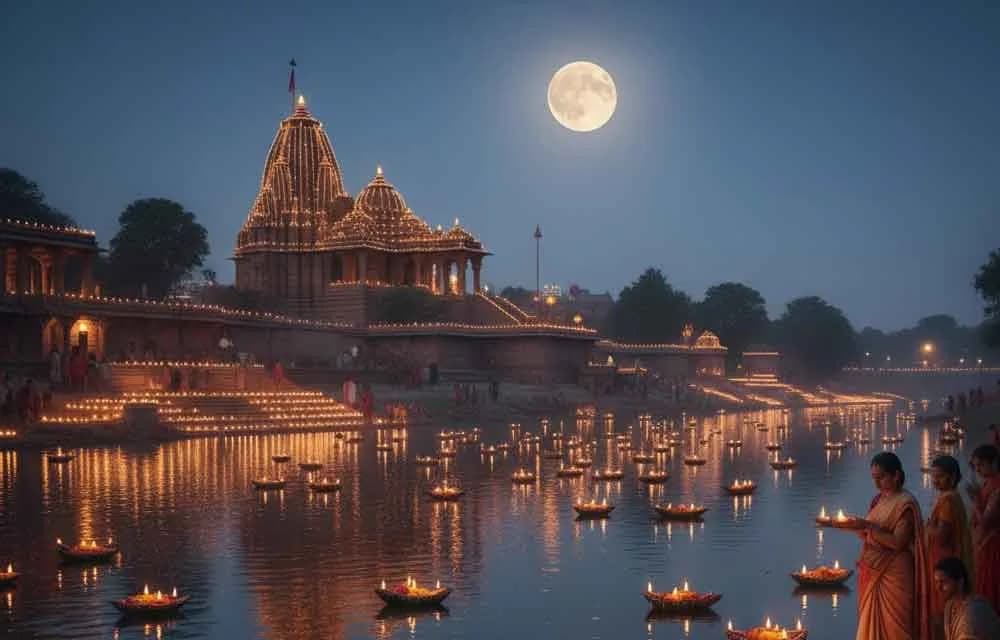
On Riverbanks: Floating lamps are set upon rivers, creating mesmerizing streams of light
At Sacred Places: Hilltops, particularly Arunachala, are illuminated with enormous lamps
Special Prayers and Mantras
Devotees recite specific prayers to maximize the spiritual benefits of Karthika Pournami:
Shiva Mantras:
- Om Namah Shivaya (the five-syllable mantra)
- Rudram and Chamakam recitations
- Karthika Deepam stotram
Vishnu Mantras:
- Damodarashtakam (eight verses glorifying Krishna as Damodar)
- Vishnu Sahasranama (thousand names of Vishnu)
- Om Namo Narayanaya
Kartikeya Mantras:
- Om Saravana Bhava
- Skanda Shashthi Kavacham
Fasting and Dietary Observances
Many devotees observe various forms of fasting on Karthika Pournami:
- Complete Fast: Abstaining from all food and water until moonrise
- Phalahar: Consuming only fruits, milk, and nuts
- Ekadashi-style Fast: Avoiding grains and beans
- Sattvic Diet: Eating only pure vegetarian food prepared without onion and garlic
Charity and Service
The Karthika Pournami significance is enhanced through acts of generosity:
- Anna Daan: Feeding the poor and hungry
- Vastra Daan: Donating clothing
- Go Daan: Supporting cow welfare
- Deep Daan: Providing lamps and oil to temples and those who cannot afford them
Regional Celebrations Across India
Tamil Nadu: Karthikai Deepam
In Tamil Nadu, particularly at Tiruvannamalai, Karthika Pournami reaches spectacular heights. The Annamalaiyar Temple celebrates with a ten-day festival culminating in the lighting of the massive Karthikai Deepam atop Arunachala hill. Hundreds of thousands of devotees gather to witness this event, which requires hundreds of liters of ghee and enormous wicks.
Andhra Pradesh and Telangana: Karthika Masam
In these states, the entire Karthika month is celebrated with daily lamp-lighting rituals. On Karthika Pournami, people wake before dawn for holy baths in rivers like Krishna and Godavari. Evening celebrations include lighting rows of lamps and performing special pujas.
Kerala: Thrikkarthika
Kerala celebrates this festival with equal fervor, lighting traditional nilavilakku (standing lamps) in homes and temples. The state's unique tradition involves creating elaborate light displays and decorative patterns with lamps.
North India: Kartik Purnima
In North India, the day is associated with several significant events. At Pushkar in Rajasthan, a famous fair coincides with Karthika Pournami, where devotees take holy dips in Pushkar Lake. In Varanasi, the ghats are illuminated with thousands of diyas, creating an ethereal atmosphere.
Odisha: Boita Bandana
Odisha has a unique tradition called Boita Bandana, where people float miniature boats made of banana stems, cork, or paper in rivers and ponds to commemorate the state's ancient maritime heritage.
Modern Relevance of Karthika Pournami
Environmental Consciousness
Traditional Karthika Pournami celebrations used:
- Clay diyas that are biodegradable
- Natural oils (sesame, coconut, or cow's ghee)
- Cotton wicks without chemical treatment
Modern celebrations increasingly return to these eco-friendly practices, rejecting electric lights and chemical-laden products that harm the environment.
Mental Health and Well-being
The Karthika Deepam meaning resonates strongly with modern understanding of mental health. The festival's emphasis on:
- Removing internal darkness (depression, anxiety)
- Illuminating consciousness (mindfulness, awareness)
- Community connection (social support)
- Spiritual practice (meditation, prayer)
These elements align perfectly with contemporary approaches to psychological well-being.
Cultural Identity in Diaspora
For Hindus living outside India, Karthika Pournami serves as a powerful connection to cultural roots. Communities organize collective celebrations, teach children about traditions, and maintain spiritual practices across generations and geographical boundaries.
Spiritual Benefits of Observing Karthika Pournami
According to sacred texts and spiritual teachers, sincere observance of Karthika Pournami grants numerous benefits:
Material Benefits
- Removal of financial obstacles
- Success in endeavors
- Protection from negative forces
- Family harmony and prosperity
Spiritual Benefits
- Purification of karmas
- Advancement on the spiritual path
- Increased devotion and detachment
- Direct experience of divine presence
- Progress toward moksha (liberation)
Astrological Significance
The full moon's powerful energy on Karthika Pournami is believed to:
- Amplify the effects of spiritual practices
- Clear planetary afflictions
- Enhance intuitive abilities
- Balance emotional energies
Preparing for Karthika Pournami: A Practical Guide
One Week Before
- Clean and purify your home thoroughly
- Repair or purchase new lamps
- Procure pure oil or ghee and cotton wicks
- Plan your fasting and prayer schedule
- Study relevant scriptures and mantras
One Day Before
- Complete any pending work to remain free on the festival day
- Prepare sattvic food if not observing complete fast
- Arrange flowers and puja materials
- Set intentions for your spiritual practice
On Karthika Pournami
- Wake before sunrise (ideally during Brahma Muhurta)
- Take a purifying bath with holy water or herbs
- Perform morning prayers and meditation
- Light the first lamp with devotion
- Visit temple if possible
- Observe your chosen form of fasting
- Engage in scriptural study or spiritual discourse
- Perform acts of charity
- Light lamps in the evening at sunset
- Participate in community celebrations
- Meditate during moonrise
- Offer prayers of gratitude
The Eternal Message of Karthika Pournami
The true essence of this Hindu festival of lights transcends ritualistic observance. Karthika Pournami calls each individual to become a lamp unto themselves—to cultivate inner light that dispels the darkness within and around them.
As Lord Buddha taught (though not specifically about Karthika Pournami), "Be a light unto yourself." This profound wisdom aligns perfectly with the Karthika Deepam meaning. Each person must kindle their own inner flame through:
- Self-inquiry: Understanding one's true nature beyond body and mind
- Compassion: Extending kindness to all beings
- Discipline: Maintaining regular spiritual practices
- Wisdom: Studying sacred texts and learning from realized teachers
- Service: Using one's gifts to uplift others
Conclusion: Becoming the Light
Karthika Pournami significance lies not merely in the spectacular display of physical lamps but in the awakening of the eternal light of consciousness within each seeker. When we understand that the lamp we light outside mirrors the divine spark within, the festival transforms from external ritual to internal revolution.
This sacred day reminds us that darkness—whether in the form of ignorance, suffering, injustice, or confusion—has no independent existence. It is merely the absence of light. By cultivating knowledge, compassion, awareness, and devotion, we naturally dispel darkness without directly fighting it.
As millions of lamps flicker across India and the world on Karthika Pournami, they collectively proclaim an eternal truth: light will always triumph over darkness, knowledge will always conquer ignorance, and the divine will always prevail over delusion. May this Hindu festival of lights inspire us to become living lamps—illuminating our own path while lighting the way for others on their journey toward liberation.
Sarve Bhavantu Sukhinah, Sarve Santu Niraamayaah May all beings be happy, may all beings be free from disease.
Frequently Asked Questions
When is Karthika Pournami?
Karthika Pournami is observed on its traditional tithi in the Hindu lunar calendar; refer to the year's panchang for the exact date in your region.
What is the significance of Karthika Pournami?
Introduction: The Sacred Night of a Thousand Lamps Karthika Pournami, also known as Kartik Purnima, stands as one of the most luminous and spiritually significant festivals in the Hindu calendar. Celebrated on the full moon day (Pournami) in the Hindu month of Karthika (October-November), this sacred occasion transforms homes, temples, and riverbanks into a
How is Karthika Pournami celebrated?
Devotees observe it with puja, fasting or special offerings, visiting temples, chanting mantras, and gathering with family. Customs vary by region and tradition.
What should devotees do on Karthika Pournami?
Take a sacred bath, perform the day's puja and charity (dana), observe any prescribed fast, and chant mantras with sincere devotion.
You might also like
June 2026 Hindu Festival Calendar — Complete Dates, Vrat & Puja Guide for NRIs
Karthika Masam 2026: Dates, Rituals, Vrat, Festivals & North vs South India Guide
Shani Deva Temples Worldwide & Must-Performed Rituals — Complete Devotee's Guide