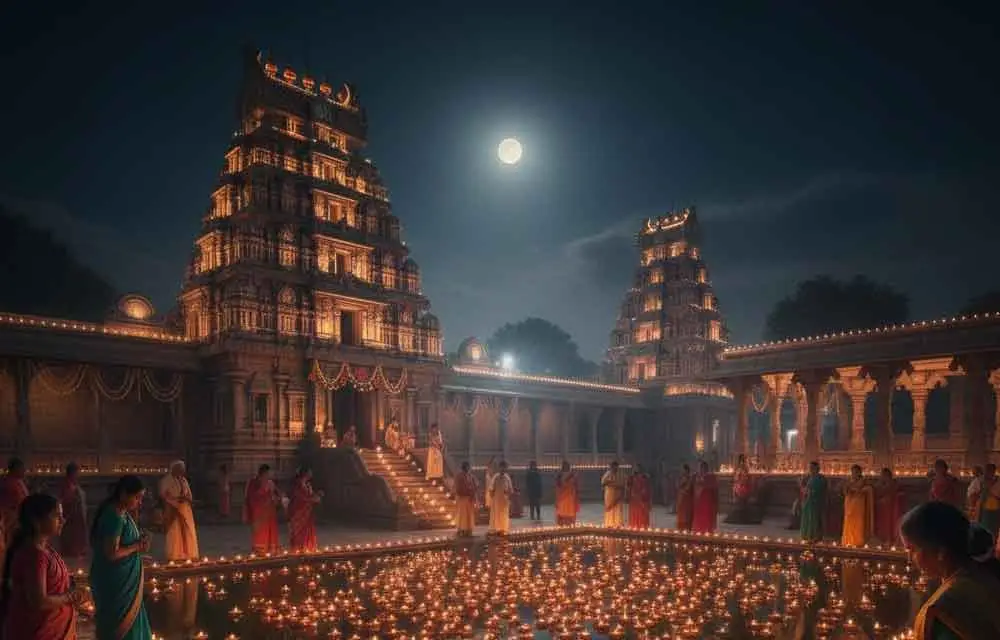
Kartika Masam 2026 Monday Rituals for Hindus in the USA
Karthika Masam 2026 runs 10 Nov to 8 Dec, with Karthika Somavaram Mondays on 16, 23 and 30 November and 7 December. A practical guide to Monday Shiva rituals for Hindus in the USA.
Karthika Masam 2026 runs 10 Nov to 8 Dec, with Karthika Somavaram Mondays on 16, 23 and 30 November and 7 December. A practical guide to Monday Shiva rituals for Hindus in the USA.
Quick answer: Karthika Masam 2026 runs from Tuesday 10 November to Tuesday 8 December 2026 in the Telugu and Kannada (amanta) calendar. The four Karthika Somavaram Mondays are 16 November, 23 November, 30 November and 7 December. Karthika Pournami falls on Tuesday 24 November and Karthika Amavasya on 8 December. Because 2026 has an extra lunar month, the whole season is about three weeks later than last year.
Karthika Masam, also called Kartik Maas, is one of the holiest months of the Hindu year. It is the month of lamps, dawn baths and Vishnu bhakti, and its Mondays are especially dear to Lord Shiva. For Hindus across the United States, from New Jersey to the Bay Area, Karthika Somavaram is a chance to keep an old Telugu and South Indian rhythm alive alongside work, school and cold November mornings. This guide covers the dates, the meaning, a step-by-step home Rudrabhishekam, the main mantras and practical tips for observing the Mondays at US temples.
Karthika Masam 2026 key dates for the USA
| Date (2026) | Day | Observance |
|---|---|---|
| Sun 8 Nov | Sunday | Diwali / Lakshmi Puja (Amavasya) |
| Mon 9 Nov | Monday | Govardhan Puja in the USA (Pratipada) |
| Tue 10 Nov | Tuesday | Karthika Masam begins (amanta calendar); Bhai Dooj in the USA |
| Mon 16 Nov | Monday | First Karthika Somavaram |
| Fri 20 Nov | Friday | Devuthani (Uthana) Ekadashi |
| Sat 21 Nov | Saturday | Tulsi Vivah in the USA |
| Mon 23 Nov | Monday | Second Karthika Somavaram |
| Tue 24 Nov | Tuesday | Karthika Pournami / Kartika Purnima / Dev Deepawali |
| Mon 30 Nov | Monday | Third Karthika Somavaram |
| Mon 7 Dec | Monday | Fourth (last) Karthika Somavaram |
| Tue 8 Dec | Tuesday | Karthika Amavasya; month ends |
A note on the start date: in US time zones the Pratipada after Diwali falls on Monday 9 November (the day American panchangs list Govardhan Puja), so some US temples may count Karthika Masam from that day. Follow the calendar your family temple publishes. North Indian families who use the purnimanta calendar observe Kartik from late October up to Kartika Purnima on 24 November; the Mondays in that window are also widely kept as Shiva days.
Why Karthika Mondays matter
Karthika takes its name from the Krittika nakshatra, near which the full moon of the month falls. The Skanda Purana and the Karthika Puranam describe it as the month in which even small acts of devotion, a lamp lit at dusk, a bath before sunrise, a leaf offered with love, bear great fruit. Vishnu is worshipped as Damodara and Shiva as Someshwara, the lord of the moon, which is why Monday (Somavaram, the moon's day) becomes the high point of each week.
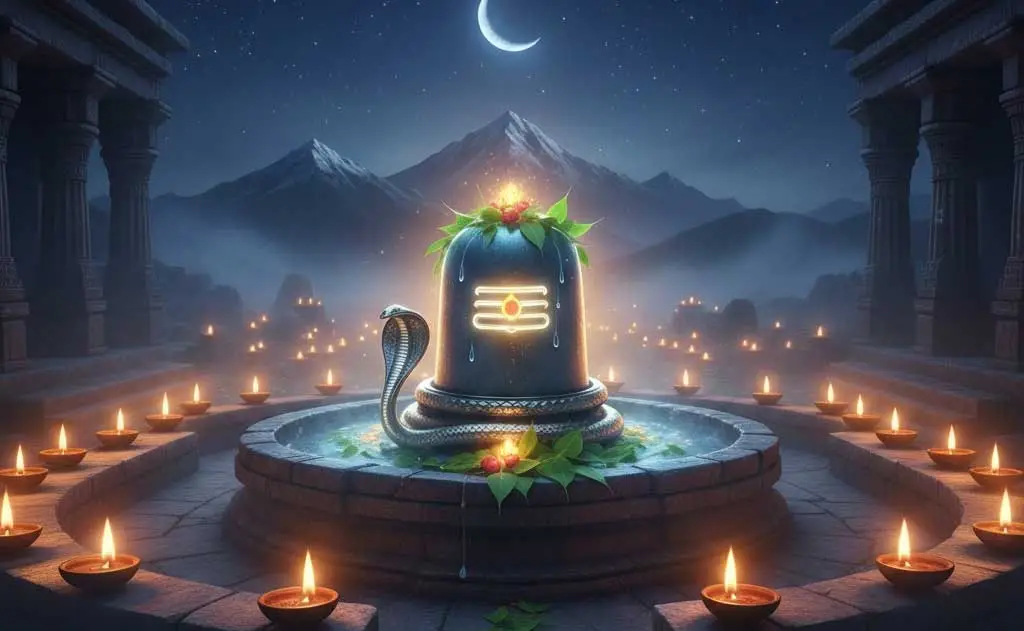
Telugu and Kannada households in particular treat Karthika Somavaram as a vrat: a dawn bath, abhishekam to the Shiva lingam, a day-long fast broken after the evening lamp, and the chanting of Sri Rudram or the Panchakshari mantra. Many temples perform Ekadasa Rudrabhishekam, eleven recitations of Sri Rudram with abhishekam, on these Mondays. The Markandeya story, in which the young devotee clings to the lingam and Shiva defeats Yama himself, is often retold on these days as a reminder of Shiva's protection.
- Spiritual: purification, steadiness of mind and surrender of ego.
- Family: prayers for the health and long life of family members, and for harmony at home.
- Community: temple gatherings that connect children born in the USA with their grandparents' traditions.
Daily Karthika practices that build up to Monday
The Monday vrat sits inside a month of simple daily habits. Even if you cannot do all of them, picking two or three keeps the month alive at home.
- Karthika snanam: a bath before sunrise. In a US winter, warm water with a few tulsi leaves is perfectly acceptable; chant "Om Namah Shivaya" or "Om Namo Narayanaya" while bathing.
- Deepa danam: light a ghee or sesame-oil lamp at dusk near the tulsi plant, the home altar or a window. In apartments with strict fire rules, use a small enclosed lamp or an LED diya and never leave a flame unattended.
- Sattvic food: many families avoid onion, garlic and non-vegetarian food for the whole month.
- Scripture: read a chapter of the Karthika Puranam, the Damodarashtakam or Bhagavad Gita chapter 12 each day.
- Charity: donating food, warm clothing or a lamp in the temple is part of the month's spirit. US temples and community kitchens usually welcome volunteers in November.
- Vanabhojanam: a shared vegetarian meal under trees, often organised by Telugu associations in a local park on a weekend in Karthika. Check with your association for 2026 plans.
Step-by-step Karthika Somavaram puja at home
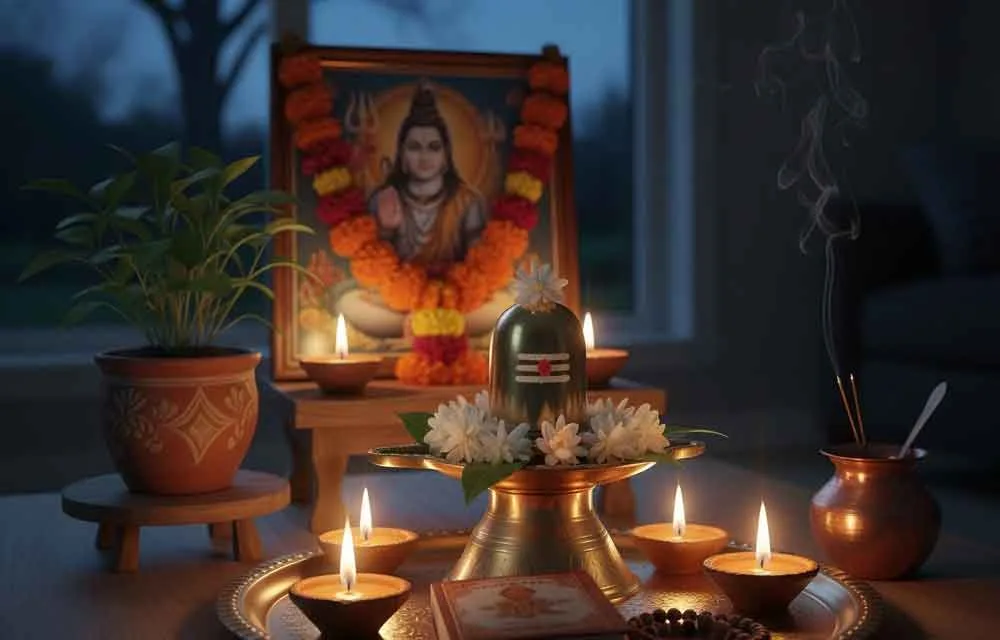
This sequence works in a typical American home. Gather everything the evening before: a Shiva lingam (brass, stone or sphatika) or a picture, a plate to hold the lingam, water, milk, curd, ghee, honey and sugar (or ready panchamrita), bilva leaves from an Indian grocery (tulsi if bilva is unavailable), flowers, sandal paste, vibhuti, incense, camphor, a ghee lamp and a rudraksha or tulsi mala.
Early morning: bath and sankalpa
- Bathe before sunrise and wear clean clothes. Sit facing east on a mat.
- Light one lamp and take a small amount of water in your right palm for the sankalpa: "Mama upatta durita kshaya dvara Sri Parameshwara preetyartham Karthika Somavara vratam aham karishye" (I undertake this Karthika Monday vow for the pleasure of the Lord and the removal of my faults).
- Begin with Ganesha: chant "Om Gam Ganapataye Namah" 11 or 21 times and offer a flower or fruit.
Abhishekam
- Wash the lingam with plain water while chanting "Om Namah Shivaya".
- Pour milk, then curd, ghee, honey and sugar water, rinsing with water between each. If you know Sri Rudram, chant the Namakam during the pours; otherwise repeat the Panchakshari or the Maha Mrityunjaya mantra.
- Finish with a final water rinse, pat the lingam dry and apply sandal paste and vibhuti.
- Collect the abhishekam liquids in a clean bowl; they are shared as prasadam later.
Archana and offerings
- Offer bilva leaves one at a time (11, 21 or 108), saying "Om Namah Shivaya" with each leaf. Place the leaf with the smooth side touching the lingam.
- Offer flowers, incense and a lamp, then naivedyam: fruit, milk or a simple sweet such as payasam.
- Read or play Lingashtakam, Shiva Panchakshara Stotram or Shiva Mahimna Stotram.
Evening: lamp, aarti and breaking the fast
- After sunset, light a lamp with several wicks (many families use 11) before the lingam or at the doorstep.
- Perform camphor aarti with a bell and conclude with "Kayena vacha manasendriyair va..." offering all actions to the Lord.
- Break the fast with the abhishekam prasadam and fruit, followed by a light sattvic meal. Traditionally the fast ends after the evening lamp or when the stars appear.
Short version for a workday: a quick bath, a water-and-milk abhishekam to a small lingam, 108 repetitions of Om Namah Shivaya and an evening lamp still honours the day. Children can do a three-pour abhishekam and listen to the Markandeya story; elders can do the whole puja seated.
Mantras for Karthika Monday puja
Panchakshari mantra
Om Namah Shivaya (ॐ नमः शिवाय), "I bow to Shiva." The heart of every Shiva puja. Chant 108 times on a mala, or with each abhishekam pour.
Maha Mrityunjaya mantra
Om Tryambakam Yajamahe Sugandhim Pushtivardhanam, Urvarukamiva Bandhanan Mrityor Mukshiya Maamritat. "We worship the three-eyed Lord, fragrant and nourishing; as a ripe cucumber is freed from its vine, may He free us from death, not from immortality." Chanted for health, protection and long life, 11, 21 or 108 times.
Shiva Gayatri
Om Tatpurushaya Vidmahe Mahadevaya Dhimahi, Tanno Rudrah Prachodayat. "May we know the Supreme Person, meditate on the Great God; may Rudra inspire our understanding." Good for daily recitation through the month, 11 or 27 times.
Shiva and Vishnu together
Om Namo Narayanaya, Om Namah Shivaya. Karthika honours both Vishnu and Shiva. Families with Vaishnava and Shaiva traditions often close the Monday puja with both names, a reminder that the month belongs to both.
Chant slowly, with attention to meaning. A recording from a trusted temple is a fine way to learn pronunciation, and children pick up the Panchakshari quickly if the whole family chants together.
Observing Karthika Mondays at US temples
Many American Hindu temples hold special Shiva abhishekams, Rudra homams and evening deepotsavams during Karthika, especially on Mondays and on Karthika Pournami. Schedules, sponsorship options and timings change each year, so check your temple's 2026 calendar or newsletter before you go. Temples whose Shiva shrines and Karthika observances have long drawn devotees include:
- New York / New Jersey: Sri Maha Vallabha Ganapati Devasthanam (the Ganesh Temple) in Flushing, Queens, and BAPS Shri Swaminarayan Mandir in Robbinsville, NJ.
- Chicago: the Hindu Temple of Greater Chicago in Lemont and Sri Venkateswara Swami (Balaji) Temple in Aurora.
- Houston: Sri Meenakshi Temple in Pearland, Sri Ashtalakshmi Temple and BAPS Shri Swaminarayan Mandir in Stafford.
- Dallas-Fort Worth: Karya Siddhi Hanuman Temple in Frisco.
- Atlanta: the Hindu Temple of Atlanta in Riverdale.
- Los Angeles: Malibu Hindu Temple in Calabasas.
- Boston: Sri Lakshmi Temple in Ashland, MA.
- San Francisco Bay Area: Shiva-Vishnu Temple in Livermore.
- Detroit: Bharatiya Temple in Troy, MI.
- Seattle: Sri Ganesha Temple in the Kent area.
Temple tips: arrive early on Monday evenings, when local devotees come after work; bring your own bilva leaves only if the temple allows outside offerings; dress modestly and in layers for November weather; and ask about volunteering for annadanam, which is a meaningful Karthika seva.
Karthika Pournami and the end of the month
Karthika Pournami on Tuesday 24 November is the climax of the lamp month. Families light rows of diyas at home, many temples hold Jwala Thoranam or large deepotsavams, and some devotees float a lamp in a bowl of water or a pond. In North India the same full moon is celebrated as Dev Deepawali. The month closes with Karthika Amavasya on 8 December; the following day, many Telugu families float lamps for Poli Swargam as a farewell to the month.
Frequently asked questions
When are the Karthika Somavaram Mondays in 2026?
Karthika Masam 2026 (Telugu/Kannada amanta calendar) runs from 10 November to 8 December. The Mondays that fall inside it are 16 November, 23 November, 30 November and 7 December 2026.
Why is Karthika Masam so late in 2026?
Hindu months follow the moon. 2026 has an extra lunar month (Adhik Maas), so Diwali and Karthika Masam come roughly three weeks later than they did last year.
When is Karthika Pournami 2026 in the USA?
Karthika Pournami (Kartika Purnima) falls on Tuesday 24 November 2026. It is the brightest lamp-lighting day of the month; many families light 365 wicks or a row of diyas that evening.
Can I do Karthika Somavaram puja at home if there is no temple nearby?
Yes. A small Shiva lingam or picture, water and milk for abhishekam, bilva leaves (or tulsi as a substitute), a ghee lamp and sincere chanting of Om Namah Shivaya are enough. The steps in this guide are written for an ordinary US kitchen or apartment.
What should I eat during the Somavaram fast?
Traditional practice is to fast until evening (nakta vratam) and then eat one simple sattvic meal without onion, garlic, meat or eggs. Fruit and milk during the day are acceptable for people who cannot do a full fast; pregnant women, the elderly and anyone on medication should keep it light and consult their doctor.
Editor's note (4 October 2026)
This guide was rewritten for 2026. All dates are taken from Drik Panchang data for the USA and the Telugu/Kannada amanta calendar. Temple programmes, timings and sponsorship details were removed because they change every year; please confirm with your local temple. If your family follows the purnimanta (North Indian) calendar or your temple begins the month on 9 November, follow your own tradition.
Related guides
You might also like
Gita Jayanti 2026 Prasad Recipes — Tulsi-Honoring Sweets, Krishna's Favourites & December 20 Bhog Plate
Shani Deva Temples Worldwide & Must-Performed Rituals — Complete Devotee's Guide
Maha Shivratri 2026 Vrat Recipes — Sabudana Khichdi, Singhada Halwa, Phalahara Foods Complete Fasting Guide