Makara Jyothi 2027: What It Means, How It Differs from Makaravilakku, and How Devotees Behold It at Sabarimala
What is Makara Jyothi, and is it the same as Makaravilakku? A respectful guide to what devotees mean by each, the expected 14 January 2027 date (confirm with the Travancore Devaswom Board), how pilgrims behold the light with devotion, staying safe in large gatherings, and keeping the evening at home abroad.
What is Makara Jyothi, and is it the same as Makaravilakku? A respectful guide to what devotees mean by each, the expected 14 January 2027 date (confirm with the Travancore Devaswom Board), how pilgrims behold the light with devotion, staying safe in large gatherings, and keeping the evening at home abroad.
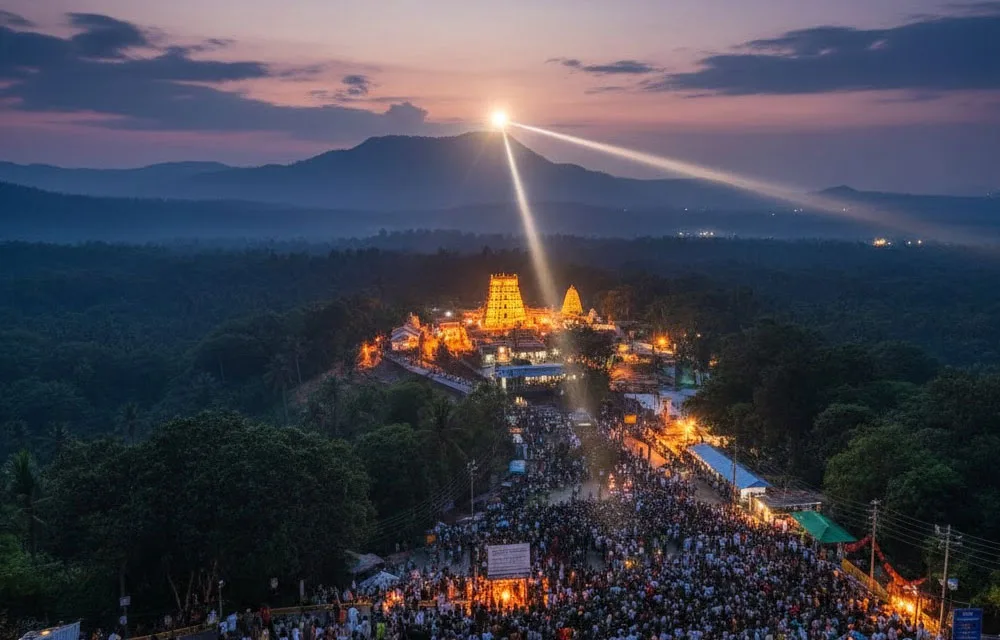
Quick answer: Makara Jyothi is, as many devotees describe it, the star that appears in the sky on the evening of Makara Sankranti and is seen from Sabarimala as a sign of Lord Ayyappa's grace. Makaravilakku is the festival itself and the lamp, or light, devotees behold on the hills that evening. They belong to the same sacred evening but are not the same thing. In 2027 that evening is expected on Thursday 14 January 2027; official dates had not been published when we wrote this, so please confirm with the Travancore Devaswom Board (TDB).
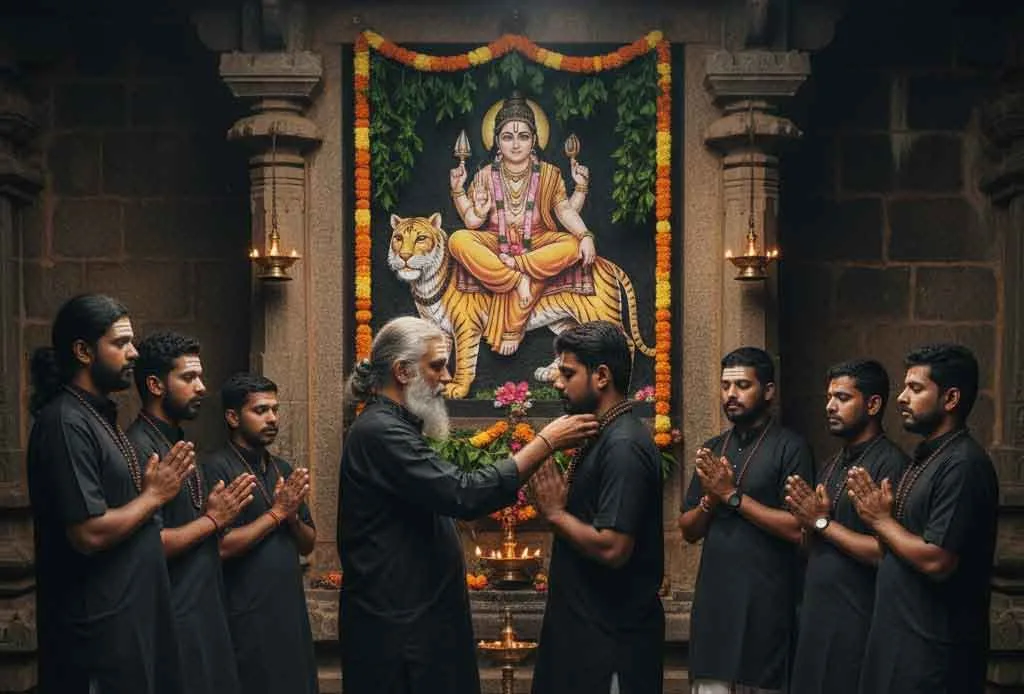
Few moments in Hindu pilgrimage carry the emotion of Makara Sankranti evening at Sabarimala. After weeks of vratham, a long climb with the Irumudi on their heads and hours of waiting, pilgrims turn their eyes to the sky and the hills, and when the light is seen, a single cry of Swamiye Saranam Ayyappa rolls across the forest. This guide explains, carefully and with respect, what devotees mean by Makara Jyothi and Makaravilakku, why the two are often confused, how to behold the evening with devotion and safety, and how to share in it from home.
For the full season, see our Sabarimala 2026-27 season guide, and for the festival's date and traditions, our Makaravilakku 2027 guide.
Makara Jyothi 2027: expected date
Makara Jyothi is associated with the evening of Makara Sankranti, the day of the Makaravilakku festival. For the 2026-27 season the expected dates are below. All are HinduTone calculations from the Malayalam solar calendar; please confirm with the TDB.
| Event | Expected date (confirm with TDB) |
|---|---|
| Temple reopens for Makaravilakku | Wednesday 30 December 2026 |
| Makaravilakku and Makara Jyothi evening (Makara Sankranti) | Thursday 14 January 2027 |
| Season closes | Around Wednesday 20 January 2027 |
We do not give clock times for the evening's rituals or for when the light is seen, and we do not quote crowd figures. Arrangements are made and announced by the TDB and the authorities each year.
What devotees mean by Makara Jyothi
The name is simple: Makara is the zodiac sign the sun enters on Makara Sankranti, and jyothi means light or radiance. As many devotees describe it, Makara Jyothi is a star that rises and is seen in the sky over Sabarimala on that evening, and its appearance is received as the Lord's own blessing on the pilgrims who have completed their vratham.
For the devotee, the meaning lies less in astronomy than in what the light represents. Ayyappa devotees often speak of the evening as the moment when the long inner effort of the Mandalam is answered. A common devotional interpretation, offered by Guru Swamis and elders, is that the outer light reminds the pilgrim of the inner light that the vratham is meant to awaken: the realisation summed up in the Sabarimala teaching that the devotee and the Lord are one. This is an interpretation, and families and teachers express it in their own ways.
What devotees mean by Makaravilakku
Vilakku is the Malayalam word for lamp. Makaravilakku is the name of the great festival held at Sabarimala on Makara Sankranti, when, by tradition, Lord Ayyappa is adorned with the Thiruvabharanam, his sacred ornaments brought in procession from Pandalam. The name is also used for the lamp, or light, that devotees behold on the hills across the valley from the shrine that evening, which pilgrims greet with the sharanam chant.
Read more about the ornaments and their journey in our Thiruvabharanam procession guide.
Makara Jyothi vs Makaravilakku: the difference at a glance
| Makara Jyothi | Makaravilakku | |
|---|---|---|
| Literal meaning | The light (jyothi) of Makara | The lamp (vilakku) of Makaram |
| What devotees refer to | The star seen in the sky on Makara Sankranti evening, as many devotees describe it | The festival on Makara Sankranti, and the lamp or light beheld on the hills that evening |
| Connected traditions | Prayer and sharanam chant on seeing it | Thiruvabharanam adornment of the deity, festival worship |
| Expected 2027 date | Evening of Thursday 14 January 2027 | Thursday 14 January 2027 |
Because both happen on the same evening, and both are moments of light received in devotion, it is natural that people use the names interchangeably, and many news reports do. When speaking with your Guru Swami or reading Sabarimala literature, it helps to know that they are understood as two distinct things belonging to one sacred evening.
Beholding the light with devotion
Pilgrims describe the evening not as a spectacle but as darshan. Some simple ways devotees prepare their minds, as commonly practised:
- Arrive having kept your vratham faithfully. The evening is the fruit of the 41 days, not a separate event.
- Spend the waiting time in quiet chanting of Swamiye Saranam Ayyappa rather than chatter or phone scrolling.
- When the light is seen, join the sharanam chant with folded hands. Many devotees then pray silently for family, for the world and for the strength to carry the vratham's lessons into ordinary life.
- Remember the Lord within the shrine as well: the adorned deity, Neyyabhishekam, and the shrine of Malikappuram Devi near the sannidhanam.
- Afterwards, carry the prasadam home with reverence, and share the experience with those who could not come.
If this is your first pilgrimage, our Kanni Ayyappan and Guru Swami guide explains what to expect, and the Sabarimala 18 steps guide explains the Irumudi rule for the Pathinettam Padi.
Staying safe in large gatherings
Makara Sankranti evening is among the most crowded times at Sabarimala. Devotion and care go together. In general terms:
- Follow every instruction of the police, the TDB and official volunteers. Stay only in permitted viewing areas.
- Never climb trees, rocks, rooftops or slopes for a better view, and do not stand at edges or barricades.
- Stay with your group and fix a meeting point in advance with your Guru Swami. Keep children and elders close and carry a contact card for each person.
- Drink water, carry light snacks permitted by your vratham, and rest when you need to. Many pilgrims have walked a long way that day.
- Do not push or rush when the light is seen or when crowds start to move. Wait calmly; the blessing is not lost by waiting.
- Keep plastic out of the forest and the Pamba river, and follow the authorities' rules on what may be carried.
Book Virtual-Q only through the official TDB channel; the TDB states it is mandatory for all pilgrims.
From abroad: keeping Makara Jyothi evening at home
For Ayyappa devotees in the USA, the UK, Canada, the Gulf, Singapore or Australia, being at Sabarimala on Makara Sankranti is not always possible. Many follow the evening through broadcasts and mark it with a home puja. A simple pattern many families keep:
- On 14 January by your local calendar, bathe in the evening and wear clean clothes, and your mala if you are keeping the vratham.
- Light a lamp before a picture of Lord Ayyappa. Light is the theme of the evening; an electric diya is fine where open flames are not allowed.
- Offer flowers and a simple naivedyam such as payasam.
- Sit quietly and chant Swamiye Saranam Ayyappa 108 times, or recite the Ayyappa 108 names together.
- Close with Harivarasanam, the lullaby sung as the sanctum closes each night.
Many Ayyappa temples abroad hold special worship for Makaravilakku; check your local temple's own announcements. See our guides to Ayyappa temples in the USA, how NRIs keep Ayyappa deeksha abroad and Harivarasanam lyrics and meaning.
If you are flying in from the USA or the Gulf, plan your trip with flexibility around the expected dates, since the TDB's official calendar may differ, and allow time to recover from the journey before the climb.
Frequently asked questions
What is Makara Jyothi?
As many devotees describe it, Makara Jyothi is the star that appears in the sky on Makara Sankranti evening, seen from Sabarimala and greeted as a divine sign of Lord Ayyappa's blessing. The name joins Makara (the month and sign the sun enters that day) and jyothi (light). Devotees receive it with folded hands and the chant of Swamiye Saranam Ayyappa.
When is Makara Jyothi 2027?
Makara Jyothi 2027 is expected on the evening of Thursday 14 January 2027, Makara Sankranti, the day of the Makaravilakku festival at Sabarimala. Official 2026-27 dates had not been published when we wrote this; please confirm with the Travancore Devaswom Board (TDB).
Is Makara Jyothi and Makaravilakku the same?
They are closely connected but not the same. In devotional usage, Makara Jyothi refers to the star seen in the sky that evening, while Makaravilakku refers to the festival itself and the lamp, or light, devotees behold on the hills across from the shrine. In everyday speech and news reports the two names are often mixed.
Where can you see Makara Jyothi from at Sabarimala?
Devotees gather at viewpoints in and around the Sabarimala area that the temple and police authorities designate each year. We do not list viewpoints or timings because arrangements change; follow the instructions of the TDB, police and volunteers on the day, and never climb or stand in unsafe places.
Can I watch Makara Jyothi from abroad?
Many devotees abroad follow the evening through broadcasts and keep a simple puja at home: lighting a lamp, chanting Swamiye Saranam Ayyappa and singing Harivarasanam. Devotion does not depend on distance; many Ayyappa devotees say the light is beheld as much in the heart as by the eyes.
Do I need Virtual-Q to visit Sabarimala for Makara Jyothi?
Yes. The Travancore Devaswom Board states that online booking of Virtual-Q is mandatory for all pilgrims visiting Sabarimala. Book only through the official channel and check the current process with the TDB before travel.
Sources and verification
Dates here are HinduTone's expected dates from the Malayalam solar calendar for Kollavarsham 1202, consistent with our Sabarimala 2026-27 season guide. Descriptions of Makara Jyothi and Makaravilakku reflect how devotees and Sabarimala tradition commonly speak of them. The Travancore Devaswom Board (TDB) and the official Sabarimala website are the authorities for festival dates, arrangements and Virtual-Q. As of 7 October 2026 the TDB homepage stated that online booking of Virtual-Q is mandatory for all pilgrims. Please confirm dates and Virtual-Q with the TDB before travel. Our earlier evergreen article, Makara Jyothi: the divine light of Sabarimala, offers further devotional background.
Editor's note (7 October 2026)
Written on 7 October 2026, before the Travancore Devaswom Board published official 2026-27 dates; the official Sabarimala site was temporarily unavailable when we checked. All dates are expected. This is a devotional guide: it describes Makara Jyothi and Makaravilakku as devotees understand them, and does not set out to prove or question anyone's faith. Customs vary between families and Guru Swamis. We will update this page when official dates are announced.
Related guides
You might also like
Makaravilakku 2027 at Sabarimala: Expected Date (14 January), Thiruvabharanam, Makara Sankranti and How NRIs Observe It
Neyyabhishekam at Sabarimala: Meaning of the Ghee Coconut and How the Ritual Is Done
Sabarimala 18 Steps (Pathinettam Padi): Meaning, the Irumudi Rule and Padi Pooja