
Sabarimala 18 Steps (Pathinettam Padi): Meaning, the Irumudi Rule and Padi Pooja
The Pathinettam Padi, the eighteen sacred steps before Lord Ayyappa's sannidhanam, is the heart of the Sabarimala pilgrimage. Learn why only pilgrims carrying the Irumudi traditionally climb them, the symbolic interpretations devotees give to the eighteen steps, how to climb with reverence, what Padi Pooja is, and how NRI devotees prepare.
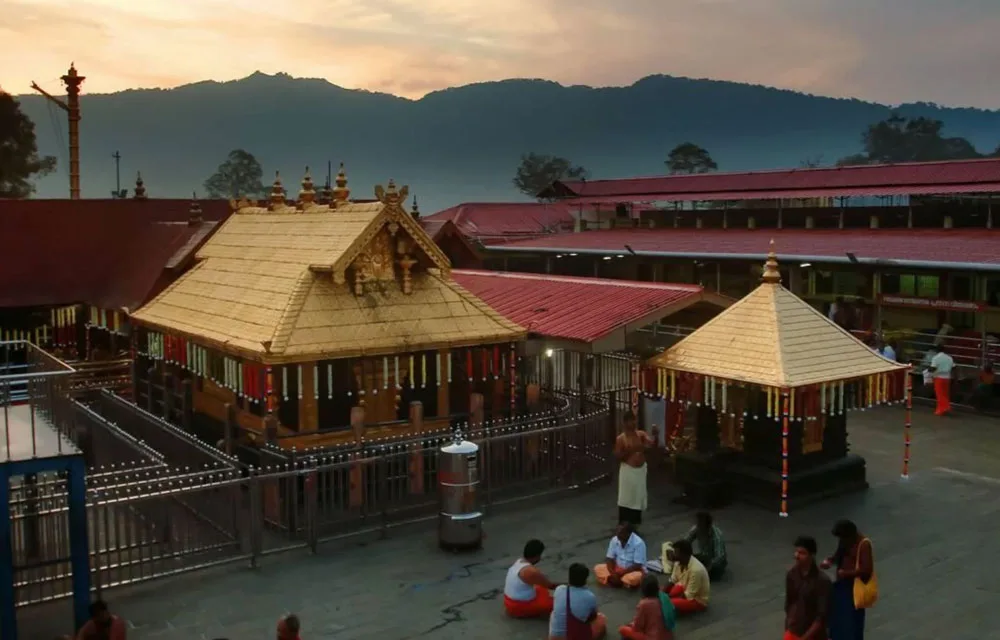
The Pathinettam Padi, the eighteen sacred steps before Lord Ayyappa's sannidhanam, is the heart of the Sabarimala pilgrimage. Learn why only pilgrims carrying the Irumudi traditionally climb them, the symbolic interpretations devotees give to the eighteen steps, how to climb with reverence, what Padi Pooja is, and how NRI devotees prepare.
Quick answer: The Pathinettam Padi is the flight of eighteen sacred steps leading up to the sannidhanam of Lord Ayyappa at Sabarimala. By tradition, only a pilgrim who has kept the vratham and carries the Irumudi Kettu on the head climbs these steps. Devotees describe the climb as the most moving moment of the yatra. The eighteen steps are given many symbolic meanings; the most widely told is that they stand for the senses, inner weaknesses, the gunas and the pair of knowledge and ignorance, which the devotee leaves behind on the way to the Lord. These are interpretations, not a single official doctrine.
For the season ahead, our Sabarimala 2026-27 season guide brings dates, the vratham and the full pilgrimage together. Swamiye Saranam Ayyappa.
What is the Pathinettam Padi?
"Pathinettu" means eighteen in Malayalam and "padi" means step. The Pathinettam Padi rises in front of the main shrine on the hilltop sannidhanam, and every Irumudi-bearing pilgrim walks the long forest path from Pamba to reach its foot. For many, the steps are not simply a staircase. They are treated as holy in themselves, as the threshold where the devotee who has lived as "Swami" for the vratham season finally stands before Ayyappa.
Because of that sanctity, devotees do not climb casually, do not sit on the steps and do not treat them as a place for photographs. Many touch the first step with their hand and then their forehead before they begin.
The Irumudi rule: why the Irumudi decides who climbs
The Irumudi Kettu is the two-compartment bundle a pilgrim carries on the head. It is prepared under a Guru Swami in the Kettunirakkal ceremony, and its front pouch holds the ghee-filled coconut for Neyyabhishekam. By tradition, only pilgrims carrying the Irumudi climb the Pathinettam Padi. Those who come without one, for example people visiting outside the vratham, reach the sannidhanam by a separate route.
The rule is commonly explained like this: the Irumudi is the visible sign that the pilgrim has completed the 41-day Mandala vratham, beginning with Mala Dharana under a Guru Swami, and has come as a devotee rather than a visitor. The steps are reserved for those who have earned them through discipline. Our guide to the Irumudi Kettu, its symbolism and preparation explains the bundle in detail, and our guide to Mala Dharana rituals covers how the vratham begins.
Traditional interpretations of the eighteen steps
Devotees, Guru Swamis and spiritual teachers explain the eighteen steps in different ways. The groupings below are interpretations as commonly told. They are not an official teaching of the temple, and you will hear variations from family to family and from one Guru Swami to another. Read them as aids to reflection while you climb.
| Steps | Commonly told interpretation | Reflection for the pilgrim |
|---|---|---|
| 1 to 5 | The five senses (sight, hearing, smell, taste, touch) | Restraining the senses, as practised in the vratham |
| 6 to 13 | Eight inner weaknesses, often listed as desire, anger, greed, delusion, pride, envy, jealousy and arrogance | Leaving the ego's habits at the foot of the hill |
| 14 to 16 | The three gunas: sattva, rajas and tamas | Rising above one's own nature and moods |
| 17 and 18 | Vidya and avidya, knowledge and ignorance | Going beyond even learning, to surrender |
In this interpretation, the devotee who reaches the top has, step by step, set aside everything that separates the self from God. That is why many Guru Swamis link the climb to the phrase written over the sannidhanam, "Tat Tvam Asi" ("That thou art"), from the Chandogya Upanishad. As it is commonly explained, the pilgrim who has climbed is reminded that the divine he came to see also dwells within.
Other interpretations you may hear include:
- That the eighteen steps honour eighteen hills said to surround Sabarimala, each with its own presiding deity.
- That they recall the eighteen chapters of the Bhagavad Gita, or the eighteen Puranas.
- That they represent the weapons with which, in the Ayyappa story, the Lord overcame evil.
- That they are simply eighteen stages of a devotee's inner journey, with no fixed list.
None of these needs to be "the right one". What all of them share is the idea that the climb is inward as much as upward. For the larger story of Lord Ayyappa, see the Ayyappa Swamy story from Manikanta's birth to Sabarimala darshan.
How pilgrims climb the steps with respect
Customs differ slightly between groups, and on busy days the police and temple staff guide the flow of pilgrims. Within those arrangements, the commonly followed customs are:
- Climb only with the Irumudi on your head, held steady with one hand.
- Break a coconut at the foot of the steps, as your Guru Swami guides, as an act of surrender.
- Touch the first step reverently before climbing, and chant "Swamiye Saranam Ayyappa" as you go.
- Do not sit, rest, eat or take photographs on the steps.
- Move steadily and help the person in front if they stumble; elders and children in your group need a hand.
- Many pilgrims come down facing the sannidhanam, so as not to turn their back on the Lord, where crowd arrangements allow.
- Keep the steps clean. Nothing should be left on them except what the priests place during worship.
First-time pilgrims, the Kanni Ayyappans or Kanni Swamis, are usually guided closely by their Guru Swami on this stretch. Our Kanni Ayyappan and Guru Swami guide walks first-timers through the whole journey.
Padi Pooja: worship of the steps themselves
The steps are so sacred that they receive their own worship. Padi Pooja is traditionally performed by the temple's priests on the Pathinettam Padi, with lamps, flowers, silk and offerings placed on each of the eighteen steps while mantras are chanted. Devotees who witness it often describe it as one of the most beautiful sights at Sabarimala.
Padi Pooja is offered as a special vazhipadu (offering) through the Travancore Devaswom Board. We do not publish its schedule, cost or availability, which are set by the Board and can change. If you hope to sponsor or witness it, check the official Sabarimala website or ask the Devaswom directly.
Before the steps: the journey that leads you there
The Pathinettam Padi is the summit of a journey that starts weeks earlier. The pilgrim keeps the vratham, ties the Irumudi, travels to Pamba, takes the holy dip in the Pamba river, prays to Pamba Ganapathi and walks the forest path up to the sannidhanam. Erumeli, with the Vavar shrine and its Petta Thullal tradition, is part of the traditional route for many groups; read about Ayyappa and Vavar Swamy.
After darshan and Neyyabhishekam, many pilgrims also visit the Malikappuram Devi shrine near the sannidhanam. When the temple closes each night, the lullaby Harivarasanam is sung, and many pilgrims say hearing it after climbing the steps stays with them for life.
2026-27 season: expected dates for the climb
The Travancore Devaswom Board had not published official dates for the 2026-27 (Kollavarsham 1202) Mandala-Makaravilakku season when we checked on 7 October 2026. The dates below are expected, based on the Malayalam solar calendar. Please confirm with the Travancore Devaswom Board before you book travel.
| Occasion | Expected date (confirm with TDB) |
|---|---|
| Temple opens for Mandalam | Evening of Monday 16 November 2026 (expected) |
| Vrischikam 1, Mandala season begins | Tuesday 17 November 2026 (expected) |
| Mandala Pooja | Sunday 27 December 2026 (expected) |
| Temple reopens for Makaravilakku | Wednesday 30 December 2026 (expected) |
| Makaravilakku | Thursday 14 January 2027 (expected) |
| Season closes | Around Wednesday 20 January 2027 (expected) |
The Board's website states that online booking of Virtual-Q is mandatory for all pilgrims visiting Sabarimala. Book through official channels only.
For NRI devotees: climbing the steps after a vratham abroad
Many devotees in the USA, the UK, Canada, Singapore and the Gulf keep the full vratham where they live and fly to Kerala for the climb. A few practical points:
- Begin Mala Dharana under a Guru Swami, often at a local Ayyappa temple abroad, and plan your 41 days so that they end around your travel. Our guide to
- Ayyappa deeksha for NRIs in the USA and UK
- covers keeping the vratham at work and at home abroad.
- Many NRIs have their Irumudi tied in Kerala or at home in India after landing, so that the ghee coconut is not carried through airports. Ask your Guru Swami and check airline and customs rules if you plan to carry it.
- Book Virtual-Q before you fly, and keep a little flexibility in your plans; long-haul delays are common in the season.
- Jet lag and the climb from Pamba are a demanding combination. Rest a day if you can, and walk at your own pace.
Families abroad who cannot travel this year often watch the season from afar and visit a local Ayyappa temple; see our guide to Ayyappa temples in the USA.
Frequently asked questions
What do the 18 steps of Sabarimala represent?
There is no single official meaning. A widely told interpretation is that the first five steps stand for the five senses, the next eight for eight inner weaknesses such as desire and anger, the next three for the three gunas, and the last two for knowledge and ignorance. Other interpretations link the steps to eighteen hills around Sabarimala or to the eighteen chapters of the Bhagavad Gita. These are devotional interpretations, and they vary.
Can I climb the 18 steps at Sabarimala without an Irumudi?
By tradition, only pilgrims carrying the Irumudi Kettu on their head climb the Pathinettam Padi. Devotees without an Irumudi go to the sannidhanam by a separate path. Follow the directions of the temple staff and police on the day.
Why do pilgrims break a coconut before climbing the 18 steps?
Breaking a coconut at the foot of the steps is a long-standing custom of humility and surrender before Lord Ayyappa. Many devotees also break one when they come down. Your Guru Swami will tell you your group's custom.
What is Padi Pooja at Sabarimala?
Padi Pooja is a special worship of the eighteen steps themselves, traditionally performed by the temple priests with lamps, flowers and offerings on each step. It is a rare offering made through the Travancore Devaswom Board; check the official Sabarimala website for whether and how it can be booked. We do not publish schedules for it.
Do you climb down the Sabarimala steps backwards?
Many pilgrims come down the Pathinettam Padi facing the sannidhanam, so as not to turn their back on Lord Ayyappa, though crowd arrangements on the day may guide how pilgrims leave. Follow your Guru Swami and the officials present.
When can I climb the 18 steps in the 2026-27 season?
The Mandalam season is expected to begin on Tuesday 17 November 2026, with the temple expected to open on the evening of Monday 16 November. Mandala Pooja is expected on Sunday 27 December 2026 and Makaravilakku on Thursday 14 January 2027. All dates are expected; confirm with the Travancore Devaswom Board and book Virtual-Q before you travel.
Sources and verification
Pilgrimage arrangements, dates, Virtual-Q booking and any special offerings such as Padi Pooja are decided by the Travancore Devaswom Board (TDB). Check the official Sabarimala website run by the Board before you travel, and confirm the season dates and your Virtual-Q booking there. Symbolic meanings in this article are traditional interpretations shared by devotees and Guru Swamis; they vary and are presented as such.
Editor's note (7 October 2026)
This guide was written on 7 October 2026. The Travancore Devaswom Board had not yet published official dates for the 2026-27 season, so all dates here are expected and must be confirmed with the Board. We have not included pooja times, fees, slot numbers or crowd figures, which change every year. Customs around the steps differ between groups; where your Guru Swami's guidance differs from ours, follow your Guru Swami.
Related guides
You might also like

Neyyabhishekam at Sabarimala: Meaning of the Ghee Coconut and How the Ritual Is Done
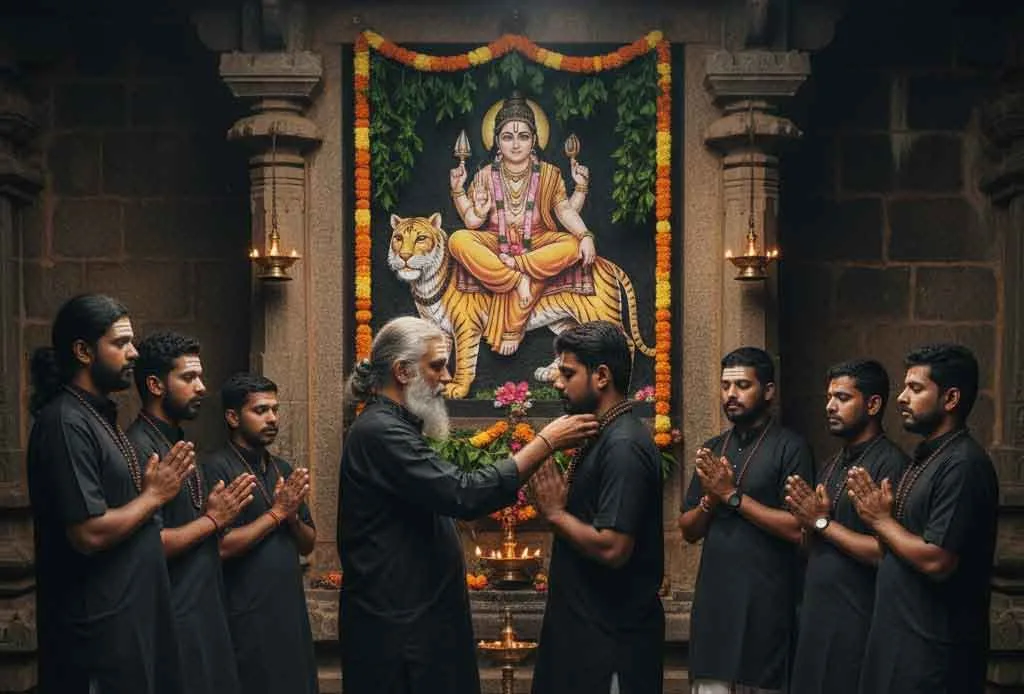
Kanni Ayyappan and the Guru Swami: A First-Timer's Guide to Sabarimala 2026-27
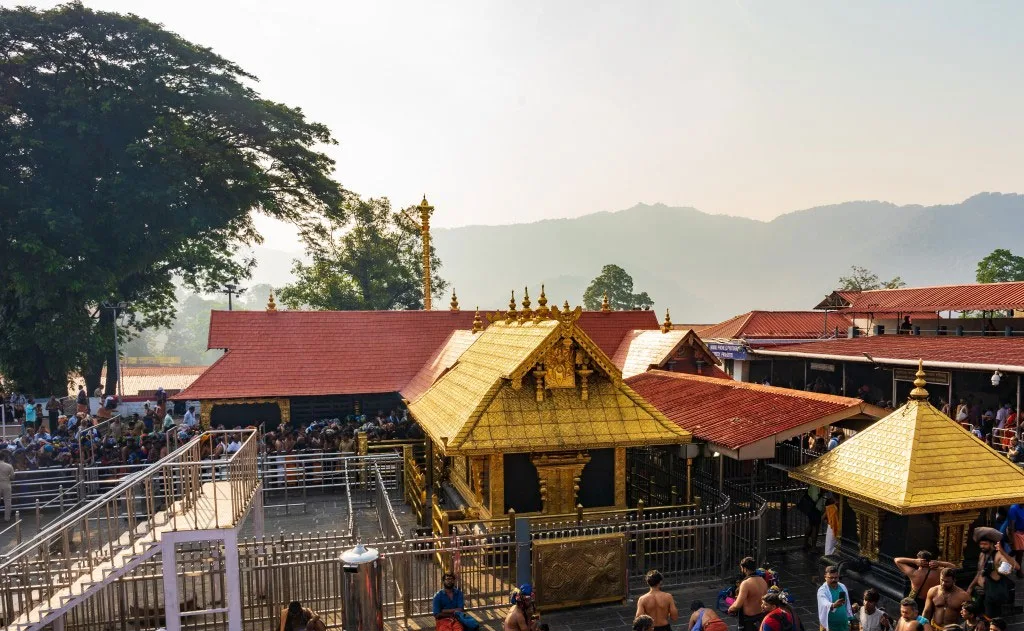
Malikappuram Devi at Sabarimala: The Story of Malikappurathamma, Her Shrine and Its Significance