
Kanni Ayyappan and the Guru Swami: A First-Timer's Guide to Sabarimala 2026-27
Going to Sabarimala for the first time makes you a Kanni Ayyappan. This guide explains what Kanni means, why the Guru Swami matters, Mala Dharana and Kettunirakkal, the Erumeli and Sharamkuthi traditions for first-timers as commonly practised, what to expect on the hill, and a practical checklist for NRIs flying in for the 2026-27 season.
Going to Sabarimala for the first time makes you a Kanni Ayyappan. This guide explains what Kanni means, why the Guru Swami matters, Mala Dharana and Kettunirakkal, the Erumeli and Sharamkuthi traditions for first-timers as commonly practised, what to expect on the hill, and a practical checklist for NRIs flying in for the 2026-27 season.
Quick answer: A Kanni Ayyappan (or Kanni Swami) is a devotee going to Sabarimala for the first time. By tradition, a Kanni Ayyappan takes the mala from a Guru Swami, keeps the 41-day vratham, has the Irumudi prepared in the Kettunirakkal ceremony, and on the way joins the Erumeli Petta Thullal and plants an arrow at Sharamkuthi, as commonly practised. Virtual-Q booking is mandatory for all pilgrims, per the Travancore Devaswom Board (TDB). The 2026-27 Mandala season is expected to begin on Tuesday 17 November 2026; confirm with the TDB.
Your first Sabarimala pilgrimage is something you never forget. The black clothes, the mala around your neck, the weight of the Irumudi on your head, the first sight of the Pathinettam Padi and the roar of "Swamiye Saranam Ayyappa": all of it is new, and all of it is meant to change you a little. This guide walks a first-timer, including NRIs flying in from abroad, through what to expect. For dates and the season as a whole, keep our Sabarimala 2026-27 season guide open alongside it.
What 'Kanni' means and why first-timers are special
"Kanni" means first or new. A Kanni Ayyappan is someone whose first pilgrimage this is. In the tradition, first-timers are welcomed warmly: the group looks after them, elders teach them the customs, and families often celebrate the occasion at home before departure.
Kanni Ayyappans also have a place in the sacred story. As commonly told, Lord Ayyappa promised Malikappurathamma that he would marry her in the year no Kanni Ayyappan came to Sabarimala. Every new pilgrim keeps that promise unfulfilled for another year. Read the full story in our sibling guide on Malikappuram Devi.
In many groups, especially in Tamil Nadu, Andhra Pradesh, Telangana and Karnataka, pilgrims also use names for later years, such as Kathi Swami and Ghanta Swami for the second and third pilgrimages. These names and their order vary from group to group, so ask your Guru Swami what your group uses.
The Guru Swami: your guide on the path
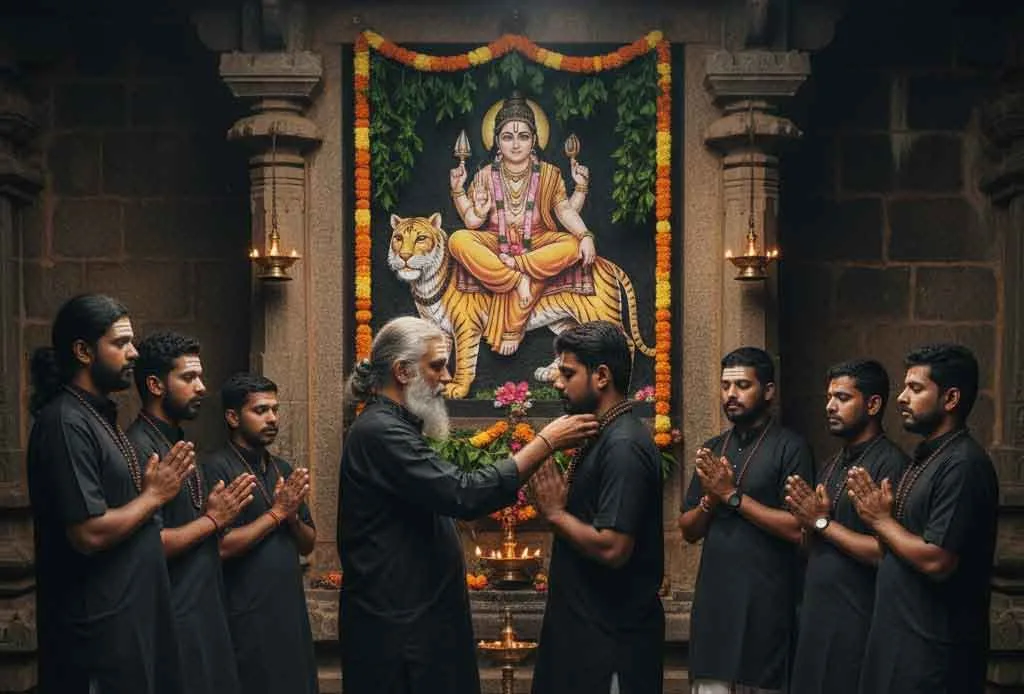
A Guru Swami is an experienced devotee who has made the pilgrimage many times and is accepted by a group as its guide. For a Kanni Ayyappan, the Guru Swami is the most important person on the journey. By tradition, the Guru Swami:
- places the mala on you at Mala Dharana and explains the vows of the vratham;
- answers your questions during the 41 days, from food to daily prayer;
- conducts or oversees the Kettunirakkal, when your Irumudi is filled;
- leads the group on the journey, decides the route and the order of rituals, and keeps everyone together on the hill;
- guides you at the Pathinettam Padi, Neyyabhishekam and the visit to Malikappuram;
- and receives the group's respect, often with a small offering, at the end of the pilgrimage.
Choose a Guru Swami you trust, ideally through a temple or family connection. If you live abroad, local Ayyappa temples and established bhajan groups are good places to ask.
Mala Dharana and the 41-day vratham
The pilgrimage begins with Mala Dharana, the wearing of the sacred mala, under a Guru Swami or temple priest. From that day you are addressed as Swami, and you keep the vratham: a simple, disciplined life of prayer, purity, celibacy, vegetarian food, and restraint in speech and habits. The traditional length is 41 days, the Mandala period.
For the full ritual and its rules, read our Ayyappa Swami Mala Dharana complete guide. The 2026-27 Mandala season is expected to begin on Tuesday 17 November 2026, so many devotees take the mala around that time or earlier to complete 41 days before their trip. Confirm the dates with the Travancore Devaswom Board.
Kettunirakkal: filling the Irumudi
Shortly before departure, the group gathers for Kettunirakkal (also called Irumudi Kettu), usually at a temple or the Guru Swami's home. The Irumudi is a two-compartment cloth bag carried on the head. The front pouch holds the coconut filled with ghee for Neyyabhishekam, the offering of ghee to Lord Ayyappa, along with other offerings; the back pouch traditionally held provisions for the journey.
By tradition, only pilgrims carrying the Irumudi climb the Pathinettam Padi, the 18 sacred steps. For a Kanni Ayyappan, having the Irumudi placed on your head by the Guru Swami is one of the most moving moments of the whole pilgrimage. Learn more in our Irumudi Kettu symbolism and preparation guide.
Erumeli, Petta Thullal and Vavar: first-timer traditions
Many groups, especially those taking the traditional route, stop at Erumeli. As commonly practised, Kanni Ayyappans take part in Petta Thullal, a joyful ritual dance in which pilgrims smear their faces with colour, carry wooden clubs or arrows, and dance to drums while chanting, in remembrance of Ayyappa's victory over Mahishi.
At Erumeli, many pilgrims also pay respects at the shrine of Vavar, revered in the tradition as a companion of Ayyappa, before going to the Dharma Sastha temple. The custom is a well-loved example of harmony in the Sabarimala tradition; read more in Ayyappa and Vavar Swamy: a lesson in unity.
Not every group follows every custom, and routes differ: some walk the longer traditional forest path from Erumeli, while many go directly to Pamba. Follow your Guru Swami's plan.
Pamba, Sharamkuthi and the climb
- Pamba snanam. Before the climb, pilgrims bathe in the Pamba river by tradition, a purification before approaching the Lord. See our guide to Pamba snanam.
- Sharamkuthi. As commonly practised, Kanni Ayyappans carry a sharam (a small arrow) and plant it at Sharamkuthi on the way up. As commonly told, Malikappurathamma sees these arrows and knows that new pilgrims have come.
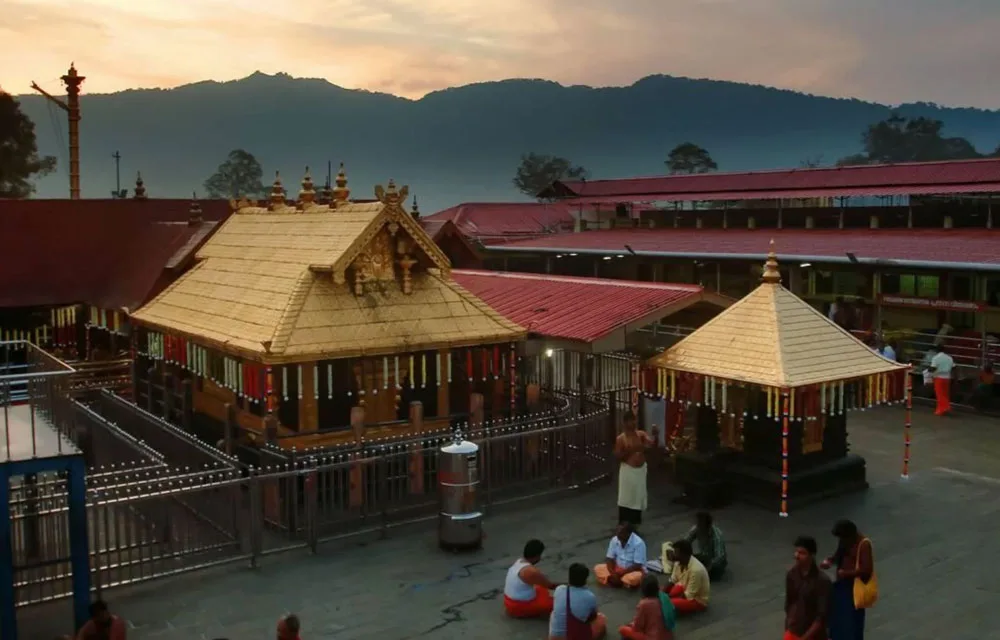
- The Pathinettam Padi. Carrying the Irumudi, you climb the 18 steps with your group. Read the meaning of the 18 steps.
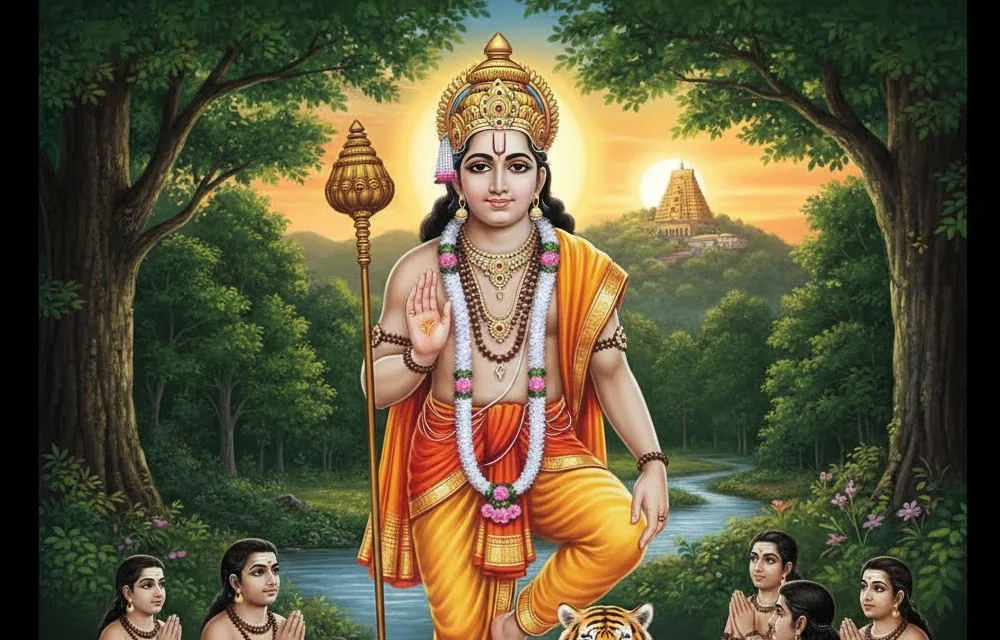
- Darshan and Neyyabhishekam. After darshan, the ghee from your coconut is offered to the Lord. See our Neyyabhishekam guide.
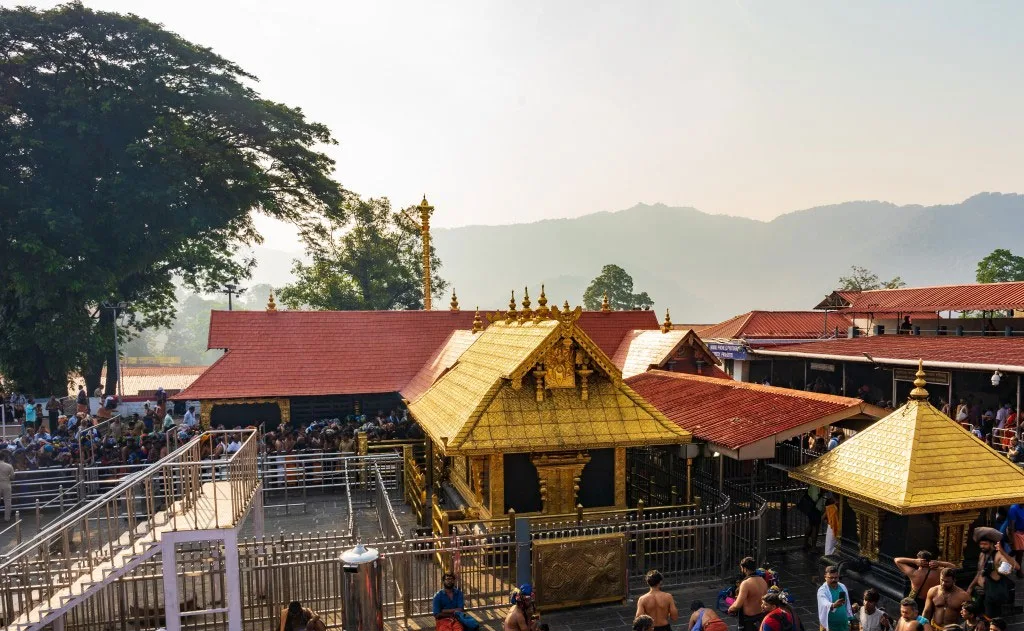
- Malikappuram. Most groups then visit the shrine of Malikappurathamma nearby.
We do not publish darshan or pooja times, fees, or crowd figures. Check the Travancore Devaswom Board's official information for current arrangements.
What to expect as a first-timer
- Long walks and waits, often in heat or rain. Patience is part of the vratham.
- Large crowds, especially near Mandala Pooja and Makaravilakku. Stay close to your group and agree on a meeting point.
- Simple food and basic facilities. Carry what your Guru Swami recommends and no more.
- Strong emotion. Many Kanni Ayyappans are surprised by how moved they feel at the Padi or at Harivarasanam, the lullaby sung as the temple closes. Read Harivarasanam with lyrics and meaning before you go.
Expected 2026-27 dates
Official dates for the Kollavarsham 1202 (2026-27) season had not been published as of 7 October 2026. These are expected dates; confirm each with the Travancore Devaswom Board.
| Event | Expected date (confirm with the TDB) |
|---|---|
| Temple opens for Mandalam | Evening of Monday 16 November 2026 (expected) |
| Mandala season begins | Tuesday 17 November 2026 (expected) |
| Mandala Pooja | Sunday 27 December 2026 (expected) |
| Temple reopens for Makaravilakku | Wednesday 30 December 2026 (expected) |
| Makaravilakku | Thursday 14 January 2027 (expected) |
| Season closes | Around Wednesday 20 January 2027 (expected) |
Checklist for Kanni Ayyappans, including NRIs flying in
- Find a Guru Swami through your local Ayyappa temple, family or a trusted group.
- Take the mala and keep the vratham. If you live abroad, see Ayyappa deeksha for NRIs in the USA and UK and how NRIs perform deeksha in the USA, UK and Canada.
- Book Virtual-Q. The TDB states: "Online booking of Virtual-Q is mandatory for all pilgrims visiting Sabarimala". Use only the official channel.
- Confirm dates before flights. Season dates are expected until the TDB announces them; leave buffer days for jet lag and travel within Kerala.
- Plan the Kettunirakkal. Decide with your Guru Swami whether your Irumudi will be filled abroad or in India, and how the ghee coconut will travel safely.
- Carry ID and documents. Keep your passport or ID and Virtual-Q confirmation together and accessible.
- Prepare your body. Walk regularly in the weeks before, and consult your doctor if you have any health condition.
- Pack light. Black or blue clothes, a towel, simple footwear for the approach, basic medicines and a small torch, as your group advises.
- Keep one chant close. "Swamiye Saranam Ayyappa" carries pilgrims up the hill. You need nothing more.
Frequently asked questions
What does Kanni Ayyappan mean?
A Kanni Ayyappan, or Kanni Swami, is a devotee making the pilgrimage to Sabarimala for the first time. 'Kanni' means first or new. Kanni Ayyappans are especially welcomed in the tradition, and certain customs, such as planting an arrow at Sharamkuthi, are kept specially by them.
Do I need a Guru Swami for my first Sabarimala visit?
By tradition, yes. A Guru Swami, an experienced devotee who has made the pilgrimage many times, places the mala on you, guides your vratham, prepares your Irumudi in the Kettunirakkal ceremony and leads the group to the hill. For a Kanni Ayyappan, this guidance is considered essential.
What should a Kanni Swami do at Erumeli?
As commonly practised, Kanni Swamis take part in Petta Thullal at Erumeli, a joyful ritual dance with coloured faces, carrying arrows or wooden clubs, recalling Ayyappa's victory over Mahishi. Many groups also pay respects at the Vavar shrine and the Dharma Sastha temple there. Your Guru Swami will tell you your group's custom.
Is Virtual-Q booking mandatory for Sabarimala?
Yes. The Travancore Devaswom Board states: 'Online booking of Virtual-Q is mandatory for all pilgrims visiting Sabarimala'. Book through the official Sabarimala channel only, for every member of your group, and carry your confirmation.
How many days of vratham for a Kanni Ayyappan?
The traditional vratham is 41 days, beginning with Mala Dharana. First-timers are generally encouraged to keep the full 41 days. Your Guru Swami will advise if your circumstances, such as work or travel abroad, need any adjustment.
Can NRIs start the Sabarimala vratham abroad and fly to Kerala?
Yes. Many NRIs take the mala from a Guru Swami at an Ayyappa temple in the USA, UK, Gulf or Singapore, keep the vratham at home, and fly to Kerala for the Irumudi and the climb. Plan your Virtual-Q booking and confirm expected dates with the Travancore Devaswom Board before you buy tickets.
Sources & verification
Customs in this guide are described as commonly practised and vary between groups and regions; symbolic readings are labelled where given. Dates are expected dates calculated by HinduTone from the Malayalam solar calendar, because the Travancore Devaswom Board had not published official 2026-27 dates as of 7 October 2026. Confirm all dates, rules and Virtual-Q booking with the Travancore Devaswom Board and the official Sabarimala website before travel.
Editor's note (7 October 2026)
We rewrote this guide in October 2026 for first-time pilgrims. We do not publish darshan times, fees, crowd numbers or unverified historical dates, and we will update the expected dates once the Travancore Devaswom Board announces the official 2026-27 schedule. Where this guide and your Guru Swami differ, follow your Guru Swami.
Related guides
You might also like
Neyyabhishekam at Sabarimala: Meaning of the Ghee Coconut and How the Ritual Is Done
Sabarimala 18 Steps (Pathinettam Padi): Meaning, the Irumudi Rule and Padi Pooja
Malikappuram Devi at Sabarimala: The Story of Malikappurathamma, Her Shrine and Its Significance