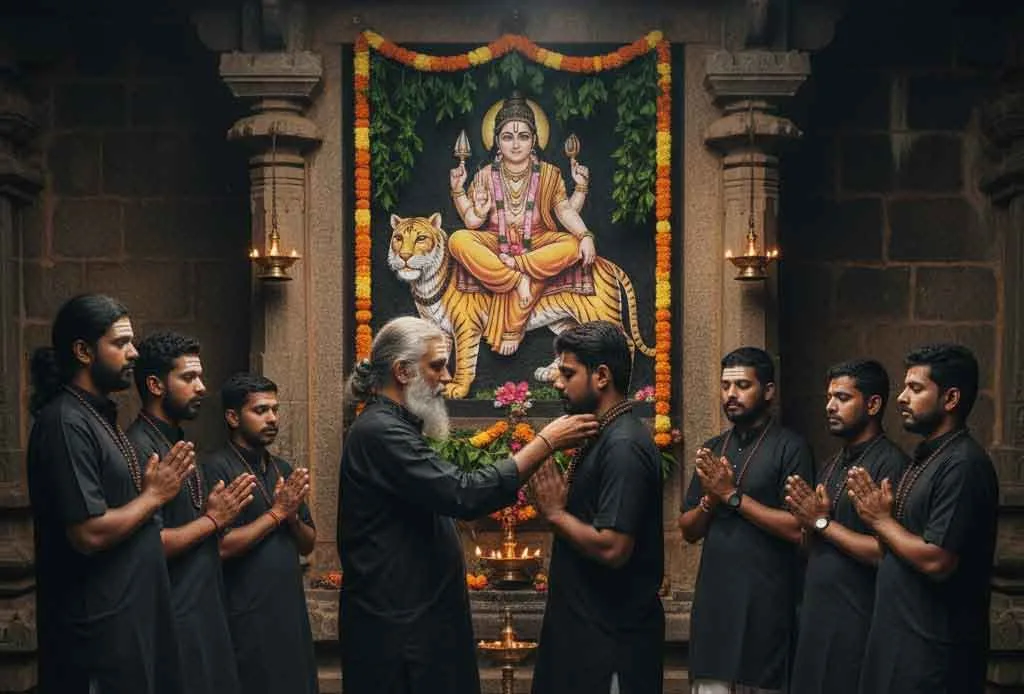
Malikappuram Devi at Sabarimala: The Story of Malikappurathamma, Her Shrine and Its Significance
Malikappurathamma, the Devi whose shrine stands near Lord Ayyappa's sannidhanam, is part of every Sabarimala pilgrimage. Here is the story as commonly told, including the traditional promise linked to Kanni Ayyappans, the offerings devotees make, and what the term 'Malikappuram' means for women and girl pilgrims.
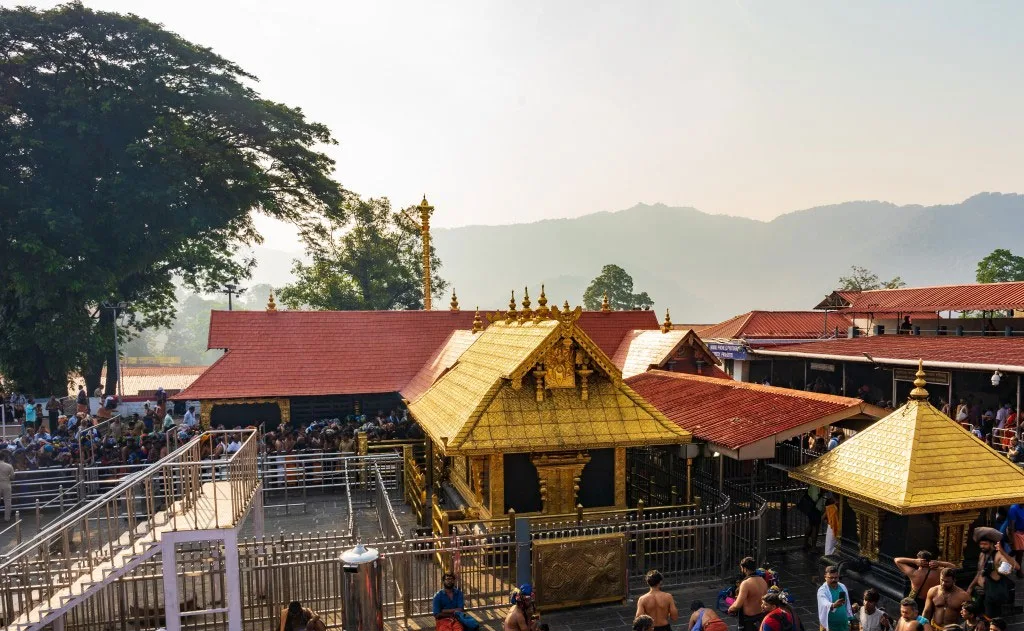
Malikappurathamma, the Devi whose shrine stands near Lord Ayyappa's sannidhanam, is part of every Sabarimala pilgrimage. Here is the story as commonly told, including the traditional promise linked to Kanni Ayyappans, the offerings devotees make, and what the term 'Malikappuram' means for women and girl pilgrims.
Quick answer: Malikappuram Devi (Malikappurathamma) is the goddess whose shrine stands near Lord Ayyappa's sannidhanam at Sabarimala. As commonly told, she is the maiden freed when Ayyappa defeated the demoness Mahishi; she wished to marry him, and he promised to do so in the year no Kanni Ayyappan (first-time pilgrim) comes to Sabarimala. In Sabarimala tradition, women and girl pilgrims are respectfully addressed as Malikappuram, just as men are addressed as Swami.
Every pilgrim who climbs to Sabarimala and receives darshan of Lord Ayyappa also walks the short distance to the shrine of Malikappurathamma. For many families, especially those who come every year, she is as much a part of the pilgrimage as the Pathinettam Padi itself. This guide sets out who she is, the story as commonly told, the offerings devotees make, and the meaning of the word "Malikappuram" in Sabarimala tradition. For season dates and planning, see our Sabarimala 2026-27 season guide.
Who is Malikappurathamma?
Malikappurathamma, or Malikappuram Devi, is worshipped at a shrine close to the main sannidhanam of Lord Ayyappa. "Amma" means mother, and devotees approach her with the affection and trust they would give a mother. Many devotees also know her as Manjamatha, a name associated with the turmeric offered to her.
Devotees understand her in more than one way. In the popular narrative, she is the maiden released from Mahishi's form, devoted to Ayyappa. In a broader devotional understanding, she is revered as a form of the Divine Mother, the Shakti whose presence beside Ayyappa's shrine blesses every pilgrim. These understandings sit side by side in the tradition, and families tend to hold whichever one they grew up with.
The story as commonly told
The Malikappuram story is told across South India with small variations. The following is the version most families share. It is a sacred story, presented here as tradition rather than history.
- The demoness Mahishi, who had obtained a boon that only a child born of Shiva and Vishnu could defeat her, troubled the worlds.
- The young Manikandan of Pandalam, revered as that child, faced and defeated her in the forest.
- As commonly told, when Mahishi was vanquished, a radiant maiden emerged from her form. In many tellings she had been cursed to live as Mahishi and was now freed.
- Filled with gratitude and devotion, she asked Ayyappa to marry her.
- Ayyappa, who had taken the vow of a naishtika brahmachari, explained that he could not. Out of compassion, he made her a promise: he would marry her in the year that no Kanni Ayyappan came to Sabarimala.
- He gave her a place close to his own shrine, where she waits. And every year, new Kanni Ayyappans make the journey.
To learn more about Ayyappa's vow, read Naishtika Brahmacharya: Lord Ayyappa's eternal vow explained, and for the wider story of his life, Ayyappa Swamy's story from Manikanta's birth to Sabarimala darshan.
Sharamkuthi and the promise linked to Kanni Ayyappans
The promise in the story is lived out every season through a custom at Sharamkuthi, a spot on the traditional path to the sannidhanam. As commonly practised, Kanni Ayyappans carry a sharam (a small arrow, often made of wood or reed) and plant it at Sharamkuthi as they pass, marking their first pilgrimage.
As commonly told, during the Makaravilakku festival Malikappurathamma is taken in procession towards Sharamkuthi. There she sees the arrows left by that year's Kanni Ayyappans and returns to her shrine, knowing that the wedding must wait another year. The custom ties the arrival of every first-time pilgrim directly to her story.
Devotees read this in different ways. These are interpretations, not doctrine:
- Interpretation: devotion that never ends. As long as new seekers keep coming to the Lord, the path of devotion stays open, and that is the true wish of both Ayyappa and the Devi.
- Interpretation: discipline before desire. The story honours Ayyappa's vow and shows that love can be expressed as patience and service rather than possession.
- Interpretation: the value of every newcomer. Each Kanni Ayyappan matters; his first pilgrimage has a place in the sacred story itself.
If you are going for the first time, our Kanni Ayyappan and Guru Swami guide explains the Sharamkuthi custom and other first-timer traditions.
Visiting the Malikappuram shrine
The shrine stands a short walk from the main sannidhanam on the same hilltop. Most pilgrims climb the Pathinettam Padi, receive darshan of Lord Ayyappa, offer their ghee for Neyyabhishekam, and then go to Malikappuram before beginning the descent. Your Guru Swami will usually guide the group's order of visits.
The area around the shrine also holds smaller shrines that devotees visit by tradition, and many groups pause here for a quiet moment of prayer after the intensity of the climb. We do not publish darshan or pooja times; please check the Travancore Devaswom Board's official information for current arrangements.
Read more about the climb in our sibling guides to the 18 steps (Pathinettam Padi) and Neyyabhishekam.
Offerings to Malikappurathamma by tradition
Offerings at Malikappuram are simple and heartfelt. By tradition, devotees commonly offer:
- Rolling a coconut. Many pilgrims roll a coconut along the ground around the shrine as an offering, a familiar sight to every Sabarimala devotee.
- Turmeric (manjal) and kumkum. Turmeric powder is especially associated with the Devi, which is why she is also known as Manjamatha.
- Red cloth and bangles. Some devotees, especially women pilgrims and families, offer a red cloth (pattu) or bangles, as is customary for the Devi in many Kerala temples.
Customs and permitted offerings can change with the temple's arrangements, so follow your Guru Swami and the instructions at the shrine. No offering is required to receive her blessing; a sincere prayer is enough.
'Malikappuram' as a term for women and girl pilgrims
In Sabarimala tradition, every pilgrim is seen as a form of the Divine. Male pilgrims are addressed as "Swami" or "Ayyappan", and women and girl pilgrims are addressed as "Malikappuram", after the Devi. A little girl on her first pilgrimage is often affectionately called a Kochu Malikappuram (little Malikappuram). The term is a form of respect, recognising the pilgrim as one who carries the Devi's presence.
Women and girl pilgrims who make the journey according to the temple's customs keep the vratham, wear the mala and carry the Irumudi in the same spirit as other pilgrims. The temple's customary practice regarding the entry of women of a certain age group has been the subject of legal proceedings. We do not take a position here; for a neutral overview of the background and current legal status, read our Sabarimala verdict explainer, and always check the Travancore Devaswom Board's current guidelines before planning.
For NRI families planning the 2026-27 season
Many NRI families from the USA, the UK and the Gulf bring daughters and grandmothers to Sabarimala as Malikappurams, often alongside a son or father making his first trip as a Kanni Ayyappan. A few practical points:
- Virtual-Q is mandatory. The Travancore Devaswom Board states: "Online booking of Virtual-Q is mandatory for all pilgrims visiting Sabarimala". Book through the official channel for every member of the family.
- Expected dates. The Mandala season is expected to begin on Tuesday 17 November 2026 and Makaravilakku is expected on Thursday 14 January 2027. Confirm both with the Travancore Devaswom Board before booking flights.
- Keep the vratham where you live. Families abroad often begin the mala at a local Ayyappa temple. See how NRIs perform Ayyappa deeksha in the USA, UK and Canada.
- Plan for children and elders. The climb and the crowds are demanding. Travel with an experienced group, rest after a long flight and keep water and basic medicines handy.
At the end of each day at Sabarimala, the temple closes with Harivarasanam, the lullaby to the Lord. You can read Harivarasanam with its lyrics and meaning before you go, so the moment means even more.
Frequently asked questions
Who is Malikappuram Devi?
Malikappuram Devi, lovingly called Malikappurathamma, is the goddess whose shrine stands near Lord Ayyappa's sannidhanam at Sabarimala. As commonly told, she is the maiden freed when Ayyappa defeated the demoness Mahishi, who then wished to marry him. Many devotees also revere her as a form of the Divine Mother.
What is the story of Malikappuram and Ayyappa?
As commonly told, the freed maiden asked Ayyappa to marry her. Because he is a naishtika brahmachari, a lifelong celibate, he told her he would marry her in the year no Kanni Ayyappan (first-time pilgrim) came to Sabarimala. She waits at her shrine nearby, and every year new Kanni Ayyappans arrive.
Why are women pilgrims called Malikappuram at Sabarimala?
In Sabarimala tradition, just as every male pilgrim is addressed as Swami or Ayyappan, every woman or girl pilgrim is addressed as Malikappuram, after the Devi. Young girls are often lovingly called Kochu Malikappuram. It is a respectful form of address that sees the Divine in each pilgrim.
What offerings are made at the Malikappuram temple?
By tradition, devotees roll coconuts around the shrine, and offer turmeric, kumkum, red cloth and bangles to the Devi. Offerings and how they are made can change, so follow the guidance of your Guru Swami and the instructions at the shrine.
Where is the Malikappuram temple located?
The Malikappuram shrine is a short walk from the main sannidhanam of Lord Ayyappa, on the same hilltop at Sabarimala. Pilgrims usually visit after their darshan of Ayyappa, before beginning the journey back.
What is the Sharamkuthi connection to Malikappuram?
As commonly told, Kanni Ayyappans plant arrows (sharam) at Sharamkuthi on the way up. During the festival, Malikappurathamma is taken in procession towards Sharamkuthi, sees the arrows of the year's new pilgrims, and returns, knowing the wedding cannot yet take place.
Sources & verification
The story in this article is presented as commonly told; details vary between regions and families, and symbolic readings are labelled as interpretations. Dates are expected dates calculated by HinduTone from the Malayalam solar calendar, because the Travancore Devaswom Board had not published official 2026-27 dates as of 7 October 2026. Confirm all dates, current rules and Virtual-Q booking with the Travancore Devaswom Board and the official Sabarimala website before travel.
Editor's note (7 October 2026)
We rewrote this guide in October 2026. We have described the Malikappuram tradition and the term for women pilgrims as the tradition holds them, without taking sides on legal questions. We do not publish darshan times, fees or unverified historical dates. If your family tells the story differently, follow your own Guru Swami's guidance.
Related guides
You might also like
Pamba Snanam: The Significance of the Holy Dip in the Pamba River on the Sabarimala Pilgrimage
Neyyabhishekam at Sabarimala: Meaning of the Ghee Coconut and How the Ritual Is Done
Sabarimala 18 Steps (Pathinettam Padi): Meaning, the Irumudi Rule and Padi Pooja