Navratri Around India: 5 Different Ways of Celebration
Discover how India's diverse regions transform the sacred nine nights of Navratri into unique cultural spectacles Navratri, literally meaning "nine nights," is…
Discover how India's diverse regions transform the sacred nine nights of Navratri into unique cultural spectacles Navratri, literally meaning "nine nights," is…
Discover how India's diverse regions transform the sacred nine nights of Navratri into unique cultural spectacles
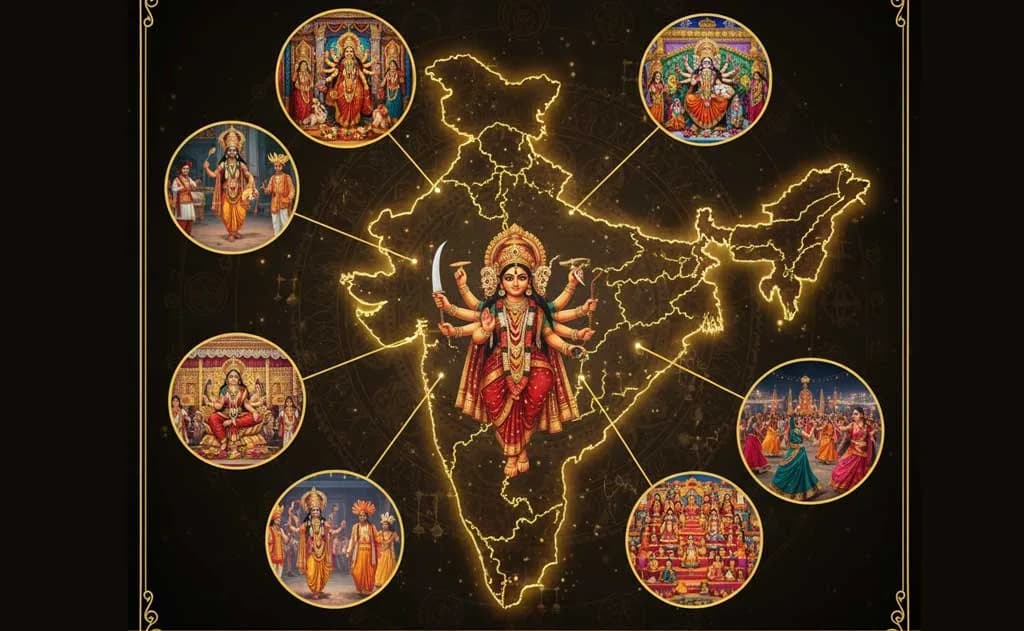
Navratri, literally meaning "nine nights," is one of India's most vibrant and widely celebrated festivals. While the core essence remains the same – honoring the Divine Feminine through Goddess Durga and her nine forms – each region of India has woven its own cultural threads into this sacred tapestry. From the grand pandals of Bengal to the rhythmic Garba circles of Gujarat, Navratri showcases India's incredible diversity in the most beautiful way possible.
Let's embark on a colorful journey across five distinct regional celebrations that make Navratri a truly pan-Indian festival with local flavors.
1. Bengal's Durga Puja: Where Art Meets Devotion
The Crown Jewel of Eastern India
In Bengal, Navratri transforms into Durga Puja, a celebration that elevates festival organization to an art form. Unlike other regions where Navratri spans nine days, Bengal focuses intensely on the last four days – Saptami, Ashtami, Navami, and Vijaya Dashami.
The Magnificent Pandals
Bengali Durga Puja is renowned for its elaborate pandals (temporary structures) that house breathtaking Durga idols. These aren't mere decorations; they're architectural marvels and social commentaries. Each year, pandal committees compete to create the most innovative themes – from recreating famous monuments to highlighting contemporary social issues.
What Makes It Special:
- Artistic Excellence: Master craftsmen from Kumartuli create stunning clay idols months in advance
- Community Bonding: Entire neighborhoods unite under pandal committees
- Cultural Programs: Each pandal hosts cultural events, turning the area into a mini-festival ground
- Food Culture: Bhog (sacred food) distribution and special Bengali delicacies
- Fashion Statement: New clothes for each day, especially the traditional red and white combination
The Rituals and Traditions
The Bengali celebration begins with "Mahalaya," a week before the main festival, when families wake up early to listen to the famous radio broadcast recounting Durga's story. The actual festivities include elaborate rituals like "Bodhon" (awakening the goddess), "Sandhi Puja" (transition worship), and the emotional "Visarjan" (immersion ceremony).
The final day, Bijoya Dashami, sees tearful farewells as the beautifully crafted idols are immersed in rivers, symbolizing Durga's return to her husband Shiva in the Himalayas.
2. Gujarat's Garba: The Dance of Divine Energy
Where Rhythm Meets Reverence
Gujarat transforms Navratri into a nine-night dance marathon that celebrates the feminine divine through movement, music, and community participation. Garba, derived from the Sanskrit word "Garbha" (womb), symbolizes life and the divine feminine creative force.
The Dance Forms
Garba: Performed in concentric circles around a decorated pot or lamp (representing the divine feminine), participants move in graceful, rhythmic steps. The circular movement represents the cycle of time and the eternal nature of the divine.
Dandiya Raas: Using colorful sticks (dandiyas), this dance form enacts the eternal dance between Radha and Krishna. The striking of sticks creates rhythmic music that adds to the celebratory atmosphere.
The Gujarat Experience
What Sets It Apart:
- Scale: Massive venues accommodate thousands of dancers simultaneously
- Fashion: Elaborate chaniya cholis (traditional skirts and blouses) with mirror work and vibrant colors
- Music: Blend of traditional folk songs and contemporary Bollywood numbers
- Food: Late-night food stalls serving Gujarati farsan and sweets
- Inclusivity: People of all ages and backgrounds participate together
Spiritual Significance
Each night is dedicated to a different form of Goddess Durga, with specific colors associated with each day. The nine nights represent the nine months of pregnancy, celebrating the creative power of the feminine divine. The dance is considered a form of meditation in motion, where the repetitive circular movements help participants achieve a trance-like spiritual state.
3. Tamil Nadu's Golu: The Divine Doll Display
A Unique South Indian Tradition
In Tamil Nadu, Navratri takes on a distinctly different character through "Golu" or "Kolu" – an elaborate display of dolls and figurines that tells stories from Hindu mythology and showcases cultural heritage.
The Art of Golu Arrangement
Golu displays are arranged on odd-numbered steps (usually 3, 5, 7, or 9), representing the celestial hierarchy. Each level tells different stories:
Top Steps: Reserved for gods and goddesses Middle Steps: Mythological stories and epics Bottom Steps: Scenes from daily life and contemporary themes
Traditional Elements
Kalyanam (Wedding) Sets: Elaborate displays showing divine weddings, particularly popular are Rama-Sita and Radha-Krishna kalyanams.
Ramayana and Mahabharata Scenes: Epic stories told through carefully arranged figurines, often spanning entire rooms.
Village Life Displays: Miniature representations of Tamil rural life, complete with tiny houses, wells, and people engaged in daily activities.
Community Participation
What Makes Tamil Golu Special:
- Storytelling Tradition: Elders use Golu displays to narrate mythological stories to children
- Social Networking: Families invite neighbors and friends to view their displays
- Cultural Education: Children learn about traditions, mythology, and heritage
- Artistic Expression: Many families create themed displays addressing contemporary issues
- Economic Support: Local artisans benefit from increased demand for dolls and decorative items
Modern Innovations
Contemporary Golu displays often incorporate themes like environmental awareness, women's empowerment, and social issues, making this ancient tradition relevant to modern times.
4. North India's Ramlila: The Epic Theatrical Tradition
Where Dharma Comes Alive
In North India, particularly in Uttar Pradesh, Delhi, and surrounding regions, Navratri culminates with Dussehra celebrations that center around Ramlila – elaborate theatrical performances depicting the Ramayana epic.
The Ramlila Tradition
Ramlila is not just theater; it's a living tradition where entire communities participate in bringing the Ramayana to life. These performances run throughout Navratri, building up to the climactic burning of Ravana's effigy on Dussehra.
Types of Ramlila
Traditional Ramlila: Following centuries-old scripts and presentation styles, these performances maintain authenticity in dialogue, costumes, and staging.
Folk Ramlila: Regional variations incorporating local dialects, music, and cultural elements.
Modern Adaptations: Contemporary versions using modern sound systems, lighting, and sometimes incorporating current social messages.
Community Involvement
What Defines North Indian Celebration:
- Democratic Participation: Actors are chosen from the community, often playing the same roles for years
- Seasonal Transformation: Entire neighborhoods transform into performance venues
- Religious Devotion: Audiences treat actors playing Ram, Sita, and Lakshman as actual deities during performances
- Educational Value: Young people learn moral values and cultural heritage through these performances
- Economic Activity: Local businesses thrive during the festival season
The Grand Finale
Dussehra day features the burning of massive effigies of Ravana, Kumbhakarna, and Meghnad, symbolizing the victory of good over evil. These effigies, often several stories tall, are filled with fireworks and create spectacular displays when burned.
5. Punjab's Jagrata: The Night-Long Devotional Singing
Where Devotion Meets Melody
Punjab's approach to Navratri centers around "Jagrata" – night-long devotional singing sessions that create an atmosphere of intense spiritual devotion through music and community participation.
The Jagrata Experience
Unlike other regional celebrations that focus on dance or theater, Punjabi Jagrata emphasizes musical devotion. These sessions typically begin in the evening and continue until dawn, with participants taking turns to sing devotional songs dedicated to Goddess Durga.
Musical Elements
Bhajan and Kirtan: Traditional devotional songs praising the goddess Jagrata Songs: Specific compositions meant for night-long sessions Regional Folk Integration: Punjabi folk tunes adapted for devotional purposes Modern Fusion: Contemporary instruments sometimes accompany traditional singing
Community Aspects
What Makes Punjabi Jagrata Unique:
- Intimate Gatherings: Usually held in homes or community halls rather than large venues
- Inclusive Participation: Everyone present is encouraged to contribute to the singing
- Hospitality: Hosts provide continuous refreshments throughout the night
- Spiritual Intensity: The all-night format creates a unique spiritual atmosphere
- Cultural Preservation: Elder community members pass down traditional songs to younger generations
Regional Variations
Different districts in Punjab have their own Jagrata traditions:
Rural Jagrata: Often held in agricultural settings with themes related to harvest and prosperity Urban Adaptations: City celebrations incorporate modern sound systems while maintaining traditional essence Gurdwara Celebrations: Some Sikh communities hold parallel celebrations focusing on the divine feminine aspect in Sikhism
The Common Thread: Unity in Diversity
Despite these varied regional expressions, several elements unite all Navratri celebrations across India:
Shared Spiritual Themes
Divine Feminine Worship: All regions honor the goddess in her various forms Good vs. Evil: The underlying theme of dharma triumphing over adharma Community Bonding: Festival celebrations strengthen social ties Cultural Transmission: Traditions pass from generation to generation Seasonal Celebration: Marking the transition from monsoon to winter
Modern Adaptations
Each regional celebration has adapted to contemporary times while maintaining its essential character:
Technology Integration: Use of social media, online streaming, and modern sound systems Global Reach: Diaspora communities worldwide recreate these celebrations Environmental Consciousness: Eco-friendly practices in decorations and celebrations Women's Participation: Increased leadership roles for women in organizing celebrations Commercial Aspects: Local economies benefit significantly from festival-related business
Planning Your Navratri Journey
If you're planning to experience these diverse Navratri celebrations, here's what you should know:
Best Time to Visit
Bengal (Durga Puja): September-October, focus on the last four days Gujarat (Garba): All nine days offer full experience, peak on weekends Tamil Nadu (Golu): Best to visit during the first week when displays are fresh North India (Ramlila): Build-up throughout nine days, climax on Dussehra Punjab (Jagrata): Any of the nine nights, but specific dates vary by community
Cultural Sensitivity Tips
Dress Appropriately: Respect local customs and dress codes Participate Respectfully: Understand the spiritual significance beyond the celebration Photography Ethics: Ask permission before photographing people or religious displays Local Customs: Each region has specific etiquettes to follow Environmental Responsibility: Support eco-friendly celebration practices
Conclusion: Celebrating India's Cultural Mosaic
Navratri's regional diversity beautifully demonstrates how a single spiritual concept can bloom into multiple cultural expressions. Whether you're drawn to Bengal's artistic grandeur, Gujarat's rhythmic energy, Tamil Nadu's storytelling tradition, North India's theatrical spectacle, or Punjab's devotional intensity, each celebration offers a unique window into India's rich cultural heritage.
These diverse traditions remind us that spirituality and culture are not monolithic but rather like a garden where different flowers bloom with their own colors and fragrances, yet contribute to the same beautiful landscape. In celebrating these differences, we celebrate the very essence of India – unity in diversity.
As you plan your Navratri experiences or simply reflect on these beautiful traditions, remember that each regional celebration carries within it centuries of wisdom, creativity, and devotion. They are not just festivals; they are living repositories of culture, spirituality, and community bonds that continue to evolve while honoring their ancient roots.
Experience the magic of India's diverse Navratri celebrations and discover how one festival can reveal the countless colors of Indian culture.
For more insights into India's rich festival traditions and cultural heritage, explore our comprehensive guides at HinduTone.com
Frequently Asked Questions
When is Navratri Around India?
Navratri Around India is observed on its traditional tithi in the Hindu lunar calendar; refer to the year's panchang for the exact date in your region.
What is the significance of Navratri Around India?
Discover how India's diverse regions transform the sacred nine nights of Navratri into unique cultural spectacles Navratri, literally meaning "nine nights," is one of India's most vibrant and widely celebrated festivals. While the core essence remains the same – honoring the Divine Feminine through Goddess Durga and her nine forms – each region of India has
How is Navratri Around India celebrated?
Devotees observe it with puja, fasting or special offerings, visiting temples, chanting mantras, and gathering with family. Customs vary by region and tradition.
What should devotees do on Navratri Around India?
Take a sacred bath, perform the day's puja and charity (dana), observe any prescribed fast, and chant mantras with sincere devotion.
You might also like
Dussehra / Vijayadashami 2026: Complete Guide — Date, Muhurat, Rituals & Meaning
Hindu Festival Calendar 2026 — Complete Guide for NRIs (Dates, Tithis, Puja)
Nine Nights, Nine Forms: Navratri as the Diaspora's Most Sustainable Festival