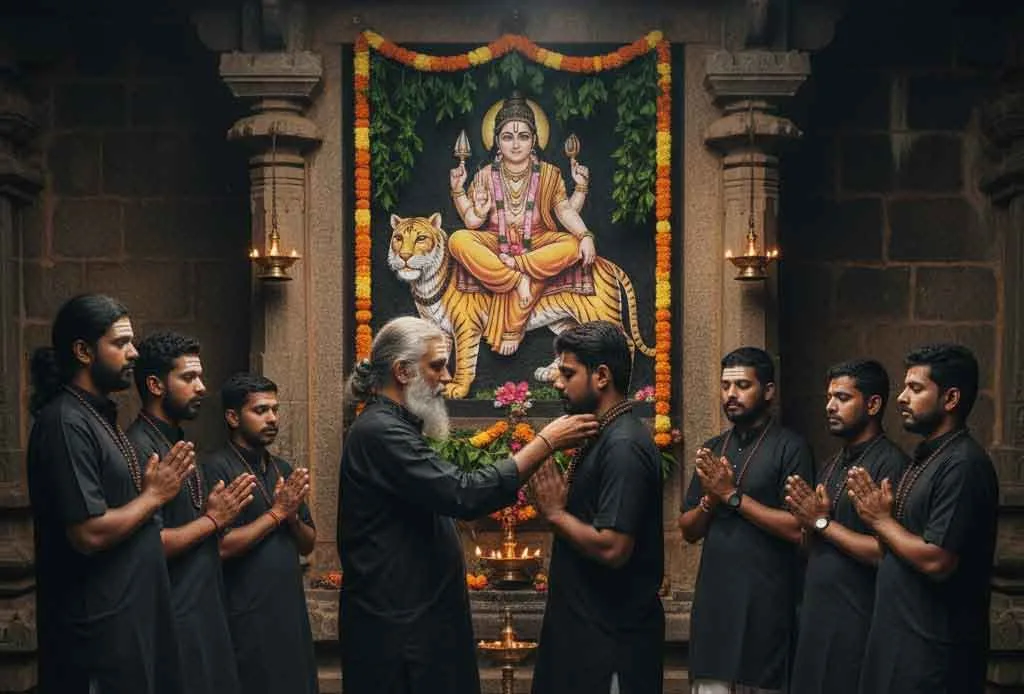
Pamba Snanam: The Significance of the Holy Dip in the Pamba River on the Sabarimala Pilgrimage
Before climbing to Lord Ayyappa's sannidhanam, pilgrims bathe in the Pamba river. This guide explains the place of the Pamba in the Sabarimala pilgrimage, the meaning of the holy dip, the traditions of Pamba Sadya and Pamba Vilakku, how to bathe safely, and why no soap, plastic or discarded clothes should ever reach the river.
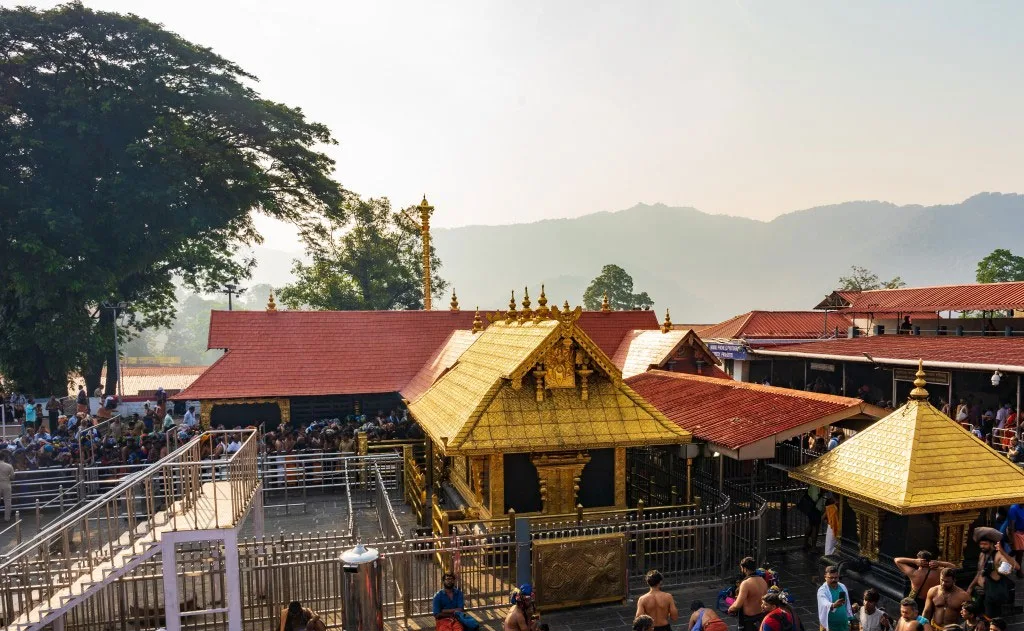
Before climbing to Lord Ayyappa's sannidhanam, pilgrims bathe in the Pamba river. This guide explains the place of the Pamba in the Sabarimala pilgrimage, the meaning of the holy dip, the traditions of Pamba Sadya and Pamba Vilakku, how to bathe safely, and why no soap, plastic or discarded clothes should ever reach the river.
Quick answer: Pamba Snanam is the holy dip that Sabarimala pilgrims take in the Pamba river before climbing the forest path to Lord Ayyappa's sannidhanam. It is a long-standing tradition of purification: after weeks of vratham and a long journey, the pilgrim bathes, prays to Pamba Ganapathi and begins the climb with the Irumudi on the head. Devotees revere the Pamba as the Dakshina Ganga. Bathe only at designated spots, with no soap, oil, plastic or discarded clothes, so the river stays safe and pure for everyone.
For the full season picture, see our Sabarimala 2026-27 season guide. Swamiye Saranam Ayyappa.
The Pamba river in the Sabarimala pilgrimage
The Pamba is one of Kerala's great rivers, and for Ayyappa devotees it is the gateway to the hills. Pamba is where the motorable route ends for most pilgrims and the walk on foot to the sannidhanam begins. Whatever route a group follows, including the traditional forest route from Erumeli associated with the Vavar shrine, the pilgrimage gathers at the river before the final ascent.
In the stories devotees tell about Lord Ayyappa, the Pamba is a sacred presence. It is commonly said that the infant Manikanta was found on the banks of the Pamba by the king of Pandalam, which is why so many devotees feel they are returning to the Lord's own birthplace when they reach the river. Read the full story in the Ayyappa Swamy story from Manikanta's birth to Sabarimala darshan.
The holy dip: what Pamba Snanam means
Ritual bathing before entering a temple is common across Hindu practice. At Pamba, it gathers extra meaning because of what comes next: the climb and the eighteen holy steps. The meanings below are traditional interpretations that Guru Swamis and devotees share, and they vary.
| Aspect | As traditionally explained |
|---|---|
| Washing the body | Shedding the dust and fatigue of the journey so that one stands before the Lord clean |
| Washing the mind | Letting the river carry away worries and wrong thoughts, so the climb is made with a calm heart |
| The Dakshina Ganga | Bathing in the Pamba is felt to carry the blessing of bathing in the Ganga |
| A threshold | The river marks the line between ordinary life and the sacred hill |
Many pilgrims take three dips while chanting "Swamiye Saranam Ayyappa". Some families also offer prayers for departed ancestors on the riverbank, following their own family custom and the guidance of a priest.
Pamba Ganapathi and the start of the climb
After bathing, pilgrims traditionally pray at the Pamba Ganapathi shrine, asking Lord Ganesha to remove obstacles from the climb ahead. Some groups tie or check their Irumudi here. Then the walk begins, past the well-known points on the path such as Neelimala, Sabari Peedam and Saramkuthi, where first-time pilgrims (Kanni Swamis) traditionally leave the arrows they carry. See our Kanni Ayyappan and Guru Swami guide for what first-timers can expect.
At the top waits the Pathinettam Padi, the 18 holy steps, which by tradition only Irumudi-bearing pilgrims climb, and then darshan and Neyyabhishekam, the offering of ghee from the coconut each pilgrim carries.
Pamba Sadya and Pamba Vilakku: traditions of the river
Two cherished traditions of the Makaravilakku period take place on the Pamba. We describe them as they are commonly observed; we do not publish dates or times, which are set each year by the Travancore Devaswom Board and local arrangements.
Pamba Sadya. Pilgrim groups, often from the same village or temple, prepare a vegetarian sadya (feast) on the riverbank and share it among themselves and with other pilgrims. As commonly told, the feast honours the spirit of hospitality in the Ayyappa story and the equality of all who come as "Swami", whatever their background. Many groups follow customs handed down by their own Guru Swamis.
Pamba Vilakku. Pilgrims light lamps and float them on the river, sometimes on small rafts decorated by their groups, as an offering of light to Lord Ayyappa. Devotees who have seen the river glowing with lamps describe it as one of the most beautiful sights of the season. It is associated with the days around Makaravilakku, when the sacred ornaments, the Thiruvabharanam, are brought in procession from Pandalam.
River safety: bathe with care
The Pamba is a living river in a forest landscape, and its current can be strong, particularly after heavy rain. Devotion and caution go together. Please:
- Bathe only at designated bathing areas and stay in shallow water.
- Do not swim out, dive, or bathe at night or in poor light.
- Keep children, elders and anyone who cannot swim close to you, and hold hands in the water.
- Follow the instructions of the police, fire and rescue staff and Devaswom officials. If bathing is restricted, respect it.
- Be careful on wet steps and rocks; many slips happen at the water's edge, not in the water.
- Bathe before the climb, not straight after a heavy meal, and drink clean water.
Keeping the Pamba pure: no soap, no plastic, no clothes
Every pilgrim who bathes in the Pamba shares responsibility for it. Caring for the river is itself an act of devotion to Lord Ayyappa, who is so closely tied to these forests and hills.
- Use no soap, shampoo, oil or detergent in the river. Water and prayer are enough for a holy dip.
- Do not leave clothes, towels or the black or blue garments of the vratham in the river. Discarding clothes in the Pamba is a practice that pollutes the river; it is not a requirement of the pilgrimage. Carry them home.
- Carry no plastic to the river, and take your rubbish back with you. The authorities have repeatedly asked pilgrims to avoid plastic on the pilgrimage route.
- Do not throw flowers, food, coins or offerings into the water. Offer them at the shrine instead.
- Use the toilets provided, never the riverbank.
- Leave the forest as you found it. The Sabarimala hills are part of a protected forest, and their wildlife depends on clean water.
Many Guru Swamis now teach this as part of the vratham itself: the discipline that keeps the devotee pure for 41 days should keep the river pure too.
For NRI devotees: the dip after a long journey
For devotees flying in from the USA, the UK, Canada, Australia or the Gulf, the Pamba dip often comes after a long-haul flight, a road journey and little sleep. A few suggestions:
- Rest a night in Kerala before going to Pamba if you can. A tired body on wet rocks is a real risk.
- Pack a quick-dry towel and a change of clothes in a cloth bag, not plastic.
- Book Virtual-Q before you leave home. The Travancore Devaswom Board's website states that online booking of Virtual-Q is mandatory for all pilgrims visiting Sabarimala.
- If you kept the vratham abroad, as many NRIs now do, the dip is a lovely moment to offer thanks for completing it. See our guide to
- Ayyappa deeksha for NRIs in the USA and UK
- .
For the overall route and practical planning, see our complete Sabarimala pilgrimage guide.
2026-27 season: expected dates
When we checked on 7 October 2026, the Travancore Devaswom Board had not published official dates for the 2026-27 (Kollavarsham 1202) Mandala-Makaravilakku season. The dates below are expected, based on the Malayalam solar calendar. Confirm with the Travancore Devaswom Board before booking travel.
| Occasion | Expected date (confirm with TDB) |
|---|---|
| Temple opens for Mandalam | Evening of Monday 16 November 2026 (expected) |
| Mandala season begins | Tuesday 17 November 2026 (expected) |
| Mandala Pooja | Sunday 27 December 2026 (expected) |
| Temple reopens for Makaravilakku | Wednesday 30 December 2026 (expected) |
| Makaravilakku | Thursday 14 January 2027 (expected) |
| Season closes | Around Wednesday 20 January 2027 (expected) |
Read more about the season's climax in our Makaravilakku 2027 guide. At closing each night, the temple sings Harivarasanam, the lullaby to Lord Ayyappa.
Frequently asked questions
Why do Sabarimala pilgrims bathe in the Pamba river?
Bathing in the Pamba before the climb is a long-standing part of the Sabarimala pilgrimage. It is understood as purifying body and mind before the pilgrim walks up to Lord Ayyappa's sannidhanam. Many devotees revere the Pamba as sacred as the Ganga and call it the Dakshina Ganga, the Ganga of the south.
Is it compulsory to take a dip in Pamba before going to Sabarimala?
It is a cherished tradition rather than a written rule, and most Irumudi-bearing pilgrims observe it. If the river is unsafe or access is restricted on the day, follow the instructions of the authorities; your Guru Swami can advise you on a simple alternative, such as sprinkling water on yourself with prayer.
What is Pamba Sadya?
Pamba Sadya is the tradition of pilgrim groups preparing and sharing a vegetarian feast on the banks of the Pamba during the Makaravilakku period. As commonly told, it recalls the hospitality of the Ayyappa story and the fellowship of pilgrims. Customs vary between groups.
What is Pamba Vilakku?
Pamba Vilakku is the tradition of floating lit lamps on the Pamba river in the Makaravilakku period, often on small rafts or leaf-boats made by pilgrim groups. It is a beautiful offering of light to Lord Ayyappa. Check with the Travancore Devaswom Board for this season's observance; we do not publish dates or times for it.
Can I use soap or shampoo in the Pamba river?
Please do not. Soap, shampoo, oil and detergents pollute the river that millions of pilgrims and the forest depend on. Bathe with water and prayer only, and never leave clothes, plastic or offerings in the river.
Is the Pamba river safe for bathing?
The Pamba can run fast and deep, especially after rain. Bathe only at designated bathing areas, stay in shallow water, keep children and elders close, and follow police and rescue staff instructions. If bathing is restricted on the day you arrive, respect the restriction.
Sources and verification
Bathing arrangements at Pamba, any restrictions, season dates and Virtual-Q booking are decided by the Travancore Devaswom Board (TDB) and the local authorities. Check the official Sabarimala website run by the Board before you travel, and confirm the dates and your Virtual-Q booking there. Meanings and traditions in this article are described as commonly told and observed; they vary between groups.
Editor's note (7 October 2026)
This guide was written on 7 October 2026, before the Travancore Devaswom Board published official 2026-27 season dates, so every date here is expected and must be confirmed with the Board. We do not publish ritual times, dates for Pamba Sadya or Pamba Vilakku, fees or crowd figures. River conditions change with the weather; on the day, the instructions of officials at Pamba come first.
Related guides
You might also like
Malikappuram Devi at Sabarimala: The Story of Malikappurathamma, Her Shrine and Its Significance
Neyyabhishekam at Sabarimala: Meaning of the Ghee Coconut and How the Ritual Is Done
Sabarimala 18 Steps (Pathinettam Padi): Meaning, the Irumudi Rule and Padi Pooja