Pitru Dosha: What the Tradition Actually Says
Pitru dosha is one of the most misused ideas online. Here is a measured, dignified explanation of what the tradition actually says — and what no ritual can promise.
Pitru dosha is one of the most misused ideas online. Here is a measured, dignified explanation of what the tradition actually says — and what no ritual can promise.
Quick answer: Pitru dosha is a term used within Vedic astrology to describe a chart placement believed to reflect unfinished remembrance of ancestors. Tradition frames it as a call toward gratitude, tarpan and daan — not as a curse. No ritual can be promised to change any life outcome; the observance is about memory and duty.
Few phrases are spread online with as much fear as pitru dosha. You may have seen advertisements insisting it causes failed marriages, childlessness, illness or financial ruin, followed by an urgent, expensive remedy. This article does none of that. Our aim is to explain, calmly and honestly, what the traditional concept actually is, how it is described within Vedic astrology, and how families quietly observe the ordinary rites of remembrance during Pitru Paksha.
If you have arrived here worried or grieving, please take a breath. Nothing on this page asks you to feel guilt, and nothing here can or should be sold to you as a fix. The tradition, read gently, is far kinder than the marketing that borrows its name.
- Term: Pitru Dosha (ancestral consideration in a horoscope)
- Framed within: Vedic astrology / Jyotisha, alongside dharmic remembrance
- Core theme: Gratitude and remembrance of ancestors (pitru)
- Pitru Paksha 2026: 26/27 September to 10 October 2026
- Sarva Pitru Amavasya 2026: Saturday, 10 October 2026
- What it is NOT: A curse, a verdict, or a guarantee of misfortune
What the tradition actually says
In classical Jyotisha, the word dosha simply means an imbalance or a point of attention in a horoscope — not a punishment. Pitru dosha is one such reading, associated in some texts with particular placements involving the ninth house, the Sun, Rahu or Ketu. Astrologers of the older, careful tradition treated it as a gentle indication that a family's duty of remembrance toward its ancestors — the pitru — deserves attention, nothing more dramatic than that.
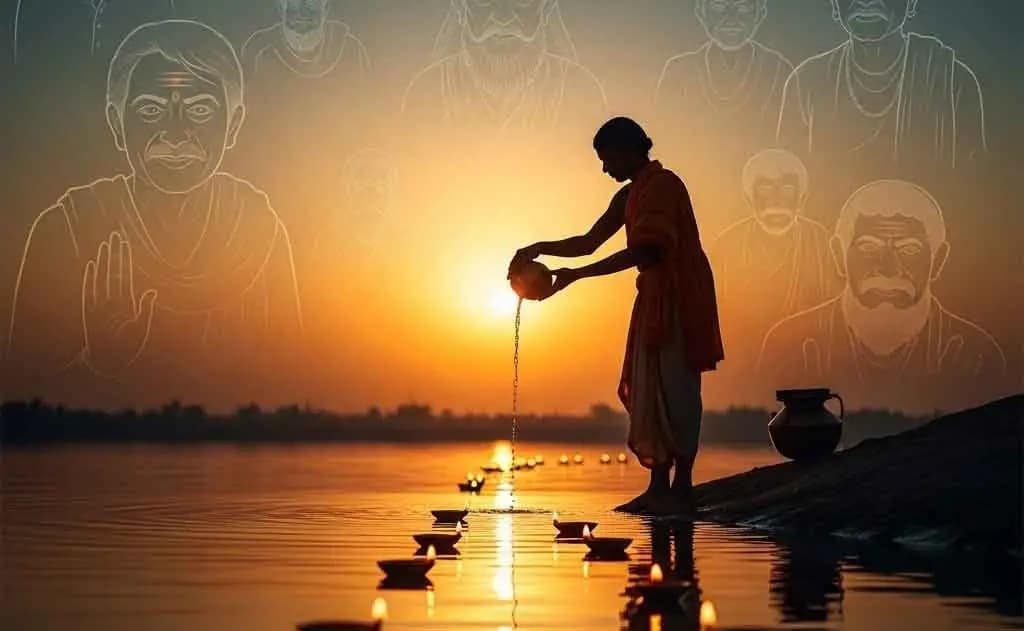
The deeper root of the idea is pitru rina, the sense of debt or duty we owe to those who came before us. Dharmic texts speak of three such duties — to the sages, to the gods, and to the ancestors — and the ancestral duty is discharged simply through remembrance, offering water (tarpan), and giving to others (daan). Read this way, pitru dosha is less an affliction and more a reminder to keep that thread of gratitude alive.
What no ritual can promise
This point matters most, so we state it plainly. No tarpan, pind daan, donation or ceremony can be promised to produce a specific life outcome — a marriage, a child, a recovery, a business result. Anyone claiming otherwise is selling certainty that the tradition itself does not offer. The dignified observances below are performed as acts of memory, duty and love, and their value rests there, not in any transaction.
How the concept is often distorted
It helps to see clearly how a calm idea gets turned into a frightening sales pitch. The table below contrasts the two.
| The fear-selling version | What the tradition more calmly holds |
|---|---|
| "Pitru dosha will ruin your marriage / career" | A chart placement inviting attention to ancestral remembrance |
| "Only this costly remedy can save you" | Tarpan and daan are simple, low-cost, and done at home |
| "Act now or face disaster" | There is no urgency, deadline or threat in the observance |
| "You are cursed by unhappy spirits" | The tone is gratitude and duty, not fear of the departed |
| "You need our astrologer immediately" | Consultation is optional; the core rites need no specialist |
The gentle observances of Pitru Paksha
During Pitru Paksha the customary way to honour ancestors is neither expensive nor complicated. Families offer water and remembrance and give food or charity to others. Here are the ordinary, dignified acts, in the spirit the tradition intends.
- ol
- Tarpan — offering water with black sesame while remembering ancestors by name or in the heart.
- Daan — giving food, grain, clothes or money to those in need, in the ancestors' memory.
- Feeding others — offering a meal to guests, the poor, or even birds and animals.
- Shraddha — the annual remembrance rite, done on the relevant tithi or on Sarva Pitru Amavasya if the date is unknown.
- Simple remembrance — lighting a lamp, recalling their lives, and giving thanks.
If you cannot travel, do not know the tithi, or have no male relative
The tradition makes room for every situation, and this is worth saying warmly. If you cannot travel to Gaya, Kashi or Prayagraj, remembrance done at home is complete in itself. If you do not know the exact tithi of a loved one's passing, Sarva Pitru Amavasya — Saturday, 10 October 2026 — is the day set aside precisely for all ancestors together. And if there is no male relative to perform the rite, many priests and families today welcome daughters and women to offer tarpan and shraddha; this is increasingly accepted, and no reader here will be told who may or may not remember their own family.
- Confirm the tithi or date locally with a panchang or family priest; if unknown, use Sarva Pitru Amavasya.
- Keep the observance simple — water, remembrance, and a gift to someone in need.
- Do it wherever you are; a home or a clean quiet place is enough.
- Feel no pressure to purchase remedies, packages or urgent consultations.
Related reading
- Pitru Paksha 2026
- Pitru Paksha 2026 tithi calendar
- Sarva Pitru Amavasya 2026
- Can a daughter perform shraddha?
- Pitru Paksha 2026 NRI guide
- Bhadrapada Masam 2026
Frequently Asked Questions
Is pitru dosha real or just a scam?
The concept exists genuinely within Vedic astrology as a chart reading concerning ancestral remembrance. What is often a scam is the fear-selling around it — the claims that it guarantees ruin and that a costly remedy will fix your life. The idea itself is measured; the marketing built on top of it is what to be wary of.
Will pitru dosha cause a failed marriage or childlessness?
No responsible reading of the tradition promises that any chart placement will cause a specific misfortune. Life outcomes have many causes, and it would be wrong to frame them as a verdict from one's ancestors. Treat such claims, especially when paired with a sales pitch, with healthy skepticism.
Can any ritual guarantee to remove pitru dosha and change my life?
No. No tarpan, pind daan, donation or ceremony can be promised to produce a marriage, a child, a recovery or a financial result. The observances are acts of remembrance and duty; their meaning lies there, not in any guaranteed outcome. Anyone promising certainty is offering something the tradition does not.
I live abroad and cannot travel to India — what can I do?
Remembrance done at home is complete in itself. You can offer tarpan, remember your ancestors by name or in your heart, and give food or charity locally to those in need. Sarva Pitru Amavasya on Saturday, 10 October 2026 is a natural day to do this if you wish.
I don't know the exact tithi of my loved one's passing. What then?
This is common and entirely provided for. Sarva Pitru Amavasya — Saturday, 10 October 2026 — is the day set aside for all ancestors together, especially when the specific tithi is unknown. Simply observe with remembrance, water and a gift to someone in need.
There is no male relative to perform the rites. Can a woman do it?
Many priests and families today welcome daughters and women to offer tarpan and shraddha, and this is increasingly accepted. We do not rule on who may or may not remember their own family; the important thing is that the remembrance is offered with love and sincerity.
Do I need to hire an astrologer or buy a remedy package?
No. The core observances — tarpan, daan and remembrance — need no specialist and no purchase. Consulting a priest or panchang to confirm a date is optional and helpful, but urgent, expensive remedy packages are not part of the dignified tradition.
When is Pitru Paksha 2026 and how do I confirm timings?
Pitru Paksha 2026 runs from 26/27 September to 10 October 2026, with Sarva Pitru Amavasya on Saturday, 10 October. Exact daily timings such as the kutup period vary by location, so please confirm them with a local panchang or family priest rather than relying on a single clock time.
You might also like
Navratri 2026: 9 Days, Colors, Goddess Names, Puja & Significance
Navratri 2026 USA: Dates, Garba, Dandiya, Durga Puja & NRI Celebration Guide

Indian Temple Flowers: Sacred Blooms & What Each Deity Loves