Pitru Paksha Mantras and Shlokas with Meanings
Understand the traditional Pitru Paksha mantras — the Pitru Gayatri, common tarpan invocations and the Pitru Suktam — with their meanings, correct context and a reminder that a priest guides precise recitation.
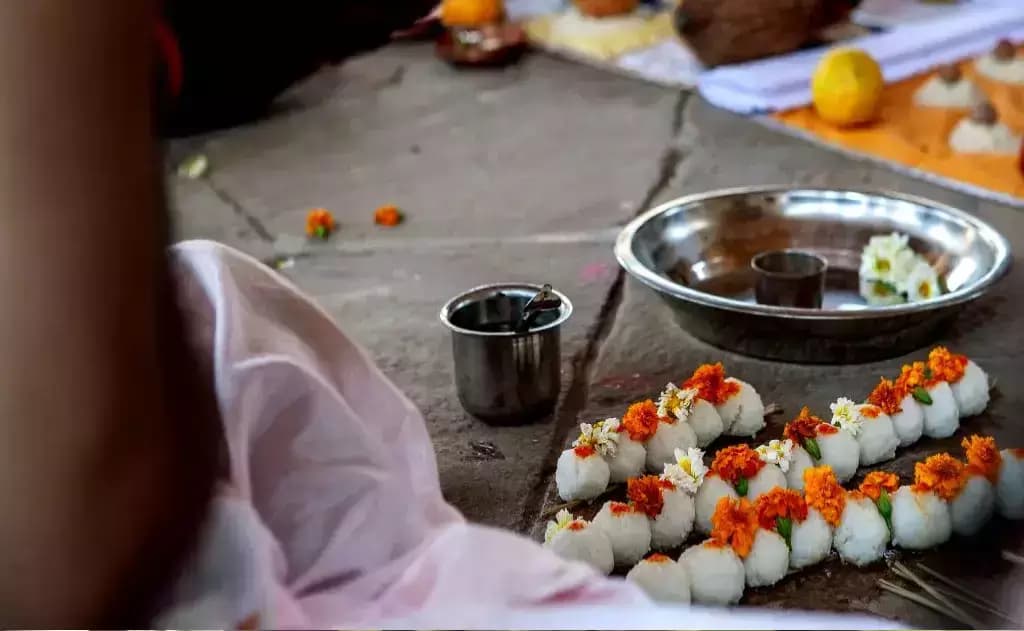
Understand the traditional Pitru Paksha mantras — the Pitru Gayatri, common tarpan invocations and the Pitru Suktam — with their meanings, correct context and a reminder that a priest guides precise recitation.
Quick answer: Pitru Paksha mantras are traditional Sanskrit prayers offered during shraddha and tarpan to honour departed ancestors. Well-known texts include the Pitru Gayatri, simple tarpan invocations and the Pitru Suktam from the Rigveda. They express gratitude and blessing, not fear. A qualified priest guides exact pronunciation, tithi and procedure.
Pitru Paksha is a gentle sixteen-day period set aside to remember and thank those who came before us. During this time many families offer tarpan (water offerings) and shraddha in memory of parents, grandparents and forebears. The mantras recited are not spells that control outcomes; they are dignified prayers of gratitude, remembrance and goodwill. Below we describe the most commonly referenced texts, their meaning and their proper context, so you can approach them with understanding rather than anxiety.
If any part of this feels unfamiliar, that is completely alright. A family priest (purohit) traditionally leads the precise recitation, and the sentiment of remembrance matters as much as exact wording. Those who cannot travel, who do not know the exact tithi, or who are learning for the first time are all welcome to offer a simple prayer with a sincere heart.
- Occasion: Pitru Paksha (Shraddha Paksha)
- Dates 2026: 26/27 September – 10 October (confirm your tithi with a local panchang)
- Core mantras: Pitru Gayatri, tarpan invocations, Pitru Suktam
- Who may offer: Sons, daughters, grandchildren or close family — as tradition and circumstance allow
- Guidance: A priest guides exact pronunciation and procedure
The Pitru Gayatri — a prayer of remembrance
The Pitru Gayatri is a short meditative verse addressed to the ancestors (pitru). Like other Gayatri-form prayers, it invokes, contemplates and requests blessing — here asking that the departed be at peace and that their remembrance inspires the living. It is commonly recited during tarpan and shraddha. Because precise Vedic pronunciation (svara) carries weight in recitation, most families learn it directly from a priest rather than from written transliteration alone.
The spirit of the verse is simple: we call the ancestors to mind, we contemplate their memory with love, and we pray for their peace. There is no threat or bargain in it — only gratitude.
Tarpan invocations
Tarpan is the offering of water (often with sesame seeds and darbha grass) to satisfy and honour the departed. As the water is offered, short invocations name the lineage — the paternal line, the maternal line, and, in many traditions, teachers and all beings who have no one to remember them. The recurring sense of these lines is simple: 'may this offering reach and satisfy them.'
The inclusion of 'all beings with no one to offer for them' is a beautiful, compassionate feature of tarpan — a reminder that remembrance extends beyond one's own family to everyone who has passed.
The Pitru Suktam
The Pitru Suktam is a hymn drawn from the Rigveda that reverently addresses the ancestors as a whole. It is longer and more elaborate than the short verses above and is typically chanted by a priest during formal shraddha. Rather than reproduce it here, we describe it: it invokes the pitrus by their orders and generations, welcomes them to the offering, seeks their goodwill and prays for the wellbeing and continuity of the family. Because of its length and precise metre, it is best heard and learned from a qualified reciter.
Mantras at a glance
| Text | Character | Typical use |
|---|---|---|
| Pitru Gayatri | Short meditative verse | Tarpan and shraddha |
| Tarpan invocations | Brief naming of lineages | While offering water |
| Pitru Suktam | Rigvedic hymn (longer) | Formal shraddha, priest-led |
Gentle guidance on recitation
- Prefer to learn pronunciation by listening to a priest or an authentic recording rather than from transliteration alone.
- Face the appropriate direction and use the traditional materials (water, sesame, darbha) as your family or priest advises.
- Recite slowly and with attention; the feeling of gratitude matters as much as speed or volume.
- If you do not know a full mantra, a sincere prayer of remembrance in your own words is honoured.
- When in doubt about tithi, sequence or wording, ask your family priest — this is exactly what their guidance is for.
There is no need for fear or perfection. Pitru Paksha is, at heart, an act of love and thanks. Offering water, lighting a lamp, sharing food, or simply remembering the departed with a calm heart are all meaningful. For the exact tithi on which to remember your ancestor, and for muhurat or parana timings, please confirm with a reliable local panchang.
Related reading
Frequently Asked Questions
What are the main Pitru Paksha mantras?
The most commonly referenced are the Pitru Gayatri, short tarpan invocations offered while giving water, and the Pitru Suktam from the Rigveda. Each honours the ancestors with gratitude. A priest guides exact recitation and procedure.
Can I recite these mantras myself at home?
Yes, many families do. It is best to learn pronunciation from a priest or an authentic recording. If you do not know the full text, a sincere prayer of remembrance in your own words is completely acceptable and honoured.
What is the Pitru Gayatri?
It is a short meditative verse addressed to the ancestors, asking for their peace and inviting their remembrance. Like other Gayatri-form prayers it invokes, contemplates and requests blessing. It is commonly recited during tarpan and shraddha.
What does tarpan mean?
Tarpan is the respectful offering of water — often with sesame seeds and darbha grass — to satisfy and honour the departed. Short invocations name the paternal and maternal lineages, and often all beings who have no one to remember them.
Do I need a priest to perform shraddha?
A priest traditionally guides the precise recitation, tithi and procedure, especially for the Pitru Suktam. But the sentiment of remembrance matters greatly. If you cannot arrange a priest, you may still offer a simple, heartfelt prayer.
Who may offer these mantras and tarpan?
Traditionally sons perform shraddha, but daughters, grandchildren and close family members also offer tarpan and prayers as tradition and circumstance allow. What matters most is sincere remembrance of the departed.
When is Pitru Paksha 2026?
Pitru Paksha 2026 falls from 26/27 September to 10 October. The exact tithi on which to remember your own ancestor varies, so please confirm it with a reliable local panchang.
What if I do not know the exact tithi?
That is alright. Many honour their ancestors on Sarva Pitru Amavasya, the final day set aside for all forebears, including those whose tithi is unknown. You may also ask your family priest for guidance.
Related guides you may find helpful
You might also like
Navratri 2026: 9 Days, Colors, Goddess Names, Puja & Significance
Navratri 2026 USA: Dates, Garba, Dandiya, Durga Puja & NRI Celebration Guide

Indian Temple Flowers: Sacred Blooms & What Each Deity Loves