

Why Sravana Purnima Matters: The Only Day That Repays Every Debt a Hindu Owes
Raksha Bandhan, Upakarma, Narali Purnima, Jandhyala Purnima, Avani Avittam — why are all of these on the same day? There is a structure underneath, and once you see it, Sravana Purnima becomes the most carefully designed day in the Hindu year.
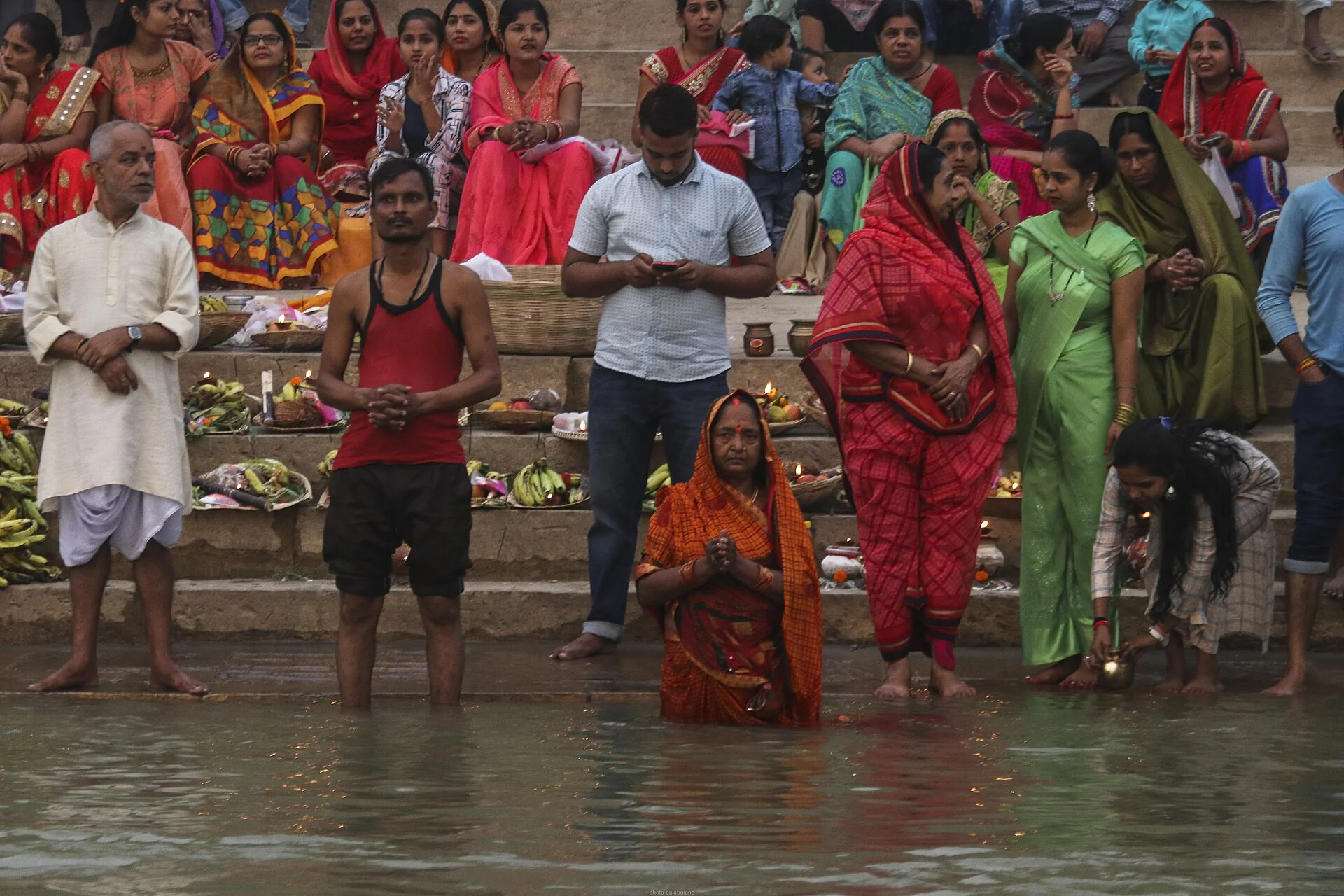
Raksha Bandhan, Upakarma, Narali Purnima, Jandhyala Purnima, Avani Avittam — why are all of these on the same day? There is a structure underneath, and once you see it, Sravana Purnima becomes the most carefully designed day in the Hindu year.
Quick answer: Sravana Purnima is the full moon that closes Sravana Masam, the holiest month of the Hindu year. Its importance rests on three foundations: it falls in the month named for śravaṇa (hearing), the mode by which the Vedas were received; it opens the Vedic academic year through Upakarma; and its combined observances discharge all five of the pancha maha yajna — the debts owed to the sages, the gods, the ancestors, other beings, and fellow humans. No other day in the calendar does all three.
Most people know Sravana Purnima as the day of Raksha Bandhan. Many know it as Upakarma. Coastal families know it as Narali Purnima, Telugu families as Jandhyala Purnima, Tamil families as Avani Avittam. Almost nobody asks the obvious question: why are all of these on the same day?
The answer is not coincidence, and it is not calendar congestion. There is a structure underneath, and once you see it, Sravana Purnima stops looking like a crowded day and starts looking like the most carefully designed day in the Hindu year.
For dates, tithi timings and step-by-step rituals for this year, see our Sravana Purnima 2026 guide. This piece is about why the day carries the weight it does.
Quick Answer: What Makes Sravana Purnima So Important?
Sravana Purnima is the full moon that closes Sravana Masam, the holiest month of the Hindu year. Its importance rests on three foundations:
- The nakshatra of listening. The month is named for Sravana Nakshatra — śravaṇa means hearing — and the Vedas are śruti, that which is heard. This is the full moon of the month of listening.
- The Vedic year begins. Upakarma literally means beginning: the sacred thread is renewed and formal Vedic study recommences. It is the academic new year of the Hindu tradition.
- Every debt is repaid. Uniquely in the calendar, the observances of this single day discharge all five of the pancha maha yajna — the debts owed to the sages, the gods, the ancestors, other beings, and fellow humans.
No other day in the year does all three.
The Foundation: A Month Named After Hearing
Start with the word. Śravaṇa means listening. It is the same root that gives us śruti — the term for the Vedas themselves, literally that which is heard. In the oldest understanding, the Veda was never written. It was heard by rishis in deep meditative absorption, and transmitted mouth to ear for thousands of years before a single syllable was committed to writing.
Sravana Nakshatra is presided over by Vishnu, and its symbol is three footprints — the three strides by which Vamana measured the universe. Some traditions depict it instead as an ear. Now put those pieces together. The month named for hearing culminates in a full moon on which:
- The sacred thread is renewed and Vedic recitation formally recommences.
- Gratitude is offered to the sages who heard the Vedas and preserved them.
- The deity who recovered the stolen Vedas appears.
- The Gayatri — the seed mantra of all Vedic learning — is chanted 1,008 times the following day.
This is not an accident of scheduling. Sravana Purnima is the day Hindu civilisation dedicates to the transmission of knowledge, placed at the peak of the month named after the act of receiving it.
Why the Full Moon of Sravana Specifically
Two reasons, one devotional and one astrological. Sravana Masam is the month of Shiva. It is the season of the Samudra Manthana, when Shiva drank the halahala poison and held it in his throat. It is the month of Jalabhishekam, of Kanwar pilgrimage, of Monday vratas. An entire month of intensified tapas builds toward its full moon — and the merit of any observance rises with the discipline that preceded it. Sravana Purnima is the culmination of thirty days of preparation, not an isolated event.
The moon governs the mind. In Vedic thought, Chandra rules the manas. The full moon is consciousness at its most complete and least fragmented — the mind whole rather than scattered. It is precisely the condition required for the two acts this day demands: receiving knowledge and making a vow. Both require an undivided mind. This is why the tradition holds that meritorious acts performed on this day yield manifold results. Acts performed from fullness carry differently than acts performed from distraction.
The Hidden Architecture: Five Debts, One Day
Here is the structure almost no one points out. Hindu dharma teaches that a person is born owing debts — the rina traya, the three debts, expanded in the pancha maha yajna into five daily obligations. They are:
| Debt / Yajna | Owed to | Discharged by |
|---|---|---|
| Brahma yajna (rishi rina) | The sages who preserved knowledge | Study and teaching of the Vedas |
| Deva yajna | The gods | Worship and offering |
| Pitru yajna (pitru rina) | The ancestors | Tarpana and shraddha |
| Bhuta yajna | Animals, nature, all beings | Feeding and care of creatures |
| Manushya yajna | Fellow human beings | Hospitality, protection, giving |
Now look at what Sravana Purnima actually contains.
Brahma yajna → Upakarma and Rishi Tarpana. The sacred thread is renewed, Vedic study formally begins, and water and sesame are offered to the seven sages who carried the Vedas orally across millennia. The debt to knowledge, paid.
Deva yajna → Hayagriva Jayanti and Satyanarayana Vrata. The appearance of Vishnu as the restorer of the Vedas, and the Purnima puja performed in millions of homes. The debt to the divine, paid.
Pitru yajna → tarpana and pinda dana. In many regions, ancestral rites are performed on this day, particularly at Gaya, Prayag, Rishikesh and Rameshwaram. The debt to the ancestors, paid.
Bhuta yajna → Narali Purnima, Gamha Purnima, and more. Coconuts offered to Varuna and the sea; cattle washed, decorated and honoured in Odisha; and in Newar Nepal, food set out for the frogs of the fields in thanks for the rain. The debt to other beings, paid.
Manushya yajna → Raksha Bandhan. A thread that binds one human being to the protection of another. The debt to fellow humans, paid.
Five obligations. One full moon. There is no other day in the Hindu calendar on which each of the five maha yajnas finds a distinct, named, publicly observed festival expression. Sravana Purnima is not a crowded day. It is a complete one.
The Observances, and What Each One Is Actually For
Upakarma: the Vedic academic year begins
Upakarma means beginning. The old yajnopavita is discarded and a new one worn after purification, prayaschitta is performed for lapses in daily observance, and Vedarambham — the formal recommencement of Vedic study — is undertaken. This is the point most modern accounts miss. Upakarma is not primarily a thread-changing ritual. It is the opening of the scholastic year, the day on which recitation of the Veda formally resumes after the monsoon, to run until its ceremonial closing months later. The new thread is the enrolment badge, not the purpose.
| Region | Name |
|---|---|
| Tamil Nadu, Kerala | Avani Avittam |
| Andhra Pradesh, Telangana | Jandhyala Purnima |
| Karnataka | Janivarada Hunnime |
| North India | Janeu Purnima |
Different Vedic branches observe on different days: Yajurveda and Rigveda followers typically on Sravana Purnima itself, Samaveda followers on a separate date. Gayatri Japam follows the next day, closing the observance for all branches together with 1,008 recitations.
Rishi Tarpana: the most touching ritual of the day
Water and sesame seeds are offered to the sapta rishis, the seven sages. Consider what is being acknowledged. For thousands of years, the entire Vedic corpus existed nowhere but in human memory. No manuscript, no library, no backup. It survived because generation after generation of people committed it to memory with a precision that modern scholarship still finds astonishing, and passed it to the next.
Rishi Tarpana is the tradition turning around once a year and saying thank you to that chain. It is, in the most literal sense, gratitude to the people who made it possible for you to know anything at all.
Hayagriva Jayanti: why the knowledge deity appears today
Hayagriva is the horse-headed form of Vishnu, worshipped as the deity of knowledge and learning. The tradition holds that Vishnu took this form to recover the Vedas after they were stolen from Brahma by an asura. The placement is exact. The Vedic year opens on the appearance day of the deity who restored the Vedas. Students, scholars and anyone beginning a course of study traditionally worship Hayagriva on this day — the practice is particularly strong in Sri Vaishnava tradition.
Two temples are especially associated with the day: the Lakshmi Hayagriva temple at Nanganallur, Chennai, and the Hayagriva Madhava temple at Hajo, Assam, a major centre of Hayagriva worship in the northeast. In several traditions the day also carries Gayatri Jayanti — the manifestation of Gayatri Devi, goddess of the Vedas. Knowledge restored, knowledge personified, knowledge renewed, all on one date.
Raksha Bandhan: the human debt
The Raksha Sutra binds one person to the protection of another before God. Within the five-debt framework it is manushya yajna in its most intimate form: not hospitality to a stranger, but a formal, annually renewed vow of protection between two people. Its full meaning and ritual method are covered in our companion guides on the spiritual meaning of the rakhi and the complete puja vidhi.
Narali Purnima: the debt to nature
Coconuts offered to Varuna on the western coast, marking the end of the monsoon fishing ban. The Koli fishing communities do not simply resume work; they ask permission first. It is one of the clearest surviving expressions of bhuta yajna in Indian public life — an entire livelihood pausing to acknowledge that the sea is not merely a resource.
Kajari Purnima, Jhulan Purnima, Gamha Purnima
The regional layers: barley shoots offered and mothers' vratas kept in Madhya Pradesh and eastern UP; the swing festival of Radha-Krishna concluding in Bengal and Vrindavan; Lord Balabhadra honoured and cattle decorated in Odisha. Each is treated in depth in our guide to Raksha Bandhan around the world.
What Anyone Can Do on Sravana Purnima
Upakarma is restricted by tradition to those who have received the sacred thread. Nothing else on this day is.
- Bathe before sunrise, ideally in a river, or with water in which a few drops of holy water have been mixed.
- Perform Satyanarayana Vrata. Every Purnima suits it; this one especially.
- Chant the Gayatri Mantra — 10, 27 or 108 times at sunrise.
- Begin something you intend to learn. This is the single most appropriate act of the day. Open the book, enrol in the class, start the recitation. The day exists for beginnings in knowledge.
- Offer tarpana to your ancestors, or simply sit and remember them by name.
- Feed an animal — cows, birds, street dogs, fish. Bhuta yajna requires no ritual competence at all.
- Give. White items — rice, milk, sugar — at a Shiva temple; a meal sponsored; a child's fees paid.
- Observe a partial fast, breaking it after moonrise with an offering of arghya to Chandra.
- Thank a teacher. The whole day is built on this. One message to one person who taught you something is a genuine observance of Brahma yajna.
Closing Thought
We tend to think of a crowded festival day as a scheduling problem — too much packed into one date, each observance competing for attention. Sravana Purnima is the opposite. It is a day on which a civilisation set out, in a single sunrise-to-moonrise span, everything a human being owes: to the people who taught them, to the divine, to those who came before, to the creatures they share the world with, and to the person sitting across from them at breakfast.
You do not have to perform all five. But it is worth knowing, once a year, that they were all placed on the same day deliberately — and that the tradition considered them a single obligation with five faces, not five separate errands.
Listen. Learn. Give thanks. Give. Protect. Om Namo Narayanaya. Om Namah Shivaya.
Frequently Asked Questions
Why is Sravana Purnima considered so important?
It closes Sravana Masam, the holiest month of the year; it falls in the month named for śravaṇa, hearing, the mode by which the Vedas were received; it opens the Vedic academic year through Upakarma; and its combined observances discharge all five of the pancha maha yajna — the debts to sages, gods, ancestors, other beings and fellow humans.
What does Sravana mean?
Śravaṇa means hearing or listening. It is the name of the nakshatra presided over by Vishnu, and shares its root with śruti, that which is heard — the Vedas themselves.
Why does Vedic study begin on Sravana Purnima?
Because Upakarma means beginning. The day marks the formal recommencement of Vedic recitation after the monsoon, and coincides with Hayagriva Jayanti, the appearance of the form of Vishnu who recovered the stolen Vedas.
What is Rishi Tarpana?
An offering of water and sesame seeds to the seven sages, in gratitude for their preservation of the Vedas through oral transmission across thousands of years.
What is Jandhyala Purnima?
The Telugu name for Upakarma, observed in Andhra Pradesh and Telangana on Sravana Purnima — the annual renewal of the jandhyam, the sacred thread.
Can people who do not wear the sacred thread observe this day?
Yes, fully. Satyanarayana Vrata, Gayatri japa, fasting, charity, feeding animals, ancestral remembrance, Raksha Bandhan and beginning a course of study are all open to everyone.
Is Sravana Purnima the same as Raksha Bandhan?
Raksha Bandhan is observed on Sravana Purnima, but it is one of several observances on that day rather than the whole of it. Upakarma, Narali Purnima, Hayagriva Jayanti and Satyanarayana Vrata also fall on the same full moon.
Which deities are worshipped on Sravana Purnima?
Vishnu — especially as Hayagriva, and as the presiding deity of Sravana Nakshatra — along with Shiva, whose month it closes, Lakshmi, and Chandra, to whom arghya is offered at moonrise.
You might also like

Raksha Bandhan Around the World: How 15 Countries and Every Indian Region Celebrate
Krishna Janmashtami 2026 in Australia: Local Midnight Puja Times & Nishita Kaal
Krishna Janmashtami 2026 in Canada: Local Midnight Puja Times & Nishita Kaal