Sri Ram Navami 2025: Surya Tilak & Ram Lalla Darshan Live Streaming
Sri Ram Navami 2025 is set to be an extraordinary celebration, especially at the newly built Ram Temple in Ayodhya.
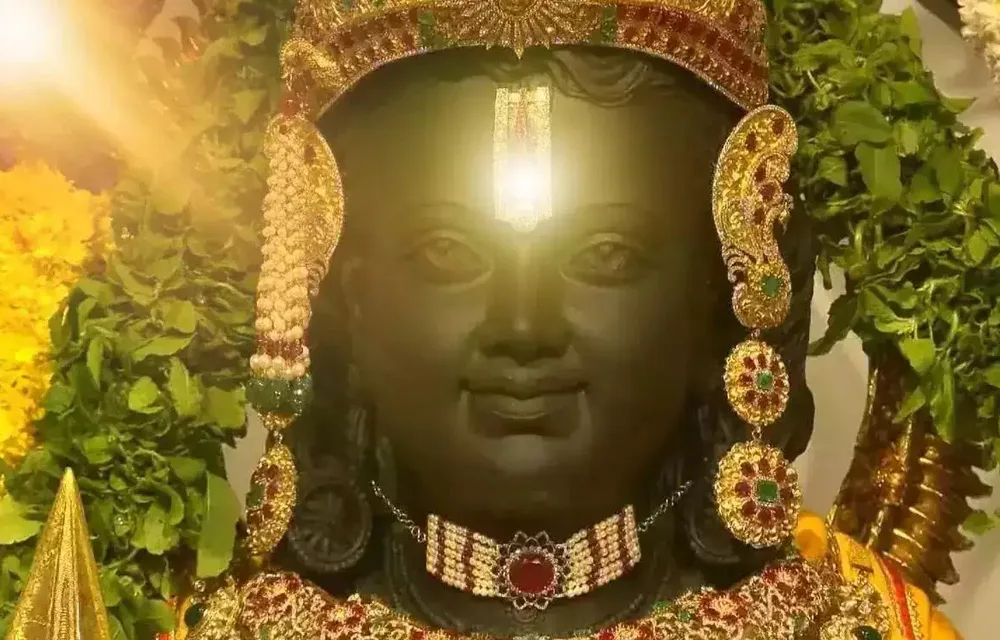
Sri Ram Navami 2025 is set to be an extraordinary celebration, especially at the newly built Ram Temple in Ayodhya.
Sri Ram Navami 2025 is set to be an extraordinary celebration, especially at the newly built Ram Temple in Ayodhya. This year, the grand event includes the much-anticipated Surya Tilak ceremony of Ram Lalla, a celestial spectacle where the sun's rays illuminate the deity at the sanctum sanctorum. Devotees worldwide are eager to witness this divine moment. But how can you watch it live from the comfort of your home? Let’s find out!
What is Surya Tilak?
The Surya Tilak is a rare astronomical event where the sun’s rays naturally fall on Ram Lalla’s forehead at 12 PM IST on April 6, 2025. The temple's architectural precision ensures that this event aligns perfectly with Sri Ram Navami, making it a divine sight to behold.
Where to Watch Sri Ram Navami 2025 Live?
If you can’t visit Ayodhya in person, don’t worry! Here’s how you can watch the live streaming of the Surya Tilak and other celebrations:
1. DD National & Doordarshan YouTube Channel
- Live Telecast: DD National, India’s public broadcaster, will stream the event live.
- YouTube Streaming: Doordarshan’s official YouTube channel will provide free access to devotees worldwide.
2. Official Ram Temple Website & Social Media
- Visit www.hindutone.com for real-time updates, expert spiritual insights, and direct links to live coverage.
- Follow Shri Ram Janmbhoomi Teerth Kshetra on YouTube, Facebook, and Twitter for exclusive videos and announcements.
3. Hindu Religious Channels
- Tune in to channels like Aastha TV, Sanskar TV, and Bhakti TV for special coverage of the celebrations.
4. Virtual Darshan via Mobile Apps
- Apps like Bhakti Sagar, Sri Ram Darshan, and Temple Connect may provide a live stream of the Surya Tilak and other temple rituals.
Ram Navami 2025: Key Events & Schedule
- 5:00 AM - Mangala Aarti & Abhishek
- 8:00 AM - Vedic Chanting & Ram Katha
- 12:00 PM - Surya Tilak Ceremony (Main Event)
- 3:00 PM - Maha Prasadam Distribution
- 6:00 PM - Grand Rath Yatra in Ayodhya
- 8:00 PM - Ram Bhajan & Deepotsav
Will Ram Lalla’s Surya Tilak Outshine Your Monday Blues?
With Sri Ram Navami falling on a Monday, this divine spectacle is bound to start your week on an auspicious note! Watching the Surya Tilak can uplift your spirit and bring positivity into your life.
Conclusion
Whether you’re in Ayodhya or anywhere across the globe, experiencing the Surya Tilak of Ram Lalla is just a click away. Tune in to DD National, YouTube, or www.hindutone.com for the latest updates. Don’t miss this celestial moment that connects faith with cosmic precision!
FAQs
1. What is the significance of Surya Tilak?
It symbolizes divine alignment, where the sun’s rays naturally illuminate Lord Ram’s forehead, signifying celestial blessings.
2. Is there an entry fee for the Ram Temple during Navami?
No, entry is free for all devotees, but expect large crowds.
3. Can international devotees watch the Surya Tilak live?
Yes, through DD National, YouTube, and online spiritual platforms.
4. What time should I log in for live streaming?
Join by 11:45 AM IST on April 6, 2025, to witness the Surya Tilak at 12 PM sharp.
5. Where can I get more updates on Sri Ram Navami celebrations?
Visit www.hindutone.com for real-time updates, live streaming links, and spiritual insights.
What is the Scriptural Significance of Ram Navami in Valmiki Ramayana and Puranas?
Ram Navami commemorates the birth of Bhagavan Sri Rama on the ninth tithi (Navami) of Shukla Paksha in the month of Chaitra. The Valmiki Ramayana, in its Bala Kanda (1.18), records that Rama was born at midday when the sun was in the Aries sign (Mesha Rashi), with the moon in Cancer (Karka) and five planets — Sun, Mars, Jupiter, Saturn, and Venus — exalted in their respective houses. This planetary configuration is considered among the most auspicious in Vedic astrology.
The Skanda Purana and Padma Purana further elaborate on the cosmic importance of this tithi, declaring that a devotee who fasts, performs Vishnu Sahasranama recitation, and takes a holy dip in the Sarayu River on this day attains the merit equivalent to performing the Ashwamedha Yajna. The sacred syllable 'Ra-Ma' itself is considered the Taraka Mantra — the liberating mantra — drawn from the first and eighth syllables of the Ashtottara Shatanama of Lord Vishnu and Lord Shiva respectively.
How Was the Surya Tilak Mechanism Engineered Inside the Ayodhya Ram Temple?
The Surya Tilak mechanism at the Shri Ram Janmabhoomi Temple in Ayodhya is a feat of precise optical engineering rooted in traditional Vastu Shastra principles. A series of mirrors and lenses, carefully calibrated by scientists from the Central Building Research Institute (CBRI), Roorkee, and opticians from the Indian Institute of Astrophysics, Bengaluru, channel sunlight through the temple's roof opening. The light travels through a shaft and falls directly on Ram Lalla's forehead for approximately three to four minutes around solar noon on Ram Navami.
The system is designed so that no electricity or mechanical intervention is needed during the actual tilak moment — the alignment is entirely governed by the sun's natural position on Chaitra Shukla Navami each year. This mirrors the ancient tradition of Surya Puja described in the Rig Veda, where the sun is addressed as 'Chakshu Devam' — the divine eye that illuminates all — making the event not merely scientific spectacle but an act of living cosmology.
What Are the Traditional Rituals Performed at Ayodhya on Ram Navami Beyond the Surya Tilak?
Beyond the Surya Tilak, Ram Navami at Ayodhya involves a continuous cycle of Shodashopachara Puja — sixteen forms of worship — offered to Ram Lalla from the predawn Mangala Aarti through the evening Shayan Aarti. The Abhishek, or sacred bathing of the deity, is performed with Panchamrita (milk, curd, ghee, honey, and sugar) along with the sacred water of the Sarayu River, whose sanctity is praised in both the Ramayana and the Atharva Veda.
The grand Rath Yatra that proceeds through the lanes of Ayodhya in the evening is modelled on the tradition of Utsava Murti processions described in Agama Shastra texts, where a festival image of the deity is taken through the city so that every devotee who cannot enter the temple sanctum may receive darshan. Simultaneously, the Ram Katha recitations performed by trained Kathakaras draw primarily from the Tulsidas-composed Ramcharitmanas, which holds a special place in the religious life of the Hindi-speaking heartland.
Why Is Ayodhya Considered the Supreme Tirtha for Ram Navami Pilgrimage?
Ayodhya is listed as the first among the Sapta Moksha Puris — the seven cities that grant liberation — in the Garuda Purana, which states: 'Ayodhya Mathura Maya Kashi Kanchi Avantika, Puri Dwarravati chaiva saptaita mokshadayikah.' The Sarayu River that flows through the city is described in the Atharva Veda as a purifying force, and bathing in its waters on Ram Navami is believed to cleanse accumulated karma accumulated over multiple lifetimes.
The Shri Ram Janmabhoomi — the exact site of Rama's birth — is identified within the new temple complex, and the sanctum directly above it houses Ram Lalla in his child form (Bal Swarupa). Pilgrims who undertake the Parikrama (circumambulation) of Ayodhya's Pancha-Koshi path, covering roughly fourteen kilometers around the city, are said in local Mahatmya texts to complete a journey equivalent to visiting all the twelve Jyotirlinga shrines of Lord Shiva.
How Can Devotees Observe Ram Navami Vrat at Home in the Correct Traditional Manner?
For those observing the Ram Navami Vrat at home, the Dharmasindhu and Nirnayasindhu — two authoritative texts on Hindu ritual observance — prescribe waking before sunrise, taking a ritual bath, and installing an image or idol of infant Rama in the home shrine. The fast typically involves abstaining from grains, with permitted foods including fruits, milk, sabudana (sago), and sendha namak (rock salt). The fast is broken after the midday Surya Tilak hour by performing an aarti and offering tulsi leaves to the deity.
Recitation of the Rama Raksha Stotra, composed by Budhakaushika Rishi and drawn from the Atharva Veda tradition, is considered particularly efficacious on this day. Households traditionally read at least one complete Sundara Kanda from the Ramcharitmanas or Valmiki Ramayana, as the Sundara Kanda is associated with Hanuman's unwavering devotion to Rama and is believed to remove obstacles from the devotee's life. Lighting a ghee diya for the entire day in the home's eastern corner, symbolic of Surya's direction, connects the home observance with the temple's grand Surya Tilak.
What Is the Historical and Cultural Legacy of Ram Navami Celebrations Across India?
Ram Navami has been observed as a public festival across the Indian subcontinent for centuries. In Bhadrachalam, Telangana, the Sita Rama Kalyanam (divine wedding ceremony of Sita and Rama) performed at the Sita Ramachandra Swamy Temple on Ram Navami has been patronized since the 17th century by Kancherla Gopanna (revered as Bhakta Ramadas), making it one of the oldest documented institutional celebrations of the festival. The Telangana state government continues to send the wedding garments (vastrams) as a royal honor each year.
In Tamil Nadu, the Kodanda Ramaswamy Temple in Tiruvellarai and the Sri Ranganathaswamy Temple in Srirangam hold special Utsavam during this period. In Karnataka, the Raghavendra Swami Matha in Mantralayam conducts elaborate Ram Navami rituals. This geographic spread — from Ayodhya in Uttar Pradesh to Rameswaram in Tamil Nadu — reflects the all-India, cross-regional devotion to Bhagavan Rama described in the Adhyatma Ramayana as the natural consequence of Rama being the Paramatman present in every heart.
Frequently Asked Questions
When is Sri Ram Navami?
Sri Ram Navami falls on April 6, 2025.
What is the significance of Sri Ram Navami?
Sri Ram Navami 2025 is set to be an extraordinary celebration, especially at the newly built Ram Temple in Ayodhya . This year, the grand event includes the much-anticipated Surya Tilak ceremony of Ram Lalla, a celestial spectacle where the sun's rays illuminate the deity at the sanctum sanctorum.
How is Sri Ram Navami celebrated?
Devotees observe it with puja, fasting or special offerings, visiting temples, chanting mantras, and gathering with family. Customs vary by region and tradition.
What should devotees do on Sri Ram Navami?
Worship Lord Rama, perform the day's puja and offerings, observe the fast where prescribed, and chant the associated mantras with devotion.
You might also like

Gita Jayanti 2026 Prasad Recipes — Tulsi-Honoring Sweets, Krishna's Favourites & December 10 Bhog Plate
Shani Deva Temples Worldwide & Must-Performed Rituals — Complete Devotee's Guide
Maha Shivratri 2026 Vrat Recipes — Sabudana Khichdi, Singhada Halwa, Phalahara Foods Complete Fasting Guide